كل ما تحتاجين معرفته عن البشرة الدهنية

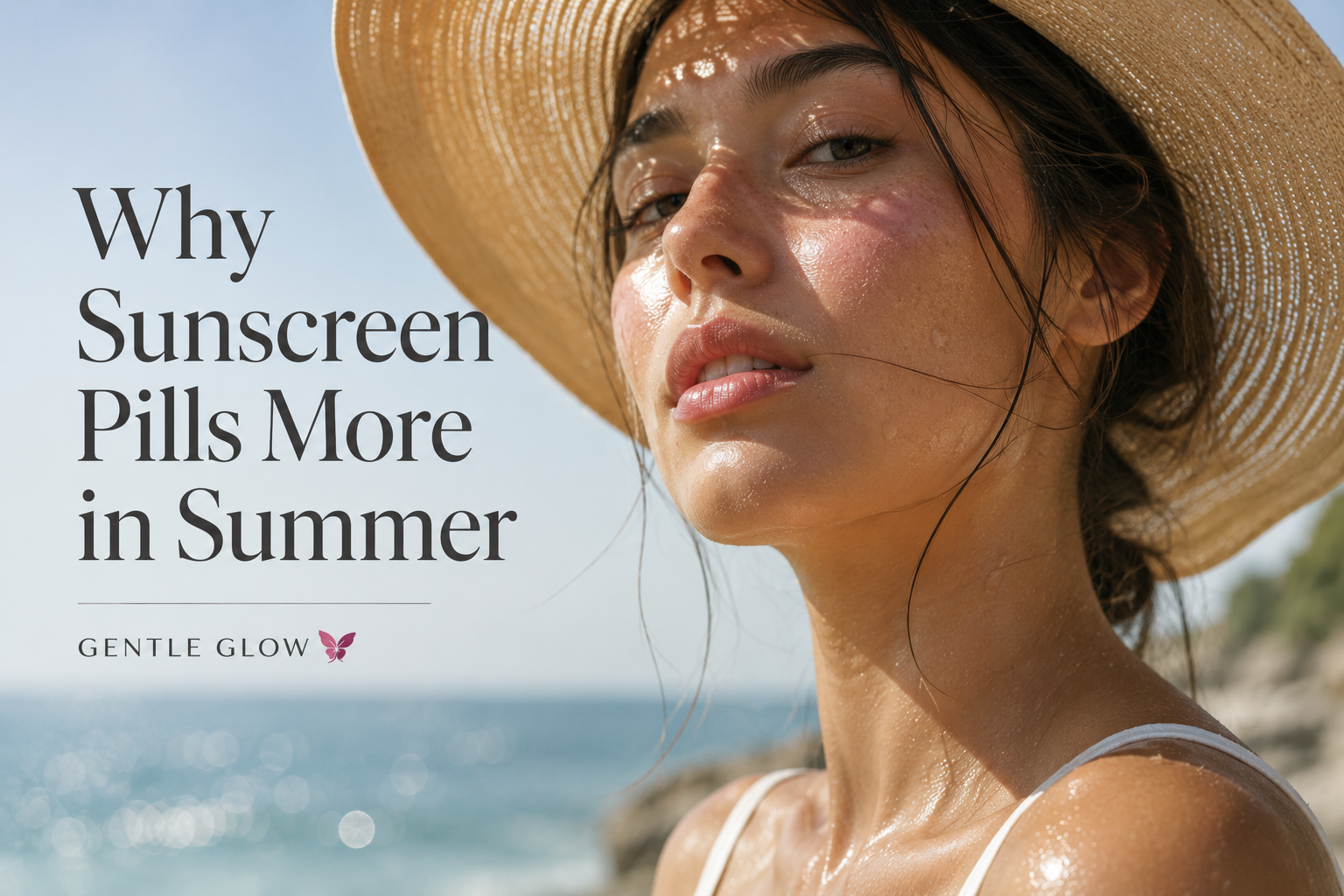
Why Sunscreen Pilling on Oily Skin Gets Worse in Summer (And How to Prevent It)

المؤسِّسة ورئيسة التحرير في Gentle Glow
Gentle Glow Editorial Team • Updated May 2026 • Evidence-based skincare
Sunscreen pilling on oily skin becomes more common during summer because heat, humidity, sweat, and excess sebum interfere with how sunscreen forms its protective film across the skin. When that film cannot settle evenly — especially under heavy layering or aggressive rubbing — the formula starts rolling into tiny flakes instead of adhering smoothly. In many cases, preventing sunscreen pilling is less about changing products and more about reducing layering friction, simplifying the routine, and allowing sunscreen enough time to set properly.
- The Main Catalyst: Fluid summer oil can loosen sunscreen films before they fully settle on the skin.
- The Humidity Variable: Sweat and ambient moisture slow drying time and increase texture instability between skincare layers.
- The 2026 Strategy: Lighter layering and frictionless application methods help stop sunscreen from rolling off the face without reducing protection.
جدول المحتويات
The Chemistry Behind Sunscreen Pilling on Oily Skin
One of the biggest misconceptions around تكتّل واقي الشمس على البشرة الدهنية is that it only happens because products are “incompatible.” In reality, most sunscreens are designed to form a thin, flexible protective film across the skin that keeps UV filters distributed evenly throughout the day.
To create that layer, modern formulas rely on film-forming ingredients such as silicones, acrylates, and lightweight polymers. These ingredients help sunscreen spread smoothly before settling into an even shield over the surface of the skin.
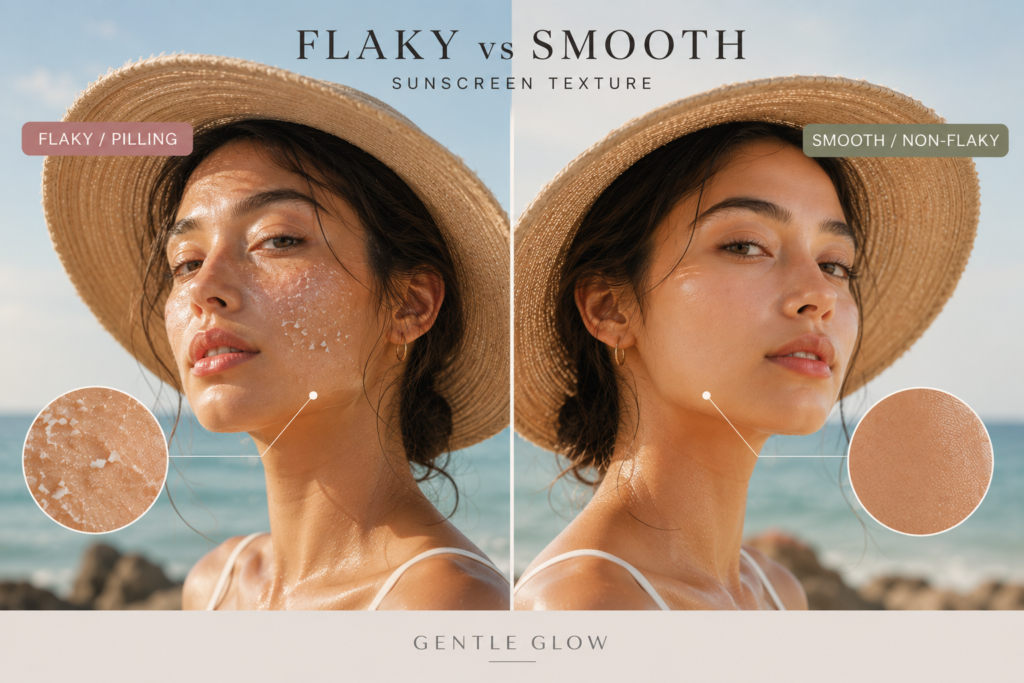
What causes sunscreen pilling is usually not the sunscreen itself, but what interrupts that settling process.
During summer, oily skin produces more fluid sebum while humidity and sweat keep the skin surface damp for longer periods. If sunscreen is layered over skincare that has not fully dried — or rubbed aggressively before the film has time to settle — the structure begins to destabilize. Instead of forming one smooth layer, parts of the formula start binding to themselves and rolling into the small flakes or “white crumbs” many people notice around the nose, jawline, or underneath makeup.
This is also why sunscreen rolling off the face often feels worse in الطقس الرطب، even when using the exact same products that worked perfectly during winter.
Texture plays an important role as well. Many modern واقيات شمس غير مسببة لانسداد المسام use lightweight silicones to improve texture and reduce heaviness on oily skin. The issue is usually not the silicone itself, but how multiple layers interact before the sunscreen fully sets. When skincare underneath remains tacky or overly layered, movement across the skin can disrupt the sunscreen film before it has time to anchor evenly.
Importantly, this does not necessarily mean your sunscreen is ineffective or poorly formulated. In many cases, how to stop sunscreen from pilling comes down to reducing unnecessary layering, minimizing friction, and giving the sunscreen enough time to anchor properly to the skin before additional skincare or makeup is applied.
Why Summer Sebum Destabilizes Your UV Shield
What makes تكتّل واقي الشمس على البشرة الدهنية feel worse during summer is that oil production changes in heat and humidity. As temperatures rise, sebaceous glands produce more fluid surface oil while sweat keeps the skin continuously damp throughout the day.
That combination creates more movement across the skin surface, especially underneath layered skincare and makeup. Products that felt lightweight during winter can suddenly start feeling heavier, shinier, or less stable by midday once humidity increases.
Some research on seasonal skin changes has also shown that warmer weather can influence sebum activity and overall skin surface behavior, which helps explain why oily skin often feels significantly more reactive during summer.
This is also why aggressive “oil-control” routines often backfire during hot weather. Harsh scrubs, over-cleansing, and excessive exfoliation can disrupt the skin barrier and increase trans-epidermal water loss (TEWL), leaving the skin dehydrated underneath the surface.
In response, the skin may begin producing even more oil to compensate — creating a cycle where sunscreen rolling off the face and midday shine become even harder to manage.
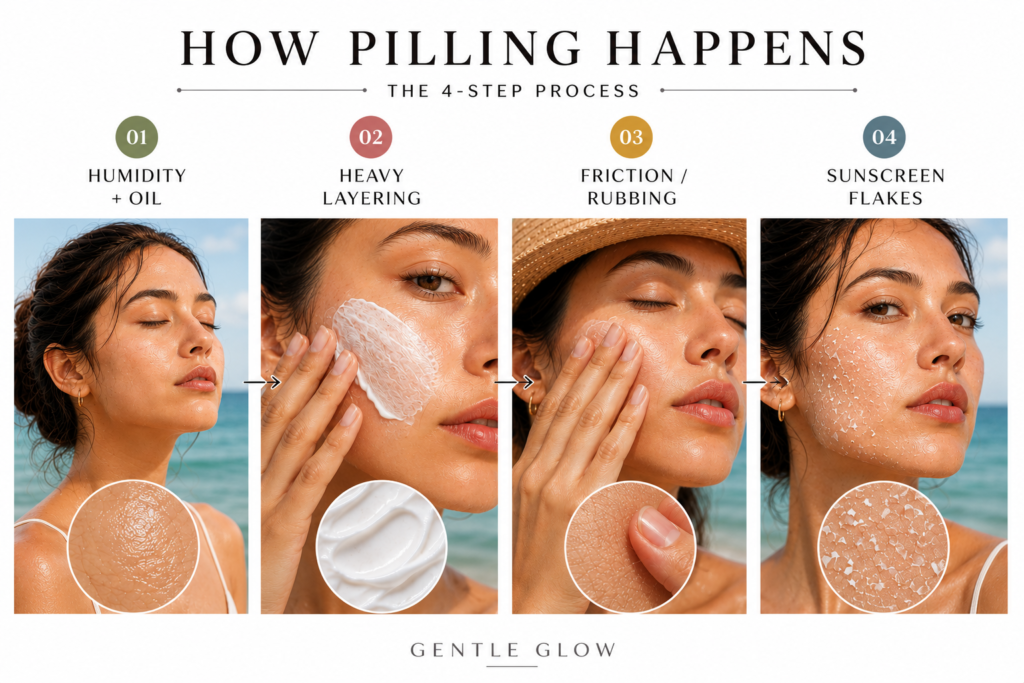
For oily skin, summer routines usually work better when they focus on lighter layering, balanced hydration, and reducing unnecessary friction rather than trying to completely strip away oil.
How to Stop Sunscreen From Rolling Off Your Face
For many people with البشرة الدهنية, preventing sunscreen pilling is less about finding a completely different sunscreen and more about reducing how much movement and friction happens underneath it.
Summer routines often become unintentionally overcrowded. A hydrating toner, multiple serums, moisturizer, sunscreen, primer, and makeup may each feel lightweight individually, but together they create several layers competing to settle on already humid skin.
In hot weather, simplifying the routine usually creates a more stable finish than adding stronger mattifying products.
The Morning Streamline
One of the most overlooked causes of sunscreen pilling after moisturizer is simply too much layering underneath the sunscreen itself.
Many modern واقيات شمس غير مسببة لانسداد المسام already contain humectants, emollients, and lightweight moisturizing ingredients. During peak humidity, some oily skin types may not need a separate rich moisturizer underneath them in the morning.
That does not mean oily skin should avoid hydration entirely. The goal is simply to reduce unnecessary texture overlap so the sunscreen can settle more evenly across the skin.
Lightweight hydration often performs better than heavy layering during summer — especially when the skin already feels humid or slick by midday.
The 90-Second Window
Another common reason sunscreen flaking happens is applying sunscreen before previous skincare layers have fully settled.
Water-based serums, سيرومات النياسيناميد, and gel moisturizers need time to dry down before sunscreen is applied on top. When skincare underneath remains damp or tacky, the sunscreen film becomes easier to disrupt during application.
Waiting even 60–90 seconds between layers can noticeably reduce pilling, especially in humid weather.
This is particularly important underneath makeup, where brushes, sponges, and powder create additional movement across the skin.
The Press-and-Glide Method
Most people naturally rub sunscreen into the skin the same way they apply moisturizer. But with تكتّل واقي الشمس على البشرة الدهنية, aggressive circular rubbing often creates more friction before the sunscreen has time to settle properly.
A gentler approach usually works better.
Instead of massaging the sunscreen repeatedly into the skin:
- Apply sunscreen in small sections
- Press it gently onto the skin first
- Glide outward softly without excessive rubbing
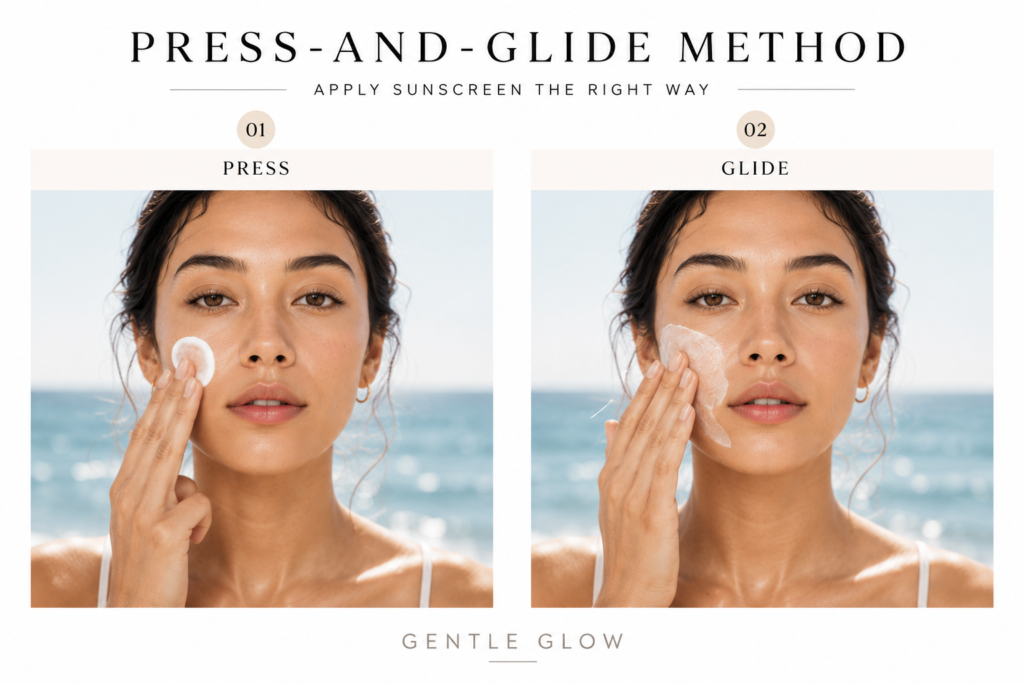
This “Press-and-Glide” approach helps reduce friction while allowing the sunscreen to spread more evenly across the skin surface.
For oily skin during summer, reducing movement often matters more than trying to force the product to absorb faster.
Simplify Texture Layering
Sometimes sunscreen pilling under makeup happens because too many layers are competing to settle on humid skin at the same time.
Lightweight fluid serums usually layer more comfortably underneath sunscreen than thick creams or tacky textures that remain damp for longer periods. This becomes more noticeable around areas with additional movement and friction, such as the nose, jawline, or underneath repeated powder application.
Many modern واقيات شمس غير مسببة لانسداد المسام use lightweight silicones to improve spreadability and reduce heaviness on oily skin. The issue is usually not the silicone itself, but how multiple layers interact before the sunscreen fully sets.
| Layer Combination | Summer Stability |
|---|---|
| Lightweight fluid serum + fluid sunscreen | Usually layers evenly |
| Gel moisturizer + silicone-rich sunscreen | May pill if layered too quickly |
| Rich cream + multiple makeup layers | More prone to rolling in humidity |
Why Over-Exfoliation Can Make Pilling Worse
When تكتّل واقي الشمس على البشرة الدهنية becomes frustrating, many people instinctively try to “smooth” the skin by exfoliating more aggressively. But during summer, excessive exfoliation often makes sunscreen sit less evenly across the skin instead of improving it. That is why adhering to a consistent weekly exfoliation routine often supports smoother sunscreen application more effectively than aggressive daily exfoliation.
Overuse of acids, harsh scrubs, or stripping cleansers can leave the skin surface more reactive to friction and repeated layering. Areas around the nose, chin, or active breakouts may become slightly rougher or more sensitive, making sunscreen and makeup more likely to separate throughout the day.
This is one reason sunscreen flaking often becomes worse after periods of aggressive oil-control routines.
تشير الأبحاث حول حاجز البشرة has also shown that excessive cleansing and barrier disruption can increase trans-epidermal water loss (TEWL), leaving the skin more vulnerable to irritation and environmental stress.
For oily skin, sunscreen usually performs better on skin that feels calm and balanced rather than overly stripped or overworked.
In many cases, simplifying the routine improves sunscreen wear more effectively than increasing exfoliation frequency.
A Lightweight Summer Routine for Oily Skin
During summer, oily skin routines often perform better when they become lighter and more streamlined rather than more aggressive. The goal is not to remove every trace of oil, but to reduce excess friction and allow sunscreen to settle more evenly throughout the day.
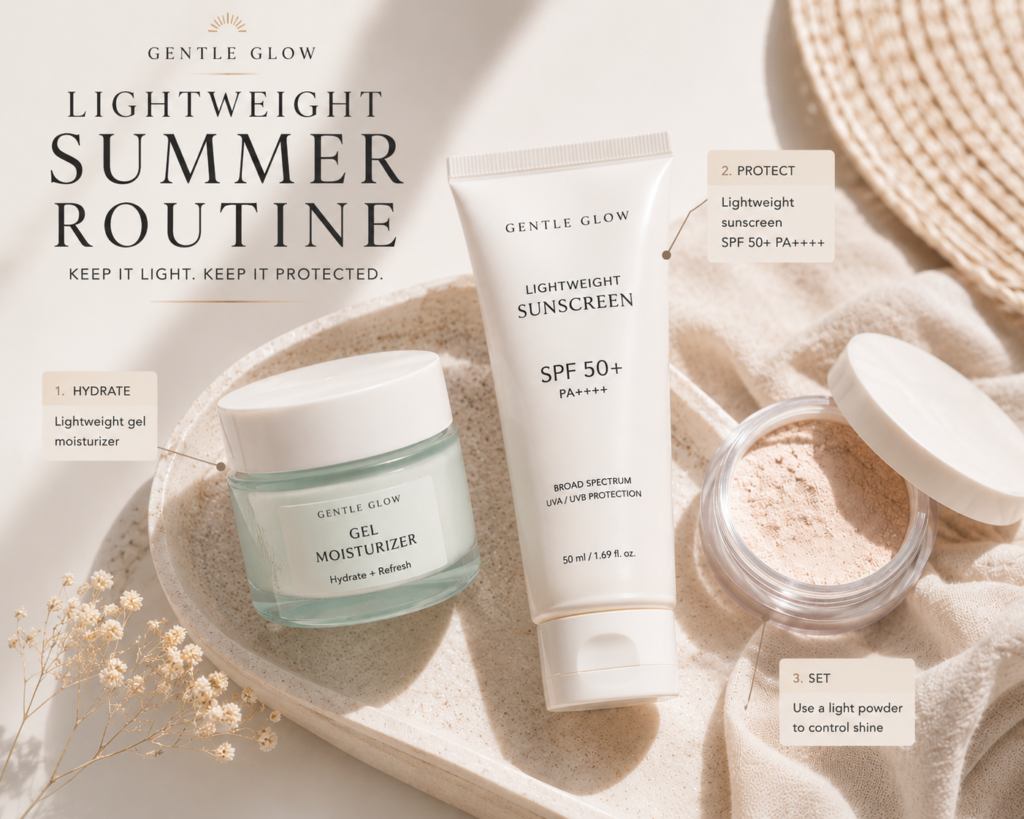
A simple routine is usually enough:
- استخدام غسول لطيف that removes overnight oil without leaving the skin tight.
- Apply lightweight hydration only if the skin feels dehydrated or uncomfortable.
- Allow serums or gel textures time to dry down fully before sunscreen.
- Apply sunscreen using the Press-and-Glide Method instead of aggressive rubbing.
- Let sunscreen settle briefly before applying makeup or powder products.
Lightweight gel-cream or fluid moisturizers often layer more comfortably underneath sunscreen during humid weather than richer cream textures.
For makeup wear, thinner layers usually remain more stable throughout the day than heavily powdered or overly matte finishes. Excess powder combined with sweat, oil, and repeated touch-ups can increase friction across the skin and make sunscreen flaking more noticeable by midday.
For many people with oily skin, summer routines become more comfortable once unnecessary layers are removed and the focus shifts toward breathable textures, balanced hydration, and consistent sunscreen wear rather than trying to completely suppress oil production. This is particularly important for people using retinoids, where sunscreen remains non-negotiable during periods of increased sun exposure. Instead of abandoning beneficial ingredients because of seasonal changes, it is often more effective to choose lightweight textures and make a few strategic summer adjustments to your routine.
الخلاصة
During summer, تكتّل واقي الشمس على البشرة الدهنية is often less about the sunscreen itself and more about how heat, humidity, oil, and layering affect the skin throughout the day.
In many cases, lighter routines, less friction, and allowing skincare time to settle improve sunscreen wear more effectively than aggressive oil-control routines.
The goal is not perfectly matte skin — it is comfortable, balanced skin that allows sunscreen to stay more stable in humid weather.
الأسئلة الشائعة
Why does sunscreen pill more in the summer?
Sunscreen pills more frequently during summer because elevated temperatures drop the viscosity of your الزهم (Sebum)،, making it highly fluid. This liquid oil creates a slick layer that lifts the sunscreen’s film-forming polymers off the skin before they can dry. High environmental humidity also slows down the evaporation of the sunscreen’s liquid base, keeping it wet longer and leaving it highly vulnerable to clumping when touched.
Does pilling sunscreen still work?
لا. When a sunscreen pills, the uniform polymer lattice holding the UV filters together is broken. This leaves microscopic gaps across your face where ultraviolet radiation can penetrate directly. If your sunscreen pills extensively during application, it is best to gently rinse it off and reapply using a streamlined routine to ensure you are getting full sun protection.
Should oily skin skip moisturizer before sunscreen?
Not always. Some oily skin types still need hydration during summer, especially if the skin feels tight or dehydrated. However, in humid weather, certain واقيات شمس غير مسببة لانسداد المسام may already provide enough lightweight hydration on their own, making heavy morning layering unnecessary for some people.
How long should I wait between skincare and sunscreen?
You should wait approximately 60 to 90 seconds, or until your underlying serums feel completely tack-free to the touch. This allows the volatile water and alcohol carriers in your morning treatments to evaporate fully, preventing them from destabilizing the sunscreen emulsion as you apply it.
Why does sunscreen pill under makeup?
This typically occurs due to mechanical friction أو product incompatibility. If you apply foundation or powder before the sunscreen’s film-formers have completely cured (which takes about 3 to 5 minutes), the shifting motion of brushes or sponges will roll the formula into flakes. Additionally, stacking heavy oil-based cosmetics over a water-gel sunscreen can instantly break down the underlying protective film.
المصادر والمراجع
- Seasonal Variations in the Skin Parameters of Caucasian Women from Central Europe
https://pubmed.ncbi.nlm.nih.gov/33084174/ - The Clinical Relevance of Maintaining the Functional Integrity of the Stratum Corneum in Both Healthy and Disease-Affected Skin
https://pubmed.ncbi.nlm.nih.gov/21938268/
يعتمد هذا المقال على أبحاث علمية في طب الجلدية ودراسات مُحكّمة حول تطوّر حب الشباب، والإشارات الهرمونية، ووظيفة حاجز البشرة.
تنويه طبي
يتم إعداد أدلة Gentle Glow استنادًا إلى أبحاث علمية محكّمة في مجال طب الجلدية وإرشادات سريرية معتمدة. المعلومات المقدَّمة هنا لأغراض تعليمية فقط، ولا تُعد بديلاً عن الاستشارة الطبية المهنية أو التشخيص أو العلاج. يُنصح دائمًا باستشارة طبيب جلدية معتمد أو مقدم رعاية صحية مؤهل قبل البدء باستخدام أي مكوّنات علاجية نشطة جديدة في روتين العناية بالبشرة.