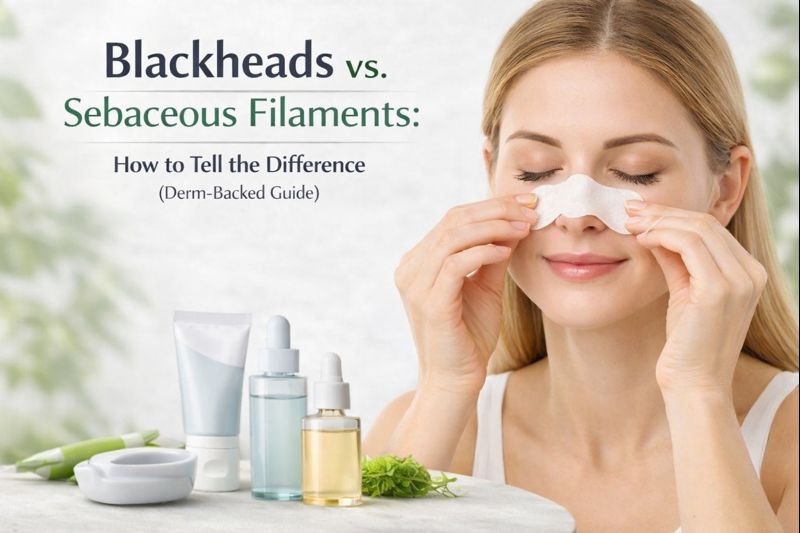

Blackheads are oxidized plugs of sebum and dead skin that clog pores and require treatment, while sebaceous filaments are natural, flat, greyish structures that channel oil to the skin’s surface. Unlike blackheads, sebaceous filaments are a healthy part of your skin’s anatomy and should not be squeezed, as they will naturally refill.
This guide breaks down blackheads vs sebaceous filaments using derm-backed science and acne-safe routines.
Table of Contents
If you have oily or acne-prone skin, you’ve probably leaned in close to the mirror and wondered:
Are these blackheads… or are they sebaceous filaments?
They look similar. They show up in the same places (especially the nose, chin, and inner cheeks). And no matter how often you cleanse, exfoliate, or extract, they seem to come back.
Here’s the problem: treating blackheads and sebaceous filaments the same way is one of the biggest reasons pores look worse over time. These two conditions may live in the pore, but biologically, they are very different—and they need very different strategies.
This derm-backed guide explains what’s really happening inside your pores, why oily and acne-prone skin is more affected, and how to manage pore texture without clogging pores, triggering breakouts, or damaging your skin barrier.
Blackheads can often be reduced long-term with salicylic acid, retinoids, and non-comedogenic routines.
Sebaceous filaments cannot be permanently removed—but they can be made less visible with oil-balancing care.
Understanding the difference is the foundation of clear, calm, and healthy-looking pores.
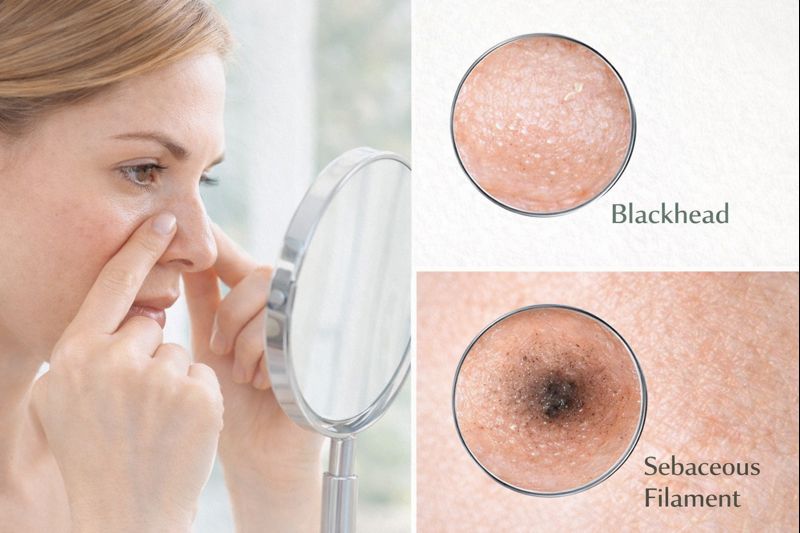
Blackheads vs Sebaceous Filaments: Side-by-Side Comparison
Understanding blackheads vs sebaceous filaments helps you choose the correct treatment and avoid pore damage.
| Feature | Blackheads | Sebaceous Filaments |
| Color | Dark brown or black | Light gray, yellow, flesh-colored |
| Texture | Firm, raised plug | Flat or slightly raised |
| Cause | Pore-clogging + oxidation | Normal sebum flow |
| Acne type | Yes (comedonal acne) | No |
| Permanence | Can improve long-term | Always refill |
| Best treatment | Salicylic acid, retinoids | Oil regulation, gentle care |
The Biological Blueprint: How Pores Actually Work
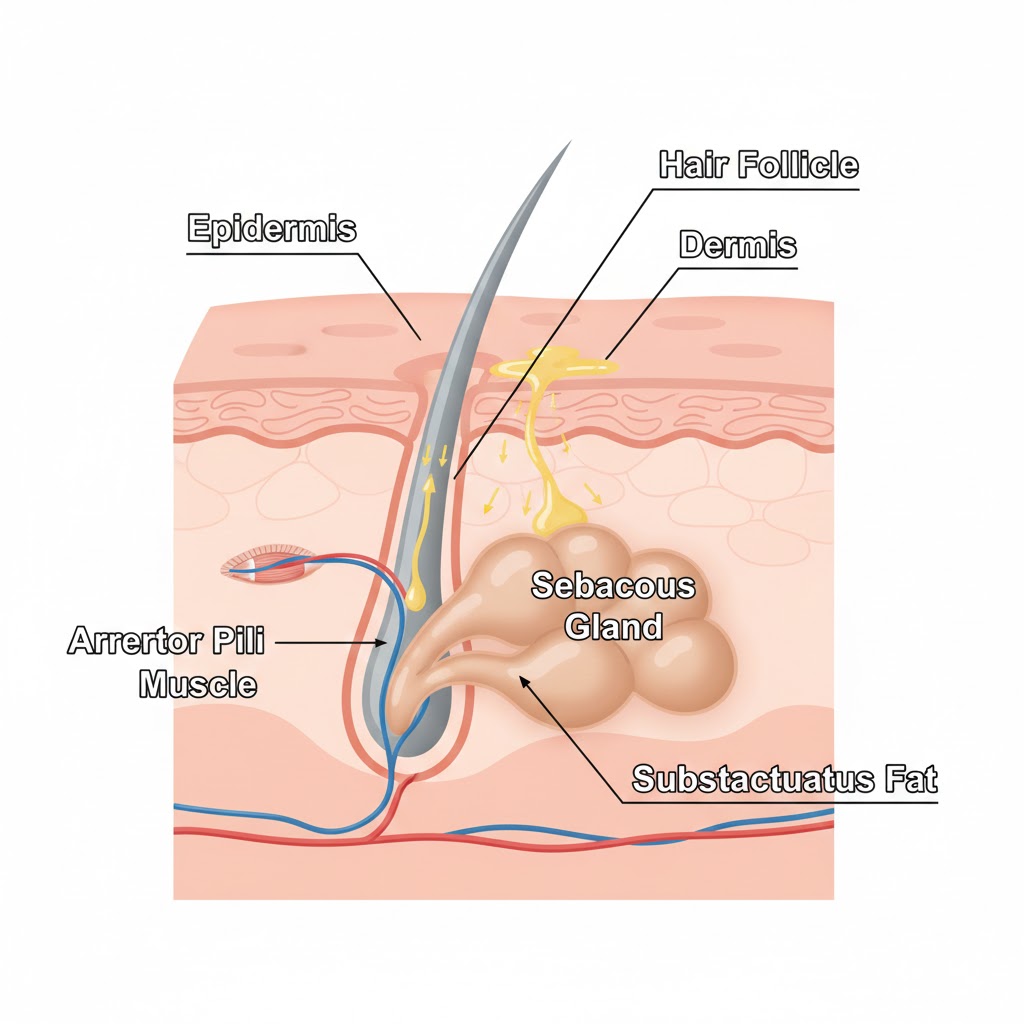
To understand why your skin behaves the way it does, we first have to debunk a major 2026 skincare myth: Pores are not doors. They do not have muscles; they cannot “open” with steam or “close” with cold water.
The Pilosebaceous Unit
Every pore on your face is actually the opening of a pilosebaceous unit. This unit consists of a hair follicle and a sebaceous gland. The gland produces sebum (your skin’s natural oil), which travels up the follicle to the surface to lubricate your skin and maintain the moisture barrier.
Sebaceous glands produce sebum to:
- Protect the skin barrier
- Prevent water loss
- Defend against bacteria
In oily and acne-prone skin, these glands are larger and more active, especially in the T-zone. Add modern stressors—pollution, blue light exposure, heat, and humidity—and oil becomes thicker and more prone to stagnation.
Why “Shrinking Pores” Is a Myth
Pores don’t open and close. What changes is:
- Oil thickness
- Dead skin buildup
- Collagen support around the pore
When oil flows smoothly, pores look refined. When oil thickens and stalls, pores look larger.
Blackheads: The Science of Oxidation
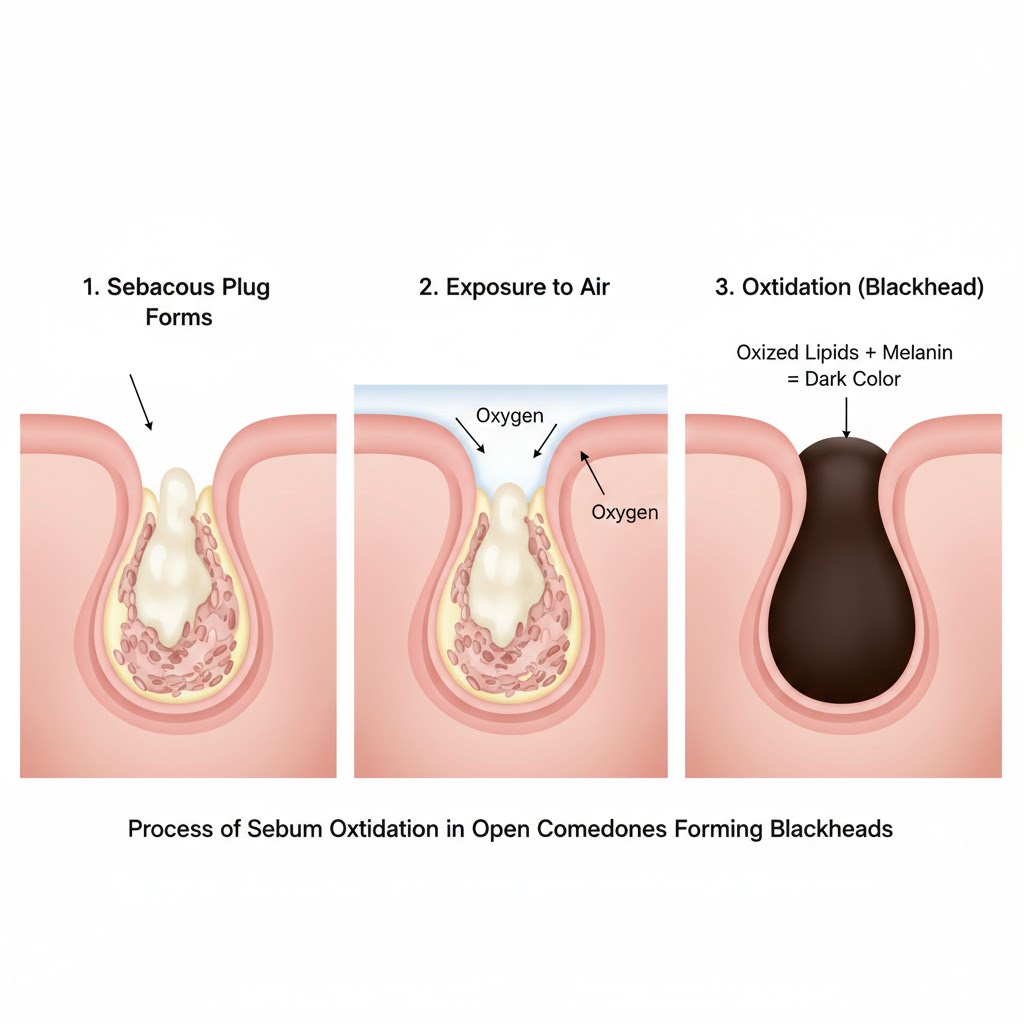
Blackheads form when sebum and dead skin cells become trapped inside an open pore.
Once exposed to air, this trapped oil undergoes a chemical reaction known as sebum oxidation, which causes the plug to darken.
When that trapped material meets oxygen, a chemical reaction called oxidation occurs—turning the plug dark. This is why blackheads appear black or deep brown.
Surface vs. Deep Blackheads
- Surface blackheads respond well to salicylic acid
- Deep-rooted blackheads require long-term cell-turnover regulation (retinoids)
The Lifecycle of a Blackhead
- Hyperkeratinization: Your skin sheds dead cells. In acne-prone skin, these cells stick together instead of falling off.
- Sebum Trap: The sticky dead cells mix with excess oil, creating a soft “plug” deep in the pore.
- The Opening: Because the pore remains open at the top, this plug is exposed to the air.
- Oxidation: This is the key chemical reaction. Just like an apple turns brown when exposed to air, the melanin and lipids in your sebum turn black when they hit oxygen.
Left untreated, blackheads can evolve into inflamed acne.
Gentle Glow Verdict: A blackhead is a sign of an “interrupted” skin cycle. It requires chemical intervention to dissolve the bond between the oil and the dead skin.
Sebaceous Filaments: Your Skin’s Protective “Wicks”
If blackheads are the “traffic jam,” sebaceous filaments are the “highway.” Sebaceous filaments are not blockages. These tiny, hair-like structures are made of triglycerides, wax esters, and squalene. They are functional oil channels that line the pore and help sebum reach the surface evenly to keep your barrier healthy.
Why They’re Most Visible on the Nose
- Higher sebaceous gland density
- Constant oil flow
- Thinner surrounding skin
The Refill Cycle
One of the most frustrating things for my Gentle Glow readers is the “7-day refill.” If you use a pore strip or squeeze a sebaceous filament, you are essentially emptying the “oil pipe.” Because your skin is a biological machine, it will immediately start pumping more oil into that pipe.
- The Reality: Research shows that a squeezed sebaceous filament will typically refill within 96 hours to 7 days.
- Appearance: They are usually found in the “high-oil” zones (nose and chin) and appear as uniform, flat, sandy-colored dots.
Aging and Pore Visibility
As collagen decreases with age, pore walls lose support, making filaments appear larger even if oil production stays the same.
The Ingredient Bible for Pore Management
To manage these issues without causing irritation, we look at the specific molecules that target the pilosebaceous unit.
Salicylic Acid (BHA): The Lipophilic Hero
Salicylic Acid is the only acid that is lipophilic (oil-loving). While AHAs (like Glycolic Acid) stay on the surface, BHA dives into the pore.
- For Blackheads: It breaks the “glue” holding the plug together.
- For Filaments: It keeps the oil moving so it doesn’t sit at the surface and oxidize.
Retinoids: Preventing the Plug
Retinoids increase cell turnover, preventing dead skin from accumulating in the pore.
Long-term benefits:
- Fewer blackheads
- Smoother texture
- Refined pores
Niacinamide (Vitamin B3): The Oil Governor
Niacinamide communicates with your sebaceous glands to tell them to slow down production. Clinical studies have shown that a 5% Niacinamide concentration can significantly reduce the “diameter” look of pores by keeping them from being over-stretched by excess oil.
Zinc: Calming Inflammation
Zinc helps control oil and calm acne-prone skin, making it ideal for reactive complexions.
Clay (Kaolin & Bentonite): The Temporary Vacuum
Clay absorbs surface oil but should be used sparingly to avoid rebound oil production.
The Danger Zone: Why We Squeeze (and Why We Shouldn’t)
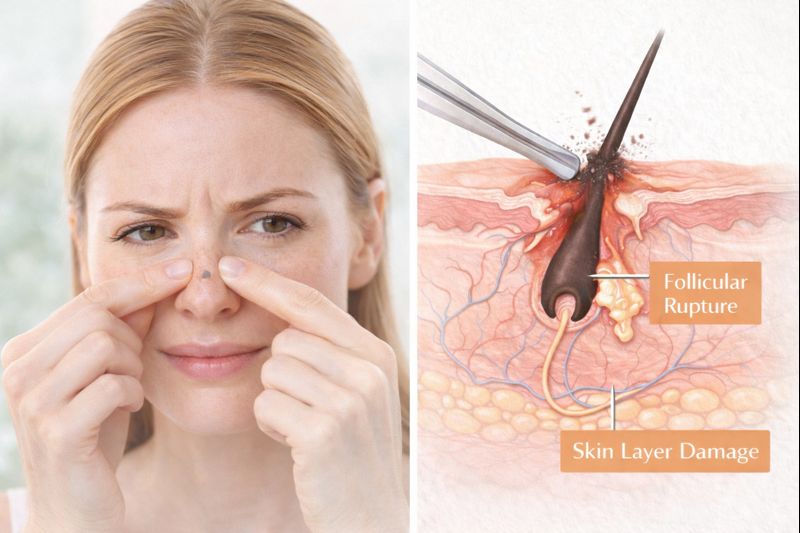
In the age of viral “pimple popping” videos, the urge to manually clear your pores can feel irresistible. However, in 2026, the dermatological consensus is clearer than ever: At-home extraction is the leading cause of permanent pore distortion.
The Physics of the Squeeze
When you apply pressure to a blackhead, the force does not just move upward. It radiates downward and outward into the delicate walls of the pilosebaceous unit.
- Follicular Rupture: If the blockage is deep, the pressure can cause the pore wall to burst internally. This spills bacteria and oxidized sebum into the dermis, turning a simple blackhead into a painful, deep-seated cystic breakout.
- Capillary Damage: The skin on the nose is exceptionally thin. Squeezing often leads to telangiectasia (permanently broken blood vessels) which appear as thin red lines that only expensive laser treatments can remove.
- Tethered Scarring: Repeated trauma destroys the collagen “scaffolding” that holds the pore tight. This results in “ice-pick” scars or “orange peel” texture—pores that stay permanently wide because they have lost their structural integrity.
Gentle Glow Tip: If you feel the urge to squeeze, your routine needs oil regulation—not force.
Professional 2026 Treatments — Beyond the Sink
If your blackheads are “impacted” (hardened and resistant to BHA), 2026 technology offers safer, non-traumatic alternatives to the bathroom mirror.
- Laser Coring & Resurfacing: Emerging platforms like UltraClear are now used to remodel collagen around large pores. This doesn’t just “clean” the pore; it actually firms the surrounding skin to make the pore opening look physically smaller.
- AI-Assisted HydraFacials: Modern hydradermabrasion uses AI to sense skin resistance and adjust suction levels in real-time. This ensures the “vortex-extraction” of blackheads occurs without the risk of bruising or capillary rupture.
- Medical-Grade Chemical Peels: High-concentration Salicylic Acid (BHA) peels (20-30%) performed in-clinic can dissolve months of sebum buildup in a single 15-minute session. These are far more effective than at-home “peeling solutions” which often lack the pH-depth to reach the bottom of a follicle.
These are best for stubborn blackheads, not sebaceous filaments.
At-Home Care Wins for Maintenance
Consistent, non-comedogenic routines outperform aggressive treatments long-term.
The Gentle Glow Pore-Refinement Routine
To manage sebaceous filaments and prevent blackheads, consistency is more important than intensity. Here is your 2026 blueprint for daily pore maintenance.
The AM Routine: Oil Control and Protection
- Step 1: Gentle pH-Balanced Cleansing. Use a syndet (synthetic detergent) cleanser. Avoid high-pH bar soaps which strip the acid mantle and trigger “rebound oiliness.”
- Step 2: 5-10% Niacinamide Serum. Niacinamide is your “sebum governor.” It regulates the rate at which your glands excrete oil, preventing the “backlog” that leads to blackheads.
- Step 3: Non-Comedogenic SPF 30+. UV rays degrade the elastin that keeps your pores tight. Protecting your skin from the sun is, ironically, one of the best ways to keep your pores looking small.
To protect your pores without triggering breakouts, choosing the right sunscreen is essential—see our complete guide to the best non-comedogenic sunscreens for oily and acne-prone skin.
The PM Routine: The Deep Dissolve (Double Cleansing)
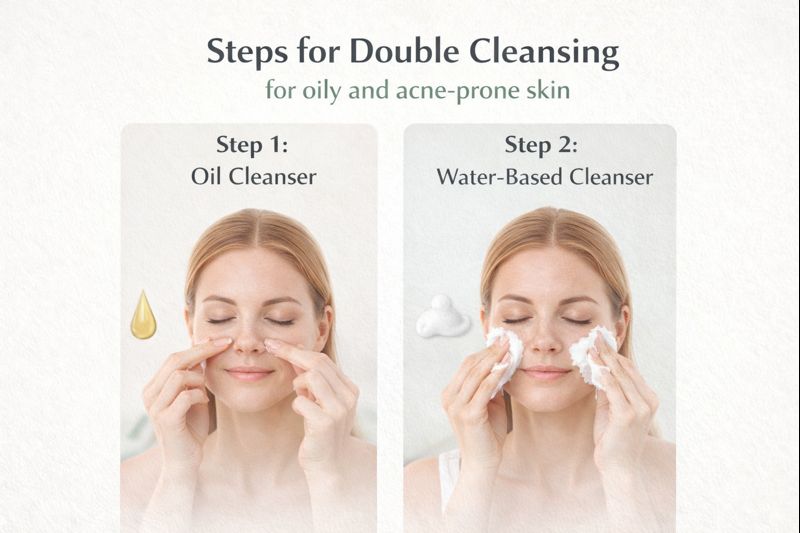
This is the most critical step for anyone with oily skin.
- Step 1: The Oil Cleanse (60-Second Rule). Massage a non-comedogenic oil or balm into dry skin for a full minute. Focus on the T-zone. The oil dissolves the surface oxidation of your sebaceous filaments, making them instantly look lighter.
- Step 2: The Water-Based Reset. Follow with a gel or foam cleanser to rinse away the dissolved impurities.
- Step 3: The Active Treatment. Apply your BHA (Salicylic Acid) or Retinoid. Pro Tip: Use BHA in the “blackhead season” (summer/humidity) and Retinoids in the winter to boost cell turnover.
For a deeper understanding of how to manage excess oil, explore our complete guide to oily and acne-prone skin.
Holistic Glow: Diet, Stress & Sebum Thickness
High-Glycemic Diets
We cannot talk about pores without talking about what fuels them. In 2026, we know that Sebum Viscosity (how thick your oil is) is heavily influenced by your internal health.
- The Insulin Spike: High-glycemic foods (sugar, white bread, processed snacks) trigger a spike in IGF-1 hormones. This hormone tells your pores to produce thicker, stickier oil that is much more likely to turn into a blackhead.
- Omega-3 vs. Omega-6: A diet high in Omega-3s (fatty fish, walnuts) helps produce “thinner” sebum that flows easily through the sebaceous filaments without getting stuck.
Stress and Cortisol
Chronic stress raises cortisol, triggering oil overproduction and inflammation.
Sleep and Hydration
Poor sleep weakens barrier repair, worsening pore appearance.
The Pore-Care Checklist (Dos and Don’ts)
To summarize the Gentle Glow philosophy on pore management, keep these rules in your daily rotation to ensure your skin remains balanced, not stripped.
- DO use an oil cleanser every single night. Even if you haven’t worn makeup, an oil-based cleanser is the only way to dissolve the oxidized “plugs” of sebaceous filaments gently.
- DO be patient with actives. Blackheads are stubborn. It typically takes 4–6 weeks of consistent BHA (Salicylic Acid) use to see a visible reduction in existing clogs.
- DO look for “Non-Comedogenic” and “Oil-Free” labels. This is especially critical for your “leave-on” products like moisturizers and sunscreens.
- DON’T use physical walnut or apricot scrubs. These create micro-tears in the skin barrier, leading to inflammation that actually makes pores look more dilated.
- DON’T use magnifying mirrors. No one sees your skin from two inches away. These mirrors only fuel the “urge to squeeze,” which leads to the scarring we discussed.
- DON’T skip your moisturizer. Dehydrated skin loses elasticity. When skin is “floppy” due to lack of moisture, pore openings appear much wider and more noticeable.
Conclusion: Embracing Your Natural Glow

Understanding the difference between blackheads vs. sebaceous filaments is the first step toward true skin confidence. In a world of filtered social media, it’s easy to believe that “poreless” skin is the goal. But in reality, visible pores are a sign of a living, breathing, and protected skin barrier.
Knowing the difference between blackheads vs sebaceous filaments allows you to treat pores without irritation or long-term damage. By switching from a “search and destroy” mindset to a “gentle management” routine, you aren’t just clearing clogs—you are respecting your skin’s natural biology. Stop the squeeze, embrace the double cleanse, and let your gentle, lasting glow do the talking.
What Dermatologists Say About Blackheads and Sebaceous Filaments
To manage persistent congestion, a science-backed routine must address both the existing clog and the future oil production.
- Treating the Clog: According to the [American Academy of Dermatology (AAD) guidelines], blackheads form when a pore becomes clogged with excess oil and dead skin. Because the pore remains open, this mixture oxidizes and turns dark, requiring specific ingredients like BHA to clear the blockage.
- Regulating the Oil: While BHA cleans the pore, [clinical studies in the Journal of Clinical and Aesthetic Dermatology] demonstrate that topical Niacinamide (Vitamin B3) significantly reduces facial sebum production. By regulating oil flow, Niacinamide helps prevent the clogs that make sebaceous filaments appear larger and more prominent.
Frequently Asked Questions
Why do my sebaceous filaments come back so fast?
Because they are a functional part of your skin. Your sebaceous glands are biologically programmed to coat your pore walls with protective oil. When you remove a filament (via squeezing or strips), your skin recognizes the “void” and refills it within 3 to 7 days. The goal is not removal, but management.
Can I use a pore strip just once a week for my nose?
We strongly advise against it. Pore strips are essentially high-strength adhesives. While they pull out the filament, they also rip off the top layer of your skin barrier and pull on the delicate pore lining. Over time, this repetitive “ripping” action can permanently stretch the pore, making it look larger than it was originally.
Does “Cold Water” actually close my pores?
This is a scientific myth. Pores do not have muscles; therefore, they cannot “snap” shut. Cold water can temporarily constrict blood vessels, reducing redness and puffiness, which gives the illusion of tighter skin. However, the effect is purely temporary and does not change the physical diameter of the pore.
Is it safe to use Salicylic Acid and Retinol together?
For most acne-prone skin, using both in the same application is too aggressive and can lead to a “damaged barrier” breakout. Instead, use Skin Cycling: Apply your BHA liquid on Monday/Wednesday and your Retinoid on Tuesday/Thursday. This gives your skin the benefits of both without the irritation.
Can sunscreen worsen pores?
Only if it’s comedogenic. Acne-safe SPF actually improves pore health.
Medical Disclaimer
Gentle Glow guides are developed using peer-reviewed dermatology research and established clinical guidelines. The information provided is for educational purposes only and does not replace professional medical advice, diagnosis, or treatment. Always consult a board-certified dermatologist or qualified healthcare provider before starting new active skincare treatments.

About the Author
Founder, Gentle Glow | Evidence-Based Skincare & Skin Biology
Hi, I’m the Founder of Gentle Glow. After years of struggling with oily and acne-prone skin—and cycling through harsh products that disrupted my barrier rather than improving it—I began researching the science behind sebum regulation, skin biology, and non-comedogenic formulation.
Gentle Glow was created to simplify evidence-based skincare. Every routine shared here focuses on root causes: barrier function, oil balance, and ingredient compatibility. My goal is to translate dermatology-backed principles into realistic, sustainable routines that work with your skin—not against it.
Beyond topical care, I believe healthy skin reflects overall balance, including nutrition, climate awareness, and lifestyle habits. Gentle Glow is built to help you make informed decisions with clarity, consistency, and confidence.