Everything You Need to Know About Oily Skin

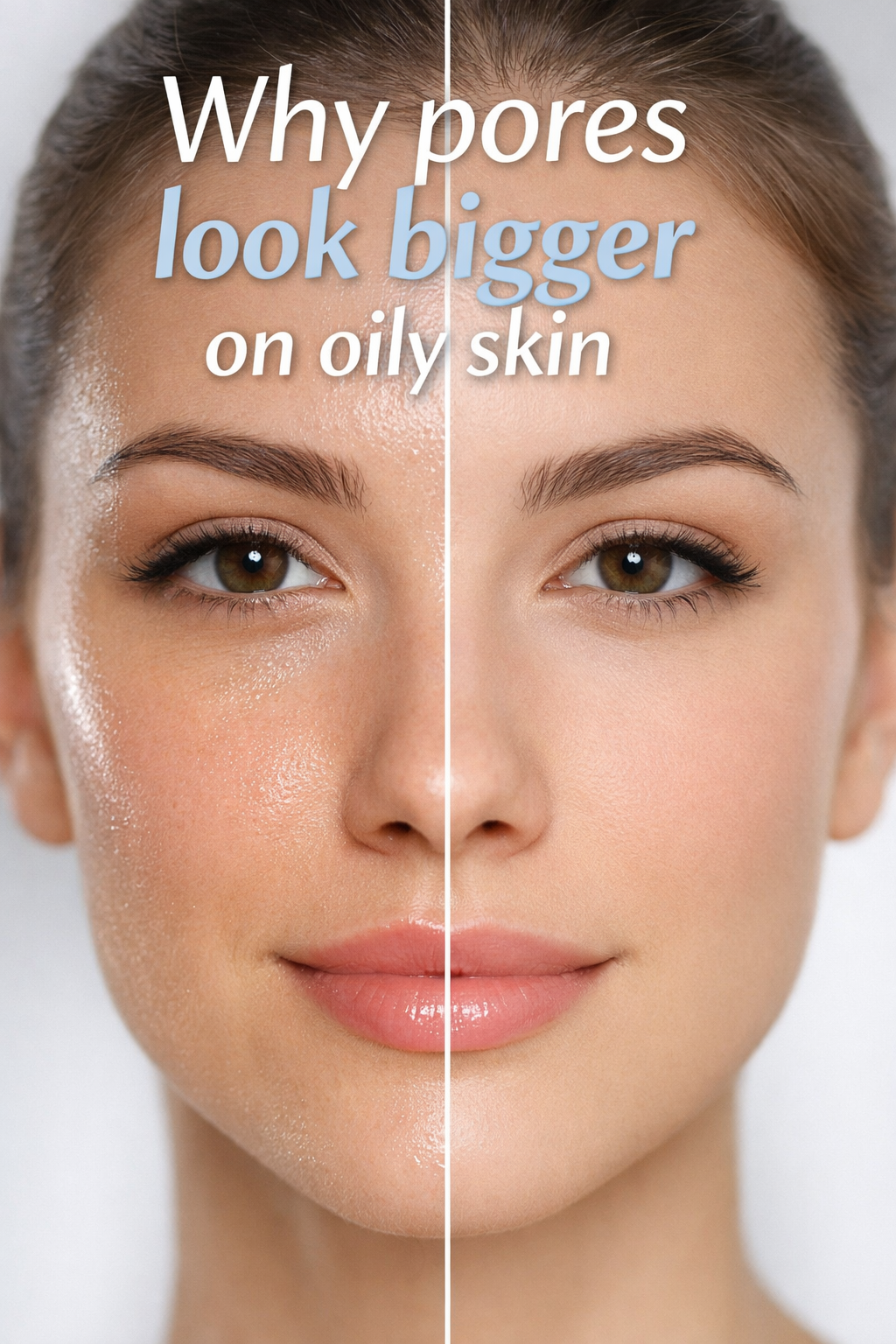
How Pores Actually Work (And Why They Look Bigger on Oily Skin)

Medically reviewed • Updated March 2026 • Evidence-based skincare
Pores are fixed structural tunnels connected to hair follicles and oil glands, meaning they don’t open or close. Their role is to move sebum (your skin’s natural oil) to the surface. On oily skin, excess sebum can build up inside the pore, making it appear larger, while surface shine creates an optical illusion that makes pores look deeper than they actually are.
- Structure: Pores are part of the skin’s architecture and remain stable over time
- Oil flow: Sebum travels through the pore to protect and balance the skin
- Appearance changes: Oil buildup and light reflection make pores look larger
Table of Contents
How pores actually work
Pores are part of your skin’s natural structure. To understand how pores actually work, it helps to look at their structure. Each one connects to a hair follicle and a sebaceous gland, which produces sebum—your skin’s natural oil.
This oil moves through the pore to the surface, where it helps protect the skin and maintain balance.
Because pores do not contain muscles, they cannot open or close. Their size is largely influenced by genetics and skin type.
On oily skin, this process is more active. If you want a full understanding of how oily skin behaves overall, you can view our main guide to oily skin.
To understand this more clearly, we need to look at how pores function as part of the skin—and what happens inside them when oil flow changes.
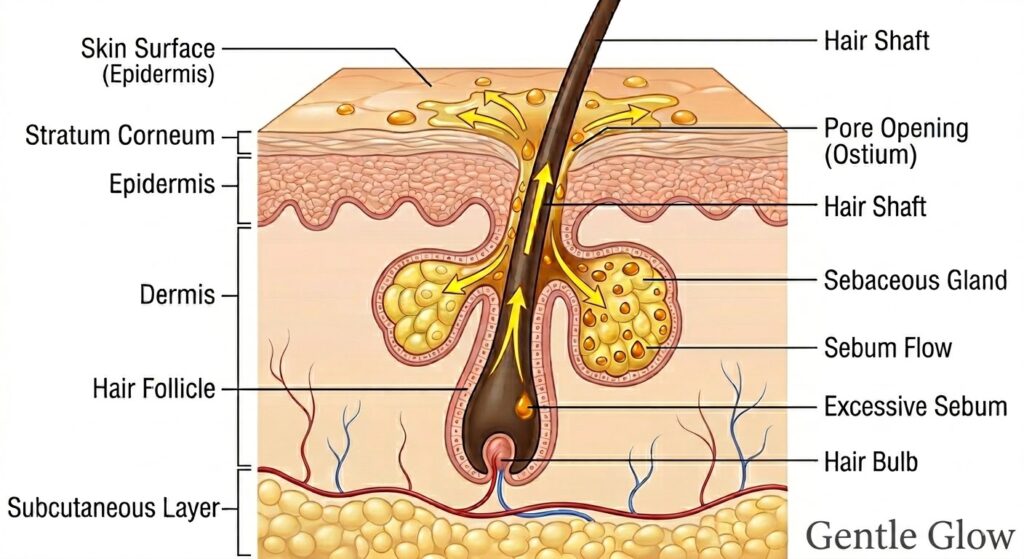
Each pore is the opening of a hair follicle that sits beneath the surface of the skin.
Attached to this follicle is a sebaceous gland, a small oil-producing structure responsible for creating sebum.
Sebum plays an important role in keeping the skin balanced as shown in dermatological research on sebaceous gland function. It helps maintain hydration, supports the skin barrier, and protects against external irritation.
Once produced, sebum travels from the sebaceous gland through the follicle and up to the pore opening. From there, it spreads across the surface of the skin.
This process happens continuously and is part of how your skin regulates itself.
Because this system is structural, pores do not expand or contract on demand.
They don’t contain muscles, and they cannot “open” or “close” in response to temperature, steam, or products.
Their role is simply to act as a pathway—moving oil from within the skin to the surface.
When this flow is balanced, sebum moves smoothly through the pore and spreads evenly across the skin.
But when oil production increases or movement becomes uneven, the way sebum behaves inside the pore begins to change.
This is where the shift happens—from normal function to buildup.
And it’s this change inside the pore that leads to clogging and breakouts, which we explain in more detail in our guide on how acne forms in oily skin throughout the day.
What happens inside the pore when it becomes clogged?
Once sebum flow is no longer balanced, the environment inside the pore begins to change.
Instead of moving smoothly to the surface, excess sebum starts to mix with dead skin cells. This combination creates a thicker, stickier substance that doesn’t exit the pore easily.
Over time, this material begins to accumulate inside the pore rather than clearing out.
This is the earliest stage of clogging, often referred to as a micro-blockage. At this point, nothing is visible on the surface yet—but the internal environment of the pore has already changed.
This is also where vitamin A–based treatments like retinoids can help, by improving how skin cells shed inside the pore and preventing buildup from developing further.
At this stage, targeted treatments can make a significant difference—especially when using salicylic acid products that help clear buildup inside the pore before it becomes visible.
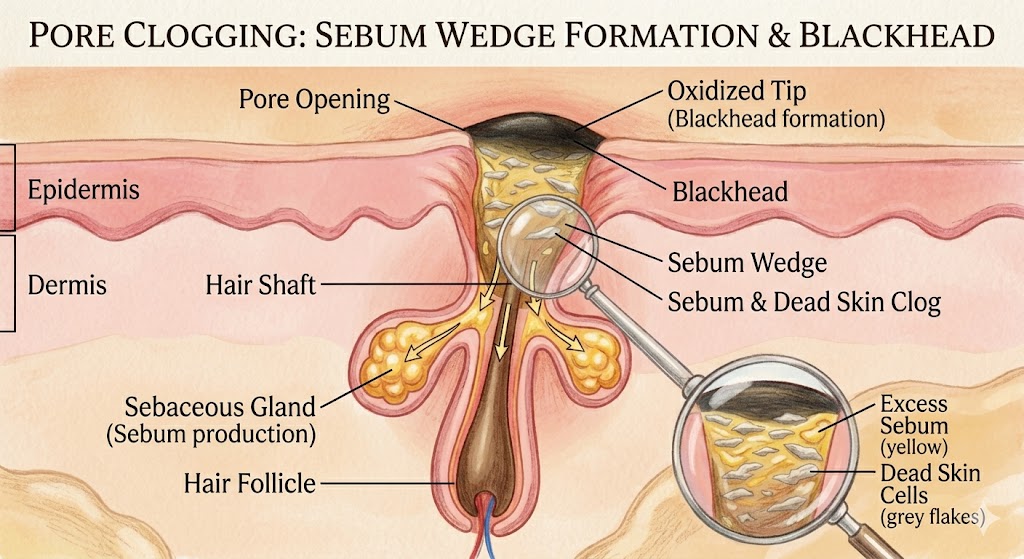
As more oil and dead skin collect, the pore becomes increasingly filled.
This is where the sebum wedge effect becomes more noticeable. The buildup sits inside the pore and presses outward against its walls, making the opening appear wider.
If the top of this buildup is exposed to air, the sebum begins to oxidize.
This is what turns a clogged pore into a blackhead—not dirt, but oil reacting with oxygen at the surface. If you’re looking for solutions, see how to remove blackheads from the nose permanently without damaging your pores.
If you want to understand this process in more detail, you can read our guide on why skin oil turns black and how oxidation happens.
At the same time, the presence of trapped oil and dead skin creates an environment where bacteria can thrive which is a key factor in acne development, which can lead to inflammation and breakouts.
It’s important to understand that the pore itself hasn’t changed structure. What’s changed is what’s happening inside it.
The more buildup that remains inside the pore, the more it influences how the pore looks on the surface.
How pore buildup develops over time
| Stage | What Happens Inside the Pore | What You See |
|---|---|---|
| Early | Sebum mixes with dead skin | Nothing visible |
| Buildup | Material accumulates | Pore looks fuller |
| Oxidation | Sebum reacts with air | Blackhead forms |
| Inflammation | Bacteria grow | Breakouts appear |
Why pores can look stretched over time
When a pore is repeatedly filled with buildup, it begins to affect how it appears over time.
Constant pressure from trapped sebum can make the pore opening look wider, especially when the pore remains filled for long periods.
Over time, pores can adapt to this repeated pressure—a concept often referred to as pore memory. Even after clearing, the pore may still appear more visible if this cycle has been ongoing.
Pores don’t permanently open, but their appearance can change over time when they are consistently filled and under pressure.
What makes pores look more stretched over time
Frequent buildup inside the pore
When excess oil and dead skin repeatedly accumulate, they create ongoing internal pressure. Over time, this reinforces the stretched appearance of the pore.
Squeezing and physical manipulation
Squeezing or picking at pores places sudden pressure on the pore walls and can damage the surrounding tissue.
Science Insight: Why popping causes “pore fatigue”
Squeezing a pore doesn’t just remove oil—it creates sideways pressure that can micro-tear the follicle wall. Once this structure is weakened, the pore loses its ability to return to its original shape, making it appear permanently more open.
Loss of collagen support (UV exposure and aging)
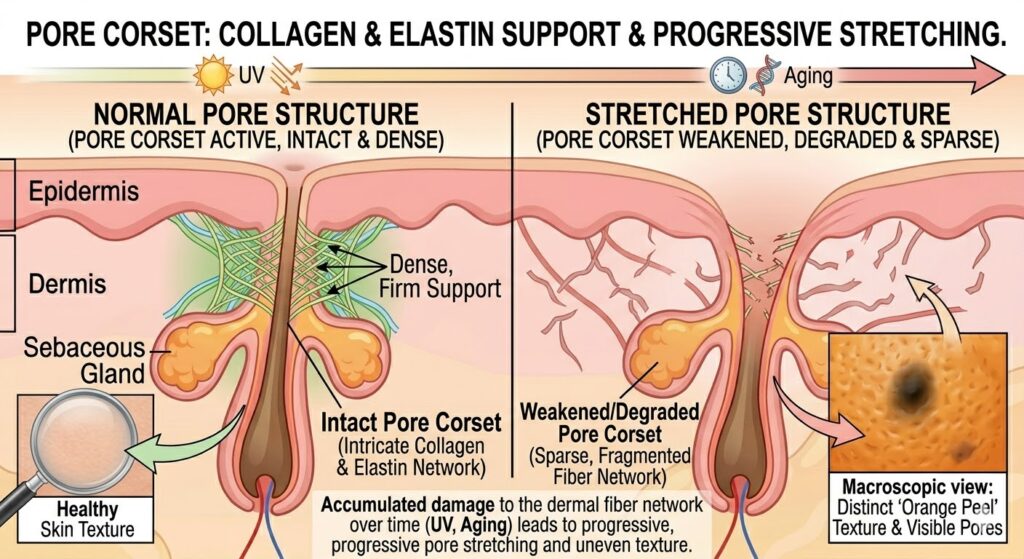
Pores are supported by collagen and elastin, which act like internal support fibers holding the pore structure in place. You can think of this as a “pore corset” that keeps the opening tight.
Over time, UV exposure and aging weaken this support. UV rays act like a slow “solvent,” breaking down the collagen that holds the pore firm, which is why daily sunscreen plays a key role in maintaining skin structure, a process well-documented in studies on photoaging.
As these internal “screws” loosen, the pore can begin to sag slightly, creating a more visible and uneven appearance—often described as an “orange peel” texture.
Oily skin types and natural variation
Pore size and visibility vary naturally between individuals and skin types as observed in dermatological studies on skin structure and sebaceous activity. On oily skin, sebaceous glands are more active, meaning pores are more frequently filled with sebum.
This repeated filling increases how noticeable pores appear over time, especially when combined with buildup and surface shine.
Why pores sometimes look worse (the optical shadow effect)
One of the most overlooked reasons pores look larger has nothing to do with structure—it’s visual.
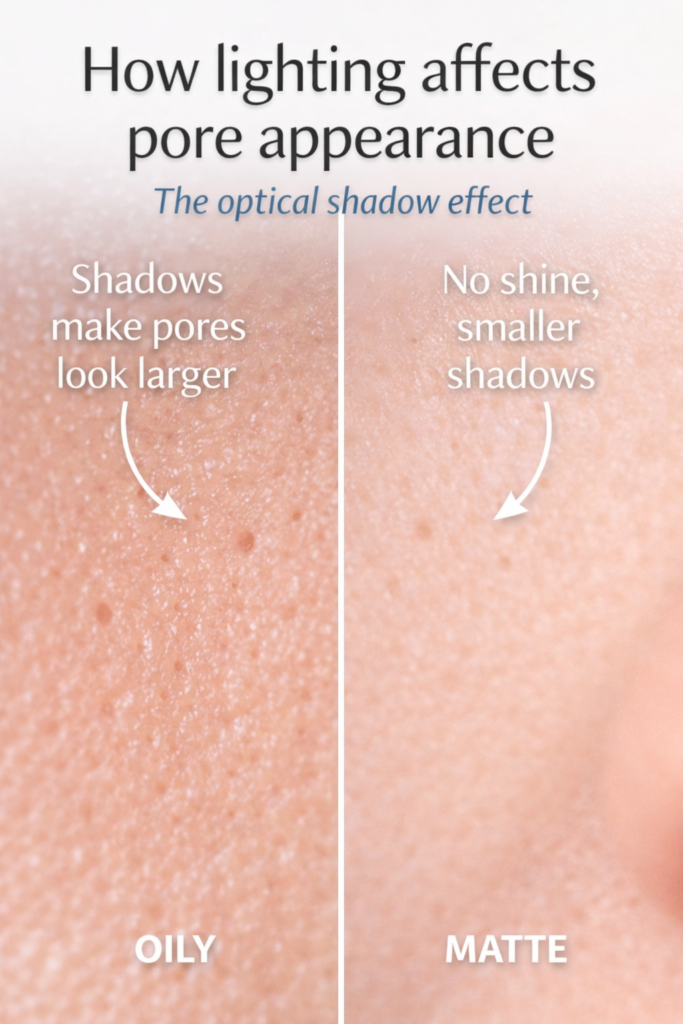
On oily skin, sebum creates a reflective surface. Light hits this shiny layer and reflects unevenly, making the edges of the pore appear brighter while the inside looks darker.
This contrast creates what can be described as an optical shadow effect.
The pore hasn’t changed—but the difference between light and shadow makes it look deeper and more noticeable.
This is why pores often seem to “disappear” after washing your face or blotting excess oil. The structure is the same, but the reflective surface has been reduced, so the contrast is less visible.
How to support pores and make them look less visible
Since pores are structural, the goal isn’t to shrink them—but to support how they function and appear over time.
Step 1: Keep the pore clear
Ingredients like salicylic acid (BHA) help dissolve excess oil and dead skin cells inside the pore, reducing buildup that creates internal pressure. You can learn more about how this works in our guide to salicylic acid for oily and acne-prone skin.
Step 2: Regulate oil production
On oily skin, excess sebum is a key factor in pore visibility. Ingredients like niacinamide help balance oil production and improve how sebum behaves on the skin. If you want to understand this better, see our full guide on niacinamide for oily skin.
Step 3: Remove surface oil effectively
Techniques like the 4-2-4 cleansing method can help remove excess oil and residue more thoroughly without damaging the skin. This method involves 4 minutes of oil cleansing, followed by 2 minutes of a gentle water-based cleanser, and 4 minutes of rinsing to fully clear buildup.
This approach helps dissolve the oil inside the pore while also removing the surface shine that makes pores appear more visible. When done correctly, it supports both sides of the issue—reducing internal buildup and minimizing the shadow effect.
For best results, combine this with a gentle cleansing routine for oily and acne-prone skin.
Step 4: Support the skin structure
Because pores rely on collagen and elastin for support, protecting the skin from sun exposure plays a key role in maintaining how tight they appear over time.
Step 5: Stay consistent
Pores don’t change overnight. When buildup is reduced, oil is balanced, and the skin is supported consistently, their appearance becomes smoother and less noticeable over time.
The Gentle Glow Pore Support System
| The Goal | The “Job Title” | How It Supports the Pore | Key Ingredient/Step |
|---|---|---|---|
| Clear the tunnel | The Daily Janitor | Dissolves the sebum wedge to reduce buildup and internal pressure | Salicylic Acid (BHA) |
| Balance the flow | The Oil Regulator | Reduces excess oil so pores are not constantly filled | Niacinamide |
| Tighten the walls | The Structural Architect | Supports collagen to reinforce the pore corset and maintain structure | Retinoids |
| Reset the view | The Shadow Buster | Removes surface oil to reduce the optical shadow effect | 4-2-4 cleansing |
| Protect the structure | The Barrier Protector | Helps prevent UV damage that weakens collagen and pore support | broad-spectrum SPF 30+ sunscreen |
Conclusion
Pores are a natural part of your skin’s structure, and their size doesn’t change—but their appearance does. Understanding how pores actually work helps shift the focus from shrinking them to supporting them.
When oil flow is balanced and buildup is controlled, pores look less noticeable. When sebum accumulates, reflects light, or stretches the pore over time, they appear more visible.
Understanding this shift—from structure to appearance—changes how you approach skincare.
Instead of trying to shrink pores, the focus becomes simple: keep them clear, regulate oil, and support the skin that holds them in place.
When you work with your skin, rather than against it, pores become less of a concern—and more of a normal, manageable part of healthy skin.
Frequently Asked Questions
Can you shrink pores permanently?
No, you cannot permanently shrink pores because they are fixed structural tunnels, not muscles. Their size is largely determined by genetics and skin type. However, you can significantly reduce their appearance by clearing internal buildup (the sebum wedge), controlling oil flow, and supporting the skin’s structural “pore corset” with collagen-boosting ingredients.
Do pores open and close?
No, pores do not open or close because they do not contain muscles. While steam can soften the debris (sebum and dead skin) inside a pore to make it easier to clear, it does not change the pore’s physical structure. Similarly, cold water may temporarily constrict blood vessels, but it cannot “close” the pore.
Why do pores look bigger on oily skin?
Pores look larger on oily skin due to a combination of physical stretching and optical shadows. Excess sebum acts as a “wedge,” pressing against the pore walls and widening the opening. Additionally, surface oil reflects light, creating a high-contrast shadow inside the pore that makes the tunnel appear $2\times$ deeper than it actually is.
Why do pores look smaller after washing your face?
Pores look smaller after washing because you have removed the “Optical Shadow” created by surface oil. Cleansing eliminates the reflective shine that exaggerates the depth of the pore. While the physical hardware of the pore remains the same, the lack of light-contrast makes the skin surface appear smoother and more uniform.
Do pores get bigger with age?
Pores do not grow with age, but they appear larger as the skin’s “Pore Corset” weakens. Over time, a loss of collagen and elastin—often accelerated by UV damage—causes the structural walls of the pore to sag. This lack of support makes the once-tight opening look “gaped” or like an “orange peel” texture.
Why do blackheads keep coming back?
Blackheads return because the sebaceous gland is a continuous “oil factory.” While extraction removes the current “product” (the oxidized oil plug), it doesn’t stop the factory from producing more sebum. If dead skin cells and oil are allowed to accumulate again, the “sebum wedge” reforms and darkens upon contact with oxygen.
Is it safe to squeeze pores or blackheads?
No, squeezing pores can lead to “Pore Fatigue” and permanent structural damage. Manual pressure can micro-tear the follicle wall and damage the surrounding collagen. Once the structural integrity of the pore is compromised, it loses its ability to “snap back,” making the pore appear permanently stretched or uneven.
Medical Disclaimer
Gentle Glow guides are developed using peer-reviewed dermatology research and established clinical guidelines. The information provided is for educational purposes only and does not replace professional medical advice, diagnosis, or treatment. Always consult a board-certified dermatologist or qualified healthcare provider before starting new active skincare treatments.
This article is based on dermatology research and peer-reviewed studies on acne pathogenesis, hormonal signaling, and skin barrier function.
Sources and References
- National Institutes of Health (NIH). Facial skin pores: a multiethnic study: Skin Physiology and Sebaceous Activity: Variations in Pore Size and Function.
Available at: https://pmc.ncbi.nlm.nih.gov/articles/PMC4337418/ - National Institutes of Health (NIH). UV Damage of Collagen: Collagen and UV damage.
Available at: https://pmc.ncbi.nlm.nih.gov/articles/PMC3299808/ - National Center for Biotechnology Information (NCBI). Physiology, Sebaceous Glands: Hair Follicles, Sebaceous Glands, and Pore Structure.
Available at: https://www.ncbi.nlm.nih.gov/books/NBK499819/ - PubMed. Acne vulgaris: A review of the pathophysiology, treatment, and recent nanotechnology based advances: Clinical insights into acne development, follicular buildup, and inflammation mechanisms.
Available at: https://pubmed.ncbi.nlm.nih.gov/38076662/