كل ما تحتاجين معرفته عن البشرة الدهنية

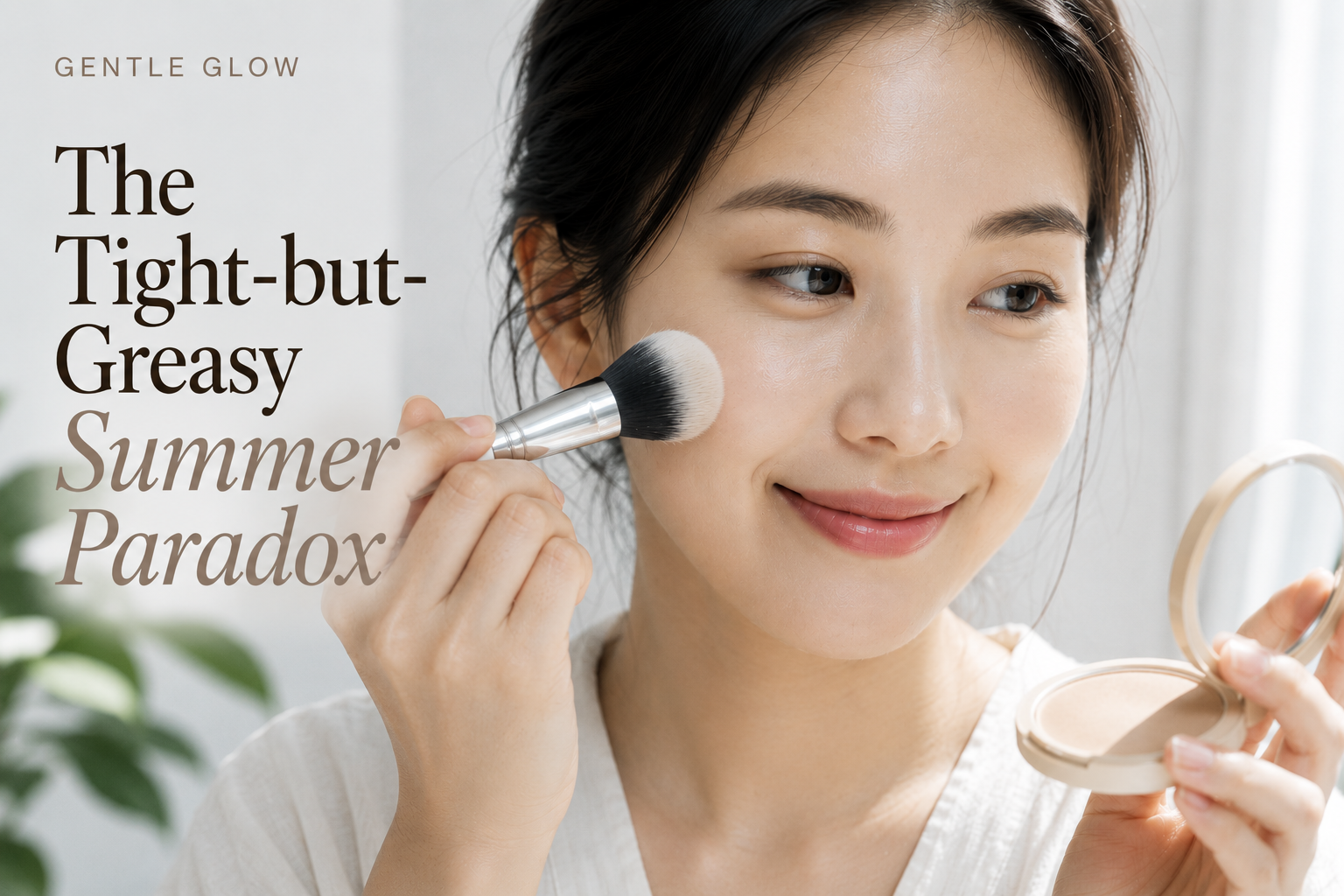
Summer AC Rebound Sebum: Why Oily Skin Feels Tight Yet Greasy Indoors

المؤسِّسة ورئيسة التحرير في Gentle Glow
Gentle Glow Editorial Team • Updated May 2026 • Evidence-based skincare
Summer AC rebound sebum describes the cycle where oily skin becomes tighter, shinier, and more dehydrated indoors as air conditioning lowers humidity and increases water loss from the skin. As hydration drops, the skin may begin producing more surface oil to slow evaporation — a temporary response known as rebound sebum. In many cases, stabilizing oily skin indoors comes down to reducing unnecessary stripping, supporting lightweight hydration, and helping the skin maintain a more balanced water-oil environment throughout the day.
- Dry indoor air increases transepidermal water loss (TEWL): Air-conditioned environments pull moisture away from the skin more quickly than humid outdoor air.
- Oil does not replace hydration: Skin can look shiny and oily while still lacking enough water beneath the surface.
- Balanced hydration usually works better than aggressive oil control: Lightweight, breathable layers often help oily skin feel more stable indoors without creating heavy buildup.
جدول المحتويات
The Tight-but-Greasy Summer Paradox
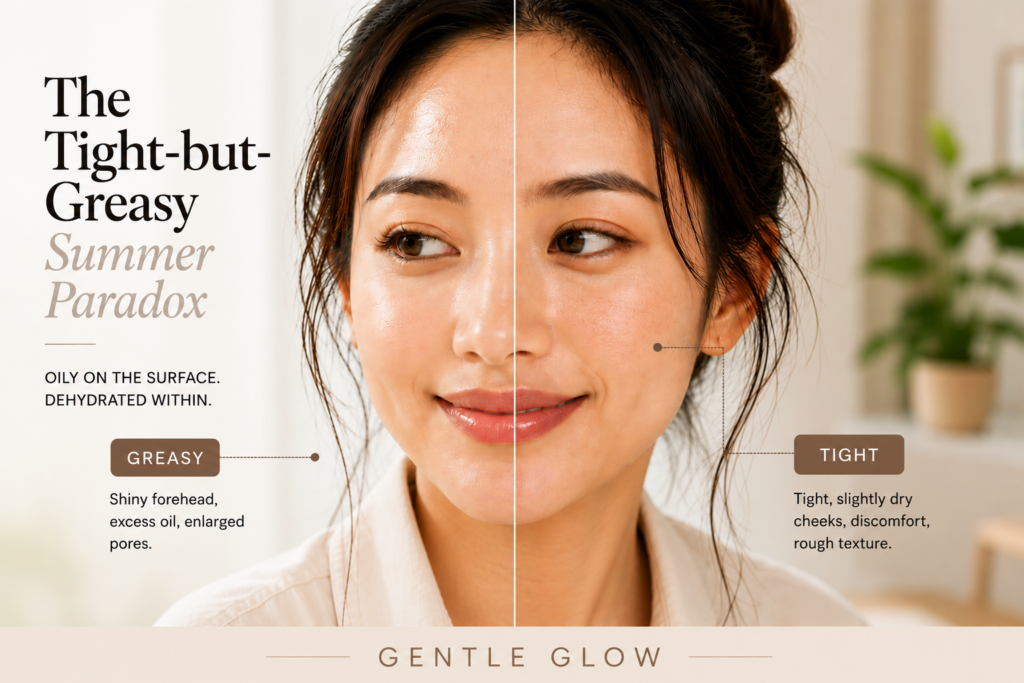
One of the most confusing parts of having oily skin during summer is realizing that your face can feel both dehydrated and greasy at the same time.
For many people, زيادة إفراز الدهون الارتدادية بسبب تكييف الصيف becomes most noticeable after several hours inside heavily cooled offices or indoor spaces. The skin may start feeling tighter around the cheeks or forehead, yet the surface still becomes noticeably shiny by midday. Makeup begins separating more quickly, powders look heavier, and the skin feels less comfortable overall — even without excessive sweating.
This is where oily skin behaves very differently from truly dry skin.
With dry skin, there is usually both low oil and low water. But with oily skin, the issue is often more complex. Surface oil may increase while water content underneath the skin decreases at the same time. That imbalance is what creates the classic “tight but greasy” feeling many people experience indoors during summer.
In air-conditioned environments, the skin loses water more quickly while still continuing to produce sebum. Because oil sits visibly on the surface, it can create the impression that the skin is well hydrated — when in reality, the barrier may be struggling to maintain enough water balance underneath.
This is also why repeated stripping often makes the situation feel worse rather than better. Repeated stripping, harsh cleansing, or heavy powdering may temporarily reduce shine, but they can also leave the skin feeling even tighter and more reactive indoors.
For many people with oily and acne-prone skin, the goal is not removing every trace of oil. It is helping the skin stay more stable as it moves between humid outdoor heat and artificially cooled indoor air.
| What You Notice | What’s Actually Happening |
|---|---|
| Skin looks shinier indoors | Sebum becomes more noticeable on the surface |
| Skin feels tight after several hours in AC | Water loss increases in dry indoor air |
| Makeup separates faster by midday | Surface oil and dehydration destabilize texture |
| Powder starts looking heavier or patchier | Oil mixes with dehydrated skin flakes throughout the day |
| Skin feels greasy but uncomfortable | Oil and hydration are no longer balanced properly |
Why Indoor Cooling Changes the Way Oily Skin Behaves
One of the biggest misconceptions about oily skin during summer is that cooler air automatically means calmer skin. In reality, air conditioning changes the environment around your skin completely — especially after long hours indoors.
Air conditioners do not just cool a room. They also remove humidity from the air as part of the cooling process. That lower humidity creates a drier indoor environment, which increases how quickly water evaporates from the skin throughout the day.
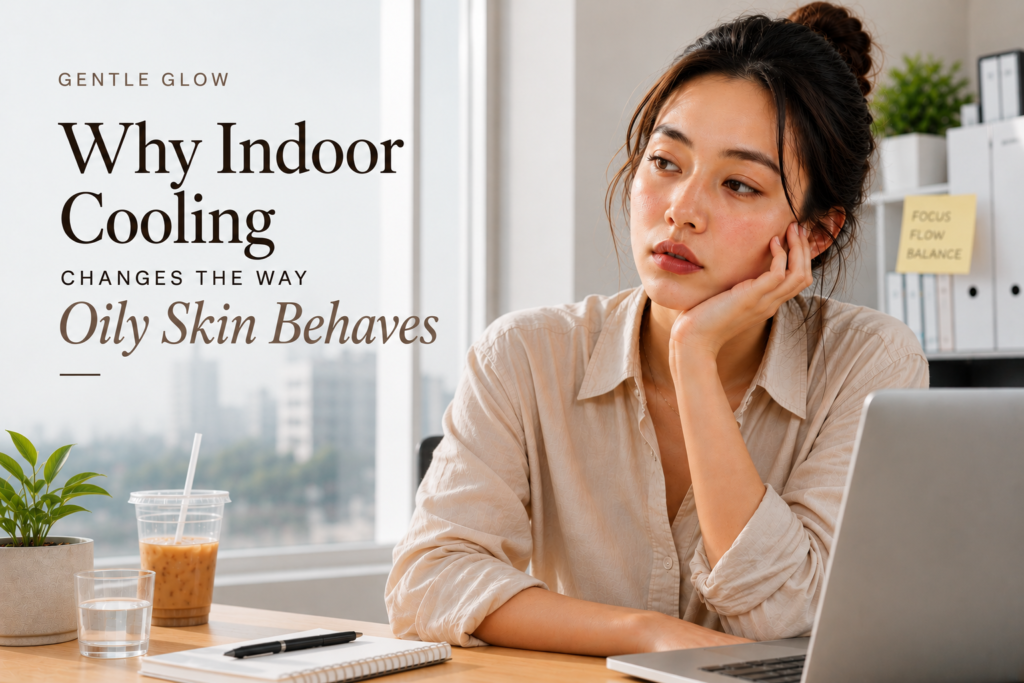
This process is known as فقدان الماء عبر البشرة (TEWL). — the gradual evaporation of water from the skin into the surrounding air. In heavily air-conditioned spaces, lower indoor humidity can make this water loss happen more quickly.
This is why oily skin often feels very different indoors compared to outside during summer. Outdoors, humidity keeps the skin feeling more flexible, while dry indoor air can leave the skin feeling tighter, flatter, or less comfortable after several hours in AC.
| Outdoor Summer Heat | Indoor Air-Conditioned Environment |
|---|---|
| Humidity stays higher | Humidity drops significantly |
| Sweat increases | Water evaporates faster |
| Skin feels damp or humid | Skin often feels tighter |
| Oil spreads more fluidly | Surface shine becomes more noticeable |
| Skin stays warmer | Repeated cooling can destabilize skin comfort |
The situation becomes even more noticeable for people moving constantly between outdoor heat and heavily cooled indoor spaces throughout the day. Repeated shifts between humidity and dry artificial air can leave oily skin feeling less stable overall — especially when combined with over-cleansing or harsh mattifying routines.
تشير الأبحاث حول humidity and skin barrier function has shown that low-humidity environments can increase skin sensitivity and make the barrier more vulnerable to environmental stress.
For many people, the issue is not simply “too much oil.” It is that the skin is trying to adapt to two completely different environments within the same day.
Why Oily Skin Can Become Shinier Indoors
As hydration levels drop indoors, the skin may increase surface oil to help reduce further moisture loss.
This response is often referred to as rebound sebum — a temporary increase in visible oiliness triggered by dehydration and environmental stress rather than excess oil alone.
For oily and acne-prone skin, this can create a frustrating cycle indoors. The skin may start looking shinier by midday even though it feels less comfortable underneath the surface. In heavily air-conditioned environments, that shine is often mistaken for “too much oil,” leading many people to over-cleanse, over-powder, or repeatedly strip the skin throughout the day.
In reality, the issue is usually not oil alone. It is that the skin is trying to maintain balance in an environment that continuously pulls moisture away from the surface.
| What Happens Indoors | How Skin Responds |
|---|---|
| Indoor humidity drops | Water evaporates faster from the skin |
| Hydration decreases | Skin feels tighter or less comfortable |
| تحاول الغدد الدهنية التعويض | Surface oil becomes more noticeable |
| Skin is repeatedly stripped | Rebound shine often becomes more persistent |
For many people with oily skin, reducing rebound shine is less about aggressively removing oil and more about helping the skin maintain a steadier water-oil balance indoors.
Why Moving Between Outdoor Heat and Indoor AC Makes Skin More Unstable
For many people with oily skin, the issue is not just air conditioning itself — it is the constant transition between two completely different environments throughout the day.
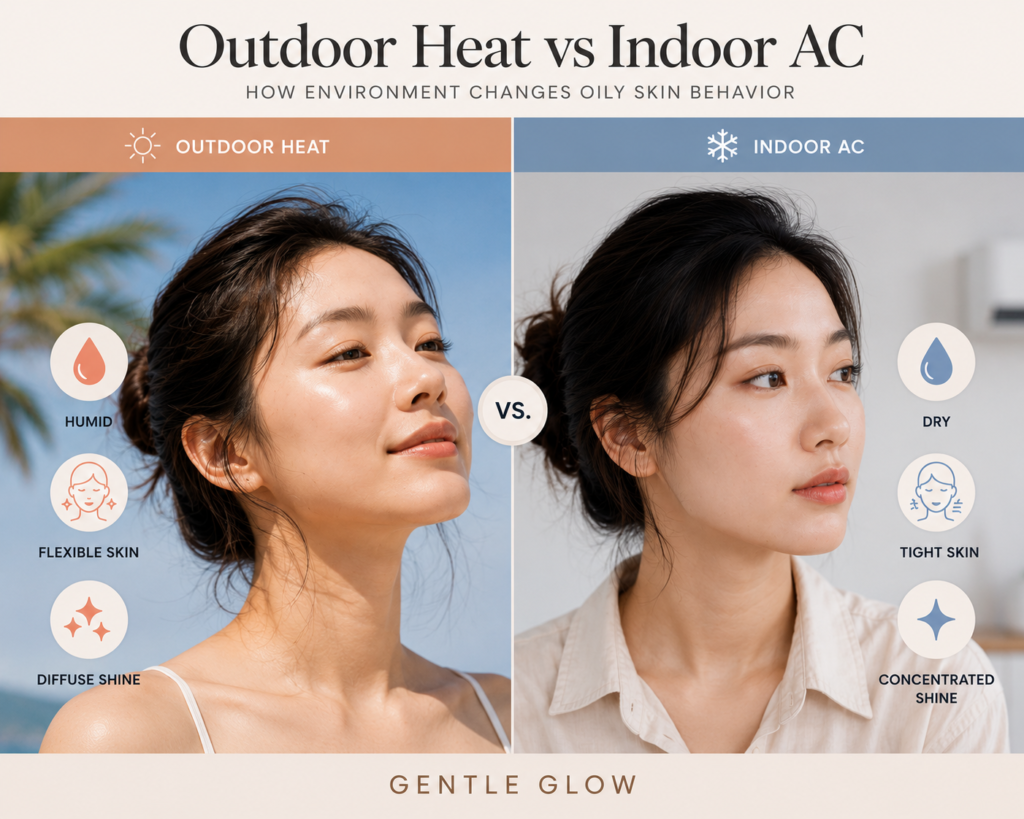
Stepping out into humid summer heat and then walking directly into a heavily cooled office, mall, or car forces the skin to keep adapting to rapid changes in temperature and humidity. Outdoors, moisture stays closer to the surface of the skin. Indoors, the environment suddenly becomes much cooler and drier.
تشير الأبحاث حول seasonal skin changes has shown that variations in humidity and temperature can significantly influence skin hydration, TEWL, and sebum behavior throughout the year.
These environmental changes do not only affect oil production and hydration levels. When the skin becomes dehydrated or stressed by repeated shifts between outdoor heat and indoor air conditioning, it may also feel more reactive to everyday products. Some people notice that skincare products, makeup, or even fragrances can irritate the skin more easily during summer, particularly when heat, humidity, and friction are involved.
Over time, these repeated shifts can also leave oily skin feeling less stable and more reactive. Makeup may wear differently indoors, powders can start looking heavier by midday, and the skin may feel less comfortable after several hours under continuous cooling. It can also change how certain active ingredients feel on the skin during summer, particularly those that influence skin renewal and barrier function.
| Outdoor Summer Heat | Indoor Air Conditioning |
|---|---|
| Humidity stays higher | Humidity drops significantly |
| Sweat increases | Water evaporates faster |
| Skin feels more flexible | Skin may feel tighter or flatter |
| Sebum spreads more evenly | Surface shine appears more concentrated |
| Moisture stays closer to the skin | Dry air increases surface dehydration |
This is also why some oily skin types feel worse in aggressively cooled offices than they do outside in summer heat. The skin is not simply responding to oil production — it is continuously adjusting to changing environmental conditions throughout the day.
When harsh cleansing, alcohol-heavy toners, or repeated mattifying products are added on top of those fluctuations, the skin often becomes even more reactive indoors.
For many people with oily and acne-prone skin, stability usually comes from helping the skin adapt more gently to these environmental shifts rather than trying to keep the skin completely matte at all times.
Why Some “Oil-Control” Habits Backfire Indoors
When oily skin starts looking shinier indoors, the natural instinct is usually to remove the oil as quickly as possible. But in heavily air-conditioned environments, some common “oil-control” habits can unintentionally make the skin feel even less balanced throughout the day.
This is especially true during summer, when the skin is already moving constantly between humid outdoor heat and dry indoor air.
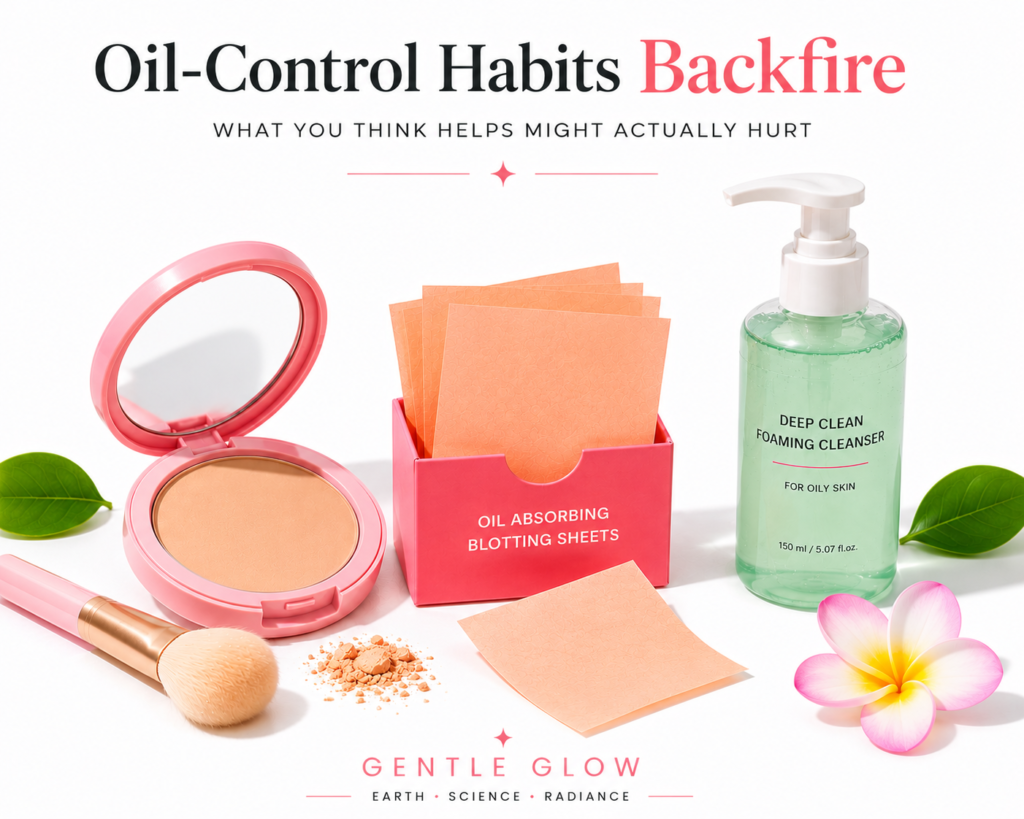
The Over-Cleansing Cycle
Washing the face repeatedly during the day may temporarily reduce surface shine, but it can also leave the skin feeling tighter and more reactive indoors afterward.
Strong foaming cleansers, alcohol-heavy toners, and repeated oil stripping can disrupt the skin barrier and increase water loss even further. Maintaining a healthy حاجز البشرة أو تهيّجها is important for helping the skin regulate water loss and stay more resilient in dry indoor environments.
In response, oily skin may begin producing more visible surface oil again within a few hours — especially in dry office environments.
This is often where many people become stuck in a cycle of:
- shine
- stripping
- temporary mattifying
- ارتداد إفراز الدهون،
بالنسبة للبشرة الدهنية والمعرضة لحب الشباب، فإن gentler cleansing usually creates a more stable result indoors than repeatedly trying to remove every trace of oil.
This becomes even more noticeable for people already dealing with an over-stripped or sensitized skin barrier.
Why Facial Mists Sometimes Feel Good — But Do Very Little
Facial mists are often marketed as a quick solution for tight, uncomfortable skin during summer. And temporarily, they can feel refreshing.
The problem is that in very dry indoor air, water-based misting alone may evaporate too quickly to meaningfully improve hydration. In some cases, that fast evaporation can leave the skin feeling tight again shortly afterward — especially if no lightweight barrier support is layered underneath.
That does not mean facial mists are inherently “bad.” The issue is usually the environment they are being used in. In heavily air-conditioned rooms, hydration tends to last longer when the skin also has lightweight humectants or breathable moisturizing support underneath.
The Powder Buildup Problem
Another common response to midday shine is repeatedly layering powder throughout the day. But indoors, heavy powdering can gradually create a thicker, less breathable layer across oily skin — especially once it mixes with sunscreen, الدهون التي تأكسدت, sweat, and dehydrated skin flakes.
Instead of making the skin look fresher, repeated mattifying sometimes leaves the complexion looking heavier, patchier, or more textured by late afternoon.
| Common Habit | What Happens Indoors |
|---|---|
| Repeated over-cleansing | Increases tightness and water loss |
| استخدام تونرات غنية بالكحول | Leave skin feeling drier afterward |
| Water-only facial misting | Evaporates quickly in dry air |
| Constant powder touch-ups | Create heavier texture buildup over time |
For many oily skin types, indoor summer skin usually becomes more comfortable when the focus shifts away from aggressively removing oil and toward keeping the skin barrier more balanced throughout the day.
Why Lightweight Hydration Usually Works Better Indoors
One of the biggest shifts many people notice with oily skin during summer is that extremely matte routines often stop feeling comfortable after long hours indoors. Skin may look oily on the surface while simultaneously feeling flatter, tighter, or more reactive underneath.
هنا يأتي دور lightweight hydration usually performs better than aggressively trying to dry the skin out.
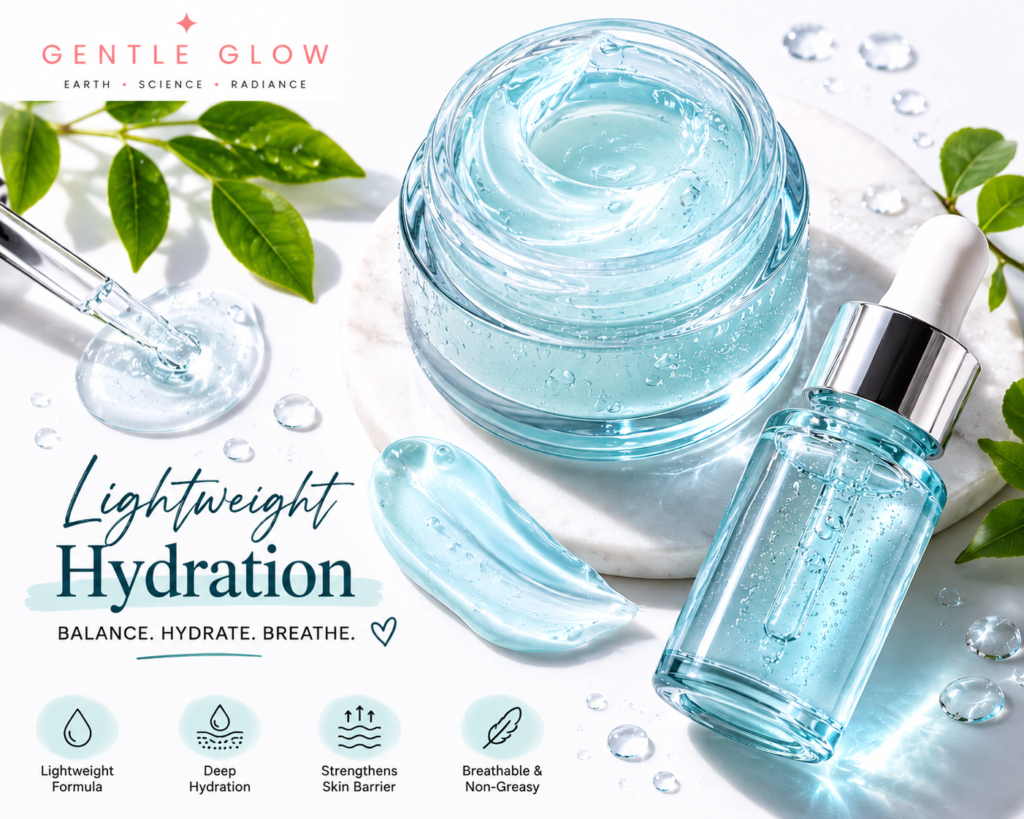
In air-conditioned environments, the goal is often not removing every trace of oil. It is helping the skin maintain enough water balance so the barrier feels more stable throughout the day. When hydration levels remain more consistent, surface shine also tends to become less reactive and less unpredictable indoors.
For oily and acne-prone skin, this usually means focusing on breathable layers that support hydration without creating heavy buildup. Gel-creams, lightweight emulsions, humectant-based serums, and balanced moisturizing layers often feel more comfortable indoors than thick occlusive products designed for very dry skin.
This is also why many people with oily skin tolerate ingredients like niacinamide better in lightweight formats rather than dense, heavily matte formulations — especially during summer.
Hydration-focused support does not necessarily make oily skin “more oily.” In many cases, helping the skin stay more comfortable indoors can reduce the constant cycle of tightness, stripping, and rebound shine throughout the day.
| Lightweight Support | Why It Often Feels Better Indoors |
|---|---|
| Humectant-based hydration | Helps attract and retain water |
| Gel or fluid textures | Feel breathable in humid weather |
| Balanced moisturizers | Support barrier comfort without heaviness |
| Lightweight niacinamide layers | Help regulate oil without excessive drying |
This is also why many oily skin routines become more stable once the focus shifts away from achieving a perfectly matte finish and toward maintaining a more balanced skin environment overall.
For people spending most of the day in heavily cooled offices or indoor spaces, consistency and comfort usually matter more than trying to keep the skin completely shine-free at all times.
الخلاصة
Summer AC rebound sebum is often less about “too much oil” and more about how oily skin responds to repeated shifts between humid outdoor heat and dry indoor air. When the skin loses water throughout the day, aggressive stripping can make shine feel even more unstable indoors.
For many oily skin types, balance usually comes from keeping the skin comfortable and supported rather than trying to remove every trace of oil.
الأسئلة الشائعة
Why does air conditioning make my skin oily?
Air conditioning can make oily skin look shinier because dry indoor air increases water loss from the skin. As hydration drops, the skin may produce more surface oil to help reduce further moisture loss. This temporary increase in visible oil is often called rebound sebum.
Can oily skin become dehydrated indoors?
Yes. Oily skin can still become dehydrated in heavily air-conditioned environments. Oil and hydration are not the same thing. Skin may continue producing surface oil while simultaneously losing water underneath, which can leave the skin feeling both greasy and tight at the same time.
Why does my skin feel tight but look greasy?
Tight but greasy skin is often a sign of dehydrated oily skin. Dry indoor air can pull water away from the skin while surface oil remains visible on top. This creates the uncomfortable combination of shine, tightness, and texture changes many people notice indoors during summer.
Does dry air increase sebum production?
Yes — dry air can make surface oil become more noticeable. When the skin loses hydration in low-humidity environments, sebaceous glands may increase oil production to help reduce further water loss. This is one reason oily skin often appears shinier indoors.
Is matte skincare making my oily skin worse indoors?
In some cases, yes. Over-cleansing, harsh mattifying products, alcohol-heavy toners, and repeated powdering can make oily skin feel more unstable in dry indoor environments. Instead of improving shine long term, aggressive stripping may increase tightness and rebound oiliness throughout the day.
Can air conditioning worsen acne-prone skin?
Air conditioning can sometimes worsen acne-prone skin indirectly by increasing dehydration and barrier stress. When dry skin flakes mix with surface oil, sunscreen, sweat, and repeated powder layers, congestion may become more noticeable — especially in heavily air-conditioned environments.
المصادر والمراجع
- Seasonal Variations in Skin Parameters: Seasonal Variations in the Skin Parameters of Caucasian Women from Central Europe — PubMed
- Stratum Corneum Integrity: The Clinical Relevance of Maintaining the Functional Integrity of the Stratum Corneum in Both Healthy and Disease-Affected Skin — PubMed
- Environmental Humidity on Skin Barrier: The effect of environmental humidity and temperature on skin barrier function and dermatitis — PubMed
This article is based on dermatology research and peer-reviewed studies on skin barrier function, transepidermal water loss (TEWL), environmental humidity, and sebum behavior.
تنويه طبي
يتم إعداد أدلة Gentle Glow استنادًا إلى أبحاث علمية محكّمة في مجال طب الجلدية وإرشادات سريرية معتمدة. المعلومات المقدَّمة هنا لأغراض تعليمية فقط، ولا تُعد بديلاً عن الاستشارة الطبية المهنية أو التشخيص أو العلاج. يُنصح دائمًا باستشارة طبيب جلدية معتمد أو مقدم رعاية صحية مؤهل قبل البدء باستخدام أي مكوّنات علاجية نشطة جديدة في روتين العناية بالبشرة.