كل ما تحتاجين معرفته عن البشرة الدهنية

Best Serums for Post-Acne Hyperpigmentation on Oily and Acne-Prone Skin (2026 Guide)

Dermatologist, Medical Reviewer & Contributor at Gentle Glow
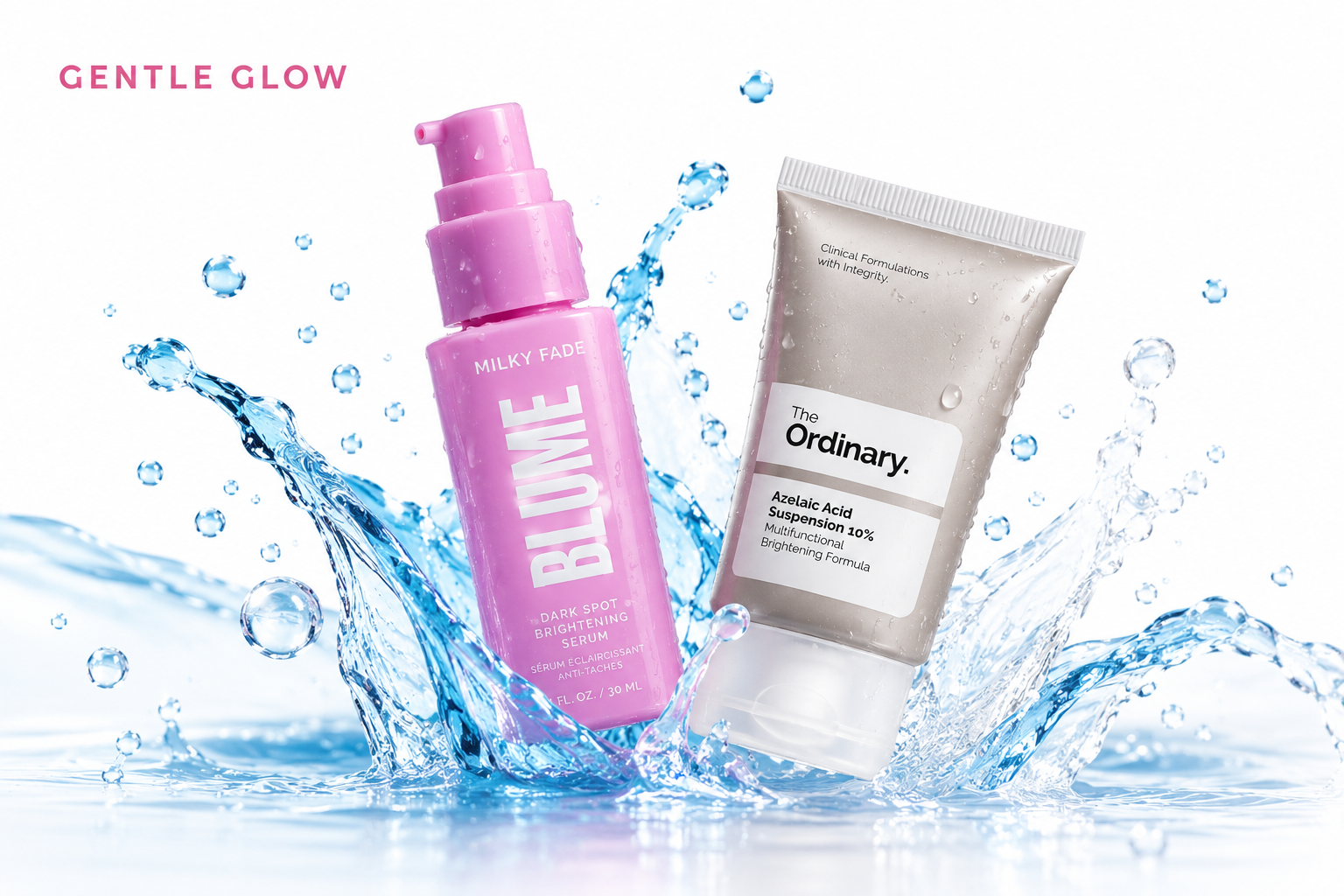
The best serums for post-acne hyperpigmentation include The Ordinary Azelaic Acid Suspension 10% for acne and dark marks, Eucerin Anti-Pigment Dual Serum for lingering discoloration, and Blume Milky Fade for a gentler, non-exfoliating approach. The right choice depends on your acne activity, skin sensitivity, and existing treatments.
- Still dealing with breakouts? The Ordinary’s azelaic acid formula may help address both acne and post-acne dark marks.
- Have stubborn marks but little active acne? Eucerin’s thiamidol-based serum offers a pigment-focused approach supported by acne-related PIH research.
- Already using acne treatments? Blume Milky Fade offers a non-exfoliating alternative, but tolerance still depends on your skin and routine. Daily broad-spectrum sunscreen remains important for managing PIH.
جدول المحتويات
قد تتضمن بعض الروابط في هذا الدليل روابط تسويق بالعمولة. قد يحصل Gentle Glow على عمولة بسيطة إذا اشتريت من خلالها، دون أي تكلفة إضافية عليك. نرشّح فقط المنتجات التي نراها مناسبة للبشرة الدهنية والمعرضة لحب الشباب.
Best Serums for Post-Acne Hyperpigmentation: Quick Comparison
If you’re comparing the best serums for post-acne hyperpigmentation, first identify your main skin concern. Whether you’re dealing with active breakouts, persistent dark spots, or easily irritated skin, the table below can help you find a serum that best fits your needs.
| المشكلة الجلدية | Selected serum | Key Ingredients | Strongest reason to consider | Limitations | عرض المنتج |
|---|---|---|---|---|---|
| Still breaking out, with dark marks | The Ordinary Azelaic Acid Suspension 10% | Azelaic acid 10%: anti-inflammatory plus tyrosinase inhibition | Direct clinical evidence for acne-related PIH, based on a trial of 15% azelaic acid gel. Lowest price per mL in our comparison. | Contains 10% azelaic acid, while clinical trials used 15%. Its silicone-based texture may feel different from a water-based serum. | عرض المنتج |
| Persistent marks after breakouts settle | Eucerin Anti-Pigment Dual Serum | Thiamidol (tyrosinase inhibitor) | Clinical evidence for acne-related dark spots in skin type V. | Research is manufacturer-linked. Some Versions contain fragrance. | عرض المنتج |
| Easily irritated skin, or already using acne treatments | Blume Milky Fade | Niacinamide 3% plus a 2% vitamin C derivative and centella | Non-exfoliating formula, and soothing properties of centella | Higher price; vitamin C has weaker evidence for PIH | عرض المنتج |
| Budget | Good Molecules Discoloration Correcting Serum | Cetyl tranexamate mesylate plus 4% niacinamide | Disclosed percentages at about US$12 per 30 mL | A tranexamic acid derivative, not tranexamic acid; limited evidence | عرض المنتج |
| Stubborn dark spots after breakouts have settled, and your skin tolerates active ingredients. | SkinCeuticals Discoloration Defense | 3% tranexamic acid, 1% kojic acid, 5% niacinamide | A published clinical evaluation of this active combination | About US$115. Manufacturer-linked study covering different types of hyperpigmentation. | عرض المنتج |
| Higher-strength multi-active | Anua Niacinamide 10% + TXA 4% | Niacinamide, tranexamic acid, and arbutin | Combines several ingredients that target dark spots at a mid-range price. | Higher concentrations don’t guarantee better results; contains plant oils and a salicylic acid salt on the label | عرض المنتج |
Choosing the right serum depends on three things: whether you still break out, how easily your skin irritates, and which active ingredients you tolerate. Some ingredients suit active acne, while others target stubborn marks once breakouts settle. These serums address flat brown spots, not indented or raised acne scars.
You should match the serum to your acne status. New breakouts will keep creating new marks, so control acne first or choose an active that helps with both.
And always keep in mind that sunscreen is not optional. AAD recommends broad-spectrum SPF 30 or higher. For oily or acne-prone skin, consider a non-comedogenic formula. No serum offsets sun exposure that can keep marks dark.
Our Recommended Serums for Post-Acne Dark Spots
These picks are for flat brown or tan post-acne marks (PIH). Each entry separates evidence for the ingredient from evidence for the finished serum.
For Active Acne and Dark Marks: The Ordinary Azelaic Acid Suspension 10%
The problem it solves: If you still experience inflamed breakouts, each new breakout can leave another dark mark. A pigment-only product may not address the underlying problem.
Why it fits: Azelaic acid works on both problems. It has anti-inflammatory and antibacterial effects relevant to acne, and it inhibits tyrosinase, the enzyme melanocytes use to make pigment. This is a single-active, 10% formula, so it adds little extra irritant load to an acne routine.
Evidence: The best acne-PIH data are for a prescription 15% azelaic acid gel. A randomized, placebo-controlled trial of 72 people with mild to moderate acne found that 12 weeks of twice-daily use improved acne-related PIH and PIE. A 16-week open-label pilot in darker skin types reported fewer acne lesions and improved PIH. The 2024 AAD acne guideline gives azelaic acid a conditional recommendation for acne.
On oily, acne-prone skin: No fragrance is listed. The dimethicone base suggests a silky finish, but we cannot judge how it wears on oily skin without hands-on testing.
Limitations: In the 16-week pilot, dryness and mild redness were the main tolerability complaints. The brand’s own usage guidance, as repeated by retailers, lists retinoids and direct acids among products not to combine it with.
Choose another option if: You want a built-in exfoliant: Paula’s Choice 10% Azelaic Acid Booster adds 0.5% salicylic acid for roughly US$39 to $42, but also adds exfoliating load.
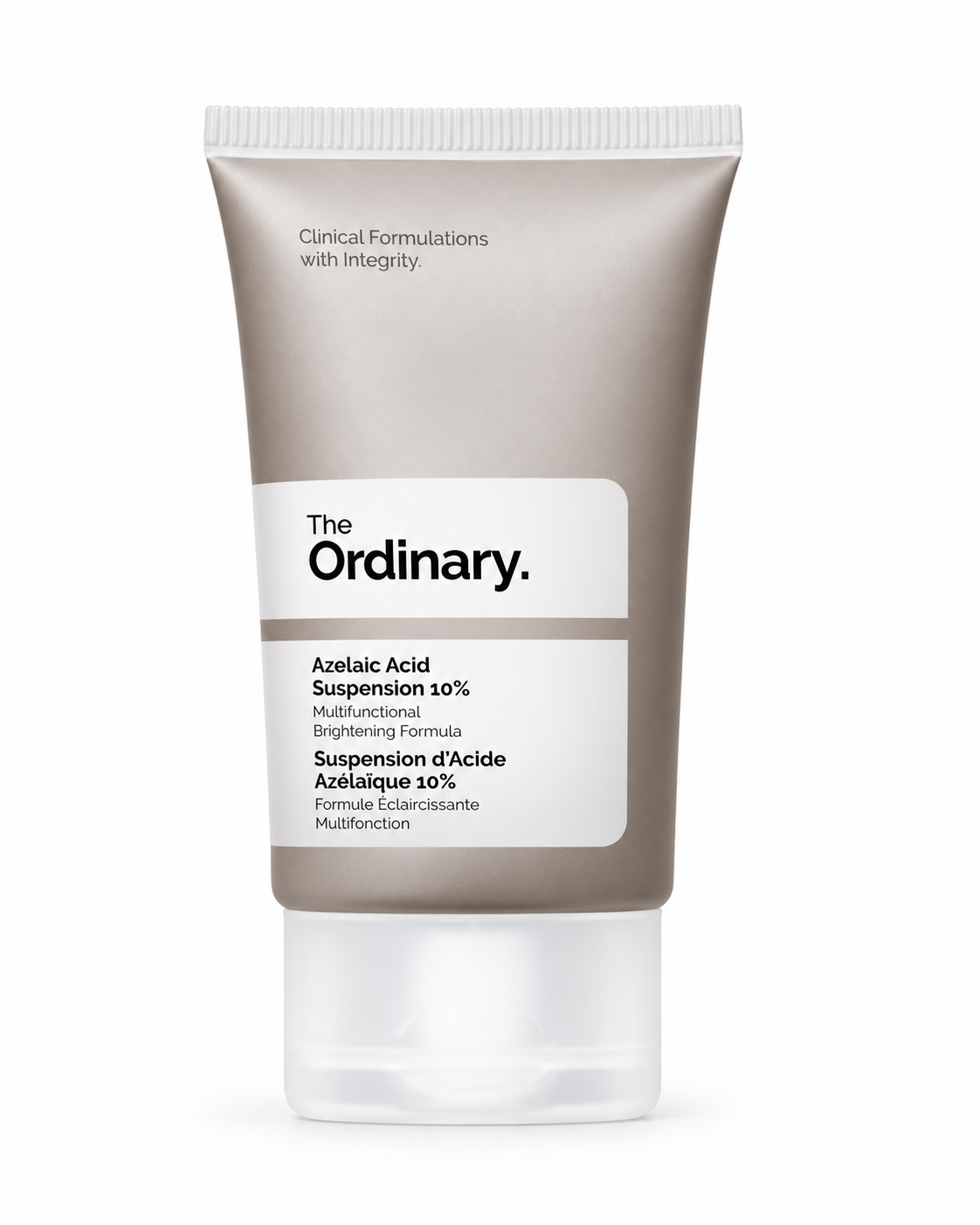
ACTIVE ACNE + DARK MARKS
The Ordinary Azelaic Acid Suspension 10%
- 10% azelaic acid formula targeting acne and post-acne dark marks
- Clinical acne-PIH evidence comes from a different 15% gel formulation
- Silicone-based suspension; monitor your skin’s tolerance
Best for Persistent Dark Marks After Breakouts Settle: Eucerin Anti-Pigment Dual Serum
The problem it solves: If your breakouts have settled but flat brown marks remain, you may want a serum that focuses on pigmentation rather than treating active acne.
Why it fits: Thiamidol is a tyrosinase inhibitor that can improve the appearance of post-inflammatory hyperpigmentation.
Evidence: Thiamidol is the only active in this guide with a vehicle-controlled trial in acne-related PIH. In participants with Fitzpatrick phototype V, 12 weeks of use improved the visibility of acne-induced hyperpigmentation compared with vehicle, based on participants’ self-grading. Two systematic reviews of PIH treatment, Tan 2022 و Mar 2024, also single out thiamidol.
On oily, acne-prone skin: One retailer describes a non-greasy, quick-absorbing finish, but some listings mention a light fragrance, so check the label if you want to avoid fragrance.
Limitations: At approximately $42 for 30 mL, it’s one of the more expensive options in our comparison.
Choose another option if: Acne is still active, since azelaic acid addresses both, or you want to avoid fragrance.
Best for Easily Irritated Skin, or When You Already Use Acne Treatments: Blume Milky Fade
The problem it solves: If you already use a retinoid, benzoyl peroxide or salicylic acid, another exfoliating active can mean stinging and flaking, and irritation can itself deepen marks.
Why it fits: The formula is short and non-exfoliating: النياسيناميد, centella, ascorbyl glucoside (a vitamin C derivative), hyaluronic acid and fruit extracts, with no azelaic acid, tranexamic acid or added acids on the label.
Evidence: النياسيناميد reduced melanosome transfer in laboratory models, and a moisturizer with 5% niacinamide reduced facial hyperpigmentation versus vehicle in an 18-person study of Japanese women over four weeks. The topical PIH systematic review counted niacinamide among agents with high-quality studies.
On oily, acne-prone skin: It is a lightweight, milky pump serum. It contains an emollient (diheptyl succinate), making it suitable for sensitive skin.
Limitations: About US$45 for 30 mL, among the higher prices per mL.
Choose another option if: تريد another niacinamide product at a lower price. AXIS-Y Dark Spot Correcting Glow Serum lists 5% niacinamide for about US$20 per 50 mL.
NON-EXFOLIATING OPTION
Blume Milky Fade
- 3% niacinamide, 2% vitamin C derivative, and centella
- Non-exfoliating approach for readers already managing an acne routine
- Individual tolerance varies; ingredient evidence does not prove results for the finished serum
Best Budget-Friendly Pigmentation Serum: Good Molecules Discoloration Correcting Serum
The problem it solves: You want a pigment-targeted serum that is affordable.
Why it fits: Short, fragrance-free formula for about US$12 per 30 mL.
Evidence, and an important distinction: Cetyl tranexamate mesylate is a fat-soluble derivative of tranexamic acid, not tranexamic acid itself, so trials of tranexamic acid do not validate it. The published study tested a 2% serum in 35 women with sun-damaged skin over eight weeks, relied partly on self-assessment, and its abstract describes no vehicle control. We found no acne-PIH data for this ingredient or this serum.
On oily, acne-prone skin: The listed formula is short and water-based with no fragrance listed. However, we haven’t tested its texture or finish on oily skin firsthand.
Limitations: Because the evidence is limited, treat this as a low-cost trial rather than a proven fade. It contains no azelaic acid or exfoliating acid, so it will not help active acne.
Choose another option if: Acne is still active (azelaic acid), or you want a tranexamic acid serum with a published finished-product evaluation (next pick).
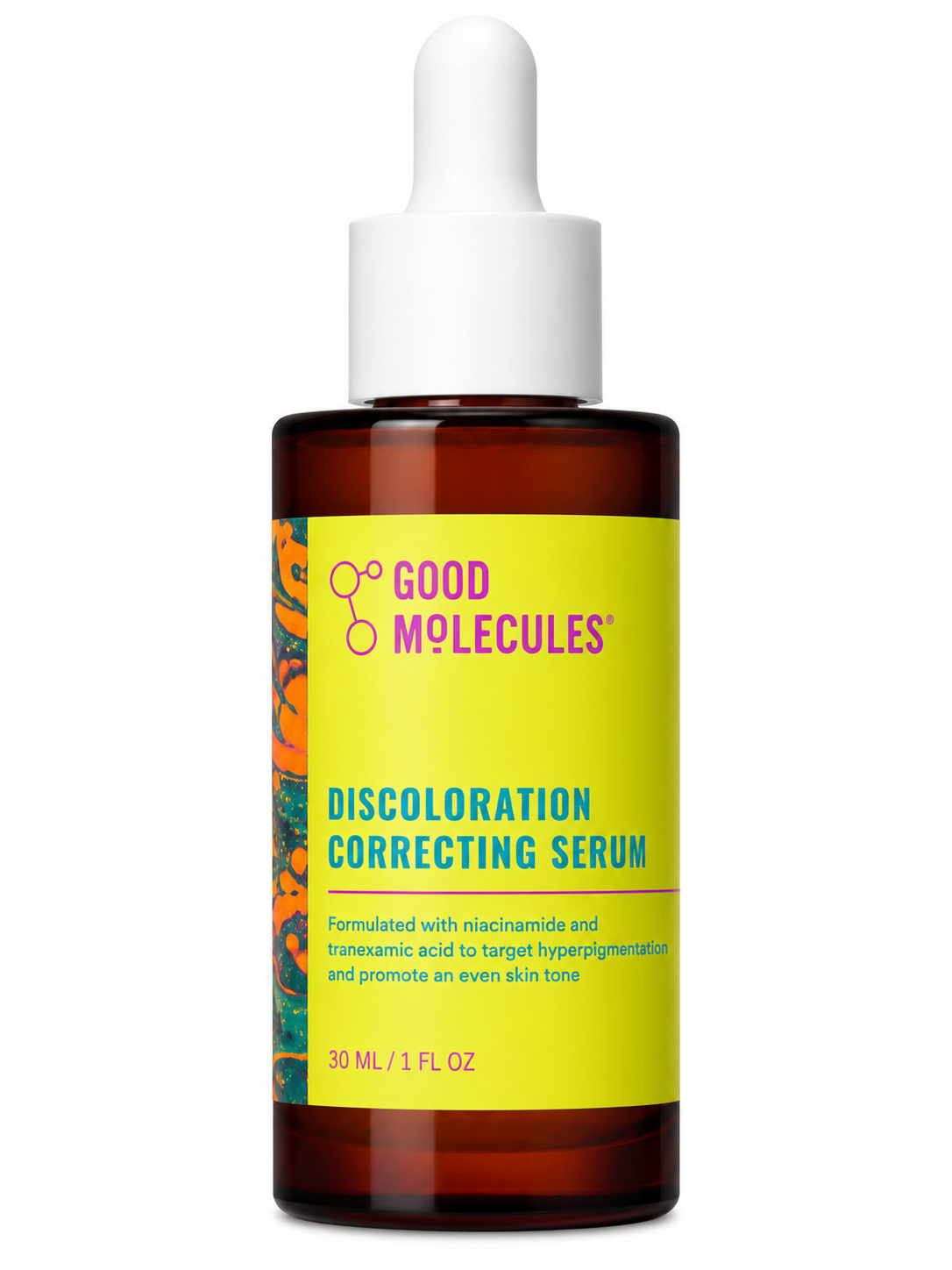
BUDGET-FRIENDLY DARK-SPOT SERUM
Good Molecules Discoloration Correcting Serum
- 3% cetyl tranexamate mesylate and 4% niacinamide
- Affordable option for leftover dark spots
- The tranexamic acid derivative has limited acne-specific clinical evidence
Best Multi-Active Formulas for Stubborn Marks: SkinCeuticals Discoloration Defense or Anua Niacinamide 10% + TXA 4%
The problem they solve: If your acne is under control but stubborn dark marks remain, and your skin tolerates active ingredients, you may want more than one pigment-targeting pathway in a single step.
SkinCeuticals Discoloration Defense lists 3% tranexamic acid, 1% kojic acid, 5% niacinamide and 5% HEPES on an oil-free, fragrance-free label. A 12-week clinical evaluation of this active combination in Brazilian women with melasma, PIH and other hyperpigmentation (Fitzpatrick types I to IV) reported improvement from week 2. Several study authors were affiliated with SkinCeuticals or L’Oréal, and the research included different types of hyperpigmentation rather than post-acne marks alone. The study abstract also does not describe a comparison with a formula without the active ingredients. Retailers note that some color change may occur because of kojic acid. The serum costs approximately US$115 for 30 mL.
Anua Niacinamide 10% + TXA 4% lists 10% niacinamide, 4% tranexamic acid and 2% arbutin, plus plant oils, a salicylic acid salt (betaine salicylate) and an ascorbic acid derivative, for roughly US$20 to $25 per 30 mL. The closest trial tested a moisturizer with 2% niacinamide and 2% tranexamic acid for eight weeks in 42 Korean women with irregular pigmentation. It was not an acne-PIH study, and higher percentages have not been shown to work better or be better tolerated.
Limitations of both: More actives raise the chance of irritation, and neither treats active acne. The plant oils and emollients in the Anua formula are a consideration for oily skin.
Choose another option if: Your skin is easily irritated (Blume) is a good option, or if your acne is still active choose a product that contains (azelaic acid).
Prices may change often and vary by retailer and country.
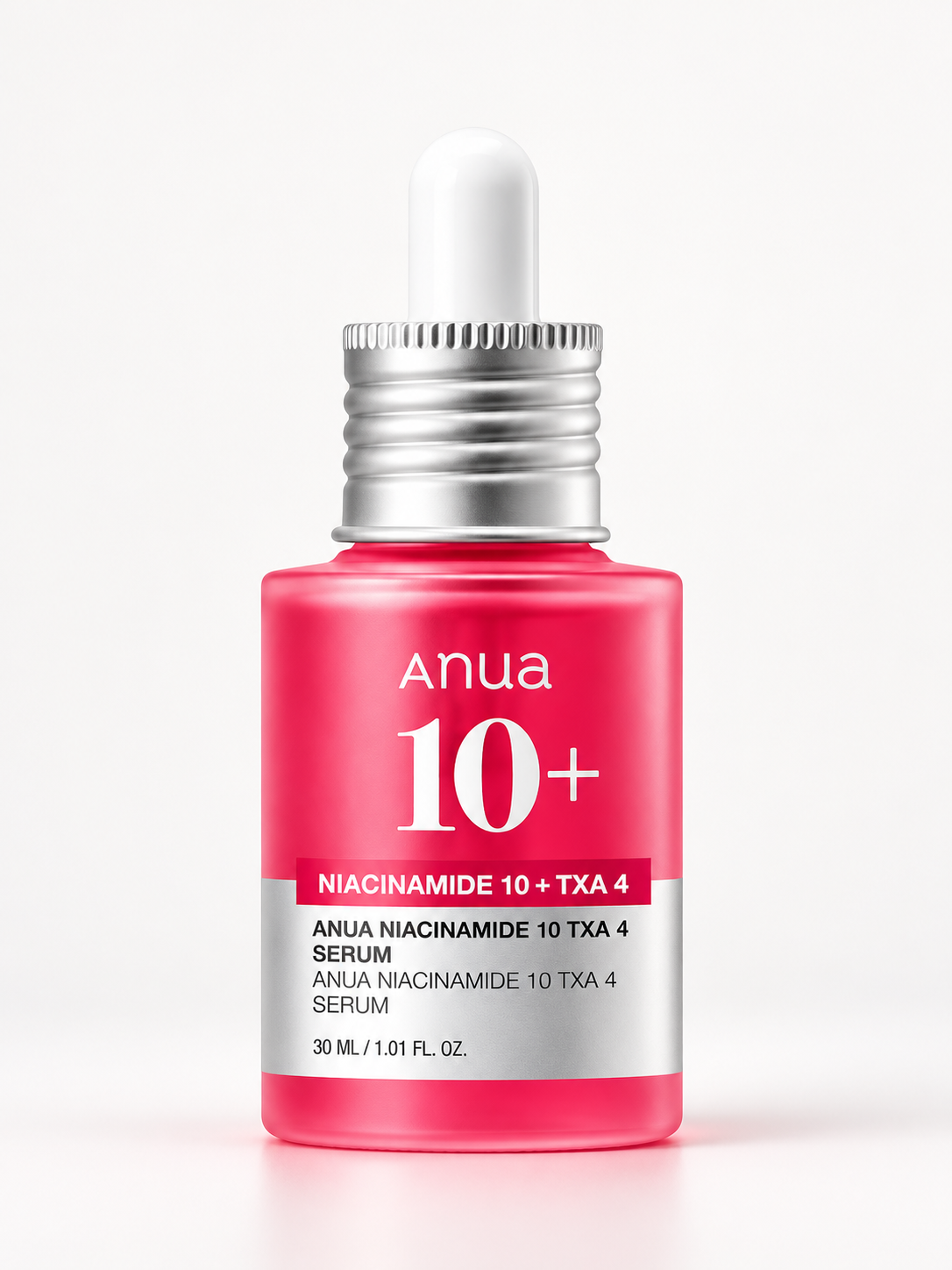
HIGHER-STRENGTH MULTI-ACTIVE
Anua Niacinamide 10% + TXA 4% Serum
- 10% niacinamide, 4% tranexamic acid and 2% arbutin
- Multi-active approach to uneven tone and dark spots
- Higher concentrations are not proven to give better results; monitor irritation
How to Choose a Dark-Spot Serum for Oily, Acne-Prone Skin
Do You Still Have Active Acne or Only Leftover Dark Marks?
If you’re still dealing with active inflamed acne, controlling breakouts comes first. The AAD acne guideline strongly recommends benzoyl peroxide and topical retinoids and gives conditional recommendations for azelaic and salicylic acid, so a pigment serum is usually an add-on, not the main treatment. If you want one product that helps both, azelaic acid is the choice. Once acne is controlled, a pigment-specific serum makes more sense.
Which Ingredients Are Worth Looking for in a Post-Acne Serum?
Not all dark-spot ingredients have the same level of clinical evidence. Azelaic acid و thiamidol have randomized acne-PIH data, though sponsor involvement and strength matter. Niacinamide has more published pigment studies but little acne-specific data. Tranexamic acid evidence is mostly from melasma, and cetyl tranexamate mesylate, arbutin and vitamin C derivatives have the least acne-PIH evidence we found. Vitamin C was not among the agents with high-quality studies in the topical PIH review.
Does Serum Texture Matter for Oily and Acne-Prone Skin?
Lightweight, water-based or gel formulations may feel more comfortable on oily and acne-prone skin, but “oil-free” doesn’t guarantee breakout-free.
Should You Choose a Stronger Serum or a Gentler Formula?
Start gentler. A higher ingredient concentration or longer ingredient list does not guarantee better PIH results, and irritation can add the inflammation that creates marks. The azelaic acid pilot noted that retinoids can contribute to PIH by causing irritation, and the topical PIH review lists desquamation, burning, stinging, dryness and itching as common side effects of PIH treatments.
Can You Use a Pigmentation Serum With Your Acne Treatments?
Often, but it depends on the formula. The AAD guideline lists combining topical therapies with different mechanisms as good practice, so a pigment serum can fit alongside acne treatment if your skin tolerates it.
Can You Use a Dark-Spot Serum With Salicylic Acid?
Count every exfoliating ingredient, not just your BHA product. Paula’s Choice’s azelaic booster contains 0.5% salicylic acid, the Anua serum contains a salicylic acid salt, and the other serums here list no added acid. Layering these over a separate BHA raises the chance of dryness and stinging.
Can You Use a Pigmentation Serum With Retinol, Retinal, or Adapalene?
Introduce one change at a time. Prescription retinoids have the strongest evidence in PIH reviews (Tan 2022; Mar 2024), so a serum is usually an adjunct. Some brands, including The Ordinary for its azelaic suspension, advise against combining with retinoids. That guidance is conservative and may not apply to everyone, so ask your dermatologist or pharmacist about your own regimen. If your skin is already peeling, pause new products first.
What About Benzoyl Peroxide?
Evidence on specific pairings is thin. Benzoyl peroxide is strongly recommended for acne, and compatibility with each serum here comes mostly from manufacturer guidance rather than trials. If irritation appears, separate the products by time of day or alternate nights, and ask for individual advice.
How Can You Introduce a Serum Without Overloading Your Routine?
Add one product at a time and watch your skin. Patch-test first, begin a few nights a week, and increase only if your skin stays comfortable. Stinging, tightness or flaking mean you have reached your limit. If you are pregnant, breastfeeding or trying to conceive, check any active, including retinoids and tranexamic acid ingredients, with your clinician before using it.
What Can These Serums Actually Improve?
Can a Serum Fade Brown Post-Acne Marks (PIH)?
Possibly, gradually, and not for everyone. Trials of these ingredients measure change over roughly 8 to 16 weeks, and improvement varies between people and studies. Sun protection and keeping new acne under control matter as much as the serum itself.
Will These Serums Help Red Acne Marks (PIE)?
Not reliably. Flat red, pink or purple marks (PIE) come from lingering blood-vessel changes, not melanin, so pigment evidence does not apply. One acne trial that also tracked erythema used a prescription 15% azelaic acid gel, not these products.
Can a Serum Remove Indented or Raised Acne Scars?
Topical pigment products cannot rebuild lost collagen or flatten raised scar tissue. A dermatologist can identify the scar type and discuss procedures.
الخلاصة
Fading post-acne hyperpigmentation is rarely about finding one miracle ingredient. What matters most is controlling new breakouts, protecting your skin from UV exposure, and consistently using treatments your skin can tolerate.
You don’t need multiple dark-spot products or a complicated routine to make progress. Choose an approach that fits your skin’s needs, give it time to work, and reassess if your marks persist or new breakouts continue.
الأسئلة الشائعة
What Is the Best Serum for Acne Scars and Hyperpigmentation?
No serum fixes both, because they are different problems. Flat brown or tan marks are pigment and may respond to the serums above, while indented or raised acne scars are changes in skin structure that topical pigment products cannot reverse. If you have both, treat the pigment with a serum and ask a dermatologist about the scars.
Is Niacinamide or Vitamin C Better for Post-Acne Dark Spots?
Neither is a proven winner for acne marks. Niacinamide has more published pigment studies, including in the topical PIH review, while vitamin C derivatives are used as supporting antioxidants with limited acne-PIH evidence. Results depend on the form and the formulation, so choose by tolerance and the rest of your routine rather than expecting one to outperform.
How Long Does Post-Acne Hyperpigmentation Take to Fade?
Post-acne marks usually fade over months, not days, and no timeline is guaranteed. Studies check progress at set points such as 8, 12 or 16 weeks, which reflects study design, not a deadline for your skin.
Can I Use Vitamin C When I Still Have Active Acne?
Often yes, depending on the formula and how your skin tolerates it. Vitamin C is not one ingredient: L-ascorbic acid, ascorbyl glucoside and ethyl ascorbic acid behave differently, and a low-pH acid can sting inflamed skin. Introduce it on its own, use it a few times a week at first, and stop if stinging or flaking persists.
How We Evaluated These Serums
To identify the best serums for post-acne hyperpigmentation, we evaluated each product based on its active ingredients and concentrations, clinical evidence for post-acne hyperpigmentation (PIH), suitability for oily and acne-prone skin, irritation potential, compatibility with acne treatments, texture, price, and availability.
We considered evidence for the individual ingredients, acne-related PIH, and the finished formulations separately. Scientific evidence was prioritized in this order: clinical guidelines and systematic reviews, randomized controlled trials, and smaller or manufacturer-linked studies.
Manufacturer and retailer websites were used to verify product specifications, ingredients, sizes, directions, and prices, not as independent evidence of effectiveness.
Our recommendations are based on published research and product information, not firsthand testing. Therefore, observations about texture and finish are limited to manufacturer and retailer descriptions.
Prices and availability were checked on October 25, 2026, and may vary by retailer and country. References
المصادر والمراجع
- Shucheng H, et al. Effects of 15% azelaic acid gel in the management of post-inflammatory erythema and post-inflammatory hyperpigmentation in acne vulgaris. Dermatol Ther (Heidelb). 2024. doi:10.1007/s13555-024-01176-2
- Kircik LH. Efficacy and safety of azelaic acid (AzA) gel 15% in the treatment of post-inflammatory hyperpigmentation and acne: a 16-week, baseline-controlled study. J Drugs Dermatol. 2011;10(6).
- Reynolds RV, et al. Guidelines of care for the management of acne vulgaris. J Am Acad Dermatol. 2024;90(5):1006.e1-1006.e30.
- Tan MG, et al. Topical treatment for postinflammatory hyperpigmentation: a systematic review. J Dermatolog Treat. 2022;33(5):2518-2526.
- Mar K, et al. Treatment of post-inflammatory hyperpigmentation in skin of colour: a systematic review. J Cutan Med Surg. 2024.
- Alsharif SH, et al. Efficacy and best mode of delivery for tranexamic acid in post-inflammatory hyperpigmentation: a systematic review. Clin Cosmet Investig Dermatol. 2022;15:2873-2882.
- Hakozaki T, et al. The effect of niacinamide on reducing cutaneous pigmentation and suppression of melanosome transfer. Br J Dermatol. 2002;147(1):20-31.
- Reduction in facial hyperpigmentation after treatment with a combination of topical niacinamide and tranexamic acid: a randomized, double-blind, vehicle-controlled trial. Skin Res Technol. 2014. PubMed
- Desai S, et al. Effect of a tranexamic acid, kojic acid, and niacinamide containing serum on facial dyschromia: a clinical evaluation. J Drugs Dermatol. 2019;18(5):454-459.
- da Silva Souza ID, Lampe L, Winn D. New topical tranexamic acid derivative for the improvement of hyperpigmentation and inflammation in the sun-damaged skin. J Cosmet Dermatol. 2021;20(2):561-565. doi:10.1111/jocd.13545
- Effective reduction of post-inflammatory hyperpigmentation with the tyrosinase inhibitor isobutylamido-thiazolyl-resorcinol (Thiamidol). Int J Cosmet Sci. 2021. Manufacturer-linked research.
- American Academy of Dermatology Association. How do I know if I’m using the right sunscreen?
تنويه طبي
يتم إعداد أدلة Gentle Glow استنادًا إلى أبحاث علمية محكّمة في مجال طب الجلدية وإرشادات سريرية معتمدة. المعلومات المقدَّمة هنا لأغراض تعليمية فقط، ولا تُعد بديلاً عن الاستشارة الطبية المهنية أو التشخيص أو العلاج. يُنصح دائمًا باستشارة طبيب جلدية معتمد أو مقدم رعاية صحية مؤهل قبل البدء باستخدام أي مكوّنات علاجية نشطة جديدة في روتين العناية بالبشرة.