Everything You Need to Know About Oily Skin

Niacinamide Serums for Oily and Acne-Prone Skin: 5 Formulas Compared (2026)

Medically reviewed by
Gamal Henin, B.Pharm
Pharmacist & Medical Reviewer at Gentle Glow
Reviewed June 9, 2026
The best niacinamide serums for oily and acne-prone skin in our 2026 picks include La Roche-Posay Mela B3 for post-acne marks and uneven tone, Tree of Life Niacinamide Serum 5% for visible pores, excess oil, and hydration, and The Ordinary Niacinamide 10% + Zinc 1% for higher-strength oil control.
- Best for post-acne marks: La Roche-Posay Mela B3 combines niacinamide with a formula focused on uneven tone and visible discoloration.
- Best 5% option for oily skin: Tree of Life Niacinamide Serum pairs 5% niacinamide with hydrating ingredients while targeting the appearance of pores and excess oil.
- Best higher-strength option: The Ordinary Niacinamide 10% + Zinc 1% offers a 10% niacinamide formula with zinc for readers looking for a more concentrated oil-control option.
Table of Contents
Some links in this guide are affiliate links. This means Gentle Glow may earn a small commission if you purchase through them — at no extra cost to you. We only recommend products that are suitable for oily and acne-prone skin.
Watch: Best Niacinamide Serums 2026 — Which Is Best for Your Skin?
Quick Selection Guide: 5 Niacinamide Serums Compared
The five formulas below range from 5% to 10% niacinamide, but concentration is only one part of the comparison. We also look at the skin concern each formula targets, supporting ingredients, texture, and how easily it fits into an oily or acne-prone skincare routine.
| Product | Niacinamide Concentration | Best For | Formula Focus | Why It Stands Out | View |
|---|---|---|---|---|---|
| La Roche-Posay Mela B3 | 10% + Melasyl | Post-acne marks + uneven tone | Discoloration-focused serum | Targets visible post-acne marks and uneven tone | View product |
| Tree of Life Niacinamide Serum | 5% | Visible pores + hydration | Niacinamide + hydrating support | Lower-strength option focused on pores and hydration | View product |
| The Ordinary Niacinamide 10% + Zinc 1% | 10% + Zinc 1% | Excess oil + visible pores | High-strength niacinamide + zinc | Concentrated option specifically positioned for oil control | View product |
| Dr. Barbara Sturm The Better B | 5% | Sensitive or reactive routines | Niacinamide + barrier-supporting ingredients | Premium 5% formula with a gentler positioning | View product |
| Eva Skin Clinic Niacinamide Serum | 10% + Zinc 1% | Oily skin + regional availability | Niacinamide + zinc | Accessible MENA option for readers looking for a 10% formula | View product |
Each serum serves a different purpose within an oily or acne-prone skincare routine. The best fit depends on what you want to address most—such as post-acne marks, visible pores, excess oil, hydration, sensitivity, or everyday layering.
Best Niacinamide Serums for Oily and Acne-Prone Skin (2026)
If you’re looking for the niacinamide serum that fits your skin best, it helps to know that not all niacinamide serums are designed around the same concern. Some focus more on post-acne marks and uneven tone, while others are better suited to visible pores, excess oil, hydration, or sensitive routines.
The five formulas below offer different concentrations and supporting ingredients, so the goal is to help you choose based on what your skin needs most, rather than percentage alone.
Best for Post-Acne Marks
La Roche-Posay Mela B3 Serum
Best for: Post-acne marks and uneven tone
Why we picked it:
If lingering post-acne marks and uneven tone are your main frustration, this is where we would lean toward La Roche-Posay Mela B3. Its 10% niacinamide with Melasyl gives it a more targeted role for visible discoloration, including post-acne marks, making it a better fit when evening out tone matters more than simply controlling shine.
Good fit if:
- Post-acne marks are a bigger concern than shine alone
- You want niacinamide in a discoloration-focused formula
- You prefer one serum that addresses uneven-looking tone alongside your oily-skin routine
Consider another option if:
Your priority is specifically excess oil or visible pores, where a formula designed more directly around those concerns may be a better fit.
Best 5% Option for Oily Skin
Tree of Life Niacinamide Serum
Best for: Visible pores, hydration, and a lower-strength niacinamide option
Why we picked it:
If day-to-day shine is your main frustration, especially in hot weather, Tree of Life Niacinamide Serum is one we’d pick for everyday use. Its 5% niacinamide, paired with hyaluronic acid, makes it a practical option for oily yet dehydrated skin, while still addressing visible pores, excess oil, and uneven skin texture. It makes the most sense when you want help managing shine without adding another higher-strength formula to skin that already feels dehydrated.
Good fit if:
- Visible pores are one of your main concerns
- You want hydration alongside niacinamide
- You prefer a lower-strength alternative to 10% formulas
Consider another option if:
Post-acne discoloration is your main concern and you want a formula developed specifically around visible marks and uneven tone.
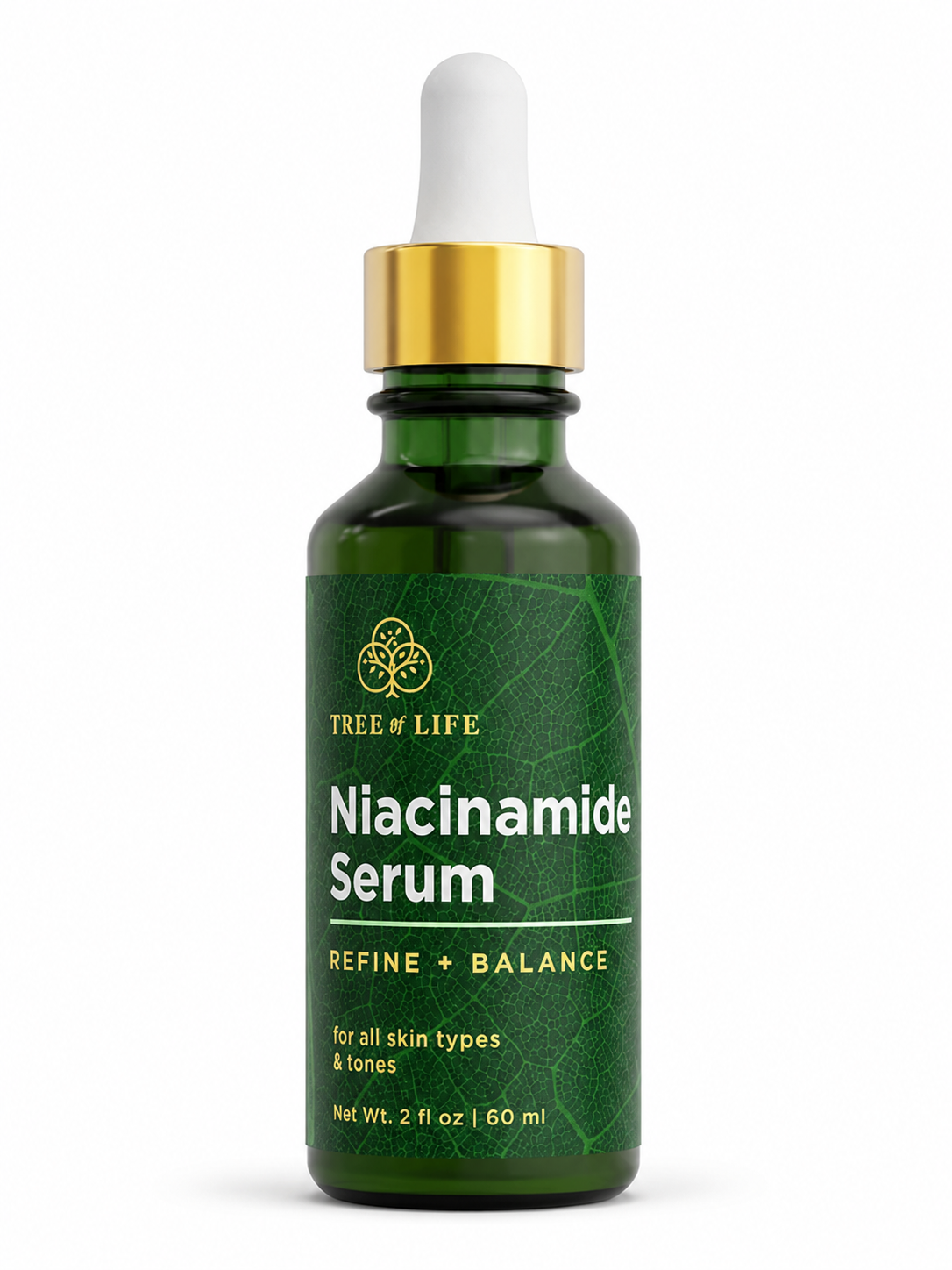
⭐ RECOMMENDED FOR EVERYDAY USE
Tree of Life Niacinamide Facial Serum
Best for oily, dehydrated skin
Why We Like It
- 5% niacinamide for a lower-strength everyday option
- Hyaluronic acid adds a hydration-focused element
- Targets shine, visible pores, and uneven texture
Best Higher-Strength Option
The Ordinary Niacinamide 10% + Zinc 1%
Best for: Excess oil and visible pores
Why we picked it:
If excess oil and enlarged-looking pores are the main issues you want to target, this is where we’d turn to The Ordinary. Its 10% niacinamide + 1% zinc formula gives it the most straightforward oil-focused role in this comparison, making it a better fit when shine and visible pores matter more to you than hydration, sensitivity, or post-acne marks.
Good fit if:
- Excess oil is one of your main concerns
- You specifically want a 10% niacinamide formula
- You want zinc included alongside niacinamide
- You prefer a simple, targeted formula
Consider another option if:
You prefer a lower niacinamide concentration or your main concern is post-acne discoloration rather than oil control.
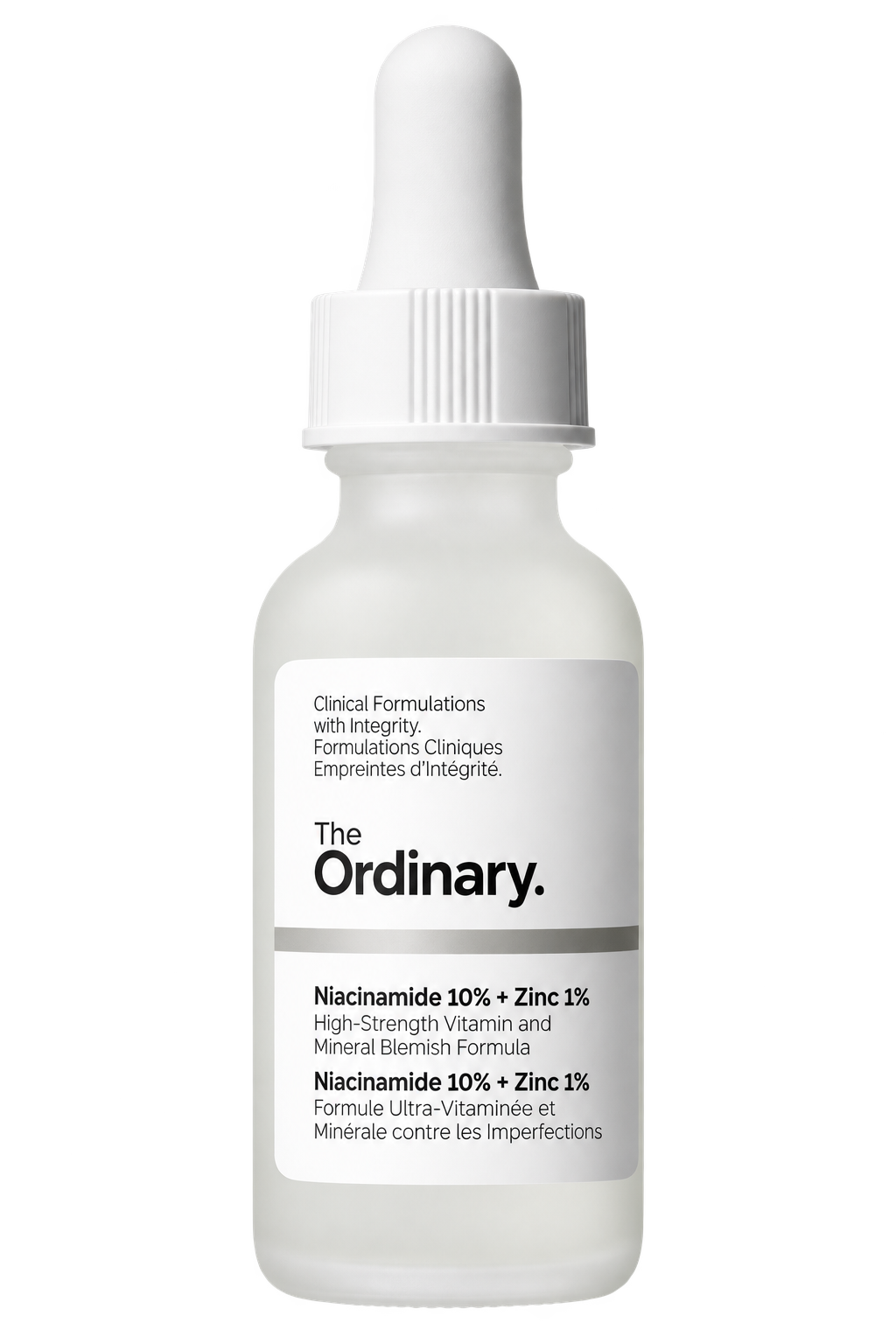
⭐ RECOMMENDED FOR OIL CONTROL
The Ordinary Niacinamide + Zinc
Best for excess oil and visible pores
Why We Like It
- Focused on shine and visible pores
- Good choice when oil control is the priority
Best Premium 5% Formula
Dr. Barbara Sturm The Better B Niacinamide Serum
Best for: Sensitive or reactive routines, visible pores, and hydration
Why we picked it:
If your skin is easily irritated or your routine is already crowded with stronger actives, this is where we favor The Better B. Its 5% niacinamide is paired with panthenol and other hydrating, skin-supportive ingredients, so it makes more sense when you want to address visible pores and uneven texture without adding another higher-strength active to an already busy routine.
Good fit if:
- You prefer a 5% niacinamide concentration
- Your routine already contains several active products
- Visible pores and hydration matter alongside oiliness
- You are looking for a premium formula
Consider another option if:
You mainly want a straightforward niacinamide serum focused on oil control at a lower price point.
Best MENA 10% + Zinc Option
Eva Skin Clinic Niacinamide Serum
Best for: A 10% niacinamide + zinc formula with regional availability
Why we picked it:
If excess oil and visible pores are your main concerns and you specifically want a 10% niacinamide formula with zinc, Eva Skin Clinic is one we’d consider. Its 10% niacinamide + 1% zinc gives it a more oil-focused role in this list, making it a better fit when shine control is a bigger priority than extra hydration or a lower-strength formula. If you’re living in the MENA region, it can also be a more accessible option, giving it an advantage over some internationally popular formulas that may be harder or more expensive to source locally.
Good fit if:
- Excess oil and visible pores are among your main concerns
- You prefer a 10% niacinamide + 1% zinc formula for a more oil-focused routine
- You live in the MENA region and want an option that may be easier to source locally
Consider another option if:
You specifically want a lower-strength 5% formula or a serum focused primarily on post-acne marks.
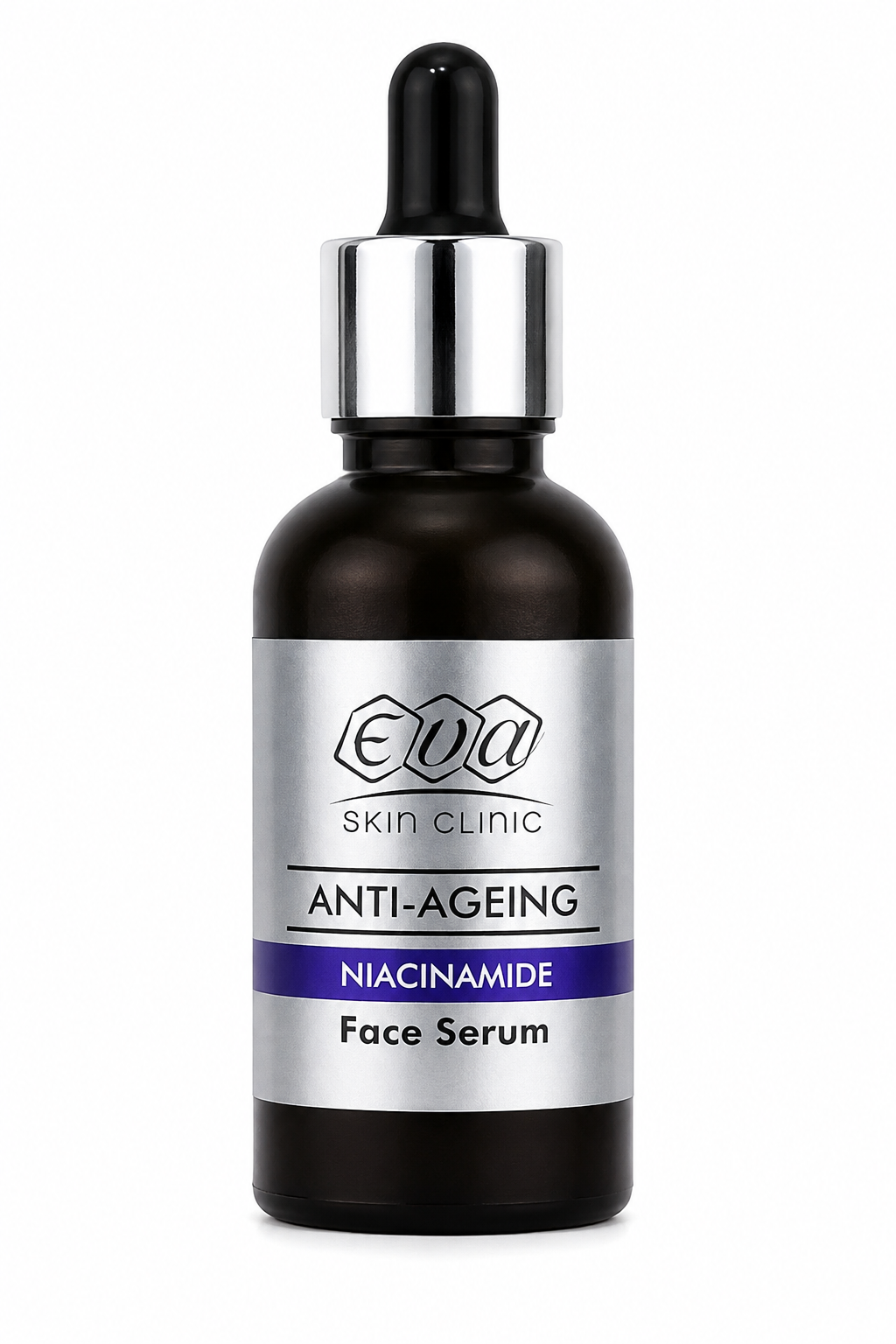
⭐ MENA-FRIENDLY PICK
Eva Skin Clinic Niacinamide and Zinc
Best for excess oil and visible pores
Why We Like It
- Targets shine and visible pores
- More accessible if you’re based in the MENA region
Why niacinamide isn’t working the way you expect
If the serum doesn’t match your main skin concern, concentration needs, or the rest of your routine, that may be one reason it isn’t working as expected. A formula chosen for post-acne marks, for example, may not be the best fit when your bigger concern is excess oil, dehydration, sensitivity, or visible pores.
If you’ve tried niacinamide without getting the results you expected, the first question should be: “What am I actually trying to address?”
A serum selected for post-acne marks and uneven tone serves a different purpose from one designed around excess shine and visible pores. Likewise, moving straight to a higher-strength formula may not make sense if your skin already feels dehydrated, easily irritated, or overloaded with other actives.
For oily and acne-prone skin, the right niacinamide serum needs to fit both your main concern and the rest of your routine. Concentration matters, but so do supporting ingredients, formula texture, and how easily the serum layers with your moisturizer, sunscreen, exfoliants, or retinoids.
If a serum feels heavy, pills under sunscreen, or simply doesn’t seem to suit your routine, that doesn’t automatically mean niacinamide itself is the wrong ingredient for you. Sometimes the individual formula is simply not the best match.
Is 5% Niacinamide Better Than 10% for Oily Skin
The best niacinamide concentration for your routine depends on your skin concerns, tolerability, and the overall formula. A 5% serum is not automatically better than 10% for oily skin, and a higher percentage does not necessarily mean better results. Clinical research has shown that even 2% niacinamide can reduce facial sebum, so concentration should be considered alongside the complete formula and how well it fits your routine.
It’s easy to assume that 10% niacinamide must work better than 5%, especially when excess oil is your main concern. But the evidence doesn’t support choosing a serum based on percentage alone.
So where does 5% fit in? For an everyday routine, a 5% formula can be a sensible middle ground when you want niacinamide benefits without making a higher concentration the priority. This may be especially relevant if your routine already contains salicylic acid, retinoids, or other active ingredients.
A 10% serum can still be the better choice for you. If excess oil and visible pores are your main priorities and your skin is comfortable with the formula. Importantly, 10% niacinamide is not automatically irritating; tolerability also depends on factors such as the complete formulation and supporting ingredients.
This is why we prefer to compare the whole formula rather than the niacinamide percentage alone. A 5% serum paired with hydrating or skin-supportive ingredients serves a different purpose from a 10% niacinamide + zinc serum designed with oily skin concerns in mind.
For oily and acne-prone skin, 5% can be a practical everyday choice, while 10% may suit someone who specifically wants a higher-strength, oil-focused formula. Neither percentage is automatically better—the better serum is the one whose overall formula fits your skin and routine.
5% vs 10% Niacinamide: How Different Formulas Fit Your Routine
| Feature | 5% Niacinamide | 10% Niacinamide |
|---|---|---|
| When to choose it | Your skin is dehydrated, sensitive, or your routine already contains several actives | Excess oil and visible pores are your main priorities and your skin already tolerates niacinamide well |
| Main advantage | Fits more easily into a routine where hydration, skin comfort, or other actives also matter | Lets niacinamide take a more prominent role in an oil-focused routine |
| Potential downside | Can still irritate if the overall formula doesn’t suit your skin | May be more irritating for some skin, depending on the complete formulation |
| Best fit | Balanced or active-heavy routines | Oil- and pore-focused routines |
Percentage alone still doesn’t tell you how a serum will feel, layer, or perform in your routine. Texture, supporting ingredients, formulation design, and your own skin tolerance all matter, which is why we wouldn’t choose between 5% and 10% based on concentration alone.
Serum vs moisturizer vs cleanser: which niacinamide format works best?
If your main goal is to target excess oil and visible pores, a leave-on niacinamide serum is usually the most practical format. A moisturizer is a good option when hydration and barrier support are higher priorities, while cleansers provide only brief skin contact and are better treated as a supporting step rather than your main source of niacinamide.
Not all niacinamide products play the same role in a routine. The difference comes down to how the product is formulated, how long it stays on your skin, and what you actually want niacinamide to do.
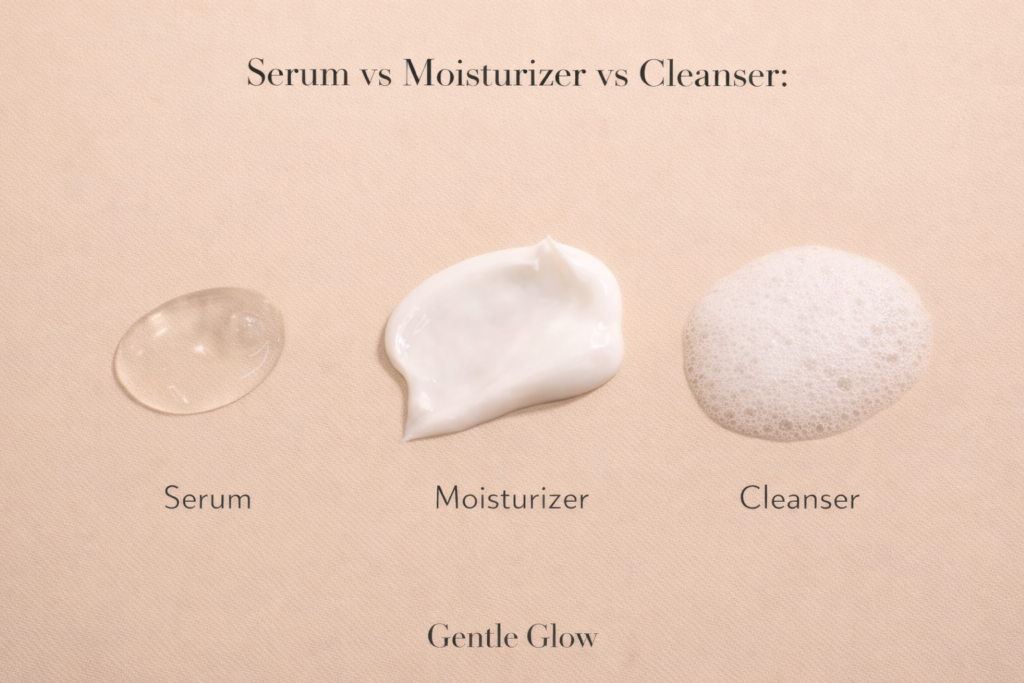
Niacinamide serums: the most targeted option
A niacinamide serum stays on the skin after application, making it a practical choice when your main concerns are excess oil, visible pores, or uneven texture.
Clinical studies demonstrating niacinamide benefits such as reduced facial sebum have used leave-on formulations, so this is the format with the strongest direct evidence behind it for targeted use.
In most routines, you don’t need several separate niacinamide products if a well-formulated serum already addresses your main concern.
Niacinamide moisturizers: when hydration and barrier support matter too
A moisturizer containing niacinamide can make more sense when your skin needs hydration and barrier support alongside niacinamide, rather than another dedicated treatment step.
Niacinamide has been shown to support the production of ceramides and other skin-barrier lipids, so incorporating it into a moisturizer can be particularly useful when your routine already contains exfoliating acids like salicylic acid (BHA) or other active products.
This format may suit you if:
- your skin is dehydrated or easily irritated
- your routine already contains several treatment steps
- you want to simplify your routine while keeping niacinamide
Niacinamide cleansers: A supporting step, not main treatment
A niacinamide cleanser has much shorter contact with your skin because it is rinsed away.
That makes it reasonable to expect a smaller direct niacinamide effect than from a leave-on product, but this distinction has not been proven in a direct cleanser-versus-serum clinical trial. The available clinical evidence for niacinamide benefits comes mainly from leave-on formulations.
So if oil control or visible pores are your main reason for using niacinamide, I wouldn’t rely on a cleanser as your only niacinamide product.
Toners and essences: optional layering
Some routines include niacinamide in toners or essences, which sit between cleansing and serums.
These tend to be lightweight and hydrating, offering a subtle boost rather than a targeted effect. They can work well in layered routines, but on their own, they’re usually not strong enough to noticeably improve oil control.
Which format should you choose?
The best format depends on what your skin actually needs — and how complex your routine already is.
- If your goal is visible oil control and pore improvement, a niacinamide serum is the most effective choice.
- If your skin is sensitive, easily irritated, dehydrated or already using strong actives, a moisturizer with niacinamide can help maintain balance and reduce irritation.
- If you want a simple routine and only need niacinamide as a supporting ingredient, a niacinamide cleanser can be enough.
- If you already use a multi-step routine where products are layered on the skin, a niacinamide toner or essence can act as a lightweight step that adds balance without making the routine feel heavier.
For most routines, you don’t need niacinamide in every step of your skincare routine. Choosing one well-formulated leave-on product that addresses your main concern is often a simpler approach than layering a niacinamide cleanser, toner, serum, and moisturizer together.
Why niacinamide pills (and how to fix it)
If your niacinamide serum pills, it’s not random — and it doesn’t mean the ingredient isn’t working.
Pilling usually comes from how the formula sits on the skin and interacts with the rest of your routine, especially in multi-step routines where several products are layered on the skin.
Why pilling happens
In most cases, pilling is caused by one of three things:
| Cause | What happens | How it feels on the skin |
|---|---|---|
| Heavy or polymer-rich formulas | The product can form a film on the skin | Rolls or flakes when you apply the next step |
| Too much product or incompatible layers | Multiple product films can build up and interact | Sticky, heavy, or more likely to roll |
| Layering too quickly | Products may not have time to settle before the next layer | Clumping when moisturizer or sunscreen is added |
The key idea is how each product forms a layer and interacts with the products applied on top of it.
Some niacinamide serums absorb cleanly into the skin, while others leave more of a film on it. When you add another product on top, that layer starts to break apart and roll, which is what you see as pilling.
How to prevent niacinamide from pilling
Fixing pilling is usually simple once you adjust how the product is used:
- Use a small amount rather than applying a thick layer
- Give each product time to settle before applying the next step
- Avoid rubbing the skin excessively when layering products
- Avoid combining with multiple thick or silicone-heavy products
When pilling is a sign of something else
If pilling happens consistently and your skin also feels tight, irritated, or increasingly sensitive, there may be more going on than a layering problem.
Those symptoms can occur when the skin barrier is already compromised, particularly in routines that contain several exfoliating or treatment products.
If that sounds familiar, simplifying the routine and focusing on barrier support may make more sense before adding additional layers.
What to expect from a well-formulated serum
A niacinamide serum that works well in your routine should:
- spread easily without excessive rubbing
- feel comfortable once applied
- layer reasonably well with your moisturizer and sunscreen
If a serum consistently feels heavy, sticky, or difficult to layer, it may simply not be the best formula for the rest of your routine.
How to use niacinamide serum for best results
To use niacinamide serum for best results, apply it after cleansing and before moisturizer and sunscreen. Use a small amount, keep the rest of your routine simple, and choose a formula that matches your main skin concern and works well with your other products.
Where niacinamide fits in your routine
Niacinamide serum usually fits after cleansing and before moisturizer and sunscreen.
In a simple routine, it usually sits between a gentle cleanser and a lightweight moisturizer, allowing it to absorb properly before being sealed in.
If you’re building your routine from scratch, you can follow a structured approach in a morning routine for oily, acne-prone skin, where niacinamide helps control oil before sunscreen is applied.
At night, it fits just as easily into a night routine designed to support clearer skin, especially when used alongside treatments that target breakouts or texture.
How to layer niacinamide with other products
Niacinamide is known for being easy to combine, but it still needs space to absorb.
It pairs well with salicylic acid treatments that clear pores, either in the same routine (applied in order) or on alternate days if your skin is more sensitive. It also layers well under a lightweight, non-comedogenic sunscreen, helping prevent the heavy feel that often leads to pilling.
The key is to avoid overloading the skin. Too many layers — especially thick serums or creams — can create buildup and make even a good formula feel less effective.
How long does niacinamide take to work?
How quickly you notice results depends on what you’re trying to improve. Research using 2% topical niacinamide suggests that niacinamide can reduce excess oil within 2–4 weeks, while changes in pigmentation may take around 4–8 weeks and visible pore improvement can take 4–12 weeks. This means you shouldn’t expect every niacinamide benefit to appear at the same time.
Niacinamide works gradually. With consistent use, most people notice less shine, smoother texture, and more stable skin within a few weeks — especially when the routine stays simple.
Part of niacinamide’s usefulness also comes from its effect on the skin barrier. Research published in the British Journal of Dermatology found that nicotinamide increased the synthesis of ceramides and other stratum-corneum lipids and improved measures of epidermal barrier function.
Niacinamide vs BHA vs retinoids: which one should you use?
Niacinamide, BHA, and retinoids solve different problems. Niacinamide is useful when oiliness and barrier support are priorities, BHA is better suited to clogged pores and blackheads, while retinoids are more targeted toward acne, texture, and long-term skin renewal.
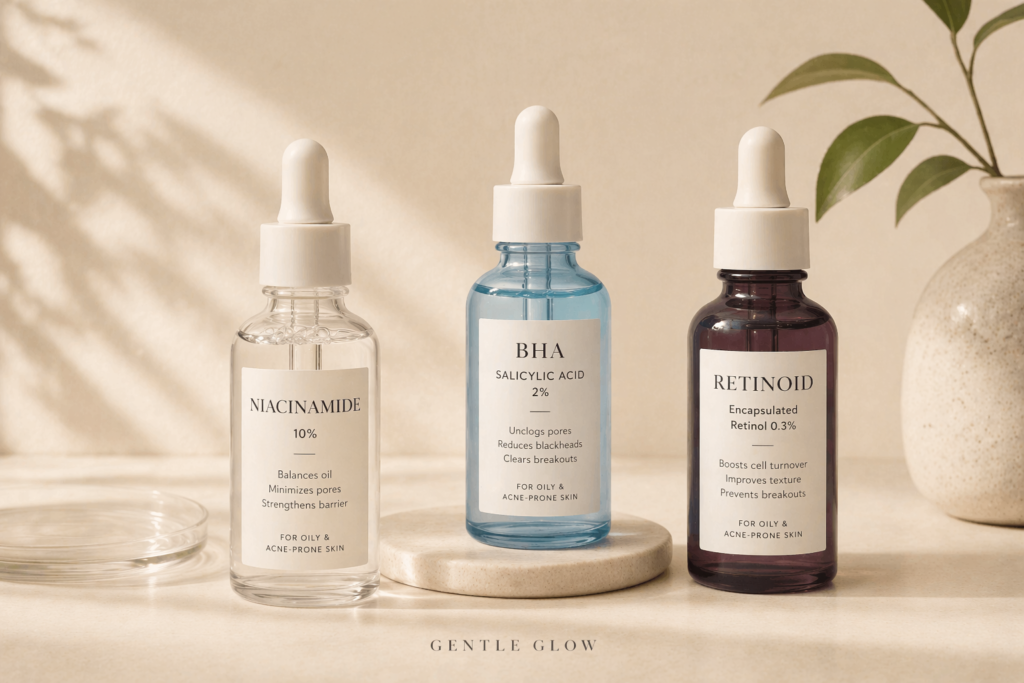
| Ingredient | What it does | Best for | When to use |
|---|---|---|---|
| Niacinamide | Helps regulate oil and supports the skin barrier | Oily skin, visible pores, overall balance | Morning or night |
| BHA (Salicylic Acid) | Exfoliates inside pores and helps reduce buildup | Blackheads, clogged pores, breakouts | Based on product directions and tolerance |
| Retinoids | Increase cell turnover and help prevent clogged pores | Acne, uneven texture, long-term skin improvement | Usually at night, depending on the product |
Niacinamide supports the skin, BHA clears the pores, and retinoids renew the skin — each plays a different role.
Common niacinamide mistakes that slow your progress
Niacinamide is often described as an “easy” ingredient — but in real routines, small mistakes can make it feel ineffective or even frustrating to use.
Most of these issues don’t come from the ingredient itself, but from how it’s used within a routine.
Using a higher percentage than your skin needs
It’s easy to assume that a 10% formula will work faster or better, but for oily skin, higher concentrations often create more problems than benefits.
They can feel heavier, increase the risk of pilling, and become harder to layer — especially in routines that already include exfoliants or sunscreen.
In most cases, a well-formulated 2–5% serum delivers more consistent results because it’s easier to use daily without irritation.
Layering too many products at once
In multi-step routines where several products are layered on the skin, adding too many serums or thick creams can lead to buildup, heaviness, and pilling.
The problem isn’t necessarily that the ingredients stop working. Sometimes the combination of product textures and films simply doesn’t layer well together.
Using multiple niacinamide products in the same routine
Using a niacinamide serum, toner, and moisturizer at the same time isn’t necessarily needed to get results.
It can also make your routine more complicated and add unnecessary layers, particularly if one well-formulated leave-on product already addresses your main concern.
For most routines, choosing one niacinamide product that fits your skin is a simpler place to start.
Expecting immediate results
Niacinamide doesn’t work overnight, and different benefits can appear on different timelines.
It improves the skin gradually by helping it become more balanced and stable over time, rather than forcing quick changes.
In practice, this gradual timeline is expected, with real-world studies showing visible improvements in skin balance within a few weeks of consistent daily use.
Ignoring how the product feels on your skin
One of the most overlooked factors is texture and skin feel.
If a serum feels sticky, heavy, or difficult to layer, it’s less likely to deliver consistent results over time.
A formula that feels comfortable and fits naturally into your routine may be easier to use consistently than one that feels sticky, heavy, or difficult to layer.
Final takeaway
Choosing the best niacinamide serum for oily and acne-prone skin depends on more than the percentage on the label. Your main skin concern, tolerance, supporting ingredients, and the rest of your routine all matter.
A 5% formula may be the better fit if your skin is dehydrated, sensitive, or already using several actives, while a 10% formula can make more sense when excess oil and visible pores are your main priorities and your skin tolerates it well.
What matters most is choosing a formula you can use comfortably and consistently.
The best niacinamide serum is the one that matches the problem you want to solve and fits naturally into your routine.
Frequently Asked Questions
Is 10% niacinamide too strong for acne-prone skin?
Not necessarily. A 10% niacinamide serum is not automatically too strong for acne-prone skin. Tolerability depends on the complete formula and how your skin responds to it, not concentration alone. If your skin is dehydrated, easily irritated, or already using several actives, a 5% formula may be easier to fit into your routine.
Why does my niacinamide serum pill under my sunscreen?
Pilling usually happens because the serum and sunscreen do not layer well together, or because too much product has been applied. It is not necessarily caused by a high niacinamide percentage or Zinc PCA.
Try using less serum, giving each layer time to settle, and avoiding excessive rubbing when applying your sunscreen. If it keeps happening, simplifying the number of products underneath your SPF can help.
Can niacinamide cause a “purging” breakout?
No, niacinamide does not cause purging. Unlike Salicylic Acid (BHA) or Retinoids, niacinamide does not speed up cell turnover, so it cannot “pull” clogs to the surface. If you see new bumps after starting a serum, it is likely a reaction to a high concentration (10%+) or a “sensitivity breakout” caused by a compromised skin barrier.
Can I use niacinamide with Acretin (Tretinoin)?
Absolutely. Niacinamide is actually the perfect partner for retinoids like Acretin. It stimulates ceramide production, which acts as a natural buffer against the dryness and peeling often caused by vitamin A. Applying your niacinamide serum first helps your skin tolerate the treatment much better, leading to a smoother, more resilient “Gentle Glow” over time.
How long should I wait to apply niacinamide after Salicylic Acid (BHA)?
There is no established waiting period required between salicylic acid and niacinamide. If you use separate products, let the first layer settle enough to apply the next comfortably. If your skin becomes irritated when you use both in the same routine, using them at different times or on alternate days may be easier to tolerate.
How long does niacinamide take to work for oily skin?
Most people see results within 2–4 weeks. Niacinamide works gradually by improving oil balance and skin stability, so consistent use matters more than strength or frequency.
Is niacinamide enough to treat acne on its own?
Niacinamide helps control oil and reduce inflammation, but it’s usually not enough on its own for active acne. For better results, it’s often combined with ingredients like salicylic acid or retinoids that target clogged pores and breakouts directly.
Sources and References
- Draelos ZD, Matsubara A, Smiles K. The Effect of 2% Niacinamide on Facial Sebum Production. Journal of Cosmetic and Laser Therapy. 2006;8(2):96–101.
- Tanno O, Ota Y, Kitamura N, Katsube T, Inoue S. Nicotinamide Increases Biosynthesis of Ceramides as Well as Other Stratum Corneum Lipids to Improve the Epidermal Permeability Barrier. British Journal of Dermatology. 2000;143(3):524–531.
- Cosmetic Ingredient Review Expert Panel. Final Report of the Safety Assessment of Niacinamide and Niacin. International Journal of Toxicology. 2005.
- Hakozaki T, Minwalla L, Zhuang J, et al. The Effect of Niacinamide on Reducing Cutaneous Pigmentation and Suppression of Melanosome Transfer. British Journal of Dermatology. 2002;147(1):20–31.
- Topical Niacinamide in Daily Skincare: A 3-Week Real-World Cosmetic Study. Applied Sciences. 2025.
Medical Disclaimer
Gentle Glow guides are developed using peer-reviewed dermatology research and established clinical guidelines. The information provided is for educational purposes only and does not replace professional medical advice, diagnosis, or treatment. Always consult a board-certified dermatologist or qualified healthcare provider before starting new active skincare treatments.