
The best night routine oily acne-prone skin requires three essential steps: a gentle double cleanse to remove oxidized sebum, a Salicylic Acid (BHA) treatment to clear congested pores, and a lightweight moisturizer to reduce transepidermal water loss (TEWL). This 3-step Gentle Glow method supports overnight repair and helps regulate oil production without disrupting the skin barrier.
Table of Contents
What Happens to Your Skin at Night?
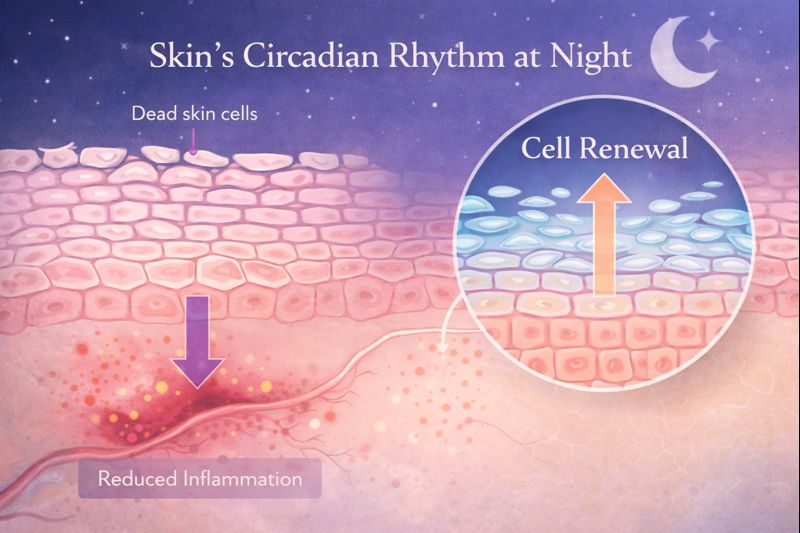
Your skin follows a circadian rhythm, just like the rest of your body. Research published by the National Institutes of Health (NIH) shows that the skin’s biological clock regulates repair, inflammation, and barrier recovery during sleep.
At night:
- Cell renewal increases as keratinocyte turnover accelerates across the epidermis, ultimately strengthening the stratum corneum.
- Barrier repair becomes more active
- Inflammation naturally decreases
- Skin becomes more receptive to treatment ingredients
Without UV exposure, sweat, and environmental stressors, your skin can focus on repair rather than defense. A thoughtful night routine takes advantage of this biological window instead of overwhelming the skin with harsh treatments.
Understanding this overnight repair cycle is just one part of maintaining balanced skin. For a deeper look at long-term oil regulation, ingredient selection, and barrier health, explore our complete guide to oily and acne-prone skin.
For a deeper scientific overview of the skin’s circadian rhythm and nighttime repair mechanisms, see this peer-reviewed review published in the National Institutes of Health (NIH).
Step 1: Double Cleansing (Without Stripping)
One of the most common mistakes with oily skin is over-cleansing. Harsh formulas disrupt the lipid barrier and trigger rebound oil production, leaving skin shinier and more reactive over time.
This first step sets the foundation for an effective night routine for oily and acne-prone skin.
When the barrier is compromised, sebaceous glands compensate by producing more sebum. The result is persistent congestion, irritation, and recurring breakouts — including blackheads and deeper acne lesions (which we explain step by step in our guide on how to get rid of blackheads permanently).
Double cleansing works differently — it removes oxidized sebum, sunscreen, and buildup without damaging barrier function. Choosing the right cleanser for oily and acne-prone skin ensures you clear pores without triggering inflammation or excessive dryness.
Why Double Cleansing Works for Oily Skin
Oily skin doesn’t just have oil—it accumulates oxidized sebum, sunscreen, pollution, and debris that harden inside pores. When left overnight, this oxidized oil can darken and compact inside the pore—a process known as sebum oxidation, which we explain in detail in our guide on why skin oil turns black and how to prevent it. Double cleansing works because it respects microbiome balance and removes buildup without triggering inflammation:
- Oil-soluble buildup: sunscreen, makeup, oxidized sebum
- Water-soluble debris: sweat, dirt, environmental pollutants
A single cleanser often can’t address both effectively without stripping the skin.
How to Double Cleanse Properly
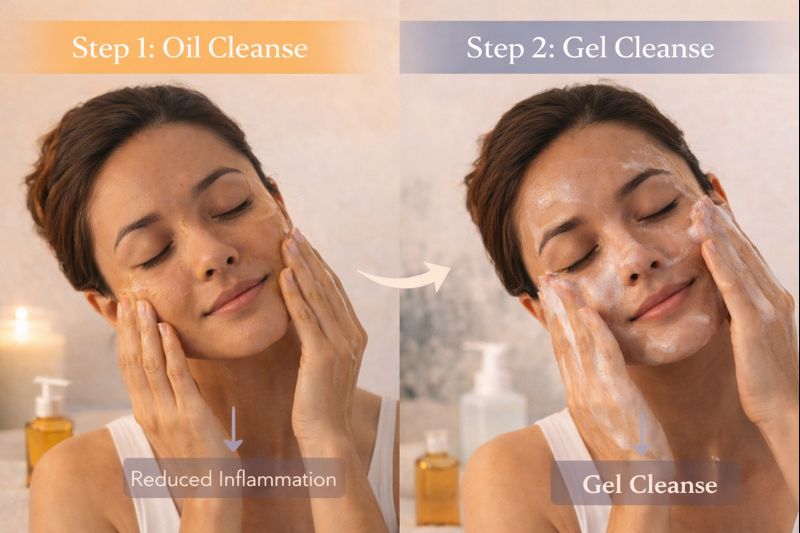
- First cleanse: Gentle oil-based cleanser or micellar water to dissolve buildup
- Second cleanse: Mild gel or foam cleanser to remove residue while protecting the barrier
The goal is clean, calm skin—not tight or squeaky skin.
Step 2: The Treatment Layer (Salicylic Acid / BHA)
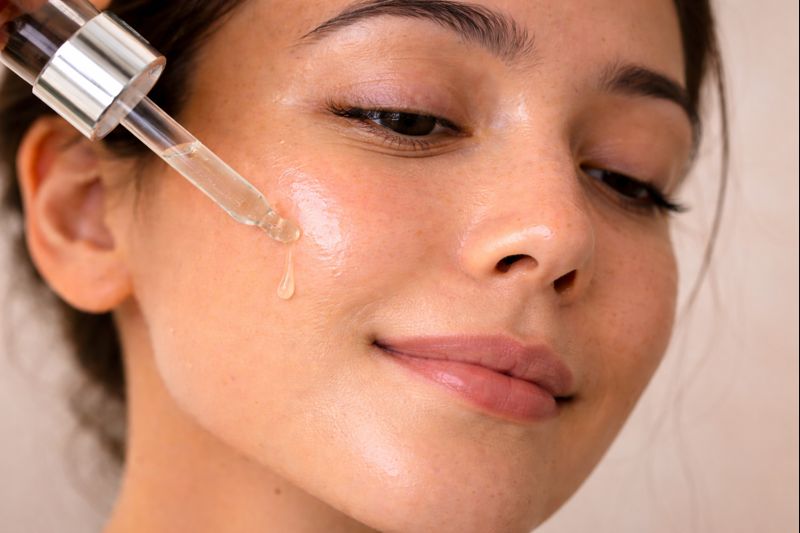
When it comes to acne-prone, oily skin, Salicylic Acid (BHA) remains one of the most effective dermatology-approved treatments. According to the American Academy of Dermatology (AAD), salicylic acid is a cornerstone acne treatment for oily skin.
Salicylic acid is lipophilic, meaning it is attracted to oil. This allows it to penetrate deep into pores and dissolve the mixture of sebum and dead skin cells that cause congestion—rather than just exfoliating the surface.
Why Salicylic Acid Works Especially Well at Night
At night, skin is not exposed to UV radiation, heat, or sweat. In hot or humid climates, sebum oxidizes faster and becomes stickier. Salicylic acid helps keep pores clear by targeting this buildup before it turns into inflammation.
How to Use Salicylic Acid Safely
- Start 2–4 nights per week
- Apply to clean, dry skin
- Avoid pairing with retinoids or vitamin C on the same night
- Always follow with a non-comedogenic moisturizer
If your skin feels tight after salicylic acid — even though it still looks oily — you may be dealing with dehydrated oily skin, where increased water loss triggers reactive sebum production. In that case, reduce frequency and prioritize barrier repair before increasing exfoliation.
More is not better. Consistency protects results.
Step 3 in Your Night Routine Oily Acne-Prone Skin: Hydration Without Clogging
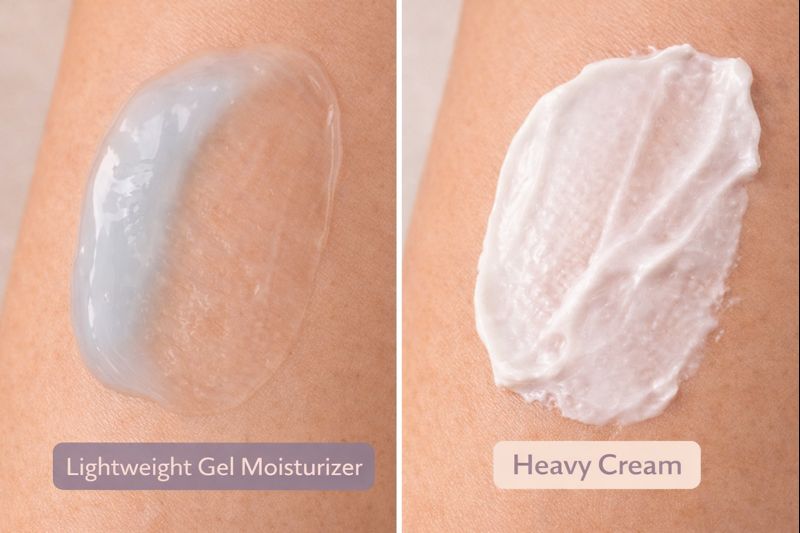
Skipping moisturizer is one of the most common mistakes in a night routine for oily and acne-prone skin. Oily skin can still be dehydrated, and dehydration increases transepidermal water loss (TEWL), signaling the skin to produce more oil.
Dermatology research consistently shows that barrier damage plays a central role in persistent acne. Without adequate hydration, skin becomes inflamed, reactive, and less able to regulate itself.
The key to proper moisturizing is not using more product, but choosing a non-comedogenic moisturizer formulated for oily skin, with ingredients that hydrate without clogging pores.
What to Look for in a Non-Comedogenic Moisturizer
- Hyaluronic acid for lightweight hydration
- Ceramides to repair the barrier
- Niacinamide to regulate oil and calm redness
Proper hydration reduces TEWL and allows oil production to normalize.
What Makes Oily Skin Worse Overnight?
Even with the right routine, certain habits can quietly disrupt your skin barrier and trigger rebound oil production while you sleep.
| Nighttime Mistake | Why It Increases Breakouts | The 2026 Fix |
|---|---|---|
| Using harsh physical scrubs | Creates micro-tears in the skin barrier and increases inflammation linked to C. acnes | Use a 2% Salicylic Acid (BHA) exfoliant to dissolve oil inside the pore instead of scrubbing the surface |
| Skipping the first cleanse | Leaves SPF, pollution, and oxidized sebum on the skin, reducing treatment effectiveness | Use micellar water or a cleansing balm before your gentle gel cleanser |
| Using heavy sleeping masks | Traps heat and sweat against the skin, increasing overnight congestion | Apply a breathable, gel-based moisturizer with ceramides to support barrier repair |
| Layering multiple active treatments | Overloads the barrier and increases transepidermal water loss (TEWL) | Rotate treatments and prioritize consistency over intensity |
Final Takeaway
Healthy skin isn’t achieved through intensity — it’s built through barrier stability and consistency. Following a consistent night routine for oily and acne-prone skin supports repair, regulates oil production, and reduces congestion over time..
Frequently Asked Questions (FAQ)
Can I use retinol with salicylic acid?
You can use Retinol and Salicylic Acid in your routine, but you should not apply them on the same night. Layering these two active ingredients on the same night can increase irritation and disrupt barrier stability. Instead, alternate them on different nights (e.g., BHA on Monday, Retinol on Tuesday) to prevent irritation.
How often should I double cleanse?
You should double cleanse every single night if you wear sunscreen, makeup, or live in a highly polluted area. The first cleanse breaks down oil-soluble debris, while the second cleanse washes it away. If you did not leave the house or wear SPF, a single gentle cleanse is sufficient.
Will moisturizing make oily skin worse?
No, using the right moisturizer will actually make oily skin better by stopping rebound oil production. When you skip moisturizer, your skin experiences transepidermal water loss (TEWL) and overproduces sebum to compensate. A non-comedogenic gel moisturizer stops this cycle.
Can I skip hydration if my skin feels oily?
You should never skip hydration, even if your skin feels exceptionally oily. Oily skin is often dehydrated underneath; the excess surface oil is a distress signal from a damaged barrier. Providing lightweight, water-based hydration calms the sebaceous glands.
How long before I see results?
You will typically see improvements in your skin’s oil balance within 2 to 4 weeks, but clearing deep acne takes 4 to 6 weeks. Because the skin’s natural cellular turnover cycle takes about 28 days, you must remain consistent with your routine for at least a month to see permanent changes.
Medical Disclaimer
Gentle Glow guides are developed using peer-reviewed dermatology research and established clinical guidelines. The information provided is for educational purposes only and does not replace professional medical advice, diagnosis, or treatment. Always consult a board-certified dermatologist or qualified healthcare provider before starting new active skincare treatments.

About the Author
Founder, Gentle Glow | Evidence-Based Skincare & Skin Biology
Hi, I’m the Founder of Gentle Glow. After years of struggling with oily and acne-prone skin—and cycling through harsh products that disrupted my barrier rather than improving it—I began researching the science behind sebum regulation, skin biology, and non-comedogenic formulation.
Gentle Glow was created to simplify evidence-based skincare. Every routine shared here focuses on root causes: barrier function, oil balance, and ingredient compatibility. My goal is to translate dermatology-backed principles into realistic, sustainable routines that work with your skin—not against it.
Beyond topical care, I believe healthy skin reflects overall balance, including nutrition, climate awareness, and lifestyle habits. Gentle Glow is built to help you make informed decisions with clarity, consistency, and confidence.