Everything You Need to Know About Oily Skin

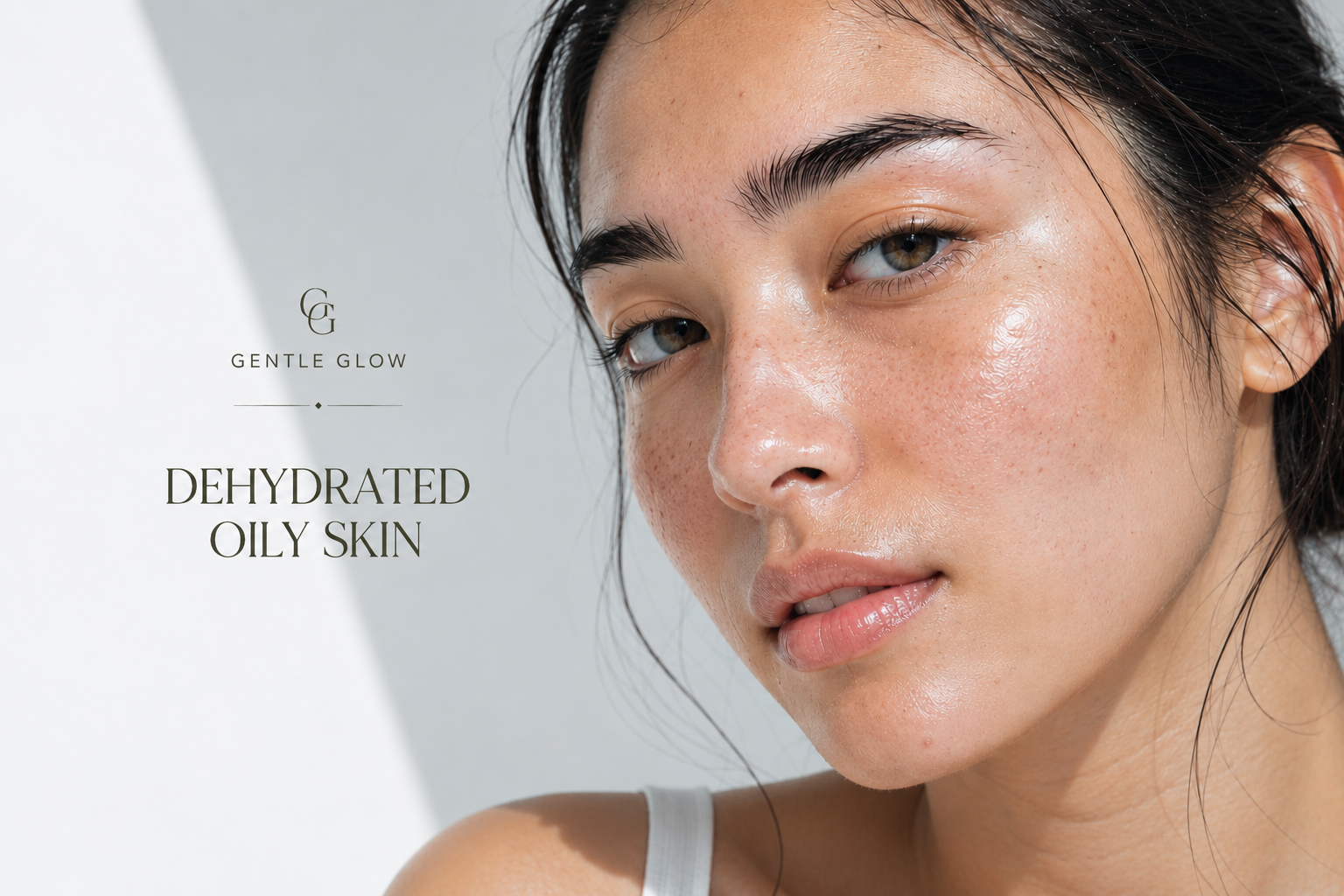
Dehydrated Oily Skin: Why Your Face Feels Tight but Still Breaks Out

Founder & Editorial Lead at Gentle Glow
Gentle Glow Editorial Team • Updated May 2026 • Evidence-based skincare
Dehydrated oily skin happens when the skin lacks enough water but continues producing surface oil, creating the confusing combination of tightness, shine, and breakouts at the same time. This imbalance often develops after over-cleansing, harsh acne routines, or repeated exposure to dry indoor environments.
- Lightweight hydration and barrier-supportive routines usually work better than harsh oil control.
- Over-stripping oily skin can leave it shinier and more uncomfortable over time.
- Indoor air conditioning and aggressive acne treatments often worsen dehydration in oily skin.
Table of Contents
What is Dehydrated Oily Skin?
Can oily skin be dehydrated? Yes. Unlike dry skin, which lacks oil, dehydrated oily skin lacks enough water while still continuing to produce surface oil. This can leave the skin feeling tight, shiny, rough, or breakout-prone at the same time — especially after over-cleansing, harsh acne treatments, or long hours in dry indoor environments.
Many people mistake this combination for “extra oily skin” and respond by stripping the skin even more aggressively. But when hydration levels drop, oily skin often becomes more reactive and less comfortable rather than clearer.
This is why oil and hydration are not the same thing. Oily skin can still need water support, even when the surface looks shiny.
If you’re unsure how oil production works in the first place, our complete guide to oily and acne-prone skin explains the biology behind sebum production, pore behavior, and why oily skin does not always behave consistently.
Dry Skin vs Dehydrated Oily Skin vs Oily Skin
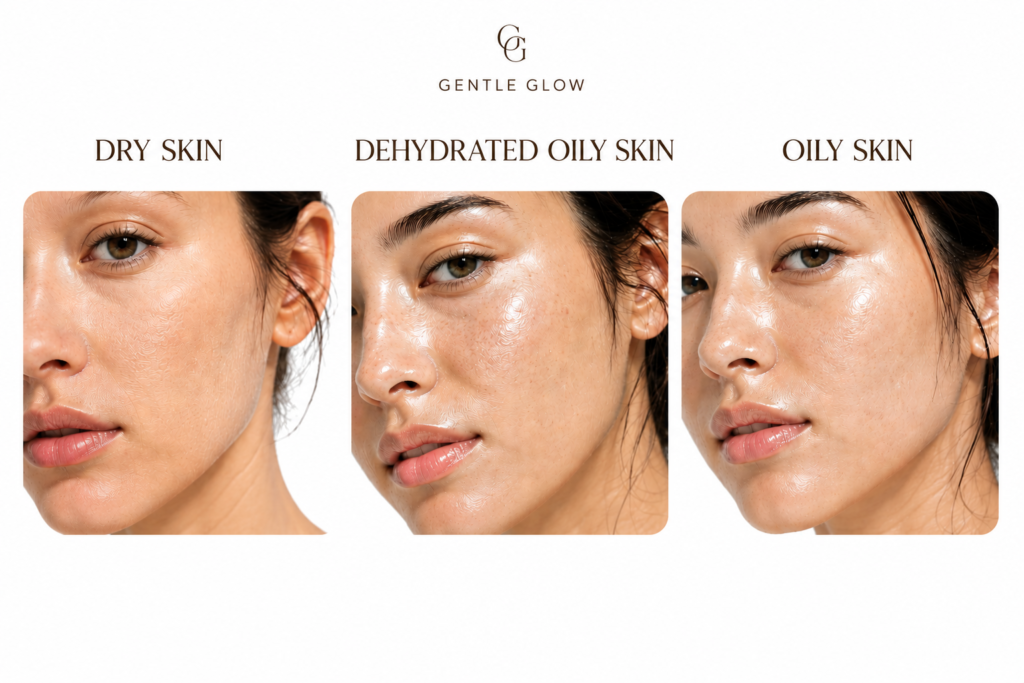
The easiest way to understand dehydrated oily skin is to compare it directly with dry skin and naturally oily skin.
| Feature | Dry Skin | Dehydrated Oily Skin | Oily Skin |
|---|---|---|---|
| Main imbalance | Low oil levels | Low water levels | Higher oil production |
| Oil production | Low | Normal to high | High |
| Surface feel | Dry or rough | Tight but shiny | Oily or greasy |
| Pore appearance | Less visible | More noticeable or congested | More visible |
| Tightness | Constant dryness | Often after cleansing or indoor AC | Less common |
| Surface appearance | Dull or flaky | Shiny but uncomfortable | Reflective or oily |
| Breakout tendency | Less common | Congestion and deeper breakouts | Blackheads and clogged pores |
| Response to moisturizer | Immediate comfort | Gradual balance improvement | Helps reduce over-stripping |
| Most helpful approach | Richer moisture support | Lightweight hydration + barrier support | Balanced oil control |
Why Oily Skin Can Feel Tight and Greasy at the Same Time
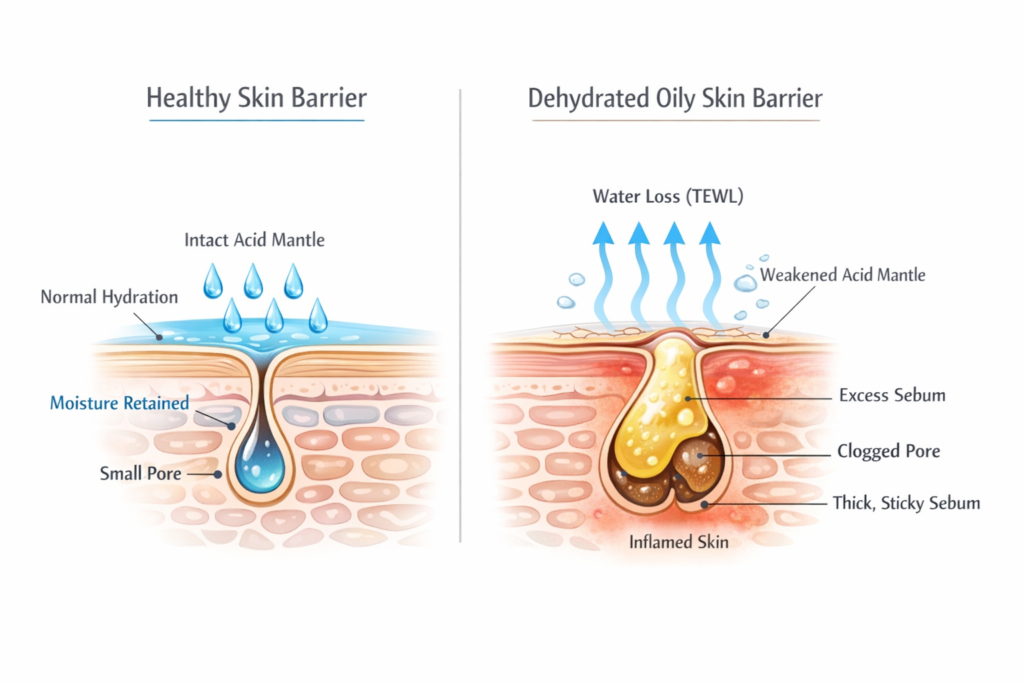
If your skin feels tight but still looks shiny, the issue is usually not “too much oil” alone. In many cases, oily skin is lacking enough water while still continuing to produce surface oil at the same time.
Your skin barrier normally helps keep hydration balanced by slowing down water loss from the surface. But when that balance becomes disrupted — often from over-cleansing, excessive exfoliation, dry indoor air, or harsh acne routines — water escapes more easily while oil production may continue underneath.
This is what creates the confusing combination of:
- tightness after cleansing
- shine by midday
- rough or flaky texture underneath oil
- makeup separating more easily
- breakouts that feel deeper or more stubborn
When hydration levels drop, oily skin often becomes less balanced and more reactive. Instead of feeling comfortable, the surface may start looking shinier while the skin underneath feels tighter or more sensitive.
In some cases, dehydration can also make oil feel thicker and harder for the skin to regulate normally. Combined with uneven shedding of dead skin cells, this may contribute to congestion and breakouts that feel more persistent than usual.
This is one reason aggressive oil-control routines can sometimes backfire. Repeated over-cleansing, harsh exfoliation, or constantly trying to “dry out” oily skin may temporarily reduce shine, but can also leave the skin feeling increasingly uncomfortable over time.
For many people, the goal is not removing all oil completely — it is helping oily skin maintain a healthier balance between hydration and oil production.
If your skin has become persistently tight, reactive, or uncomfortable, our guide on how to fix a damaged skin barrier explains how barrier-focused recovery routines help restore balance over time.
Who Is Most Prone to Dehydrated Oily Skin?
Dehydrated oily skin is more common than many people realize — especially in certain environments and skincare routines.
You may be more prone to it if you:
- use salicylic acid or other exfoliating acids too frequently
- spend long hours in air-conditioned indoor environments
- wash your face multiple times throughout the day
- avoid moisturizer because your skin already feels oily
- layer several acne treatments at the same time
- constantly try to keep your skin completely matte
Over time, these habits can leave oily skin feeling tight, shiny, reactive, and less comfortable overall. Instead of becoming more balanced, the skin may start producing more visible surface oil while still feeling dehydrated underneath.
What Usually Causes Dehydrated Oily Skin?
In many cases, dehydrated oily skin develops gradually through routines and environments that focus too heavily on removing oil without maintaining enough hydration support.
Overusing Exfoliating Acids
Ingredients like salicylic acid (BHA) can be extremely helpful for oily and acne-prone skin because they help clear excess oil and congestion. But when used too frequently — or layered with multiple active ingredients at once — they may leave the skin feeling increasingly tight, shiny, or reactive over time.
If your skin feels uncomfortable after exfoliating, it may be a sign that exfoliation has outpaced hydration and recovery.
We explore this more deeply in our guide to salicylic acid for oily and acne-prone skin.
Over-Cleansing and Harsh Foaming Routines
Many people with oily skin associate “clean” with “completely matte.” But repeatedly washing the skin or using strong foaming cleansers can sometimes leave oily skin feeling tighter and less balanced instead of fresher.
This is one reason some people notice:
- increased shine later in the day
- tighter skin after cleansing
- more noticeable congestion
- oil returning quickly after washing
Using a gentler cleanser often helps oily skin feel more comfortable and predictable over time.
Dry Indoor Air and Heavy AC Exposure
In hot climates, heavily air-conditioned environments, and during periods of frequent outdoor exercise, oily skin can lose water more quickly from the surface. This is especially common during summer, when skin repeatedly shifts between heat, sweat, and cooler indoor environments. In these situations, a more seasonal approach to skincare—including thoughtful post-workout skincare habits—can help support hydration and overall skin comfort.
Even when the surface still looks oily, the skin underneath may start feeling tighter, rougher, or more uncomfortable throughout the day.
This is also why lightweight hydration ingredients like glycerin and hyaluronic acid often work best when paired with barrier-supportive moisturizers rather than used completely on their own.
We explore this indoor dehydration cycle more deeply in our guide to Summer AC rebound sebum.
Skipping Moisturizer Because Skin Feels Oily
One of the most common mistakes in oily skincare routines is avoiding moisturizer completely.
It seems logical:
“If my skin already looks oily, why add more?”
But moisturizer is not simply about adding oil — it helps reduce water loss and supports overall skin comfort. Without enough hydration support, oily skin may start feeling tighter, shinier, and more reactive instead of more balanced.
Lightweight, non-heavy moisturizers are often easier for dehydrated oily skin to tolerate consistently.
Layering Too Many Acne Treatments Together
When breakouts persist, many people start combining multiple strong treatments at once:
- exfoliating acids
- retinoids
- benzoyl peroxide
- clay masks
- drying spot treatments
Over time, this can make oily skin feel increasingly uncomfortable and harder to manage consistently.
In many cases, simplifying the routine and rebuilding hydration balance helps the skin behave more predictably again.
Learning how to space exfoliation and recovery nights more carefully often helps oily skin feel less reactive and easier to manage over time.
How to Support Dehydrated Oily Skin
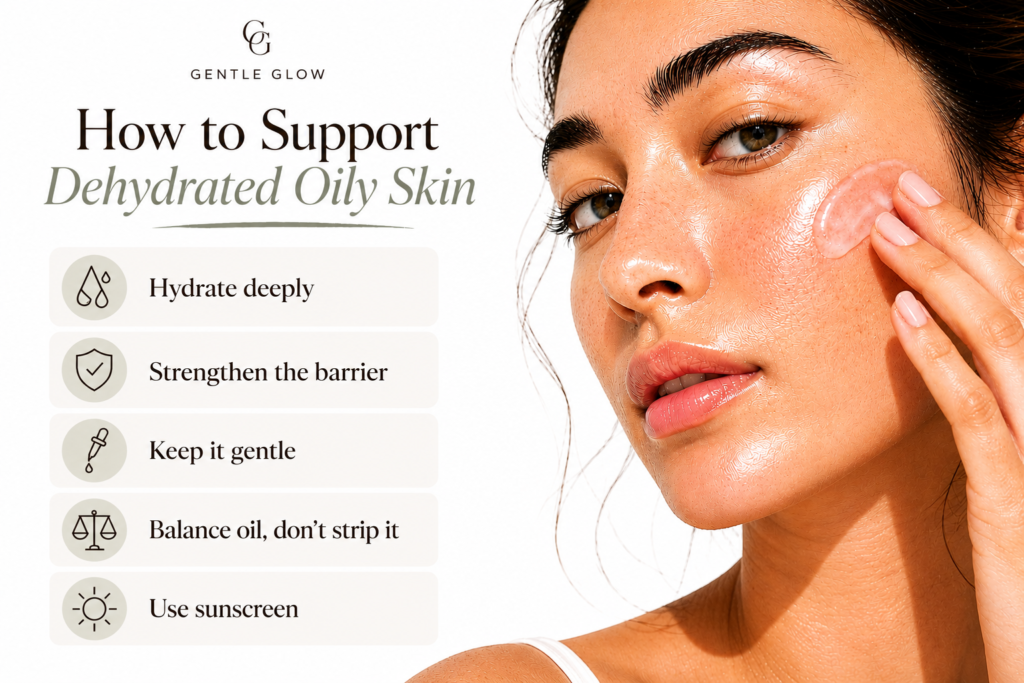
Once dehydrated oily skin is identified, the goal is not to remove as much oil as possible. The focus is helping the skin regain a healthier balance between hydration, comfort, and oil production over time.
This is where many oily skincare routines become too aggressive. Instead of calming the imbalance, they continue layering stronger cleansers, exfoliants, and drying treatments in response to increased shine.
In many cases, oily skin responds better to:
- reducing over-cleansing
- spacing exfoliation more carefully
- using lightweight hydration consistently
- avoiding too many strong actives at once
- focusing on comfort instead of constant mattifying
If your skin has become persistently tight, reactive, or uncomfortable, temporarily simplifying your routine may help restore balance more effectively than increasing treatment intensity.
For example, many people notice improvement when they:
- pause daily exfoliation for several days
- reduce the number of active ingredients used together
- switch to gentler cleansers and lightweight moisturizers
- reintroduce stronger treatments more gradually afterward
This does not mean oily skin should avoid actives permanently. It simply means that hydration and recovery often need to happen alongside acne treatment — not separately from it.
Ingredients That Help Support Dehydrated Oily Skin
When oily skin becomes dehydrated, the goal is not simply adding heavier products. The focus is supporting hydration, reducing unnecessary water loss, and helping the skin feel more balanced over time.
In dry climates and heavily air-conditioned environments, the texture and layering of products can matter just as much as the ingredients themselves.
Humectants: Supporting Water Balance
Dehydrated oily skin lacks water — not oil. This is where humectants become important.
Humectants help attract water into the upper layers of the skin, but some tend to feel more comfortable than others depending on the environment.
Glycerin
In dry indoor environments, glycerin is often one of the most reliable hydration ingredients for oily skin. It helps bind water to the skin and tends to work especially well in hot or low-humidity climates.
Hyaluronic Acid
Hyaluronic acid can also help support hydration, particularly when applied to slightly damp skin and followed with a lightweight moisturizer. Used completely on its own in very dry air, however, it may not always feel as comfortable for dehydrated oily skin.
In many cases, hydration ingredients work best when paired with consistent barrier support rather than used as isolated steps.
Ceramides: Supporting the Skin Barrier
Ceramides are naturally found in the skin barrier and help reduce excess water loss from the surface.
In oily but dehydrated skin, lightweight moisturizers containing ceramides often help improve:
- skin comfort
- hydration balance
- tightness after cleansing
- reactive shine over time
Gel-cream textures are usually easier for oily skin to tolerate consistently than heavier occlusive creams.
Properly formulated barrier-supportive moisturizers do not automatically clog pores simply because they focus on hydration.
Niacinamide: The Balancing Ingredient
Niacinamide is especially useful because it supports both barrier function and gradual oil regulation at the same time. It’s also frequently paired with complementary ingredients that support sebum regulation, allowing formulations to improve oil balance without compromising hydration.
Niacinamide may help:
- improve barrier resilience
- reduce visible oiliness over time
- calm irritation from over-stripping routines
- support overall skin balance
Unlike aggressive oil-control ingredients, niacinamide supports oily skin without trying to completely dry it out.
For many people with dehydrated oily skin, this creates a more comfortable balance between hydration and oil control.
Lightweight Occlusives: Sealing Hydration Without Feeling Heavy
The word “occlusive” often sounds intimidating for acne-prone skin, but lightweight occlusive ingredients can help slow down water loss without making the skin feel greasy.
Ingredients like:
- squalane
- lightweight silicones
- gel-cream moisturizers
can help lock hydration into the skin while still feeling comfortable for oily skin types.
The goal is not creating a heavy layer on the skin — it is helping hydration stay more stable throughout the day.
The Core Principle
With dehydrated oily skin, the goal is not removing all oil. It is helping the skin maintain a healthier balance between hydration, barrier support, and oil production.
Many oily skincare routines fall into the same cycle:
Strip Oil → More Tightness → More Shine → More Actives → More Irritation
But oily skin often responds better to a different approach:
Hydration → Barrier Support → More Balanced Oil Production → Fewer Breakouts
As hydration improves, skin usually feels less tight after cleansing, surface shine becomes easier to manage, and congestion often feels less persistent over time.
Building a Routine for Dehydrated Oily Skin
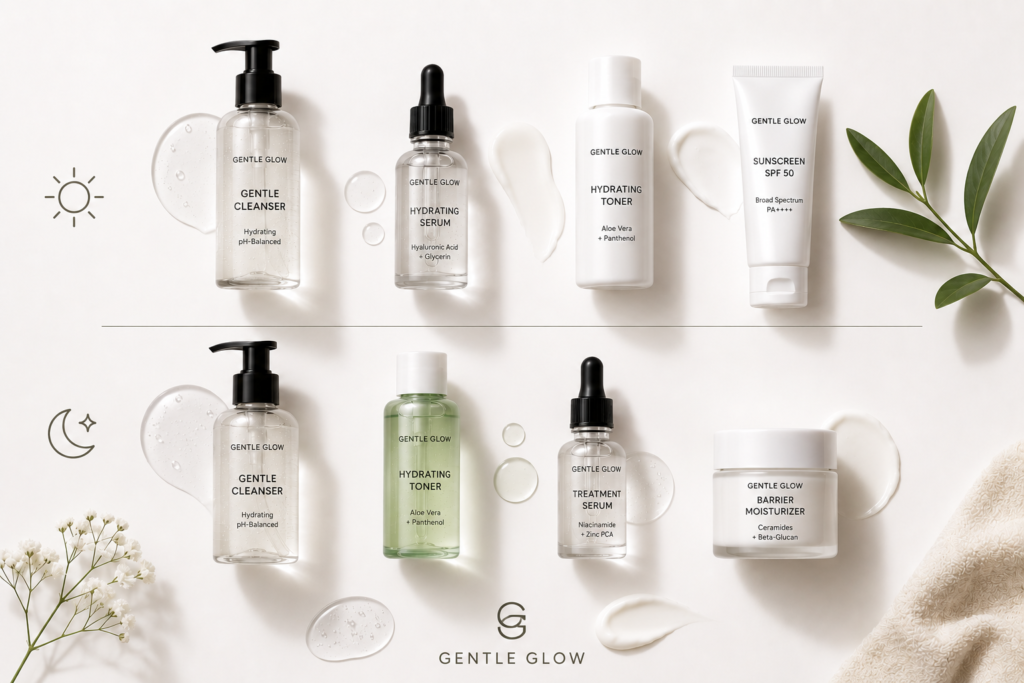
Once dehydrated oily skin starts feeling calmer and more comfortable again, the next step is building a routine that supports hydration consistently without overloading the skin.
The goal is not using more products. It is choosing routines that help oily skin feel balanced, predictable, and easier to manage over time.
Morning Routine: Protect Hydration Throughout the Day
In the morning, focus on reducing unnecessary dryness while helping the skin stay comfortable throughout the day.
A simple routine often works best:
- a gentle cleanser or lukewarm water rinse
- a lightweight hydration serum containing ingredients like glycerin or hyaluronic acid
- a barrier-supportive moisturizer with ingredients like ceramides or niacinamide
- a hydration-friendly sunscreen that does not leave the skin overly matte or tight
Hydration also plays an important role in overall skin comfort. When the skin becomes dehydrated, it often feels more reactive to environmental stressors and everyday products. This can be particularly noticeable during hot, humid weather, when some people find that other skincare products, including fragrances can irritate the skin, more easily than usual.
Over-cleansing in the morning often makes oily skin feel shinier and more reactive later in the day.
Night Routine: Support Recovery Without Overloading the Skin
Evening routines are usually where oily skin becomes overcomplicated. Layering too many exfoliants, acne treatments, and drying products together can make dehydrated oily skin harder to manage consistently.
At night, focus on:
- cleansing gently
- restoring hydration
- keeping active ingredients balanced
- avoiding unnecessary irritation
For many people, lightweight moisturizers containing ceramides, niacinamide, or glycerin help the skin feel more comfortable overnight without creating heaviness.
Once hydration feels more stable, stronger treatments like exfoliating acids or retinoids can usually be reintroduced more gradually and consistently.
Our night routine for oily and acne-prone skin explains how to structure active ingredients more carefully without overwhelming the skin barrier.
Reintroducing Actives Gradually
Once your skin feels more comfortable again — with less tightness, less reactive shine, and better tolerance to hydration — stronger active ingredients can usually be reintroduced more gradually.
For many people, this means starting with exfoliation only once or twice per week instead of daily use. If the skin starts feeling tight, overly shiny, or uncomfortable again, it’s often a sign the routine needs more recovery time between active nights.
The goal is not avoiding exfoliation completely. It is using active ingredients in a way that supports clearer skin without pushing oily skin back into dehydration.
What to Expect Over the Next Few Weeks
With more consistent hydration and a less aggressive routine, most people notice changes gradually rather than all at once.
Usually, the first improvement is that the skin feels less tight and uncomfortable after cleansing. Over time, surface shine often starts looking less harsh or “plastic-like,” while congestion and inflamed breakouts become easier to manage.
Many people also notice that their skin feels calmer overall, with pores appearing less stretched once dehydration and reactive oiliness become more balanced.
This process is usually gradual rather than instant. But as hydration improves, oily skin often becomes more predictable and easier to regulate without constantly increasing treatment intensity.
What Research Shows About Dehydrated Oily Skin
The connection between dehydration, barrier disruption, and oily skin is not just anecdotal. Dermatology research increasingly shows that acne-prone skin often has higher water loss and greater barrier sensitivity compared to more balanced skin types.
Studies on transepidermal water loss (TEWL) have found that acne-prone skin tends to lose water more easily while also producing higher levels of sebum, which may help explain why oily skin can feel both shiny and uncomfortable at the same time — especially when routines become too aggressive.
Research on niacinamide also helps explain why it works so well in dehydrated oily skin routines. Beyond helping regulate visible oiliness, niacinamide supports the skin’s natural ceramide production, helping improve barrier resilience and overall hydration balance over time.
There is also growing interest in how different humectants behave in dry environments. In low-humidity settings — including heavily air-conditioned spaces — ingredients like glycerin often provide more stable long-term hydration support when paired with a moisturizer, while lighter hydration serums may feel more effective when layered underneath barrier-supportive creams.
Together, this research supports a simpler idea: oily skin usually responds better to balanced hydration and barrier support than repeated over-stripping.
Final Takeaway
Dehydrated oily skin is often less about “too much oil” and more about imbalance. When oily skin feels tight, shiny, and reactive at the same time, the solution is usually not harsher treatments — it is better hydration, gentler routines, and stronger barrier support.
For many people, oil becomes easier to manage once the skin feels balanced again.
Frequently Asked Questions
Can oily skin be dehydrated?
Yes. Oily skin refers to excess oil production, while dehydrated skin lacks enough water. This is why skin can feel both tight and shiny at the same time.
Why does my skin feel tight but look oily?
This usually happens when the skin loses hydration but continues producing surface oil. The result can be tightness, shine, rough texture, and breakouts at the same time.
Does drinking water help dehydrated skin?
Drinking water supports overall health, but dehydrated skin is usually more related to a weakened skin barrier and water loss from the surface. Barrier-supportive skincare often makes a bigger visible difference.
What moisturizer is best for dehydrated oily skin?
Lightweight gel-cream moisturizers with ingredients like ceramides, glycerin, and niacinamide are usually best because they support hydration without feeling heavy or greasy.
How long does dehydrated oily skin take to improve?
Many people notice less tightness and irritation within a few weeks of using a gentler, more hydration-focused routine. Improvement is usually gradual rather than instant.
Is niacinamide good for dehydrated oily skin?
Yes. Niacinamide helps support the skin barrier while also reducing visible oiliness over time, making it especially helpful for dehydrated oily skin.
Sources and References
- Skin Barrier Parameters in Acne Vulgaris versus Normal Controls: A Cross-Sectional Analytic Study
https://www.dovepress.com/skin-barrier-parameters-in-acne-vulgaris-versus-normal-controls-a-cros-peer-reviewed-fulltext-article-CCID - Nicotinamide increases biosynthesis of ceramides as well as other stratum corneum lipids to improve the epidermal permeability barrier
https://pubmed.ncbi.nlm.nih.gov/10971324/ - Glycerol and the skin: holistic approach to its origin and functions
https://pubmed.ncbi.nlm.nih.gov/18510666/ - Glycerol accelerates recovery of barrier function in vivo
https://pubmed.ncbi.nlm.nih.gov/10598752/
This article is based on dermatology research and peer-reviewed studies on skin barrier function, transepidermal water loss (TEWL), hydration balance, and oily acne-prone skin.
Medical Disclaimer
Gentle Glow guides are developed using peer-reviewed dermatology research and established clinical guidelines. The information provided is for educational purposes only and does not replace professional medical advice, diagnosis, or treatment. Always consult a board-certified dermatologist or qualified healthcare provider before starting new active skincare treatments.
.