
Quick Summary: Salicylic Acid (BHA) is a 2% oil-soluble exfoliant that dissolves deep-seated pore clogs. Unlike AHAs, it penetrates the oil “shield” to treat blackheads at the source. Best used 3x weekly at a pH of 3.0–4.0, it is the gold standard for oily skin in 2026.
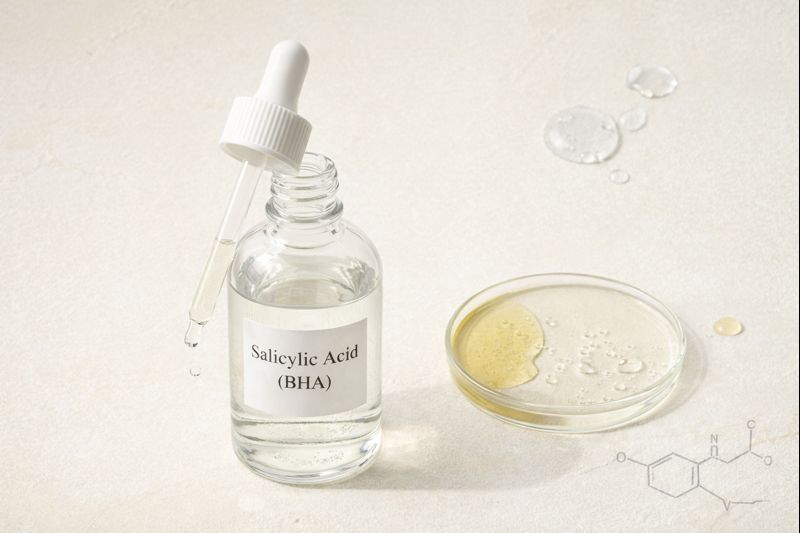
Salicylic acid (BHA) is an oil-soluble exfoliating acid. Unlike surface-level acids, BHA works within the pore lining itself—breaking down the mixture of oil and skin cells that leads to blackheads, congestion, and acne. When used correctly, it helps clear pores, regulate oil, and improve skin texture without damaging the skin barrier.
This oil-loving behavior is what makes salicylic acid the gold-standard active for oily and acne-prone skin—especially when blackheads and visible pores are a concern.
Table of Contents
What Is Salicylic Acid?
Salicylic acid is a beta-hydroxy acid (BHA) with a unique molecular structure that makes it lipophilic, meaning it dissolves in oil rather than water.
From a chemistry perspective, this matters more than marketing claims.
Because sebum (your skin’s natural oil) lines the inside of pores, most water-soluble ingredients can’t reach where congestion actually forms. Salicylic acid can.
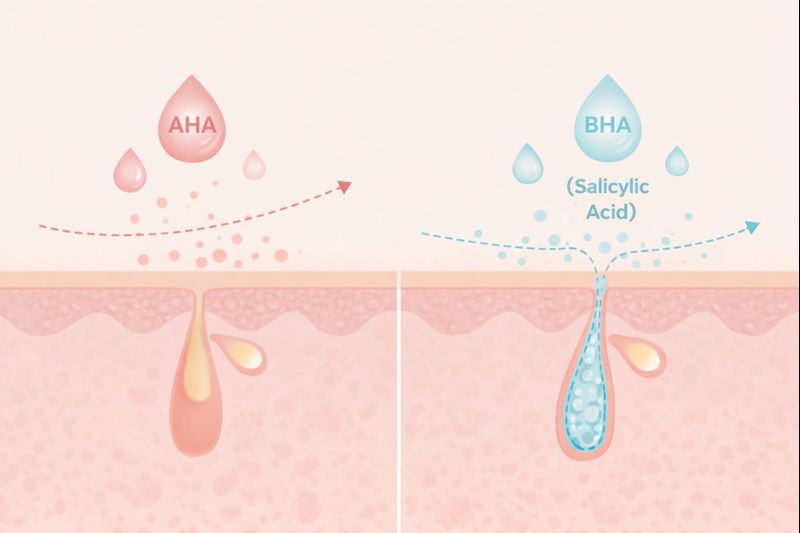
Most exfoliating acids, like Glycolic or Lactic acid (AHAs), are water-soluble. Imagine trying to clean an oily pan with only water—the water just beads up on top. That is how AHAs behave on oily skin; they exfoliate the surface but can’t get past the sebum “shield.”
Salicylic Acid, however, acts like a magnet for oil. It dives deep into the pilosebaceous unit (the pore), where it works to dissolve the solidified oils and cellular debris that eventually turn into blackheads. Beyond just “cleaning,” BHA is structurally related to aspirin (acetylsalicylic acid), giving it natural anti-inflammatory properties that calm redness while it works.
At a molecular level, salicylic acid:
- Is small enough to travel into the pore
- Breaks down the bonds between dead skin cells
- Loosens compacted debris mixed with oil
This is why dermatologists consistently recommend BHA for:
- Blackheads and whiteheads
- Persistent congestion
- Oily skin with enlarged or visible pores
Importantly, salicylic acid exfoliates chemically, not physically—meaning it works without scrubbing or abrasion.
AHA vs. BHA: What’s the Real Difference?
Many exfoliating acids get grouped together, but AHAs and BHAs work in fundamentally different ways.
| Feature | Salicylic Acid (BHA) | AHAs (Glycolic, Lactic) |
| Solubility | Oil-soluble | Water-soluble |
| Penetration | Inside the pore | Skin surface |
| Best for | Oily, acne-prone, clogged pores | Dry, dull, uneven tone |
| Blackheads | ✔ Yes | ✖ Limited |
| Texture smoothing | Moderate | Strong |
AHAs exfoliate the surface. BHAs exfoliate the pore lining.
That distinction alone explains why salicylic acid succeeds where many other acids fail for oily skin.
This unique ability to deep-clean the pore is supported by the [American Academy of Dermatology (AAD) guidelines], which highlight the effectiveness of BHA in managing non-inflammatory acne and preventing future congestion.
The Oil-Loving Mechanism: How BHA Works Inside the Pore
Each pore contains a pilosebaceous unit—a structure made up of a hair follicle and an attached oil gland. In oily or acne-prone skin, this unit produces excess sebum.
When oil mixes with dead skin cells, it forms a sticky plug one of the earliest steps in how acne develops in oily skin. Over time, this plug oxidizes and becomes a blackhead—or stays trapped under the surface as congestion.
This darkening process is not caused by dirt, but by sebum oxidation—a chemical reaction between skin oil and oxygen that we break down in detail in our guide on why skin oil turns black and how to prevent it.
The Science of the “Dissolve”
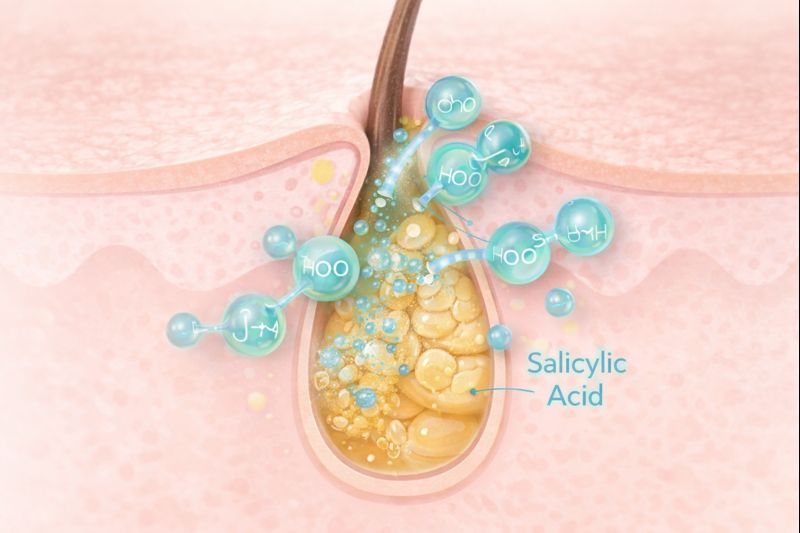
When you apply a BHA toner or serum, the acid travels down the lining of the pore. Once inside, it performs three critical tasks:
- Keratolytic Action: It thins the thickened layer of dead skin cells inside the follicle.
- Comedolytic Action: It prevents the formation of “comedones” (clogs) by keeping sebum fluid.
- Bacteriostatic Effect: While not a direct antibiotic, by clearing the pore of debris, it deprives acne-causing bacteria of the anaerobic (oxygen-free) environment they need to thrive.
This mechanism is gentle but cumulative. BHA doesn’t “strip” pores—it clears them gradually.
That’s also why results improve over weeks, not days.
Salicylic Acid for Blackheads vs. Sebaceous Filaments
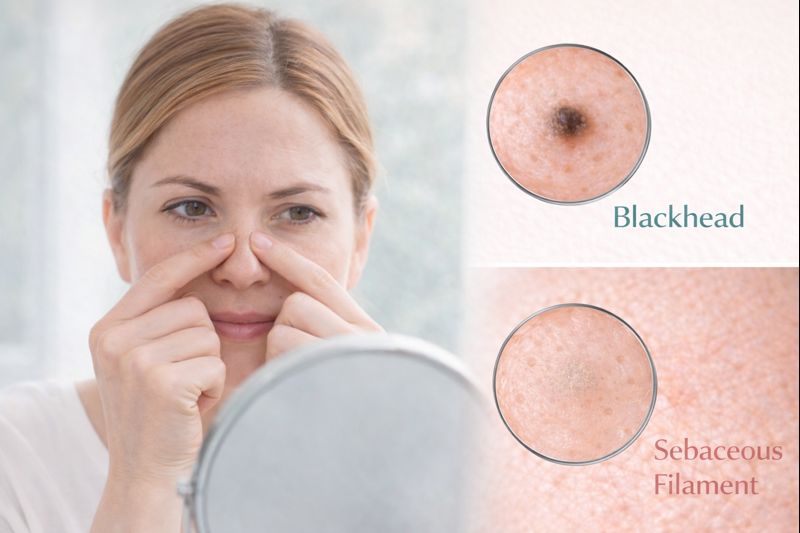
Not all dark dots on the skin are the same.
It is vital to distinguish between a “clog” and a “channel.” As we discussed in our [Blackheads vs. Sebaceous Filaments Guide], filaments are a natural part of your skin. BHA won’t make sebaceous filaments disappear forever (because your skin needs them!), but it will keep the oil inside them from oxidizing and turning dark. For true blackheads, BHA is the primary tool to melt the plug so it can be washed away naturally during your [Double Cleansing routine].
Percentage Power: Finding Your “Sweet Spot”
In 2026, more isn’t always better. The efficacy of Salicylic Acid depends on the pH of the formula (ideally between 3.0 and 4.0) and the concentration:
- 0.5% – 1%: Ideal for “skin cycling” recovery nights or for those with sensitive, acne-prone skin.
- 2%: The gold standard. Research shows this is the most effective concentration for treating active acne and stubborn blackheads.
- 4% +: Usually reserved for wash-off masks or professional peels. At this level, the risk of “hot spots” and barrier peeling increases significantly.
2% is the maximum strength recommended for over-the-counter use in most regions—and it’s also where irritation risk increases if barrier care is ignored.
Signs you’re using too much:
- Tightness after application
- Increased oiliness (a rebound response)
- Stinging that lasts more than a few minutes
When in doubt, lower concentration + consistency beats high strength + burnout.
If your skin feels tight after salicylic acid, the issue may not be “too much oil” — it may be barrier dehydration. In many cases, rebound oiliness and persistent congestion are signs of dehydrated oily skin, where increased water loss triggers reactive sebum production. Repairing hydration first can make exfoliation more effective and better tolerated.
Why Salicylic Acid Is Different From Other Acne Ingredients
Unlike antibacterial actives that target acne after it forms, salicylic acid works upstream—preventing congestion before inflammation begins.
That makes it especially valuable for:
- Non-inflamed acne (whiteheads and closed comedones).
- Textured, bumpy skin that feels rough to the touch.
- Persistent clogged pores that don’t respond to surface scrubs.
When used at the right concentration and frequency, BHA supports clearer pores without forcing the skin into irritation.
Gentle Glow Perspective
Healthy exfoliation isn’t about “scrubbing away” imperfections—it’s about working with your skin’s biology. Salicylic acid succeeds because it respects where oil lives and how pores actually function. By clearing the path rather than stripping the surface, we achieve a glow that is both gentle and lasting.
Application: BHA in Hot and Humid Climates
Living in high-heat environments, like the Middle East or North Africa, changes how your skin reacts to acids. Heat increases the fluidity of your sebum, which can actually make BHA spread more easily—but it also increases the risk of Trans-Epidermal Water Loss (TEWL).
High temperatures increase:
- Sebum fluidity
- Sweat production
- Transepidermal water loss (TEWL)
Managing the “MENA Glow”
In a humid climate, your skin might feel oily on the surface but dehydrated underneath. If you use a high-strength BHA every single day, you risk “drying out” the oil too fast, causing your skin to overcompensate by producing more grease. Salicylic acid can be extremely effective in these conditions—but only when paired with hydration and barrier support.
Managing this balance requires a holistic approach; for a deeper look at ingredient interactions and lifestyle factors, refer to our [Complete Guide to Oily and Acne-Prone Skin], which serves as the foundation for the Gentle Glow philosophy.
The Gentle Glow Rule for Heat: Start by using your BHA treatment 2–3 times a week at night. Watch for “tightness” around the nose and mouth. If your skin feels like a drum, skip a night and focus on hydration.
Key adjustments for humid climates:
- Use lower concentrations more consistently (0.5–1% daily instead of 2% frequently)
- Avoid pairing BHA with alcohol-heavy formulas
- Always follow with a lightweight, non-comedogenic moisturizer
When dehydration is ignored, pores may appear larger and oil production may increase—making BHA seem ineffective when the issue is actually barrier stress.
Formulation Matters: Why pH Determines If BHA Actually Works
This is one of the most misunderstood aspects of salicylic acid.
For BHA to exfoliate effectively, the formula’s pH must be low enough for the acid to remain active.
If the pH is too high, salicylic acid becomes neutralized—and essentially stops exfoliating.
Most effective BHA formulas fall within a pH range of ~3.0–4.0.
Why this matters for oily and acne-prone skin:
- Low-pH formulas exfoliate inside the pore
- Higher-pH “gentle” formulas may feel nice but do very little
- Buffering agents and heavy oils can reduce penetration
This also explains why:
- Some salicylic acid products “do nothing”
- Others work dramatically—even at the same percentage
It’s not just how much BHA is in the formula.
It’s whether it’s biologically available.
Leave-On vs. Rinse-Off BHA: What’s More Effective?
Not all salicylic acid products behave the same way on skin.
- Leave-on products (toners, serums):
- Longer contact time
- Better for blackheads and persistent congestion
- Rinse-off cleansers (like salicylic acid cleansers):
- Short contact time
- Helpful for oil control and maintenance
- Less effective for deep clogs on their own
For many oily-skin routines, the most balanced approach is:
- BHA cleanser or
- Low-strength leave-on BHA (not both daily)
Stacking exfoliation rarely speeds results—but it often damages the barrier.
Why Salicylic Acid Sometimes “Stops Working”
This is one of the most common frustrations—and it’s usually not tolerance.
Common reasons BHA appears ineffective:
- Using it too frequently
- Pairing it with drying actives
- Skipping moisturizer
- Expecting sebaceous filaments to disappear permanently
When the skin barrier becomes compromised, oil production can increase—making pores look worse, not better.
If this happens, the solution is often less BHA, not more.
Gentle Glow Tip
If your skin looks oilier, shinier, or rougher after weeks of BHA use, pause and rebuild the barrier before resuming. Clear skin depends on balance—not constant exfoliation.
The Purging Phase: Is Your Skin Breaking Out or Clearing Out?
One of the biggest reasons people abandon Salicylic Acid is “The Purge.” Because BHA is oil-soluble and increases cellular turnover, it effectively “speeds up” the timeline of every clog currently hiding beneath your skin’s surface.
What is Skin Purging?
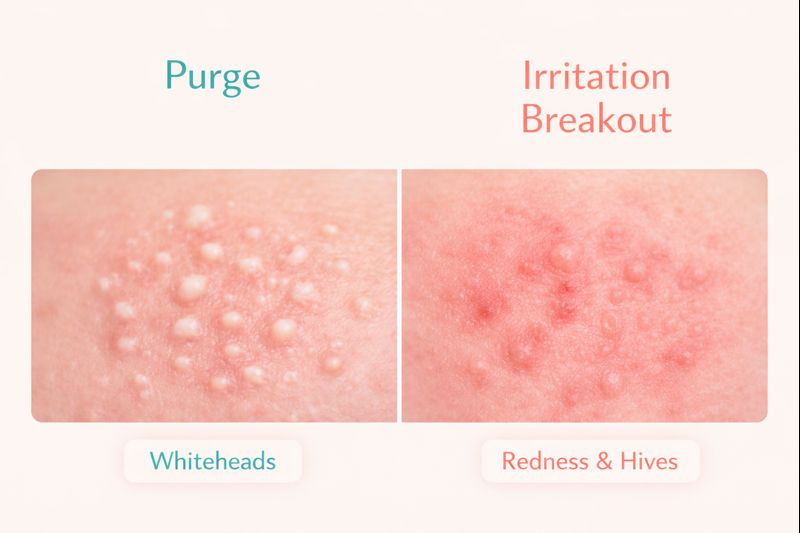
Think of BHA as a deep-cleaning service for your pores. If you had a microscopic pimple forming that would have normally surfaced in three weeks, BHA might bring it to the surface in three days. This can look like a sudden flurry of small whiteheads or red bumps in the areas where you usually get congested (like the T-zone).
| Feature | Skin Purging | Product Breakout (Reaction) |
| Location | Where you usually get clogs. | New areas where you never break out. |
| Appearance | Small whiteheads or “speed bumps.” | Red, itchy, or inflamed hives. |
| Duration | Lasts 4–6 weeks (one skin cycle). | Persistent until you stop the product. |
| Sensation | Little to no discomfort. | Burning, stinging, or extreme dryness. |
The Gentle Glow Timeline
A typical purge follows the 28-day skin cell renewal cycle. By week four, the “debris” should be cleared, and you will begin to see the refined, smooth texture that BHA is famous for. If you are still seeing new, painful bumps by week eight, the formula may be too harsh for your barrier.
Ingredient Synergies: How to Pair BHA for Maximum Results
In a science-backed routine, Salicylic Acid rarely works alone. To achieve a holistic glow, you need to pair this “exfoliating engine” with ingredients that soothe and hydrate.
1. BHA + Niacinamide (The Oil-Control Duo)
This is the gold standard for oily skin. While BHA cleans the “pipes,” Niacinamide (Vitamin B3) helps regulate excess sebum production at the source, supporting long-term oil balance rather than just temporary clarity.
- How to use: Apply your BHA first (on clean, dry skin), wait 2 minutes, then apply a Niacinamide serum. This combination significantly reduces the appearance of enlarged pores.
2. BHA + Hyaluronic Acid (The Hydration Bridge)
Because BHA can be drying—especially in the arid heat of the Middle East—following it with a humectant is non-negotiable.
- The Gentle Glow Tip: Apply your Hyaluronic Acid while your skin is still slightly damp from the BHA to “lock in” moisture and prevent that tight, “plastic-wrap” feeling.
3. What NOT to Pair: BHA + Retinol / Vitamin C
Using Salicylic Acid at the exact same time as Retinol or L-Ascorbic Acid (Pure Vitamin C) is a recipe for a compromised skin barrier.
- The Strategy: Use Vitamin C in the morning for antioxidant protection (to prevent sebum oxidation) and use your BHA in the evening. If you use Retinol, alternate nights: BHA on Monday, Retinol on Tuesday.
That’s why an antioxidant-focused morning routine prioritizes protection instead of stacking strong exfoliants
The Gentle Glow Routine: Step-by-Step Integration
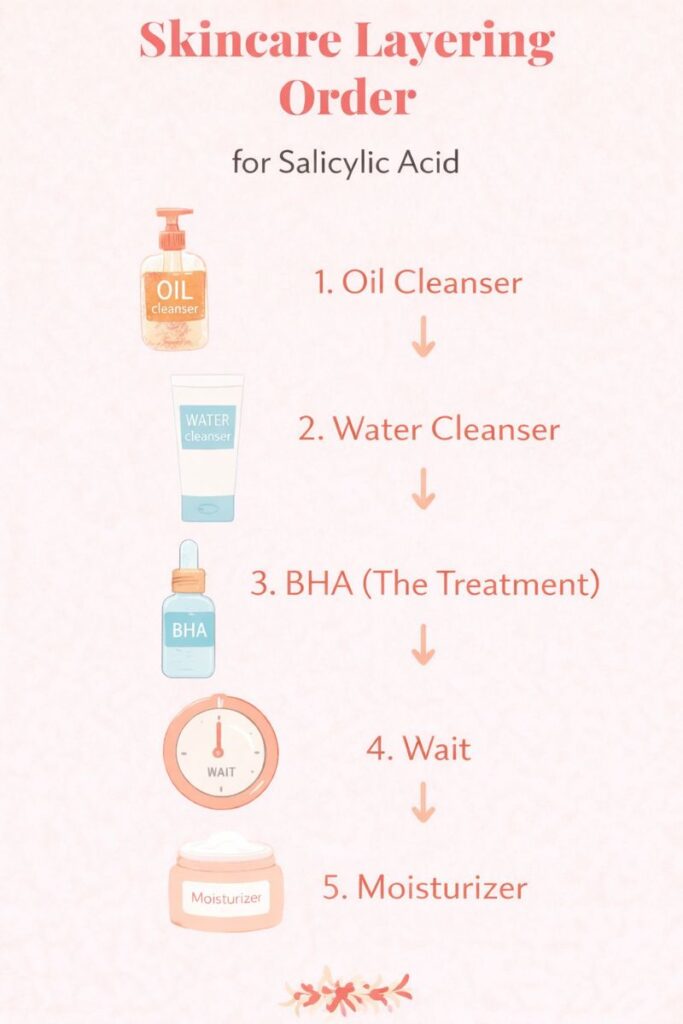
To avoid overwhelming your skin, follow this “Slow and Steady” 2026 protocol:
- Double Cleanse: Start with an oil cleanser to remove SPF, then a water-based gel. (See our [Double Cleansing Guide] for the full technique).
- The Active Layer: Apply a 2% Salicylic Acid liquid to a cotton pad or pat it on with your hands. Focus on the nose, chin, and forehead.
- The Wait: Let it sit for 2–3 minutes. This allows the pH of the acid to work before it’s neutralized by your next step.
- Hydrate: Apply a lightweight, non-comedogenic moisturizer to soothe the barrier.
- Seal: In very dry climates, a final layer of a soothing barrier balm (only on dry patches) can prevent irritation.
Professional Treatments and 2026 Myths
As we move into 2026, the conversation around pores has shifted from “perfection” to “function.” Even with a master routine, some clogs require professional intervention.
Professional BHA Peels vs. At-Home Care
At-home BHA products are limited to 2% for safety. If you have “impacted” comedones—blackheads that feel like hard pebbles under the skin—a dermatologist may use a 20% to 30% BHA peel. These “pro-strength” treatments provide a level of exfoliation that home products cannot reach, but they require strict downtime and “barrier-first” aftercare.
Debunking the “Pore Shrinking” Myth
“Salicylic acid shrinks pores.”
Let’s be direct: You cannot physically shrink your pores. Your pore size is largely determined by genetics and collagen levels. However, BHA makes pores look smaller by:
- Removing the dark oxidized plug (the blackhead).
- Reducing the inflammation that makes the pore walls look swollen.
- Keeping the “rim” of the pore clear of dead skin buildup.
“BHA makes skin sun-sensitive.”
Unlike AHAs, [FDA guidance on beta-hydroxy acids] indicates that salicylic acid does not significantly increase photosensitivity. However, because you are revealing “new” skin cells, a daily non-comedogenic sunscreen is still essential for long-term barrier health and preventing post-inflammatory hyperpigmentation.
“If it tingles, it’s working.”
Mild tingling is normal; burning is not. Results come from consistency, not discomfort.
Safety and Contraindications
Salicylic acid is generally safe, but caution is advised for:
- Aspirin (salicylate) allergies
- Compromised skin barriers
- Very dry or eczema-prone skin
During pregnancy, low-strength topical BHA is often considered acceptable—but individual guidance from a healthcare provider is recommended.
Patch testing is always encouraged, especially for first-time users.
Gentle Glow Perspective
Salicylic acid isn’t about forcing change—it’s about restoring normal pore function. When oil can flow freely and the barrier stays intact, skin naturally becomes clearer and calmer.
The Holistic Glow: How Nutrition Influences Sebum Viscosity
At Gentle Glow, we believe that what you put on your skin is only half the battle. To truly manage oily skin, we have to look at the “raw materials” your body uses to produce sebum. While Salicylic Acid thins out the oil from the outside, your diet can help change the quality of that oil from the inside.
Research suggests that high-glycemic diets (sugary foods and refined carbs) can spike insulin, which in turn triggers androgen hormones—the main drivers of oil production. Furthermore, the viscosity (thickness) of your sebum is influenced by your fatty acid intake.
- Omega-3 Fatty Acids: Found in walnuts, flaxseeds, and fatty fish, these help keep your sebum fluid and anti-inflammatory.
- Zinc: Often called the “internal Salicylic Acid,” zinc helps regulate oil glands and supports the skin’s healing process after a breakout.
By combining a BHA routine with a mindful, antioxidant-rich diet, you are tackling pore congestion from two directions, leading to a much more resilient skin barrier.
The Gentle Glow Philosophy
At Gentle Glow, we don’t believe in fighting your skin.
Oily and acne-prone skin isn’t broken—it’s biologically active.
When pores are supported instead of stripped, they function better.
When exfoliation works with oil instead of against it, results last longer.
Salicylic acid isn’t a miracle ingredient.
It’s a tool—one that works best when used with patience, education, and respect for skin physiology.
That’s the approach behind every guide we create:
- Science-first
- Non-comedogenic always
- No fear-based skincare
- No exaggerated promises
Just clear, honest guidance for skin that wants balance—not punishment.
Final Takeaway
Salicylic acid earns its reputation because it solves a specific problem: oil-based congestion inside the pore.
When you understand:
- How it works
- How much you actually need
- How to support your barrier alongside it
BHA becomes one of the most reliable, skin-respecting actives available for oily and acne-prone skin.
Not because it’s aggressive—but because it’s precise.
Frequently Asked Questions
Can I use Salicylic Acid every day?
For most oily skin types, once a day (in the evening) is the maximum recommended frequency. However, if you live in a dry climate or have sensitive areas, 2–3 times a week is often enough to maintain clear pores without causing dehydration.
Does BHA make your skin more sensitive to the sun?
While AHAs (like Glycolic Acid) definitely increase sun sensitivity, BHAs are slightly different. Because BHA is anti-inflammatory, it doesn’t increase photosensitivity as drastically. However, since you are removing dead skin cells, your “new” skin is more vulnerable. Always apply a non-comedogenic SPF 30+ the following morning.
Why are my blackheads still there after a week of BHA?
Patience is key. Salicylic Acid is a chemical process, not a physical extraction. It takes roughly 4 to 6 weeks of consistent use to see a significant reduction in deep-seated blackheads.
Is it safe to use BHA during pregnancy?
Most dermatologists recommend avoiding high-percentage Salicylic Acid during pregnancy. While small amounts in a wash-off cleanser are usually considered low-risk, always consult your healthcare provider before using a leave-on BHA treatment during this time.
Does salicylic acid damage the skin barrier?
No — not when used correctly.
Barrier damage occurs when exfoliation is excessive or unsupported by moisturizer. Balanced BHA use respects the skin’s natural renewal cycle rather than disrupting it.
Medical Disclaimer
Gentle Glow guides are developed using peer-reviewed dermatology research and established clinical guidelines. The information provided is for educational purposes only and does not replace professional medical advice, diagnosis, or treatment. Always consult a board-certified dermatologist or qualified healthcare provider before starting new active skincare treatments.

About the Author
Founder, Gentle Glow | Evidence-Based Skincare & Skin Biology
Hi, I’m the Founder of Gentle Glow. After years of struggling with oily and acne-prone skin—and cycling through harsh products that disrupted my barrier rather than improving it—I began researching the science behind sebum regulation, skin biology, and non-comedogenic formulation.
Gentle Glow was created to simplify evidence-based skincare. Every routine shared here focuses on root causes: barrier function, oil balance, and ingredient compatibility. My goal is to translate dermatology-backed principles into realistic, sustainable routines that work with your skin—not against it.
Beyond topical care, I believe healthy skin reflects overall balance, including nutrition, climate awareness, and lifestyle habits. Gentle Glow is built to help you make informed decisions with clarity, consistency, and confidence.