Everything You Need to Know About Oily Skin

Salicylic Acid for Blackheads: The Products That Actually Clear Pores (2026 Guide)

Medically reviewed • Updated March 2026 • Evidence-based skincare
The most effective salicylic acid products for blackheads—like Paula’s Choice 2% BHA Liquid and CeraVe SA Cleanser—work inside the pore, not just on the surface. Because salicylic acid is lipophilic, it dissolves the Sebum Oxidation that makes pores appear dark, helping keep blackheads from reforming with consistent use.
- Best results come from 2% Salicylic Acid leave-on products.
- Cleansers help maintain results but don’t replace targeted treatment.
- Consistency matters more than high strength for long-term clarity.
Table of Contents
Watch: How Salicylic Acid Works (Serum vs Cleanser)
Why Most Salicylic Acid Products Don’t Clear Blackheads (And What Actually Works)
If you’ve ever used a product that promised to “deep clean pores” but your blackheads came back within days, you’re not imagining it. This is one of the most common frustrations with oily, congestion-prone skin—the results never seem to last.
What’s often misunderstood is that blackheads aren’t a one-time problem you remove and move on from. They form as part of a continuous cycle inside the pore. Oil is constantly being produced, skin cells are constantly shedding, and when those two don’t move smoothly together, buildup begins again almost immediately.
This is why surface-level solutions rarely hold. Scrubs, masks, and even some exfoliating products may make the skin feel cleaner, but they don’t always reach the point where the clog is forming. And when the skin is pushed too hard, it can actually respond by producing more oil, which feeds the same cycle you’re trying to stop.
This is also where many salicylic acid products fall short—not because the ingredient doesn’t work, but because the formula or format isn’t right for how your skin behaves. Some are too mild to affect deeper buildup. Others are too aggressive and disrupt the barrier before they have a chance to work consistently.
The difference comes from using a product that can actually move through oil and stay active long enough to loosen what’s inside the pore, while still being gentle enough for repeated use. That balance is what allows pores to stay clearer over time instead of resetting every few days.
If you want to skip straight to what works, these are the salicylic acid products that consistently clear pores without pushing your skin into dryness or rebound oil.
Quick Picks: Salicylic Acid Products That Actually Clear Pores (2026)
| Category | Product | Why It Works |
|---|---|---|
| Best overall | NING Dermologie 2% Salicylic Acid Serum | Balanced 2% strength with barrier support for long-term pore clarity |
| Best for stubborn blackheads | Paula’s Choice 2% BHA Liquid | Penetrates compacted buildup deep inside the pore |
| Best gentle option | Medik8 Press & Clear BHA Tonic | Slow-release delivery reduces irritation while keeping pores clear |
| Best cleanser | CeraVe Acne Control Cleanser | Maintains clear pores without stripping the skin barrier |
| Best MENA pharmacy option | ISIS Pharma Teen Derm | Dermatologist-grade formula widely available in regional pharmacies |
The Best Salicylic Acid Products for Blackheads (2026 Guide)
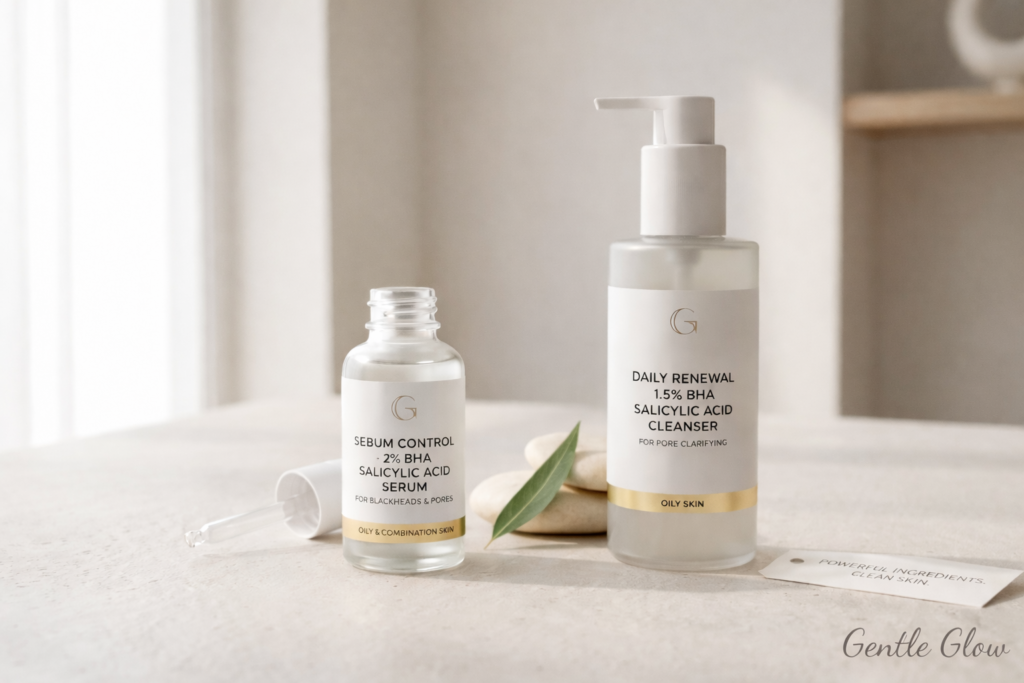
Now that you’ve seen what works at a glance, the next step is understanding which type of product your skin will actually respond to.
Not all salicylic acid products for blackheads behave the same way. Some stay on the skin long enough to break down buildup inside the pore, while others work more on the surface and are better suited for maintenance. Choosing the right format—and not overloading your routine—is what makes the difference between temporary results and pores that stay consistently clearer.
If you’re new to how BHA for oily skin works, you can explore the full mechanism in our complete guide to salicylic acid. For now, focus on choosing a product your skin can tolerate and use consistently.
Best Overall Salicylic Acid Serum for Blackheads
NING Dermologie 2% Salicylic Acid Serum
Best for:
Recurring blackheads, visible congestion, and oily skin that needs steady maintenance without irritation.
Why it works:
This formula uses 2% Salicylic Acid, the standard over-the-counter strength shown to effectively penetrate oily pores. What makes it different is how it’s balanced—with calming and barrier-supporting ingredients—so it clears buildup without triggering dryness or rebound oil production.
Texture:
Lightweight, fast-absorbing serum that sits comfortably on the skin without residue.
Gentle Glow Verdict:
If your pores clear and then refill quickly, this type of consistent, well-balanced formula is what helps interrupt that cycle over time.
Best for Stubborn Blackheads and Congested Pores
Paula’s Choice Skin Perfecting 2% BHA Liquid Exfoliant
Best for:
Compact, persistent blackheads and uneven texture that don’t respond to basic cleansers.
Why it works:
The liquid format allows salicylic acid to spread evenly and move efficiently through oil inside the pore. This improves its ability to loosen compacted buildup—especially in areas like the nose where congestion tends to be deeper.
Texture:
Watery liquid with a slightly dewy finish.
Gentle Glow Verdict:
If your pores look consistently dark even after cleansing, this type of leave-on exfoliant tends to deliver more visible results over time.
Best Gentle Salicylic Acid for Sensitive Oily Skin
Medik8 Press & Clear 2% BHA Tonic
Best for:
Oily skin that reacts easily, or skin that becomes tight or irritated with traditional exfoliants.
Why it works:
This formula uses a slow-release delivery system for salicylic acid, allowing it to reach the pore gradually instead of all at once. That reduces the risk of irritation while still supporting long-term pore clarity.
Texture:
Lightweight, refreshing liquid with no heavy residue.
Gentle Glow Verdict:
If your skin feels tight but still breaks out, this kind of controlled exfoliation is often more effective than stronger, fast-acting formulas.
Best Salicylic Acid Cleanser for Daily Use
CeraVe Acne Control Cleanser (2% Salicylic Acid)
Best for:
Daily oil control, mild blackheads, and maintaining results without adding another leave-on step.
Why it works:
Even as a rinse-off product, it uses 2% Salicylic Acid to help loosen buildup at the surface of the pore. At the same time, ceramides support the skin barrier—reducing the risk of over-stripping, which is a common cause of increased oiliness.
Texture:
Gel cleanser that foams lightly and rinses clean without leaving the skin tight.
Gentle Glow Verdict:
This works best as a maintenance step. If your blackheads are mild or already improving, it helps keep pores clear without overcomplicating your routine.
Best Salicylic Acid Products in the MENA Region
Consistency is easier when your products are accessible. These options are widely available across pharmacies in Egypt, the UAE, and other MENA countries—making them practical for long-term use.
ISIS Pharma Teen Derm (Gel / Serum)
Dermatologist-Grade Import
Best for:
Moderate acne, persistent blackheads, and oily skin that benefits from clinically formulated treatments.
Why it works:
Combines salicylic acid with complementary actives designed to target both oil buildup and inflammation. Frequently recommended in dermatology settings across the region.
Availability:
Widely available in pharmacies across Egypt, UAE, and Gulf countries.
Gentle Glow Verdict:
A reliable choice if you prefer pharmacy-backed formulations with consistent results.
Starville Acne-Prone Skin Cleanser
Effective Budget Alternative
Best for:
Early-stage blackheads, oily skin, and those looking for an affordable daily cleanser.
Why it works:
Focuses on oil control and gentle exfoliation, helping reduce buildup without overwhelming the skin.
Availability:
Easily found in Egyptian pharmacies at a budget-friendly price.
Gentle Glow Verdict:
A practical starting point. If you’re building a routine gradually, this is a solid baseline option.
For additional clinical guidance on acne and clogged pores, the American Academy of Dermatology recommends salicylic acid as an ingredient that helps open clogged pores and exfoliate the skin—making it useful for conditions where buildup inside the pore is the primary issue.
At this point, you’ve seen which products work. The next step is understanding why they work differently, and how to choose between them based on your skin—not just the label.
The Science of Lipophilic (Oil-Loving) Exfoliation
Most exfoliating ingredients work on the surface of the skin. That can help with texture, but it doesn’t address what’s happening inside the pore—where blackheads actually form.
Salicylic acid behaves differently. It is lipophilic, meaning it is oil-loving. Instead of sitting on top of the skin, it moves through sebum and reaches into the pore, where buildup begins. This is the key reason it works better for blackheads and clogged pores than surface exfoliants.
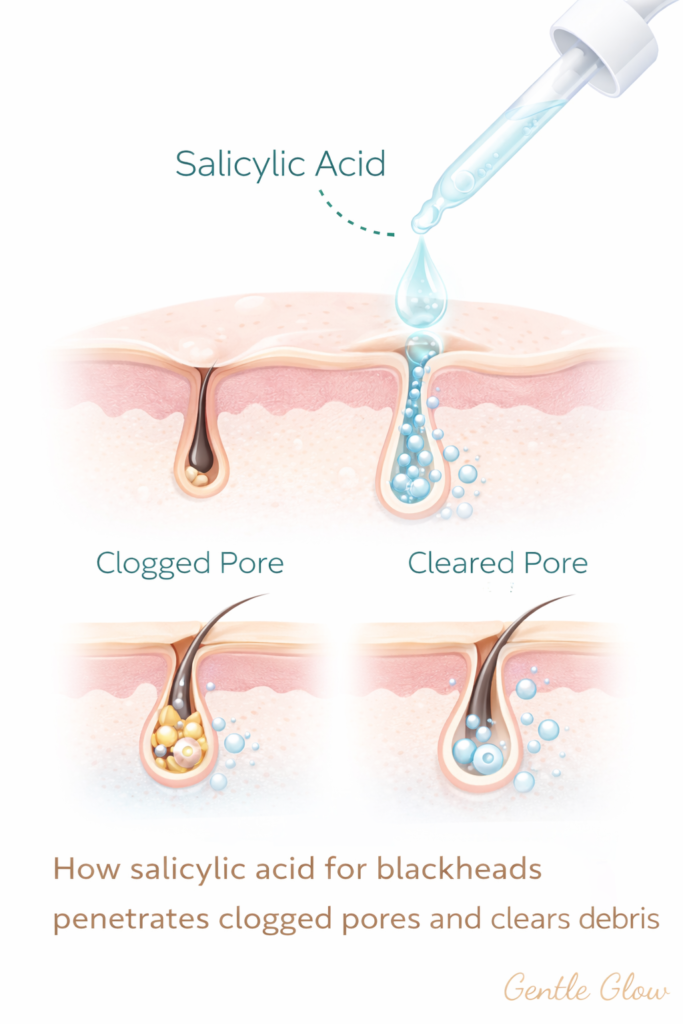
This oil-soluble behavior allows salicylic acid to penetrate into the pore and dissolve buildup rather than remaining on the surface—a mechanism supported by research on salicylic acid penetration into the skin.
Salicylic Acid Face Wash vs Serum for Blackheads
The type of product you choose changes how effective salicylic acid for blackheads will be in your routine.
A cleanser works quickly and rinses off. A serum stays on the skin and continues working over time. That difference affects how deeply it can act inside the pore.
| Product Type | Depth of Action | Frequency | Best For |
|---|---|---|---|
| Cleanser (rinse-off) | Surface + light pore action | Daily | Oil control, mild congestion |
| Serum (leave-on) | Deeper pore penetration | 2–4x per week | Stubborn blackheads, visible pores |
If your blackheads are persistent, a leave-on product is usually more effective because it has time to dissolve buildup inside the pore. Cleansers are better for maintaining results or for skin that doesn’t tolerate leave-on exfoliation well.
Using both at the same time isn’t always better. Layering multiple exfoliating products can disrupt the skin barrier and lead to more oil production instead of less.
The “Permanent” Blackhead Myth: Sebum Oxidation vs Dirt
Can you remove blackheads permanently? No, but you can manage the cycle by keeping pores clear before buildup has time to oxidize.
Blackheads aren’t caused by dirt sitting on the skin. They form when oil and dead skin collect inside the pore and are exposed to air. This triggers sebum oxidation, which is what makes the surface appear dark.
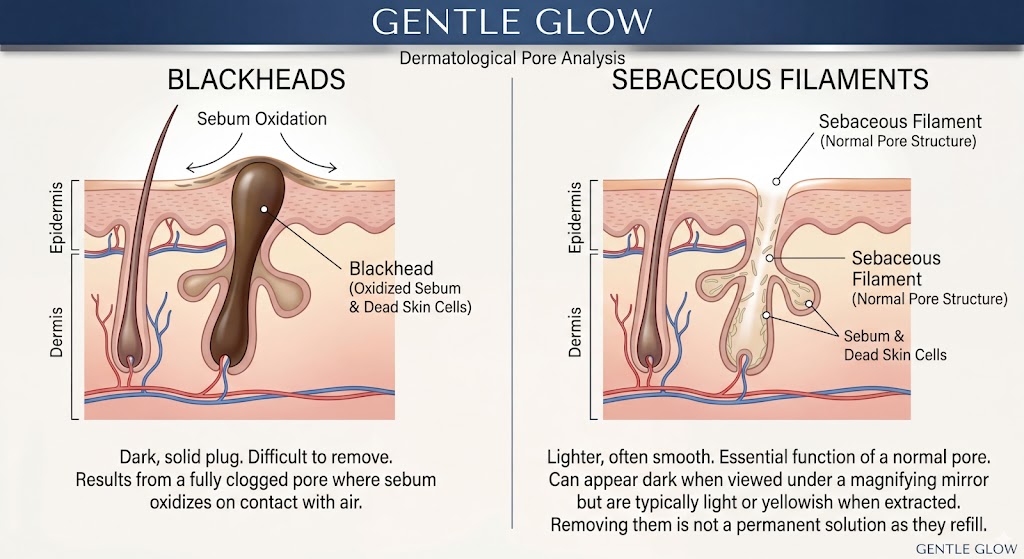
Dermatology guidance describes blackheads as open comedones formed by clogged pores, rather than dirt on the skin surface (as outlined by the American Academy of Dermatology).
This is why blackheads seem to come back quickly. The pore is still active, and oil production doesn’t stop. What changes is how that oil behaves—whether it flows out smoothly or builds up and oxidizes.
If you want a deeper explanation of why oil turns dark, you can read our full breakdown here. In practice, what matters is managing that buildup before it becomes visible.
Salicylic acid helps by clearing the pore early in the cycle, before oxidation fully develops. It doesn’t shut down oil production—it helps keep the pathway clear.
Follicular Hyperkeratosis and The Vitamin A Connection
Blackheads aren’t only about oil. They’re also about how your skin sheds.
Inside the pore, skin cells are constantly renewing. Normally, these cells shed evenly and move out with sebum. But in oily and acne-prone skin, that process can become uneven.
This is known as follicular hyperkeratosis—a condition where dead skin cells become “sticky” and don’t shed properly. Instead of leaving the pore, they mix with oil and begin forming the base of a clog.
Over time, this creates the environment where blackheads develop again and again.
Salicylic acid helps loosen these compacted cells while dissolving oil, which is why it works on both parts of the problem. But long-term regulation of this process is also linked to vitamin A activity in the skin, which controls how cells renew and shed.
If you’re exploring that deeper layer, this connects to retinoids and vitamin A–based treatments—part of how the skin regulates cell turnover and how acne develops over time—which work differently but target the same underlying cycle.
At this point, you’ve seen that blackheads are not just a surface issue—they’re a combination of oil behavior and how skin cells shed inside the pore.
The next step is using salicylic acid in a way that works with this cycle, so you can keep pores clear without triggering irritation or rebound oil.
How to Use Salicylic Acid for Blackheads (Simple Routine That Works)
Using salicylic acid for blackheads correctly matters more than choosing the strongest product. Most results plateau not because the ingredient isn’t working, but because it’s being overused or combined with too many other actives.
The goal is to keep the pore consistently clear without pushing your skin into irritation or rebound oil production.
Morning Routine (Oil Control & Protection)
In the morning, the focus isn’t exfoliation—it’s stability.
Start with a gentle cleanser to remove overnight oil. If your skin becomes shiny quickly, a lightweight niacinamide serum can help regulate oil behavior throughout the day (see our guide on niacinamide for oily skin).
Finish with a non-comedogenic sunscreen (we break this down in our guide to choosing the right sunscreen for oily, acne-prone skin). This step is often overlooked, but UV exposure contributes to sebum oxidation, which can make pores appear darker even when they’re relatively clear. If you want to see how this fits into a full routine, you can follow our step-by-step morning routine for oily acne-prone skin.
Night Routine (Pore Clearing & Repair)
Evening is where salicylic acid does its real work.
After cleansing, apply your leave-on product to completely dry skin. This helps reduce irritation and allows better penetration into the pore. Start with 2–3 times per week, then adjust based on how your skin responds.
Follow with a lightweight non-comedogenic moisturizer. If your skin feels tight but looks shinier, it’s often a sign the barrier is being disrupted—something we explain in more detail in our guide to dehydrated oily skin.
Consistency matters more than frequency. Clear pores come from steady use, not aggressive use. If you want to see how this fits into a complete routine, you can follow our step-by-step night routine for oily acne-prone skin.
Salicylic Acid vs Benzoyl Peroxide: Which Is Better for Acne?
These two ingredients are often compared, but they solve different problems.
Salicylic acid works inside the pore, helping dissolve oil and loosen buildup. It’s most effective for blackheads, clogged pores, and non-inflamed congestion.
Benzoyl peroxide, on the other hand, targets acne-causing bacteria and is better suited for inflamed breakouts.
If your main concern is blackheads, salicylic acid is usually the better choice. If breakouts are red and painful, benzoyl peroxide may be more effective.
We break this down further in our full comparison of salicylic acid vs benzoyl peroxide if you’re deciding between the two.
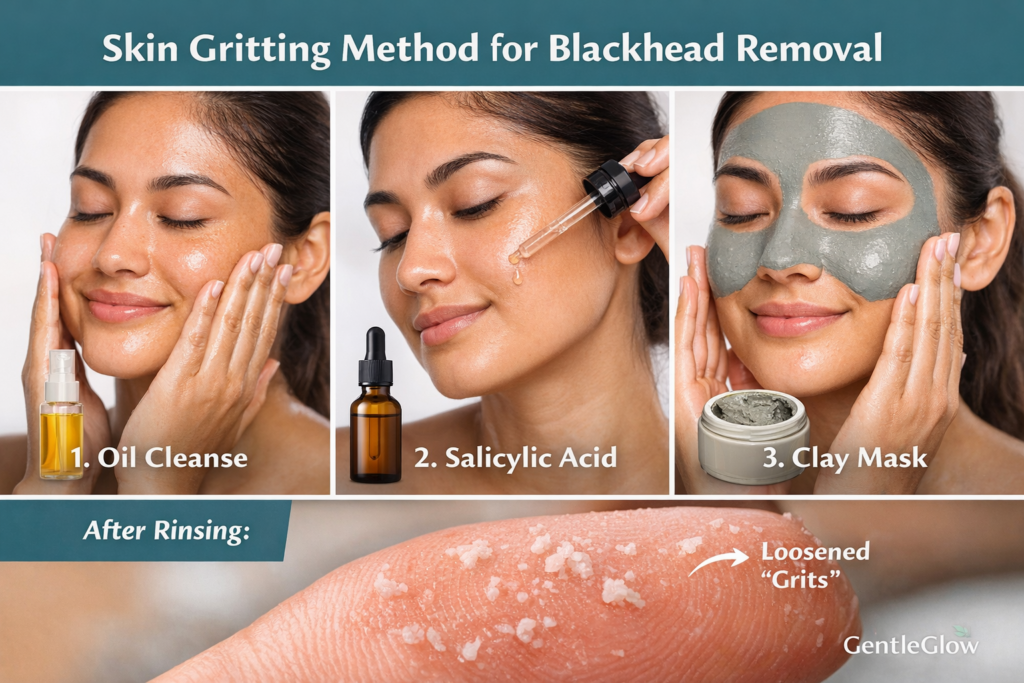
2026 Skin Gritting Method for Nose Blackheads
This method is designed for temporary removal of built-up oil and debris inside congested pores, especially when blackheads feel more compacted or visible. It doesn’t stop blackheads from forming, but it can help reset the pore when used occasionally (as explained in our guide on how to keep blackheads from coming back).
This method focuses on loosening buildup inside the pore—but it should be used occasionally, not as a daily routine.
Step 1: Oil cleanse to soften surface debris and sebum
Step 2: Apply a salicylic acid serum and leave it on for 15–20 minutes
Step 3: Use a clay mask to absorb loosened oil and impurities
As you rinse, you may feel small “grits.” These are softened plugs of oil and debris—not something you should force out.
What to Avoid When Using Salicylic Acid
Most issues with salicylic acid products come from how they’re used.
Using multiple exfoliating products at once—cleanser, toner, and serum—can overwhelm the skin and disrupt the barrier. Mixing it with strong actives like retinoids in the same routine can also increase irritation.
Skipping moisturizer is another common mistake. Even oily skin needs hydration to regulate oil production effectively.
If your skin feels tighter but looks shinier, it’s often a sign to scale back—not push harder.
Final Takeaway: The Products That Actually Clear Pores Are the Ones You Can Use Consistently
Blackheads don’t return because your skin isn’t clean enough. They return because your pores are active, and that activity doesn’t stop.
The products that actually clear pores aren’t the strongest ones—they’re the ones your skin can tolerate and use consistently without disruption. When salicylic acid is used in the right format, at the right frequency, it keeps the pore clear before buildup has time to oxidize.
That’s what changes the pattern over time.
FAQ: Salicylic Acid for Blackheads
Is 2% or 0.5% salicylic acid better?
For active blackheads and stubborn congestion, 2% Salicylic Acid is the clinical standard. It provides the necessary “horsepower” to penetrate dense sebum. However, 0.5% BHA is an excellent choice for those with sensitive skin or for “pore-priming” in the morning before a long day in the sun. If you are new to acids, start with 0.5% and move up as your barrier strengthens.
How long should I leave salicylic acid on my face?
If you are using a leave-on serum or liquid, it is designed to stay on your skin until your next cleanse (typically overnight). For salicylic acid face washes, you must allow for “Short Contact Therapy”—massage the product into your skin for at least 60 seconds before rinsing. This gives the lipophilic molecules enough time to anchor into the pores.
Can I use salicylic acid with niacinamide?
Yes, and in 2026, this is considered a “Power Pairing” for oily skin. Salicylic Acid clears the internal clog, while Niacinamide helps regulate the rate of sebum production and reinforces the skin barrier. For best results, apply your BHA first to clear the path, followed by your Niacinamide serum.
Why is my skin purging after using salicylic acid?
Because BHA is lipophilic and oil-soluble, it speeds up the cellular turnover inside the pore. This often pushes “microcomedones” (hidden clogs) to the surface all at once. A typical skin purge lasts 2–4 weeks and occurs in areas where you usually break out. If you notice redness or bumps in brand-new areas, it’s likely irritation, not a purge.
Can salicylic acid make skin glow?
Absolutely. The “Gentle Glow” isn’t just a name; it’s a physiological result. By removing the layer of dead, “sticky” skin cells (follicular hyperkeratosis) and preventing sebum oxidation, BHA allows the skin to reflect light more evenly. It transforms a dull, “clogged” complexion into a smooth, light-reflective surface.
Sources and References
- American Academy of Dermatology (AAD). Types of acne breakouts: Blackheads, whiteheads, and how clogged pores form.
Available at: https://www.aad.org/public/diseases/acne/diy/types-breakouts - DermNet NZ. Salicylic acid: Mechanism of action, lipophilic behavior, and use in acne and comedonal conditions.
Available at: https://dermnetnz.org/topics/salicylic-acid - American Academy of Dermatology (AAD). Acne: Diagnosis and treatment: Use of salicylic acid for unclogging pores and exfoliating the skin.
Available at: https://www.aad.org/public/diseases/acne/derm-treat/treat
This article is based on dermatology research and peer-reviewed studies on acne pathogenesis, hormonal signaling, and skin barrier function.
Medical Disclaimer
Gentle Glow guides are developed using peer-reviewed dermatology research and established clinical guidelines. The information provided is for educational purposes only and does not replace professional medical advice, diagnosis, or treatment. Always consult a board-certified dermatologist or qualified healthcare provider before starting new active skincare treatments.