Everything You Need to Know About Oily Skin

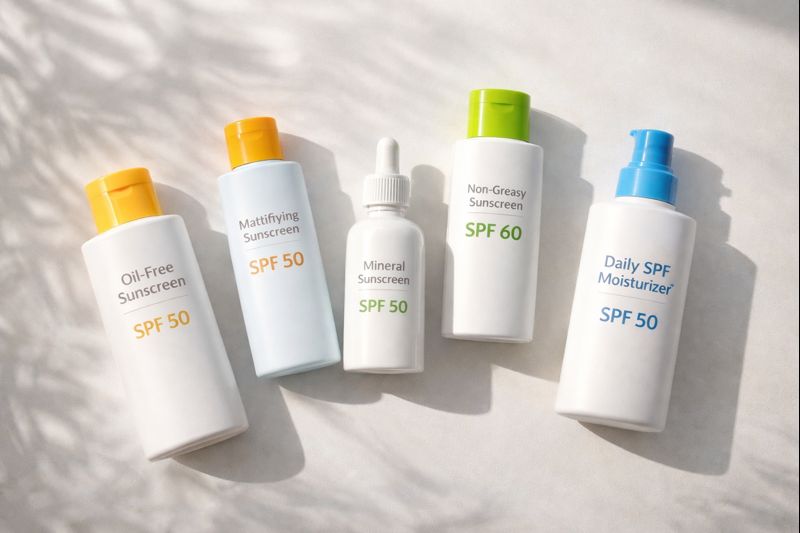
10 Best Non-Comedogenic Sunscreens for Oily and Acne-Prone Skin (2026 Guide)

Medically reviewed by
Gamal Henin, B.Pharm
Pharmacist & Medical Reviewer at Gentle Glow
Reviewed June 9, 2026
If you have oily or acne-prone skin, you already know the SPF paradox:
You want to protect your skin from sun damage—but every sunscreen you try seems to clog your pores, trigger breakouts, or leave your face greasy and uncomfortable.
For years, I skipped sunscreen altogether. Not because I didn’t believe in sun protection—but because every SPF I used caused congestion, painful breakouts, or stubborn acne marks that lasted longer than the pimples themselves. For oily, acne-prone skin, sunscreen often feels like a necessary evil.
The good news? 2026 sunscreen formulations are finally different.
Thanks to hybrid UV filters, oil-regulating actives, and acne-safe textures, today’s non-comedogenic sunscreens for oily and acne-prone skin protect without suffocating your pores. You no longer have to choose between clear skin and sun protection.
Table of Contents
Some links in this guide are affiliate links. This means Gentle Glow may earn a small commission if you purchase through them — at no extra cost to you. We only recommend products that are suitable for oily and acne-prone skin.
What Are Non-Comedogenic Sunscreens for Oily and Acne-Prone Skin?
A non-comedogenic sunscreen is formulated to protect the skin from UV damage without clogging pores, trapping oil, or triggering breakouts. The best formulas for oily and acne-prone skin are oil-free, lightweight, and contain ingredients like Zinc Oxide, Niacinamide, or Silica to absorb excess sebum while maintaining a matte or natural finish.
The Science of “Non-Comedogenic”
What Actually Makes a Sunscreen Pore-Clogging?
Breakouts don’t come from SPF itself—they come from what surrounds the UV filters.
Many traditional sunscreens rely on heavy emollients and occlusive ingredients that trap oil and heat inside the follicle. On oily skin, this leads to congestion, blackheads, inflammatory acne, and enlarged pores.
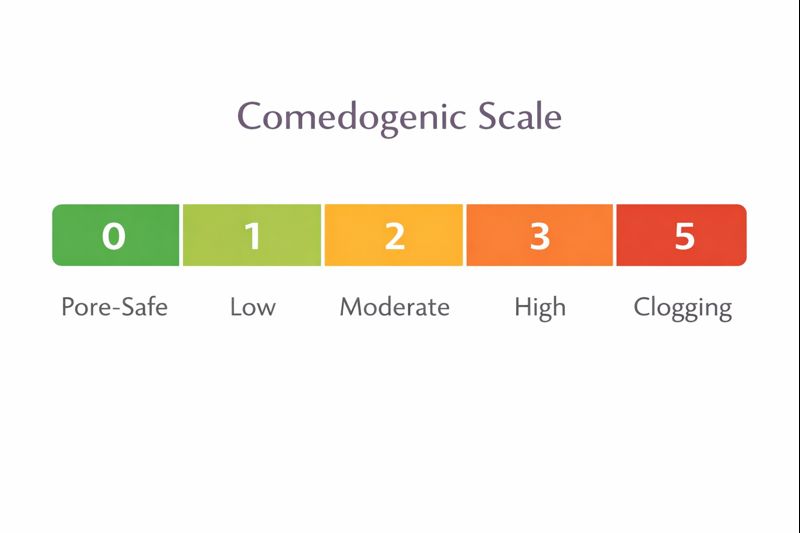
The term “non-comedogenic” is often thrown around in marketing, but in 2026, savvy consumers know to look at the Comedogenic Scale. Dermatologists often refer to the comedogenic scale, which ranks ingredients from 0 (won’t clog pores) to 5 (highly pore-clogging). While the scale isn’t perfect, it’s a helpful starting point for acne-prone skin.
Research on acne cosmetica suggests that certain fatty esters, including isopropyl myristate and isopropyl palmitate, may contribute to follicular plugging in acne-prone skin, which is why ingredient lists matter just as much as marketing claims.
Top Ingredients to Avoid in Sunscreen (2026)
If you see these in the first five ingredients of your SPF, put it back on the shelf:
| Ingredient | Why It’s a Problem |
| Isopropyl Palmitate | Highly comedogenic, traps oil |
| Coconut Oil (Cocos Nucifera) | Popular but pore-clogging |
| Lanolin | Can trigger congestion |
| Butyl Stearate | Thick, occlusive ester |
| Isopropyl Myristate | Common breakout trigger |
| Wheat Germ Oil | Extremely comedogenic |
| Algae Extract (some types) | Can worsen acne |
| Heavy Silicones (high %) | Traps heat & oil |
| Cocoa Butter | Too rich for oily skin |
| Mineral Oil (in excess) | Occlusive on acne-prone skin |
2026 Comparison Table: Quick Selection Guide
| Product | Filter Type | Best For | Finish | Key Acne-Safe Feature | View |
| EltaMD UV Clear SPF 46 | Hybrid | Acne + redness | Natural | Niacinamide + Zinc Oxide | View product |
| La Roche-Posay Anthelios UVMune 400 | Chemical | Very oily skin | Ultra-matte | 12-hour oil control | View product |
| Garnier BHA + Niacinamide Daily UV | Hybrid | Budget acne care | Invisible | Salicylic Acid (BHA) | View product |
| Beauty of Joseon Aqua-Fresh | Hybrid | Humid climates | Light / fresh | Rice + Panthenol (B5) | View product |
| ISDIN Eryfotona Actinica | Mineral | Sensitive acne | Weightless | 100% Zinc Oxide | View product |
| Skin1004 Hyalu-Cica Sun Serum | Hybrid | Dehydrated-oily | Natural glow | Centella + Hyaluronic Acid | View product |
| Paula’s Choice Clear SPF 30+ | Chemical | Extreme oil control | Dead-matte | Antioxidant blend | View product |
| Supergoop! Unseen SPF 50 | Chemical | Makeup days | Velvet | Invisible gel technology | View product |
| Neutrogena Clear Face Serum SPF 60+ | Chemical | Drugstore option | Sheer | Clinically non-comedogenic | View product |
| SkinCeuticals Brightening UV SPF 30 | Chemical | PIH & dark spots | Luminous | Tranexamic Acid + Niacinamide | View product |
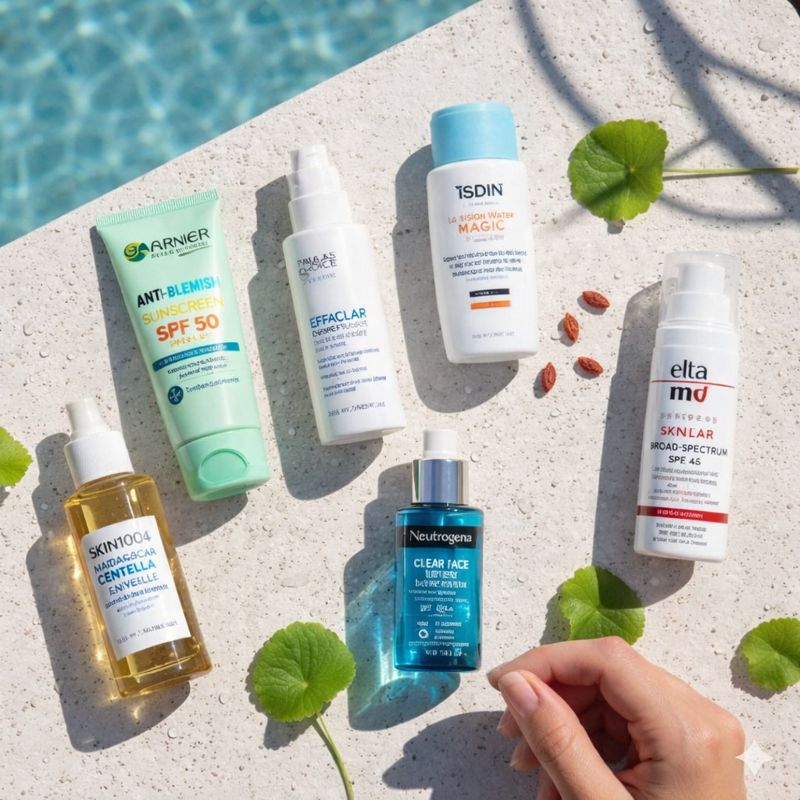
The “Hidden” Cloggers: Why “Oil-Free” Isn’t Always Safe
A sunscreen can be labeled oil-free and still clog pores. Many formulas replace oils with synthetic esters or waxes that behave the same way on oily skin. Texture, ingredient balance, and formulation matter more than marketing claims.
This is especially important if you are managing hormonal acne on oily skin, where irritation and unsuitable formulations can make breakouts more reactive.
Top 10 Non-Comedogenic Sunscreen Reviews for 2026
These non-comedogenic sunscreens for oily and acne-prone skin are designed to protect without clogging pores or triggering breakouts.
1. EltaMD UV Clear Broad-Spectrum SPF 46 (Updated)
Dermatologists still rank this as the gold standard. The 2026 update has stabilized the 5% Niacinamide, ensuring it stays active longer to soothe redness. It performs especially well in humid weather. It is formulated to be non-comedogenic and tends to wear comfortably on oily and acne-prone skin without excessive shine. Ideal if you struggle with acne and sensitivity.
- Why it works: It uses transparent Zinc Oxide combined with Lactic Acid to gently clear pores while protecting them.
- Finish: Natural, “skin-like” finish.
- Pros: Calms redness, lightweight, layers well
- Cons: Pricey for some budgets
2. La Roche-Posay Anthelios UVMune 400 Oil Control
This is the breakthrough for 2026. It features the Mexoryl 400 filter, which targets the ultra-long UVA rays that cause aging and darken acne scars. Perfect for very oily skin or hot climates. This sunscreen controls shine better than most primers.
- Why it works: The “Oil Control” version uses Airlicium technology—99% air—to absorb sebum instantly.
- Finish: Ultra-matte.
- Pros: Exceptional oil control, long wear
- Cons: Can feel drying on dehydrated skin
3. Garnier BHA + Niacinamide Daily UV Fluid
The ultimate budget-friendly “hybrid” product. An excellent entry-level SPF for oily skin that also targets breakouts. It doesn’t just protect; it treats.
- Why it works: It contains Salicylic Acid (BHA) to keep pores clear throughout the day.
- Finish: Invisible fluid that dries down fast.
- Pros: Affordable, helps prevent clogged pores
- Cons: May tingle sensitive skin
4. Beauty of Joseon Relief Sun Aqua-Fresh (Rice + B5)
The “Aqua-Fresh” version is the 2026 lighter sibling to the original viral cream. Best hybrid sunscreen for humid climates. It feels weightless. Ideal if your skin is oily but reactive.
- Why it works: It replaces heavy waxes with Panthenol (B5) and Rice Seed Water for hydration without the weight.
- Finish: Fresh, dewy-but-not-greasy.
- Pros: Comfortable, breathable, acne-safe
- Cons: Not fully matte
5. ISDIN Eryfotona Actinica Ultralight Emulsion
A high-performance mineral sunscreen that features DNA Repairsomes. Ideal if you prefer mineral sunscreen and want long-term skin repair benefits.
- Why it works: It’s 100% mineral (Zinc Oxide) but has the consistency of water. Perfect for those who want to avoid chemical filters entirely.
- Finish: Silky and weightless.
- Pros: Repairs sun damage, acne-safe
- Cons: Expensive
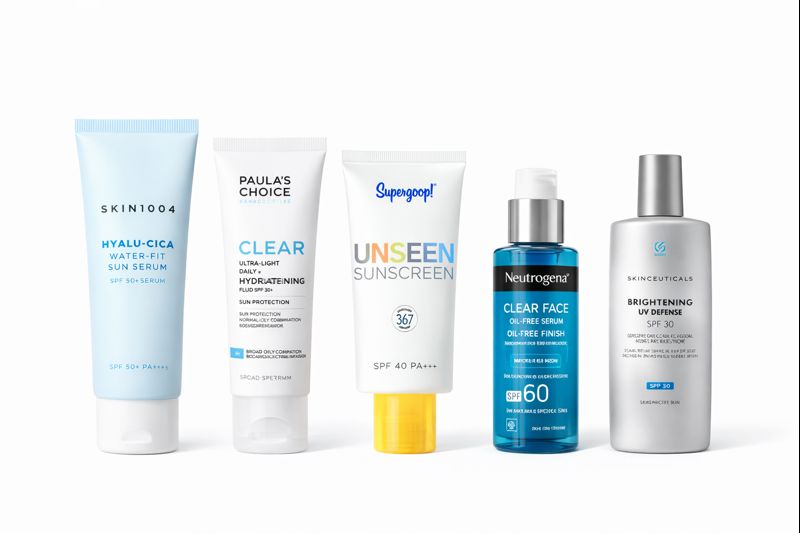
6. Skin1004 Madagascar Centella Hyalu-Cica Water-Fit Sun Serum
This K-Beauty favorite has been upgraded for 2026 to be even more “weightless.” It is the gold standard for those who hate the smell and feel of traditional sunscreen. Perfect for “dehydrated-oily” skin types who need moisture without the heavy oils.
- Why it works: It features Hyalu-Cica (a specialized blend of Hyaluronic Acid and Centella Asiatica) which deeply hydrates while instantly calming the inflammation associated with active breakouts.
- The Finish: A “serum-like” glow that isn’t greasy. It dries down to a natural, breathable finish that feels like you’re wearing nothing at all.
- Pros: Soothing, non-greasy
- Cons: Not matte
7. Paula’s Choice Clear Ultra-Light Daily Hydrating Fluid SPF 30+
Specifically formulated for the “Clear” line, this is one of the few sunscreens designed by a brand that specializes in acne.
- Why it works: It contains a potent cocktail of antioxidants (Green Tea and Goji Berry) that help neutralize free radicals from pollution—a major trigger for 2026 urban skin stress.
- The Finish: Water-light and virtually “dead matte” once absorbed.
- Gentle Glow Verdict: My go-to for high-humidity days when I know my T-zone will be at its greasiest.
8. Supergoop! New Unseen Sunscreen SPF 50 (2026 Formula)
The viral “invisible” primer just got a massive 2026 upgrade. It is now officially labeled as non-acnegenic and features a lighter glide than the original SPF 40 version. The best choice for “No-Makeup” days when you want your skin to look blurred and smooth without a thick foundation.
- Why it works: It uses a unique clear gel technology that blurs pores (like a filter) while providing high-level protection. It’s completely oil-free and fragrance-free.
- The Finish: A velvety, “suede” finish that grips makeup for 12+ hours.
- Pros: Blurs pores, invisible
- Cons: Silicone-heavy for some acne types
9. Neutrogena Clear Face Serum Sunscreen SPF 60+
Neutrogena’s 2026 serum version is a massive leap forward from their original “Clear Face” lotion. It’s designed to be thinner and more “breathable.” The most reliable, budget-friendly option you can find at any drugstore. It’s a “workhorse” for everyday protection.
- Why it works: Powered by Helioplex technology and infused with soothing Green Tea, it is formulated and tested to be non-comedogenic, making it a popular option for acne-prone skin.
- The Finish: Sheer and quick-drying with zero white cast, even on deep skin tones.
- Pros: Affordable, oil-free
- Cons: Alcohol-based
10. SkinCeuticals Daily Brightening UV Defense SPF 30
A medical-grade option for those dealing with Post-Inflammatory Hyperpigmentation (PIH)—the dark spots left behind by old acne.
- Why it works: It combines broad-spectrum protection with 1% Tranexamic Acid and 2% Niacinamide to actively brighten existing dark spots while preventing new ones from darkening in the sun.
- The Finish: Hydrating and luminous.
- Gentle Glow Verdict: If your main concern isn’t just the acne, but the scars it leaves behind, this is the investment piece your routine needs.
Customizing Sunscreen for Your Skin Type
Mineral vs. Chemical vs. Hybrid Sunscreen: Which Is Best for Acne?
Sunscreen labels can feel confusing, especially when you’re already dealing with acne. The good news? In 2026, formulas have improved so much that there isn’t one “bad” option—what matters is choosing what works best for your skin.
Choosing the right non-comedogenic sunscreens for oily and acne-prone skin depends on your skin’s sensitivity, oil levels, and daily exposure.
Here’s a simple way to decide:
Mineral (Physical) Sunscreen
Mineral sunscreens use ingredients like zinc oxide or titanium dioxide to protect the skin.
Best for:
- Active, inflamed breakouts
- Sensitive or easily irritated skin
Zinc oxide is naturally calming and anti-inflammatory, which makes mineral sunscreens a great choice when your skin feels angry or reactive, especially when the skin barrier is compromised.
Chemical Sunscreen
Chemical sunscreens use modern UV filters such as avobenzone or Tinosorb.
Best for:
- Oily skin that hates heavy textures
- Deeper skin tones
These formulas tend to feel lighter and absorb completely, which means no white cast and a more invisible finish on the skin.
Hybrid Sunscreen
Hybrid sunscreens combine both mineral and chemical filters.
Best for:
- Everyday, all-day wear
- Oily or acne-prone skin that wants balance
They offer strong protection like mineral sunscreens, but with the smoother, more lightweight feel of chemical formulas. For many people, hybrids are the easiest and most comfortable option.
Gentle Glow tip: If you’re not sure where to start, a hybrid sunscreen is usually the safest bet—it’s acne-friendly, comfortable, and easy to wear daily. If your routine also includes pore-clearing treatments, it helps to understand how salicylic acid products for managing blackheads fit alongside sunscreen without overwhelming the skin.
This becomes even more important when using retinol for oily skin, as these treatments can increase sun sensitivity and make daily SPF essential for protecting the skin. This is especially true when incorporating retinol routines suited to oily and acne-prone skin, where consistent sun protection helps maintain results and prevent irritation.
How to Reapply SPF Over Oily Skin (Without the Mess)
Let’s be honest—the hardest part about sunscreen isn’t applying it in the morning.
It’s reapplying it later in the day without turning your face into an oily, breakout-prone mess.
By 2:00 PM, your skin already has some oil. Rubbing a thick cream sunscreen on top? That’s usually when clogged pores and breakouts happen. The good news is: reapplying SPF in 2026 is much easier than it used to be.
Reapplication works best when your base layers are balanced. Starting the day with a structured sebum-stabilizing morning routine makes SPF sit better and reduces that 2:00 PM grease effect.
During summer, excessive layering, humidity, and friction can also increase sunscreen pilling on oily skin, especially underneath makeup or repeated SPF touch-ups throughout the day. Sunscreen remains one of the most important steps in any summer skincare routine. This becomes especially important for people questioning how to continue using retinoids during summer without increasing irritation or sun-related sensitivity.
The Simple 2026 Reapplication Method
1. Blot first
Before adding anything, gently blot excess oil using blotting papers or a clean tissue. This clears the surface without stripping your skin.
2. Use SPF mists or powders
SPF setting mists and powders are game-changers for oily skin. They refresh protection, control shine, and won’t disturb your makeup.
3. Press—don’t rub
If you’re using a lightweight fluid sunscreen, apply it with a clean beauty sponge and gently press it into the skin. Avoid rubbing, which can irritate your skin, move bacteria around, and break down your makeup.
Reapplying SPF doesn’t have to feel messy or stressful—and when it’s done right, it won’t clog your pores either
How to Patch Test
The Gentle Glow 24-Hour Patch Test for Acne-Prone Skin
Before applying any new SPF to your entire face, follow my signature test to ensure it won’t trigger a “reaction breakout”:
- Apply a pea-sized amount to your jawline (the most reactive area for hormonal acne).
- Wait 24 hours.
- Check for “Micro-comedones” (tiny, invisible bumps). If the skin remains smooth, you are clear to glow!
Final Takeaway: You Don’t Have to Fear Sunscreen Anymore
If there’s one thing to remember, it’s this: sunscreen doesn’t have to cost you clear skin. With today’s non-comedogenic formulas, protecting your skin and preventing breakouts can finally coexist.
The best sunscreen for oily and acne-prone skin is one you’ll actually wear every day—one that feels light, keeps shine under control, and doesn’t undo all the work you put into your skincare routine. Whether you choose a mineral, chemical, or hybrid formula, the right SPF should support your skin barrier, protect against dark spots, and help your skin heal, not fight back.
Clear skin isn’t about perfection—it’s about consistency, balance, and choosing products that respect your skin’s needs. The right non-comedogenic sunscreens for oily and acne-prone skin can protect your skin without disrupting its balance. When sunscreen works with your skin instead of against it, daily protection becomes effortless—and that’s when real, lasting glow begins.
What Dermatologists Say About Sunscreen
- American Academy of Dermatology: Sunscreen for Acne-Prone Skin
- Skin Cancer Foundation: 2026 SPF Guide
Frequently Asked Questions
Does SPF 50 clog pores more than SPF 30?
No. Pore-clogging depends on the formula, not SPF number. A well-formulated SPF 50 can be less comedogenic than a poorly formulated SPF 30.
Can I skip moisturizer if my sunscreen is hydrating?
Sometimes. If your sunscreen contains humectants and your skin isn’t tight, you may skip moisturizer—especially in the morning. For a complete routine, pair SPF with your night skincare routine for oily skin.
Can sunscreen cause acne and clogged pores?
Yes, sunscreen can cause acne if the formula contains comedogenic (pore-clogging) ingredients like coconut oil, isopropyl palmitate, or heavy silicones. These ingredients trap sweat and sebum, leading to “Acne Cosmetica.” To prevent breakouts, always choose a non-comedogenic, oil-free sunscreen specifically tested for acne-prone skin.
Why does my sunscreen “pill” or flake on my oily skin?
Pilling (when your sunscreen rolls into small balls) usually happens for two reasons: product buildup or ingredient incompatibility. On oily skin, if you apply a silicone-heavy sunscreen over a water-based serum, they may not bond. To prevent this, let your morning skincare absorb fully for 60 seconds before applying SPF, and avoid rubbing too vigorously—use a gentle “patting” motion instead.
Is mineral or chemical sunscreen better for active breakouts?
Both can work, but they serve different needs. Mineral sunscreens (Zinc Oxide) are naturally anti-inflammatory and “sit” on top of the skin, making them ideal for angry, inflamed acne. Chemical sunscreens (using modern filters) are often preferred by those with very oily skin because they absorb completely and feel weightless. If your skin is currently very reactive or red, start with a mineral or hybrid formula.
Sources and References
- Kligman AM, Mills OH. Acne Cosmetica. Archives of Dermatology. 1972.
https://pubmed.ncbi.nlm.nih.gov/4264346/ - Draelos ZD, DiNardo JC. A Re-evaluation of the Comedogenicity of Cosmetic Ingredients. Journal of the American Academy of Dermatology. 2006.
https://pubmed.ncbi.nlm.nih.gov/16488305/ - Draelos ZD, Matsubara A, Smiles K. The Effect of 2% Niacinamide on Facial Sebum Production. Journal of Cosmetic and Laser Therapy. 2006.
https://pubmed.ncbi.nlm.nih.gov/16766489/ - Arif T. Salicylic Acid as a Peeling Agent: A Comprehensive Review. Clinical, Cosmetic and Investigational Dermatology. 2015.
https://pmc.ncbi.nlm.nih.gov/articles/PMC4554394/ - Gupta M, et al. Zinc Therapy in Dermatology: A Review. Dermatology Research and Practice. 2014.
https://pubmed.ncbi.nlm.nih.gov/25120566/ - Bylka W, et al. Centella Asiatica in Cosmetology. Postepy Dermatologii i Alergologii. 2013.
https://pubmed.ncbi.nlm.nih.gov/24278045/ - Maeda K. Mechanism of Action of Topical Tranexamic Acid in the Treatment of Melasma and Post-Inflammatory Hyperpigmentation. Cosmetics. 2022.
https://www.mdpi.com/2079-9284/9/5/108
Medical Disclaimer
Gentle Glow guides are developed using peer-reviewed dermatology research and established clinical guidelines. The information provided is for educational purposes only and does not replace professional medical advice, diagnosis, or treatment. Always consult a board-certified dermatologist or qualified healthcare provider before starting new active skincare treatments.