كل ما تحتاجين معرفته عن البشرة الدهنية

5 Retinal Products for Oily and Acne-Prone Skin, Matched to Your Main Concern (2026 Guide)

راجع المحتوى طبيًا
جمال حنين، بكالوريوس صيدلة
صيدلي ومراجع طبي لدى Gentle Glow
Reviewed سبتمبر 9, 2026
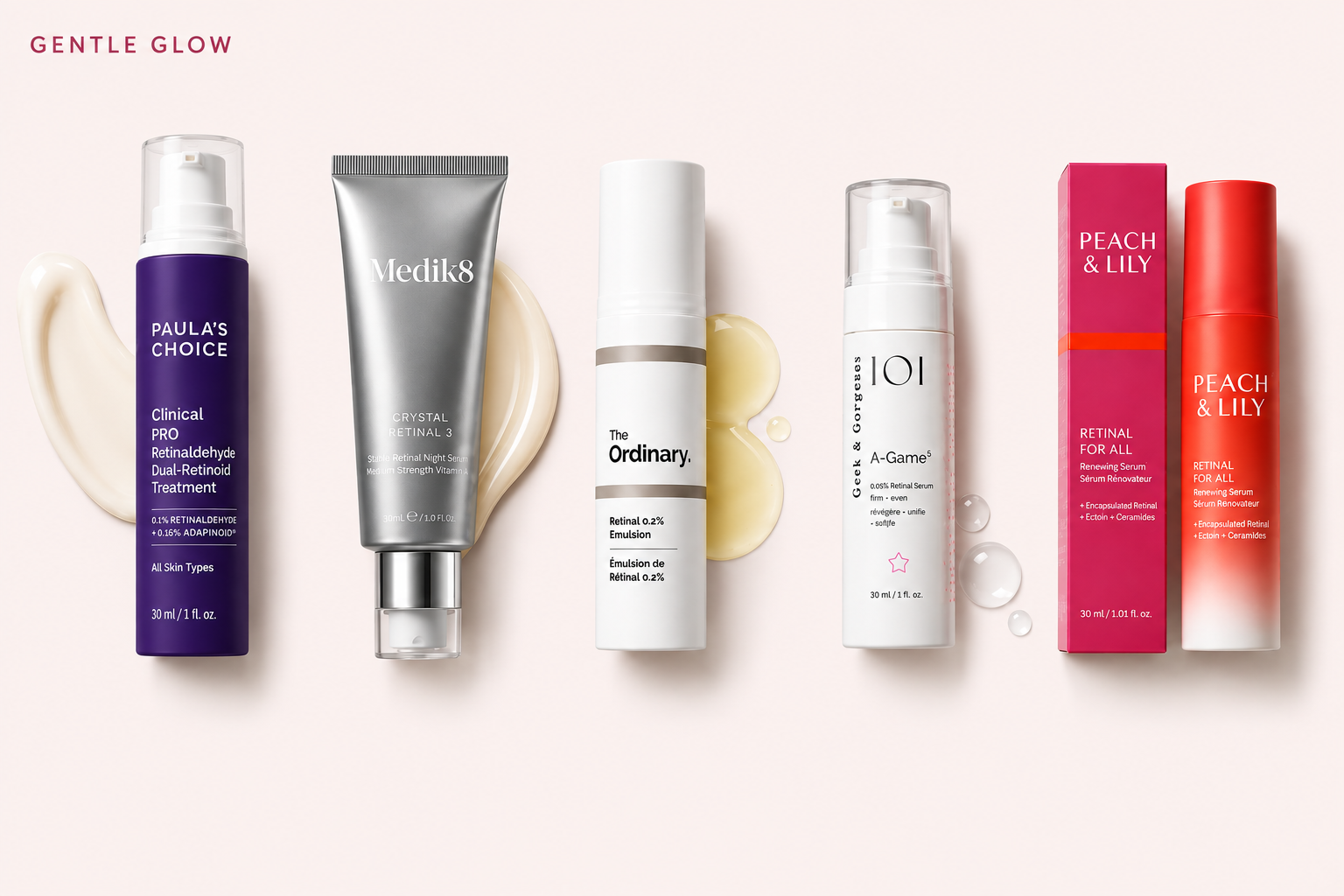
The best retinal for acne-prone skin depends on the concern you are trying to address, not simply the highest percentage. Our five picks match different needs by considering retinal strength, texture, supporting ingredients, delivery system, and tolerance.
- Recurring breakouts: Paula’s Choice Clinical PRO Retinaldehyde Dual-Retinoid Treatment.
- Clogged pores and rough, uneven texture: Medik8 Crystal Retinal.
- Post-acne dark marks and uneven tone: The Ordinary Retinal 0.2% Emulsion.
- Oily, clog-prone skin that dislikes rich creams: Geek & Gorgeous A-Game 5.
- Skin that becomes irritated or dehydrated easily: Peach & Lily Retinal For All.
جدول المحتويات
قد تتضمن بعض الروابط في هذا الدليل روابط تسويق بالعمولة. قد يحصل Gentle Glow على عمولة بسيطة إذا اشتريت من خلالها، دون أي تكلفة إضافية عليك. نرشّح فقط المنتجات التي نراها مناسبة للبشرة الدهنية والمعرضة لحب الشباب.
Watch: Which Retinal Is Right for Your Acne-Prone Skin?
Quick Selection: Which Retinal Fits Your Main Concern?
There is no single option that is automatically best for everyone with oily or acne-prone skin. The five products below were selected to match different skin concerns, formula preferences, and tolerance levels.
| Your main concern | Our pick | Retinal strength | When to consider another option | عرض المنتج |
|---|---|---|---|---|
| Recurring breakouts | Paula’s Choice Clinical PRO Retinaldehyde Dual-Retinoid Treatment | 0.1% retinaldehyde + Adapinoid® | New to retinoids | عرض المنتج |
| Clogged pores and rough texture | Medik8 Crystal Retinal | 0.01%–0.24%, depending on version | Budget is your main priority | عرض المنتج |
| Post-acne dark marks and uneven tone | The Ordinary Retinal 0.2% Emulsion | 0.2% retinal | You are new to retinal or easily irritated | عرض المنتج |
| Oily, clog-prone skin that dislikes rich creams | سيروم Geek & Gorgeous A-Game 5 بالريتينال | 0.05% retinal | You already tolerate stronger retinal concentrations comfortably | عرض المنتج |
| Skin that becomes irritated or dehydrated easily | Peach & Lily Retinal For All | 0.1% encapsulated retinal | Your priority is the highest retinal concentration for the lowest cost | عرض المنتج |
احصل على دليلك المجاني للريتينويدات
إذا كنت تبدأ باستخدام أحد الريتينويدات، فابدأ بروتين بسيط.
احصل على دليلنا المجاني «روتين الريتينويد ببساطة»، ، ويتضمن جدولًا مناسبًا للمبتدئين، وما يمكنك فعله إذا ظهرت علامات تهيّج، والأخطاء الشائعة التي يُفضّل تجنبها، بالإضافة إلى قائمة سريعة بخطوات الروتين.
احصل على الدليل المجاني وانضم إلى رسائل Gentle Glow حول العناية بالبشرة. يمكنك إلغاء الاشتراك في أي وقت.
The Best Retinal Products for Oily and Acne-Prone Skin, Matched to Your Concern
The best retinal formula depends on two things:
- The problem you want it to address.
- How much retinoid your skin already tolerates.
We matched each choice to a specific concern and considered the finished formula, supporting ingredients, delivery system, real-world feedback, and meaningful drawbacks.
For Recurring Breakouts in Retinoid-Experienced Skin
Paula’s Choice Clinical PRO Retinaldehyde Dual-Retinoid Treatment
Why We Picked It
If recurring breakouts are your main concern and your skin already tolerates الريتينويدات, Paula’s Choice Clinical PRO stands out because its formula goes beyond retinal alone. It combines 0.1% retinaldehyde with 0.16% Adapinoid®, a second retinoid derivative, to support smoother texture and clearer-looking skin.
The retinaldehyde is calcium-encapsulated for a more controlled release. It also contains supporting hydrating and skin-softening ingredients to help make the formula easier to tolerate. That matters because a dual-retinoid formula may still cause dryness or irritation, so added hydration can make regular use more comfortable as your skin adjusts.
Good Fit If
- Recurring breakouts are your main concern and your skin already has some retinoid experience.
- Retinoids tend to leave your skin dry or tight, so you want a formula with added hydration support.
- You prefer a formula that feels relatively lightweight rather than a traditional rich retinoid cream.
When to Consider Another Option
- You are completely new to retinoids and would rather begin with a simpler, lower-strength retinal.
- تريد تحديدًا retinal-only formula without another retinoid derivative.
- Budget is a major consideration; there are substantially less expensive retinal options in this guide.
- Your skin is already irritated or your barrier is struggling. A more conservative starting approach may make more sense before introducing a dual-retinoid treatment.
What Users Report
Users with acne-prone skin most often describe the formula as lightweight, non-greasy, and easy to layer, with some reporting smoother texture and fewer breakouts after consistent use. Others mention dryness, irritation, or temporary flaky patches, particularly when first introducing the treatment or using it too frequently.
A few users also question whether the results justify the higher price, making value one of the more common drawbacks mentioned alongside tolerance.
These experiences are anecdotal and can help us understand texture and day-to-day tolerance, but they do not prove how the product will perform for every skin type.
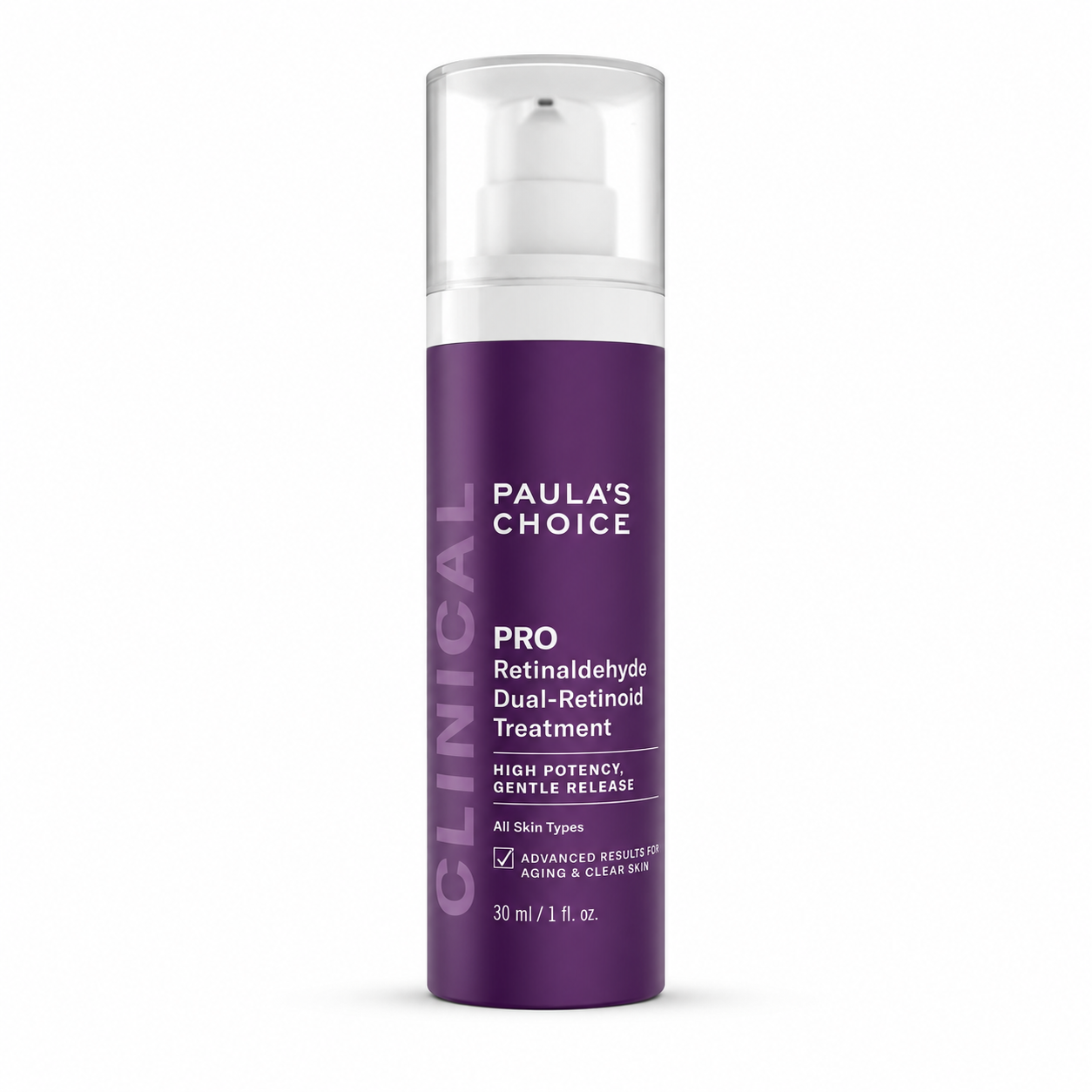
⭐ BEST FOR RECURRING BREAKOUTS
Paula’s Choice Clinical PRO
🏆 2025 NewBeauty Beauty Award — Best Retinal Serum
لماذا نفضّله
- 0.1% retinaldehyde + 0.16% Adapinoid®
- Controlled-release retinaldehyde
- Added hydration support for retinoid tolerance
For Clogged Pores and Rough, Uneven Texture:
Medik8 Crystal Retinal
Why We Picked It
If clogged pores and rough, uneven texture are what led you to retinal, Medik8 Crystal Retinal is the option we like for its gradual strength progression. The range currently spans six retinal concentrations from 0.01% to 0.24%, so you can start with a level that better matches your current tolerance and move up only as your skin adjusts.
That makes it easier to work on persistent congestion and uneven texture over time without assuming you need to begin with a high retinal percentage. Because retinal can break down when exposed to air and light, Medik8 also uses encapsulation and airless packaging to help keep the formula stable while you use it.
Good Fit If
- You want to start at a lower retinal strength and gradually progress without changing product ranges.
- Uneven texture and congestion are your main concerns.
- You prefer a creamy formula that absorbs without feeling especially heavy.
When to Consider Another Option
- Price is a major factor, especially because the higher strengths become increasingly expensive.
- You prefer a very fluid or serum-like texture rather than a creamier emulsion.
What Users Report
Users frequently describe smoother texture, brighter-looking skin, and good tolerance when they increase strengths gradually. Some acne-prone users also report fewer closed comedones or less congestion after consistent use.
The experience is not universal. Other users report breakouts after introducing Crystal Retinal, and price is one of the most common frustrations—particularly when moving into the stronger versions. Recent reviewers also mention that the creamy texture absorbs well without leaving a heavy residue.
These experiences are anecdotal, but they are useful for showing that even a well-formulated retinal can suit one acne-prone skin type and not another.
For Post-Acne Dark Marks and Uneven Tone:
The Ordinary Retinal 0.2% Emulsion
Why We Picked It
If post-acne dark marks and uneven tone are your main concerns and your skin already tolerates retinoids well, The Ordinary Retinal 0.2% Emulsion gives you a high retinal concentration at 0.2%. That makes it a more logical option for experienced users who want to step up their retinal strength instead of starting cautiously.
The formula also includes synthetic oat-derived compounds to help with the dryness and discomfort retinoids can cause, which is useful at this concentration.
Good Fit If
- آثار ما بعد حب الشباب وتفاوت لون البشرة are your main concerns.
- Your skin already tolerates retinoids comfortably.
- You want a higher retinal concentration at a relatively accessible price.
When to Consider Another Option
- You are new to retinal or easily develop dryness and irritation.
- You want a lower concentration that gives you more room to gradually increase strength.
What Users Report
Users commonly describe the emulsion as lightweight and quick to absorb, with some reporting smoother texture and more even-looking skin after consistent use. Acne-prone users also mention improvements in post-breakout marks and texture, although those experiences vary.
The most frequent practical complaints are the bright yellow colour, possible staining of light fabrics, and irritation when the product is introduced too quickly. Some experienced users also feel the 15 ml bottle is small for the price.
For Oily, Clog-Prone Skin That Dislikes Rich Creams:
سيروم Geek & Gorgeous A-Game 5 بالريتينال
Why We Picked It
If your skin gets oily easily and you tend to avoid rich retinoid creams, Geek & Gorgeous A-Game 5 gives you 0.05% retinal in a light, silky emulsion. The lower concentration also makes it a more approachable option if you want to introduce retinal without starting at 0.1% or 0.2%.
The benefit here is practical: a lighter formula can be easier to fit into an oily-skin routine, especially if heavier creams leave your face feeling coated or greasy. It also contains allantoin, panthenol, and Biosaccharide Gum-1 for added skin-soothing support as your skin adjusts to retinal.
Good Fit If
- You prefer lightweight emulsions over rich retinoid creams.
- You want to begin with a 0.05% retinal concentration.
- Heavy-feeling skincare makes your oily skin uncomfortable.
When to Consider Another Option
- You already tolerate 0.1% or stronger retinal comfortably.
- You prefer a richer, more moisturizing night treatment.
- You want a retinal range with several smaller strength steps to progress through.
What Users Report
Users commonly describe A-Game 5 as light, comfortable, and easy to absorb, including people with combination, oily, or sensitive skin. Some acne-prone users report improvements in clogged pores and occasional breakouts with continued use, while others particularly value being able to introduce retinal without significant peeling or burning.
These experiences are individual, so a lightweight texture does not guarantee that a formula will never contribute to breakouts. Its main advantage for oily skin is how it feels and fits into the routine.
For Skin That Becomes Irritated or Dehydrated With Retinoids:
Peach & Lily Retinal For All
Why We Picked It
If retinoids usually leave your skin dry, tight, or easily irritated, Peach & Lily Retinal For All is the option we chose for its tolerance-focused formula. It combines 0.1% encapsulated retinal with ectoin, ceramides, and soothing ingredients, so the formula is built to support skin comfort.
That matters because a retinal product is only useful if you can use it consistently. For someone who has previously struggled with dryness or sensitivity, the added barrier-supportive ingredients may make the treatment easier to fit into a regular routine while your skin adjusts.
Good Fit If
- Previous retinoids have left your skin dry, tight, or uncomfortable.
- تريد 0.1% retinal with added barrier-supportive ingredients.
- Comfort and tolerance matter more to you than choosing a strong formula.
When to Consider Another Option
- You already tolerate stronger retinal concentrations comfortably.
- Your main priority is the highest retinal strength for the lowest price.
- You prefer a very minimal formula with fewer supporting ingredients.
What Users Report
Users commonly describe the serum as comfortable, hydrating, and easier to tolerate than retinoids they had tried before. Some report being able to use it every few nights without the flaking or tightness they experienced with other products.
A recurring drawback is the strong yellow colour, with some users finding it noticeable on the skin or worrying about transfer onto light fabrics. Others still report redness or sensitivity, so the tolerance-focused formula does not guarantee that everyone will avoid irritation.
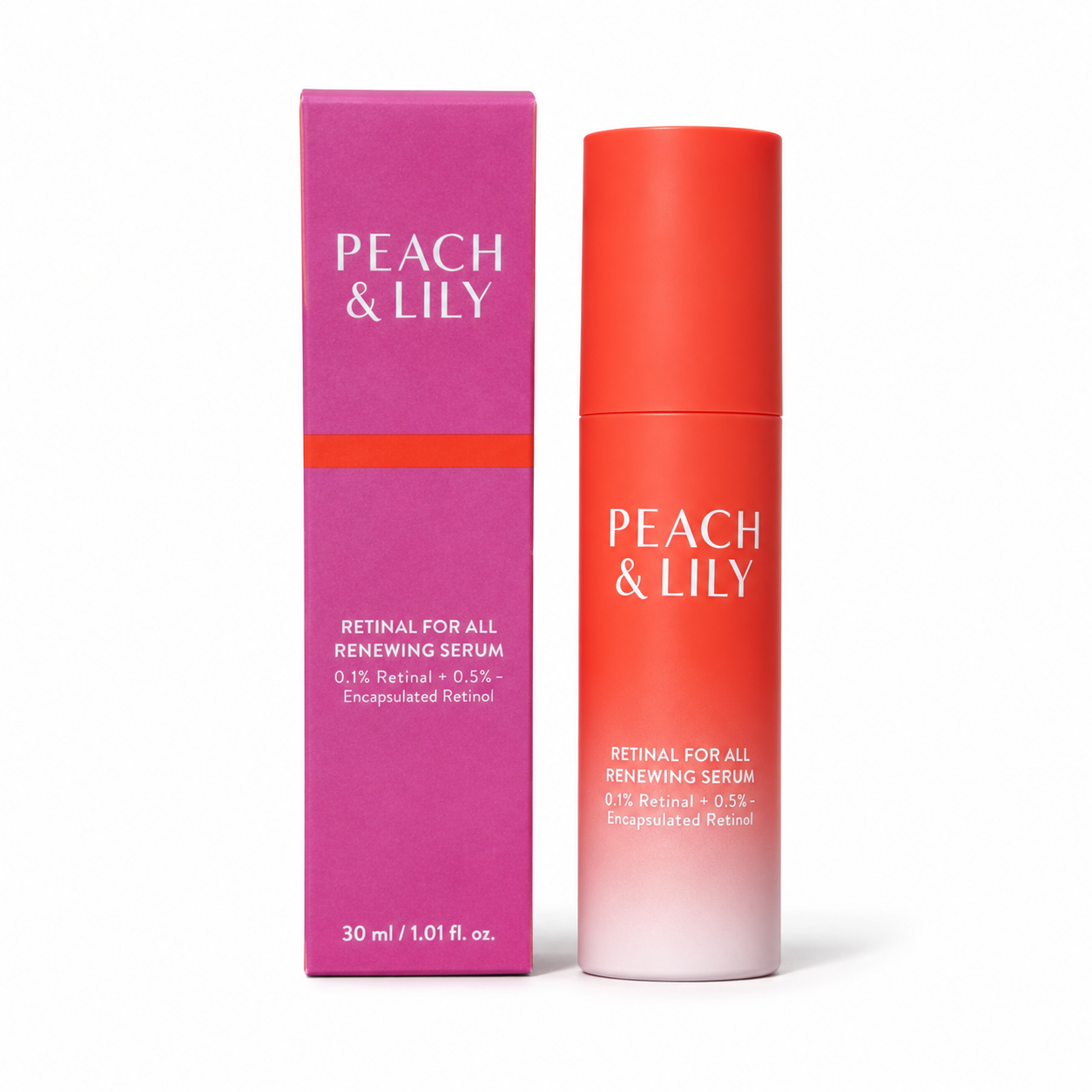
⭐ BEST FOR RETINOID-SENSITIVE SKIN
Peach & Lily Retinal For All
لماذا نفضّله
- 0.1% encapsulated retinal
- 0.3% ectoin for added skin comfort
- Built around retinal tolerance and hydration support
How to Choose the Right Retinal Formula for Your Skin Concern
Choosing the right retinal formula depends on your main skin concern, current retinoid tolerance, and preferred texture. For oily or acne-prone skin, also look for a formulation you can use comfortably and consistently, with appropriate supporting ingredients and packaging that helps protect the retinal.
Match the Formula to Your Main Concern
Start with the reason for using retinal. Someone dealing mainly with recurring breakouts may prioritize a formula developed around blemish-prone skin, while someone concerned about آثار الحبوب أو تفاوت اللون may prefer a different formulation.
This is more useful than searching for one retinal that is supposedly “best” for every concern.
Consider How the Texture Fits Oily Skin
Oily skin does not automatically need a gel, and a cream does not automatically clog pores. What matters is whether the finished formula feels comfortable enough for you to use regularly.
If rich creams tend to feel heavy on your skin, a fluid serum or lightweight emulsion may fit your routine better. If retinal tends to leave your skin feeling tight, a more cushioning formula may be preferable.
Look at the Supporting Formula
Retinal does not work in isolation. Ingredients that support hydration and skin comfort can be especially useful because retinoids may cause dryness, tightness, or irritation while the skin adjusts.
Rather than avoiding individual ingredients based on “pore-clogging” lists, consider the complete formulation and how your own skin responds to it.
Pay Attention to Delivery and Packaging
Retinal is sensitive to light and oxidation, so how it is formulated and packaged matters. Encapsulation and opaque or airless packaging can help protect the active ingredient from unnecessary exposure during use.
These features do not automatically make one retinal more effective than another, but they are useful details to consider when comparing otherwise similar formulas.
What Retinal Strength Should You Choose?
The right retinal strength depends mainly on your previous retinoid experience and how well your skin tolerates it. Lower concentrations are usually easier to introduce, while higher percentages are better suited to experienced users. A higher number is not automatically better, because delivery system, formulation, and tolerance also affect how a retinal product performs.
- 0.01%–0.05% retinal: A practical starting range if you are new to retinal or tend to become irritated easily.
- Around 0.1% retinal: Often a reasonable step for skin that already tolerates lower-strength retinoids comfortably.
- 0.2% retinal and above: Better suited to experienced users who already know their skin handles retinoids well.
These ranges are useful shopping references rather than strict clinical strength categories. Two products with the same retinal percentage can still feel and perform differently because their delivery systems and finished formulas are different.
Is Retinal Good for Oily and Acne-Prone Skin?
Yes, retinal can be a useful cosmetic retinoid for oily and acne-prone skin, particularly when clogged pores, uneven texture, and آثار ما بعد حب الشباب وتفاوت لون البشرة are concerns. Research also suggests that retinaldehyde has antibacterial activity against C. acnes, although cosmetic retinal products do not have the same acne-treatment evidence as established topical retinoids such as adapalene.
- Research suggests retinaldehyde has direct antibacterial activity against C. acnes. A small human study of 0.05% retinaldehyde and C. acnes levels found a significant reduction in bacterial counts after two weeks of daily use. However, the study measured acne-related bacteria, not changes in actual breakouts, so it cannot by itself prove that retinaldehyde clears acne.
- Clinical research also suggests retinaldehyde may help acne when used in combination formulas. A randomized, double-blind study evaluating 0.1% retinaldehyde combined with 6% glycolic acid reported reductions in comedones and inflammatory acne lesions. Because both actives were used together, the improvement cannot be attributed to retinaldehyde alone.
- Established acne retinoids have a stronger treatment evidence base. تختلف American Academy of Dermatology acne guidelines strongly recommend topical retinoids such as adapalene, tretinoin, tazarotene, and trifarotene. Cosmetic retinal can have a place in an acne-prone skincare routine, but it should not be presented as equivalent to these established acne treatments.
How to Start Using Retinal Without Overwhelming Your Skin
The best way to start using retinal is to introduce it gradually, keep the rest of your routine simple, and increase frequency only when your skin remains comfortable. This gives your skin time to adjust and can reduce the dryness, tightness, and irritation that retinoids may cause when introduced too quickly.
- Start with a few nights per week. Follow the directions for your specific product and give your skin time to adjust before increasing frequency. More frequent use is not automatically better if it leaves your skin persistently red, tight, or flaky.
- If you already use salicylic acid or other exfoliants, separating them from retinal at first can make it easier to judge how your skin is responding. A weekly routine that spaces exfoliation and retinoid nights can also help avoid stacking too many potentially irritating steps at once.
- Use hydration to support tolerance. The American Academy of Dermatology notes that المرطب و spacing out retinoid use can help reduce irritation. If your skin becomes persistently uncomfortable rather than mildly dry, reduce frequency instead of pushing through.
- Pay attention to your skin barrier. Persistent burning, marked redness, cracking, or worsening sensitivity is a reason to stop and reassess rather than assume your skin is simply “purging.” If that happens, focus first on repairing an overworked skin barrier before reintroducing retinal.
Who May Need to Be More Cautious With Retinal?
Retinal may not be the best choice if your skin is already very irritated or if your acne is severe or leaving scars. Retinal should also be avoided during pregnancy. If you are trying to become pregnant, speak with your dermatologist or healthcare provider before using it. In these situations, it may be better to address the underlying issue first before adding retinal.
If your skin is already very dry, red, or inflamed, be cautious about adding retinal. It may be better to wait until your skin feels more comfortable or speak with a dermatologist before restarting a retinoid.
Retinoids are also generally avoided during pregnancy. The American Academy of Dermatology recommends avoiding retinoid skincare during pregnancy, which includes retinal because it belongs to the same vitamin A family.
Finally, if your acne is deep, painful, persistent, or starting to scar, a cosmetic retinal may not be enough. In that situation, established acne treatments may be more appropriate, and a dermatologist can help decide what fits your skin best.
الخلاصة
The best retinal for acne-prone skin is not necessarily the strongest formula. A better choice is one that matches your main concern, your previous retinoid experience, the type of texture that feels comfortable on your skin and that you can use consistently.
For recurring breakouts, a more treatment-focused formula may make sense. If clogged pores and rough texture are your priority, a gradual strength system may be easier to work with over time. For post-acne marks, experienced users may prefer a higher retinal concentration, while easily irritated skin may benefit more from a formula built around hydration and tolerance.
Whichever product you choose, consistent use and good tolerance matter more than chasing the highest percentage.
احصل على دليلك المجاني للريتينويدات
احتفظ بخطة الريتينويد معك.
احفظ الروتين والجدول وقائمة متابعة تفاعل البشرة والأخطاء الشائعة، حتى لا تضطر إلى تذكّر كل ما ورد في هذا المقال.
احصل على الدليل المجاني وانضم إلى رسائل Gentle Glow حول العناية بالبشرة. يمكنك إلغاء الاشتراك في أي وقت.
الأسئلة الشائعة
Is retinal better than retinol for acne-prone skin?
Not necessarily. Retinal is one conversion step closer to retinoic acid than retinol, but that does not automatically make every retinal product better for acne. The finished formula, strength, your tolerance, and the concern you are trying to address all matter. If you prefer a gentler starting point, there are also retinol options for oily and acne-prone skin worth considering.
What percentage of retinal is best for acne-prone skin?
There is no single percentage that is best for everyone. Lower strengths such as 0.01%–0.05% may be easier to introduce, while 0.1% and higher concentrations are generally more appropriate for people who already tolerate retinoids well.
Can retinal help with clogged pores?
Retinal belongs to the retinoid family, which can support normal skin-cell turnover and may help with clogged pores and uneven texture. However, cosmetic retinal products do not have the same level of acne-treatment evidence as established topical acne retinoids such as adapalene.
Can retinal help with post-acne dark marks?
Retinal may help improve uneven tone over time, but evidence specifically showing that cosmetic retinal fades post-acne hyperpigmentation is still limited. Its role in supporting skin-cell turnover gives us a good reason to think it may help, but the evidence is stronger for general pigmentation than for post-acne dark marks specifically.
Can you use retinal every night?
Some people eventually tolerate nightly use, but you do not need to start that way. Gradual or spaced application can help reduce irritation, and frequency should be increased only as your skin adjusts comfortably.
المصادر والمراجع
- Pechère M, Pechère JC, Siegenthaler G, Germanier L, Saurat JH. Antibacterial activity of retinaldehyde against Propionibacterium acnes
- Poli F, Ribet V, Lauze C, Adhoute H, Morinet P. Efficacy and safety of 0.1% retinaldehyde/6% glycolic acid (Diacneal) for mild to moderate acne vulgaris: A multicentre, double-blind, randomized, vehicle-controlled trial
- American Academy of Dermatology. American Academy of Dermatology issues updated guidelines for the management of acne
- American Academy of Dermatology. Ludmann P. Acne: Diagnosis and treatment
- American Academy of Dermatology. Schleehauf B. Dermatologist-approved pregnancy skin care
- American Academy of Dermatology. Retinoid or retinol?
- Mukherjee S, Date A, Patravale V, et al. الريتينويدات في علاج شيخوخة البشرة: نظرة عامة على الفعالية السريرية والسلامة
- Duester G, Mic FA, Molotkov A. Cytosolic retinoid dehydrogenases govern ubiquitous metabolism of retinol to retinaldehyde followed by tissue-specific metabolism to retinoic acid
تنويه طبي
يتم إعداد أدلة Gentle Glow استنادًا إلى أبحاث علمية محكّمة في مجال طب الجلدية وإرشادات سريرية معتمدة. المعلومات المقدَّمة هنا لأغراض تعليمية فقط، ولا تُعد بديلاً عن الاستشارة الطبية المهنية أو التشخيص أو العلاج. يُنصح دائمًا باستشارة طبيب جلدية معتمد أو مقدم رعاية صحية مؤهل قبل البدء باستخدام أي مكوّنات علاجية نشطة جديدة في روتين العناية بالبشرة.