Everything You Need to Know About Oily Skin

What Makes a Clinic-Grade At-Home Treatment Different From Drugstore Skincare?

Medically reviewed by
Gamal Henin, B.Pharm
Pharmacist & Medical Reviewer at Gentle Glow
Reviewed July 27, 2026
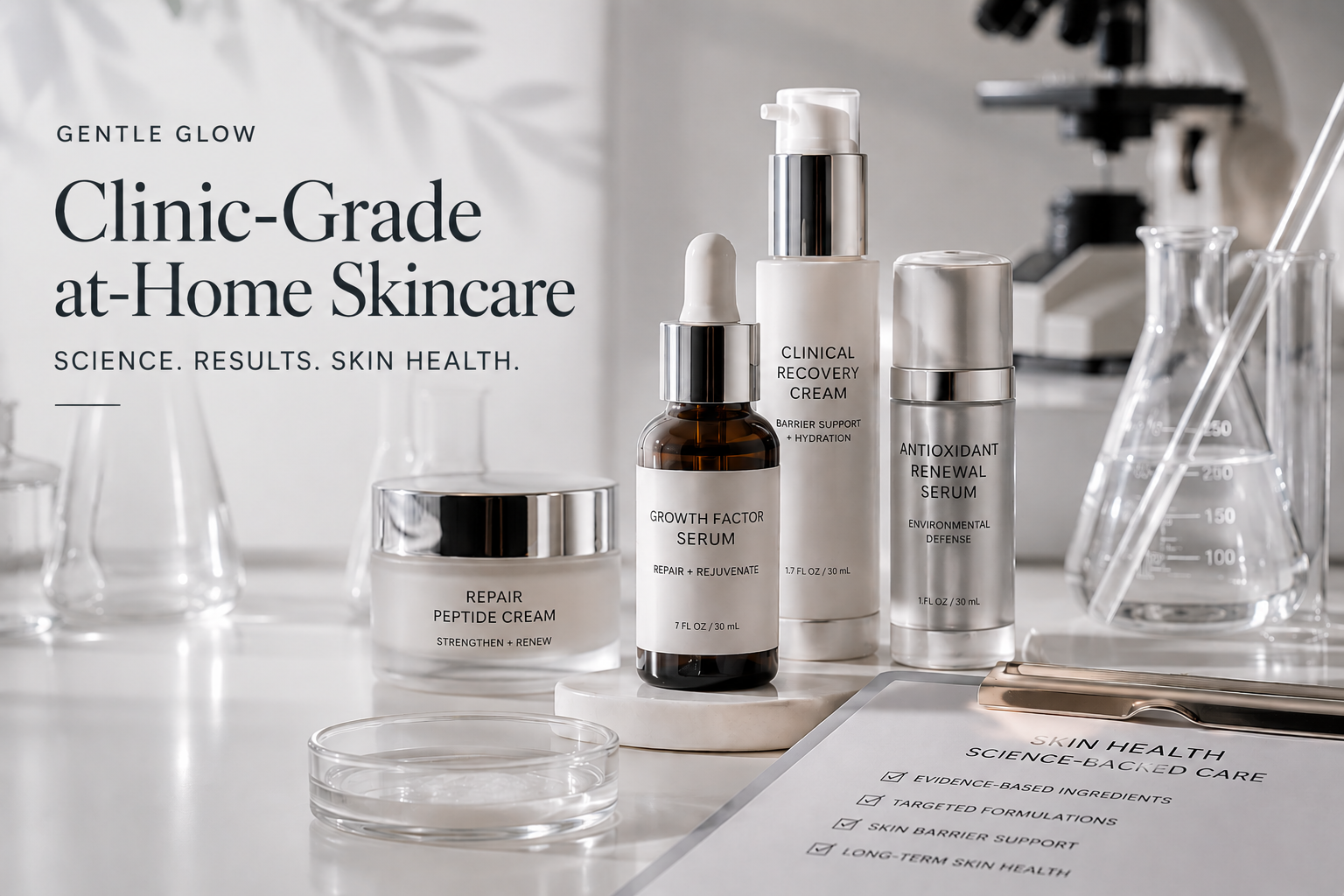
A clinic-grade at-home treatment differs from drugstore skincare because it is typically designed to support skin repair, renewal, and targeted skin concerns using more advanced formulations, evidence-backed ingredients, or professional-use applications. Drugstore skincare is still useful for hydration, barrier support, and prevention, but clinic-grade products like CALECIM® Professional frequently address more specific concerns such as firmness, texture, recovery, and visible signs of aging.
The key distinction is not price. It is the combination of formulation goals, ingredient technology, supporting evidence, and how the product is intended to be used.
Table of Contents
Clinic-grade at-home treatments differ from drugstore skincare because they are designed to support skin repair, renewal, and long-term skin quality rather than primarily providing surface-level maintenance
A clinic-grade at-home treatment is usually designed for people seeking more targeted support than hydration and daily maintenance alone.
Anti-aging skincare should begin with evidence-informed basics and product selection suited to the user’s skin needs. That means sunscreen, moisturizer, and consistent skincare habits remain important regardless of the products you choose.
Many clinic-grade skincare products aim to support concerns such as:
- Loss of firmness
- Uneven texture
- Recovery after treatments
- Visible signs of skin aging
- Skin quality and resilience
This does not mean drugstore skincare is ineffective. It means the goals are often different.
The biggest differences often come down to formulation goals, ingredient technology, and evidence behind the product
A clinic-grade skincare product is often distinguished by how it is formulated, not simply by what appears on the ingredient label.
Why ingredient concentration is only part of the story
Many consumers assume higher concentrations automatically produce better results. In reality, effectiveness depends on whether ingredients can perform as intended once applied to the skin.
According to Biomedical Dermatology, the skin barrier remains a major limitation to ingredient penetration and absorption. A product containing a high concentration of an active ingredient may still perform poorly if the formulation cannot deliver it effectively.
How delivery systems influence ingredient performance
Bioactive compounds must reach their intended target site to exert their effects.
This is why formulation technologies, stabilization methods, and delivery systems matter. Two products may contain similar ingredients while producing different outcomes because of differences in formulation design.
Why some products are designed around repair while others focus on hydration
Hydration and repair are related but not identical goals.
Hyaluronic acid plays important roles in skin hydration, aging, and wound-healing processes. Hydration can improve comfort and appearance, but it may not address all aspects of skin aging.
Repair-focused products are often designed to support biological processes associated with skin renewal, resilience, and recovery.
Clinic-grade skincare and drugstore skincare often target different stages of skin aging
The right skincare depends on your goals and current skin condition.
When basic skincare may be enough
For many people, drugstore skincare can provide excellent results when the primary goals are:
- Daily hydration
- Barrier support
- Sun protection
- Early prevention
The American Academy of Dermatology recommends sunscreen and moisturizer as two of the most effective anti-aging products people can use consistently.
In fact, a randomized trial summarized by the University of Manchester found that daily sunscreen users experienced 24% less skin aging over 4.5 years compared with discretionary sunscreen users.
When visible aging concerns may require a different approach
As skin ages, concerns often extend beyond dryness.
Collagen is essential for skin elasticity and firmness, and aging is associated with reduced collagen synthesis and increased collagen breakdown.
This helps explain why some people feel their moisturizer is still working while their skin appears less firm or more lined over time.
| Concern | Basic Skincare May Be Enough | Clinic-Grade Skincare May Be Worth Considering |
| Dryness | ✓ | |
| Daily maintenance | ✓ | |
| Early prevention | ✓ | |
| Visible loss of firmness | ✓ | |
| Recovery support | ✓ | |
| Texture concerns | ✓ | |
| Advanced anti-aging goals | ✓ |
Not all premium skincare is truly clinic-grade
A higher price tag does not automatically make a product clinic-grade.
What clinical adoption can indicate
Clinical use may suggest that professionals see value in a product, but professional adoption alone does not prove effectiveness.
How stem cell skincare products fit into the clinic-grade category
Many clinic-grade skincare products are built around advanced ingredient technologies, including growth factors and cell-signaling ingredients.
The role of growth factors and cell-signaling ingredients
A systematic review indexed in PubMed concluded that topical growth factor preparations appear effective for facial skin rejuvenation based on investigator- and participant-reported outcomes.
Growth factors are signaling molecules involved in communication between cells. They are being studied for their potential role in supporting skin repair and rejuvenation processes.
How repair-focused skincare differs from traditional anti-aging formulas
Growth factors, exosomes, and peptides are increasingly used in skincare inspired by wound-healing and skin-aging research.
Rather than focusing only on hydration or exfoliation, these products often aim to support the biological environment associated with healthier-looking skin.
How CALECIM® Professional is used as a clinic-grade at-home treatment
CALECIM® Professional is an example of a clinic-grade at-home treatment that incorporates stem cell-derived technology.
For anti-aging skincare routines
CALECIM® Professional Serum contains the brand’s highest concentration of PTT-6® and can be used daily as part of an anti-aging routine.
For post-treatment recovery support
The brand also recommends the professional serum following microneedling, chemical peels, dermabrasion, and clinical skin treatments.
For users seeking repair-focused skincare beyond hydration alone
CALECIM® Professional main ingredient, PTT-6®, contains more than 3,000 proteins, including growth factors, cytokines, and exosomes.
The company reports laboratory findings showing:
- 56% increase in elastin expression
- 83% increase in hyaluronic acid expression
- 42% more skin cell growth at seven days
- 600% average improvement in skin density markers
How to decide whether upgrading to a clinic-grade at-home treatment is worth it
A clinic-grade at-home treatment may be worth considering when your current routine no longer addresses your primary concerns.
Signs your current skincare may have reached its limits
- Skin feels hydrated but lacks firmness
- Texture concerns persist
- Recovery after treatments is slower
- Fine lines continue progressing despite consistency
Who is most likely to benefit
Clinic-grade skincare may be most relevant for:
- Mature skin
- Post-procedure recovery
- Visible aging concerns
- Users seeking advanced repair support
What realistic results to expect over time
Results vary based on skin condition, formulation, consistency, and expectations.
No skincare product should be expected to replace sunscreen, healthy skin habits, or professional medical care when appropriate.
Best For
- Mature skin
- Visible firmness concerns
- Post-treatment recovery
- Users seeking repair-focused skincare
- People interested in stem cell serum technologies
Not Best For
- Those seeking overnight results
- Users wanting only basic hydration
- Individuals expecting skincare to replace medical treatments
- People unwilling to maintain consistent use
Conclusion
A clinic-grade at-home treatment differs from drugstore skincare not because it is automatically stronger or more expensive but because it is often designed to address more targeted concerns through advanced formulation strategies, evidence-backed ingredients, and repair-focused goals.
For people dealing with visible aging, post-treatment recovery, or skin quality concerns that go beyond hydration, products such as CALECIM® Professional may be worth considering as part of a broader skincare strategy. The key is to evaluate evidence, understand realistic expectations, and choose products that match your specific skin goals.
Frequently Asked Questions
What does clinic-grade skincare actually mean?
Clinic-grade skincare is an industry term often used for products designed with advanced formulations, professional-use applications, or evidence-backed ingredients.
Is clinic-grade skincare stronger than drugstore skincare?
Not necessarily. Effectiveness depends on formulation quality, evidence, delivery systems, and intended use rather than strength alone.
Are stem cell skincare products worth considering for aging skin?
Some stem cell skincare products use growth factors and cell-signaling ingredients that are being studied for skin rejuvenation and repair support. Results depend on the specific product and supporting evidence.
How long does it take to see results from clinic-grade skincare?
Timelines vary. Improvements in hydration may appear sooner, while changes related to firmness, texture, or overall skin quality often require consistent use over weeks or months.
Can clinic-grade skincare replace professional treatments?
No. Clinic-grade skincare may complement professional treatments but should not be viewed as a replacement for medical procedures when those are appropriate.
Is clinic-grade skincare suitable for sensitive skin?
Many clinic-grade products are formulated for sensitive skin, but suitability depends on the ingredients and individual skin condition.
Sources and References
- American Academy of Dermatology. How to Select Anti-Aging Skin Care Products.
- Kim B, et al. Transdermal Delivery Systems in Cosmetics. Biomedical Dermatology. 2020.
- Hughes MCB, Williams GM, Baker P, Green AC. Sunscreen and Prevention of Skin Aging: A Randomized Trial. Annals of Internal Medicine. 2013.
- Quinlan DJ, Ghanem AM, Hassan H. Topical Growth Factor Preparations for Facial Skin Rejuvenation: A Systematic Review. Journal of Cosmetic Dermatology. 2023.
Medical Disclaimer
Gentle Glow guides are developed using peer-reviewed dermatology research and established clinical guidelines. The information provided is for educational purposes only and does not replace professional medical advice, diagnosis, or treatment. Always consult a board-certified dermatologist or qualified healthcare provider before starting new active skincare treatments.