Everything You Need to Know About Oily Skin

Best Retinol Products for Oily and Acne-Prone Skin (2026): What Actually Works Without Irritation

Medically reviewed by
Gamal Henin, B.Pharm
Pharmacist & Medical Reviewer at Gentle Glow
Reviewed July 24, 2026
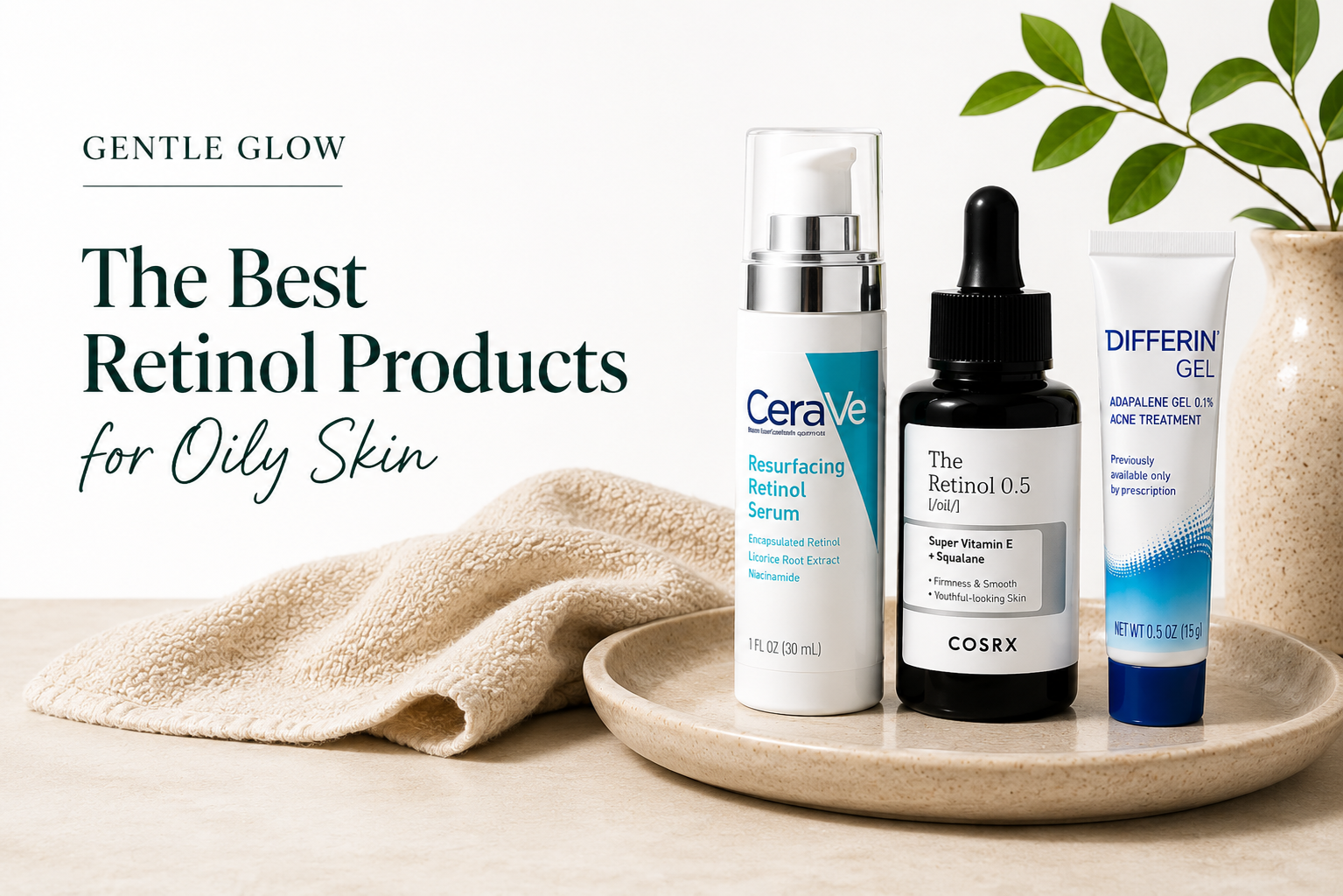
The best retinol products for oily and acne-prone skin in 2026 include CeraVe Resurfacing Retinol Serum, La Roche-Posay Retinol B3 Serum, and COSRX Retinol 0.5 Oil Serum. These formulas use lightweight textures and gradual-release retinol to clear pores without clogging or irritating the skin.
Retinol Rule: Start low and build slowly
Texture Rule: Lightweight formulas work best
Key Insight: Consistency matters more than strength
Table of Contents
Some links in this guide are affiliate links. This means Gentle Glow may earn a small commission if you purchase through them — at no extra cost to you. We only recommend products that are suitable for oily and acne-prone skin.
Watch: How to Choose the Right Retinol Texture
How Retinol Works on Oily, Acne-Prone Skin — and How to Avoid Breakouts
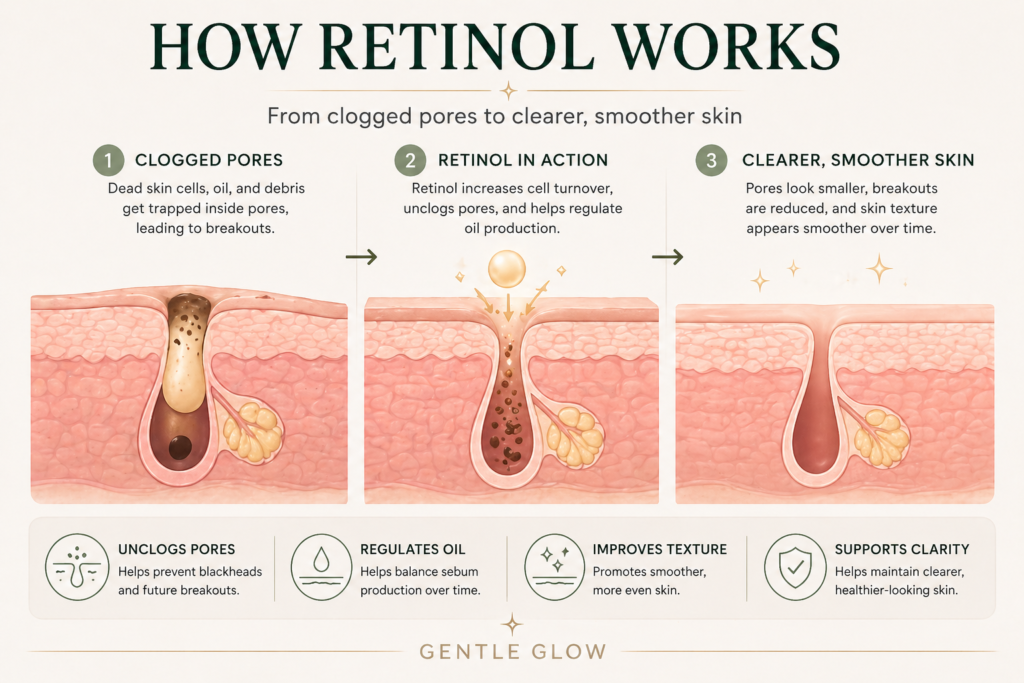
Topical retinoids help keep pores clear by supporting normal follicular cell turnover. Early irritation or a temporary flare can occur in some people, but persistent breakouts may mean the formula or frequency is unsuitable—or that retinol alone is not enough to manage the acne. You can explore this further in our guide on how retinoids behave on oily and acne-prone skin.
Have you noticed that after adding retinol to your routine, your skin became more reactive, more irritated, or started breaking out more?
That’s not just a feeling — it’s a common and predictable response when retinol doesn’t fit the skin or the routine correctly, especially when you understand how acne forms in oily skin throughout the day.
Several factors affect how retinol behaves on your skin, including the formula, the texture, and what you’re using alongside it. The most common reaction is to remove it completely. In many cases, that’s the wrong move.
What usually needs to change is not the ingredient — but how it’s used, how often it’s applied, and which type of formula you’re using.
Topical retinoids remain among the most effective treatments for acne-prone skin, with research supporting their role in reducing comedones and inflammatory breakouts. Its benefits are linked to how it helps regulate skin turnover and prevent buildup inside pores.
To better understand how oily skin produces excess oil and clogs pores, it helps to look at the underlying mechanisms — because that’s what determines how well any active ingredient will perform.
The next section breaks down the best retinol products for oily and acne-prone skin formulas that actually do that — so you can choose based on how your skin behaves.
FREE RETINOID GUIDE
Starting a retinoid? Keep the routine simple.
Get our free Your Retinoid Routine, Simplified guide with a beginner schedule, what to do if your skin reacts, common mistakes to avoid, and a quick routine checklist.
Get the free guide and join Gentle Glow’s skincare emails. Unsubscribe anytime.
Best Retinol Products for Oily and Acne-Prone Skin (Quick Selection Guide)
If you’re not sure where to start, this quick guide maps each retinol product to how your skin behaves — based on texture, tolerance, and breakouts.
| Product | Type | Best For | Texture | Level | View |
|---|---|---|---|---|---|
| CeraVe Resurfacing Retinol Serum | Encapsulated Retinol | Beginners, post-acne marks, uneven texture | Lightweight serum | Beginner | View product |
| The Ordinary Retinol 0.2% in Squalane | Retinol (Oil-based) | First-time users, simple routines | Light oil | Beginner | View product |
| COSRX Retinol 0.5 Oil Serum | Retinol (Squalane-based) | Experienced retinol users who prefer a lightweight oil | Lightweight oil | Intermediate | View product |
| La Roche-Posay Retinol B3 Serum | Encapsulated Retinol + Niacinamide | Sensitive, oily, acne-prone skin | Fluid serum | Beginner–Intermediate | View product |
| Geek & Gorgeous A-Game 5 | Retinal (0.05%) | Experienced users seeking a more potent retinal option | Lightweight emulsion | Intermediate | View product |
| Avène RetrinAL 0.1 Intensive Cream | Retinal | Acne + early aging, stronger treatment | Cream-emulsion | Advanced | View product |
| Differin Gel (Adapalene 0.1%) | Adapalene (Pharmacy) | Blackheads, clogged pores, active acne | Gel | Intermediate–Advanced | View product |
| Acretin (Tretinoin Cream) | Tretinoin (Prescription) | Severe acne, resistant congestion | Cream | Advanced | View product |
The table gives you a quick direction — but the real difference comes down to how each formula behaves on your skin.
It also helps to remember that retinol is only one type of retinoid. Ingredients like retinaldehyde and newer-generation retinoids convert differently inside the skin, which is one reason some retinoid formulas feel faster, gentler, or more acne-focused than others.
The next section breaks down each product in more detail, so you can choose based on texture, tolerance, and how it fits into your routine.
Best Retinol Products for Oily and Acne-Prone Skin (2026 Picks)
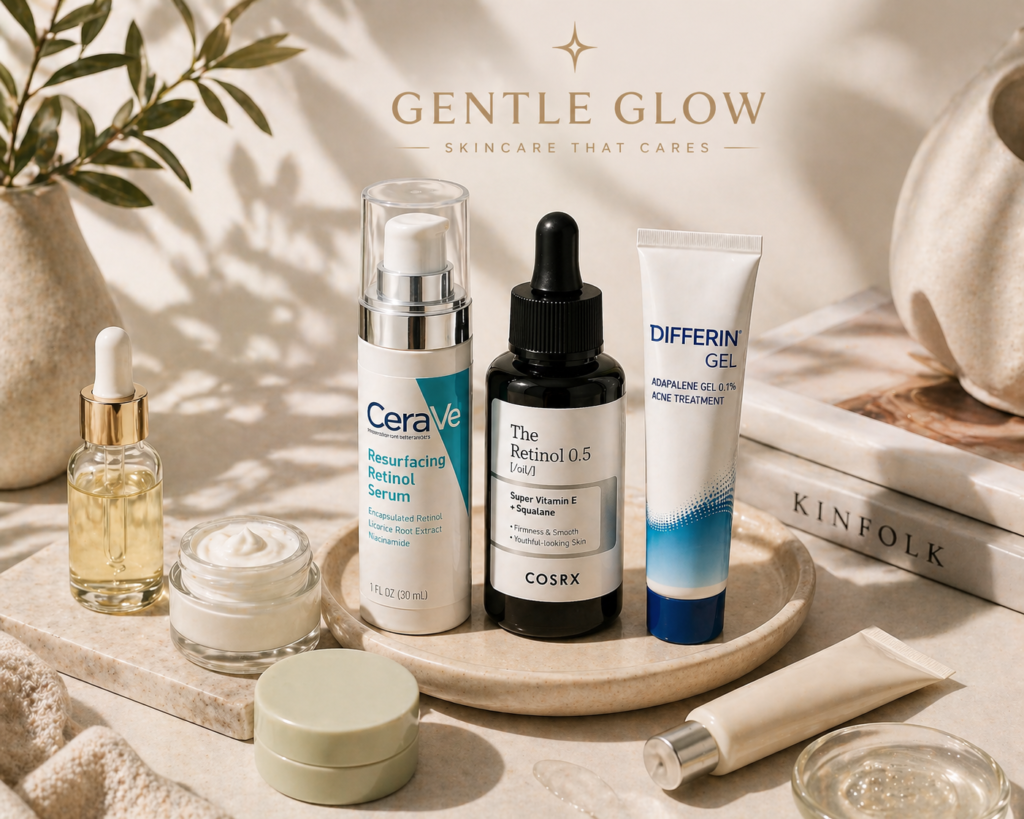
The first thing to look for when choosing the best retinol products for oily and acne-prone skin isn’t just the percentage — it’s the formula and how well it fits your skin, especially if you’re dealing with oil, congestion, or sensitivity from other actives.
Not all retinol products behave the same — even at similar strengths. Texture, delivery system, and base formula all influence how your skin responds.
Below are the formulas that consistently work well for oily, acne-prone skin, based on texture, tolerance, and routine compatibility.
CeraVe Resurfacing Retinol Serum
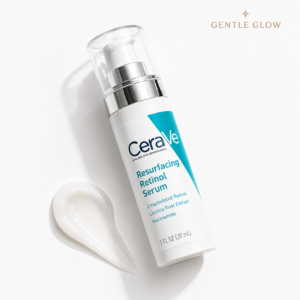
This is one of the easiest entry points into retinol if your skin is prone to breakouts or irritation.
The formula uses encapsulated retinol, which slows down how quickly it’s released into the skin. That makes it more predictable and easier to tolerate, especially if your routine already includes actives.
On oily skin, it feels light and absorbs quickly without leaving a film, which helps reduce the risk of congestion.
It works best if your goal is to smooth texture, reduce post-acne marks, and introduce retinol without disrupting your routine.
It may feel too mild if you’re dealing with persistent breakouts or looking for faster results.
Gentle Glow Verdict: A safe starting point if your skin reacts easily or if you’re introducing retinol for the first time.
The Ordinary Retinol 0.2% in Squalane
This is a simple, low-strength retinol option that focuses on tolerance rather than performance.
The squalane base gives it a slightly oily feel at first, but it spreads easily and absorbs more cleanly than heavier oils. On oily skin, this can feel balancing or slightly rich depending on your environment.
It works well if you’re starting retinol and want a minimal formula you can control.
It may not be ideal if your skin is already congested or if heavier textures tend to break you out, especially in humid conditions.
Gentle Glow Verdict: A controlled way to introduce retinol, but texture sensitivity matters here.
COSRX Retinol 0.5 Oil Serum
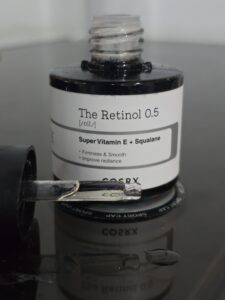
My Favourite Pick — Personally Used for 18 Months
This was the first retinol product I used, and I have now been using it for around a year and a half.
I started gradually with two nights per week before slowly increasing to nightly use. In my experience, it caused no irritation, peeling, or initial breakout flare.
Within the first few days, my oily skin felt smoother and calmer, and its overall tone appeared more even. The formula can leave an oily finish for around 10–20 minutes before it fully absorbs, which is worth considering if you prefer products that disappear immediately.
I use it with COSRX Snail Mucin Essence and a lightweight moisturizer, which made the routine feel more hydrating and comfortable.
However, it requires careful sunscreen use, so using a non-comedogenic sunscreen for oily acne-prone skin becomes essential to prevent irritation, a point consistently highlighted by medical sources like the Cleveland Clinic.
Gentle Glow Verdict: My favourite pick and the retinol I have personally used most consistently. It worked well for my oily skin without irritation, although the temporary oily finish may not suit everyone.
La Roche-Posay Retinol B3 Serum
This formula is designed to reduce irritation while still delivering visible results.
It combines retinol with niacinamide, which helps regulate oil and support the skin barrier. The texture is fluid and layers easily, making it suitable for more complex routines.
On oily, acne-prone skin, it feels light and integrates well with other products, which supports long-term consistency.
It works well if your skin is reactive or if you’ve struggled with irritation from retinol before.
It may not be strong enough for deeper congestion or persistent acne.
Gentle Glow Verdict: A balanced, barrier-supportive option that fits well into active routines.
Geek and Gorgeous A-Game 5
This is where performance increases.
It uses retinal instead of retinol, which converts more directly into its active form. This can make retinal more potent at lower concentrations, although direct evidence that it clears acne faster than retinol remains limited.
The texture is lightweight and absorbs quickly, making it well-suited for oily skin.
It works best if you’ve already built some tolerance and want to step up from cosmetic retinol without moving to a prescription treatment.
It can feel stronger, so gradual introduction is important.
Gentle Glow Verdict: A strong upgrade when your skin is ready for a more potent retinal formula.
Avène RetrinAL 0.1 Intensive Cream
This is a more refined retinal formula with a slightly richer base.
Compared to lighter serums, it offers more barrier support, which can help if your skin is becoming reactive from actives.
Some newer formulations pair retinal with barrier-supportive ingredients such as niacinamide. This can make the formula easier to incorporate into a simplified night routine, although the combination has not been directly shown to outperform retinal alone.
On oily skin, the texture may feel heavier, so it works better in controlled routines or less humid environments.
Gentle Glow Verdict: A more advanced option that balances strength with barrier support.
Differin Gel (Adapalene 0.1%)
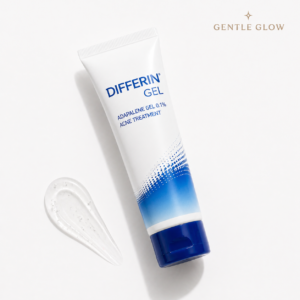
This is one of the most reliable options for acne-prone skin.
Adapalene is designed specifically for breakouts, and its gel texture makes it ideal for oily skin. It absorbs quickly, doesn’t feel heavy, and works well for clogged pores and blackheads, especially if you’re dealing with persistent buildup and looking into how to get rid of blackheads on the nose.
It’s best suited for active acne rather than texture or post-acne marks.
It can still cause dryness or irritation, especially early on, so frequency needs to be managed.
Gentle Glow Verdict: A targeted option when breakouts are the main concern.
Acretin (Tretinoin Cream)
This is the strongest option on the list.
Tretinoin works more deeply and aggressively than cosmetic retinol or retinal, making it effective for persistent acne and severe congestion.
However, the cream base can feel heavy on oily skin, and irritation risk is higher if it’s not used correctly.
It works best when introduced gradually and paired with a simplified routine.
Gentle Glow Verdict: Highly effective, but requires careful use and routine adjustment.
Why Retinol Products Feel So Different — Even at the Same Strength
Not all retinol products behave the same — even when they list the same percentage.
Two formulas with “0.5% retinol” can feel completely different on your skin. One may absorb quickly and feel comfortable, while another may sit heavily, cause irritation, or lead to breakouts.
The difference comes down to how the retinol is delivered, how the formula is built, and how it interacts with your skin — not just how strong it is.
1. The Formula Matters More Than the Percentage
A higher percentage doesn’t always mean better results — especially for oily, acne-prone skin.
Some formulas release retinol slowly (encapsulated), while others deliver it more directly. Slower-release formulas tend to feel gentler and more predictable, while faster-release formulas can feel stronger and more reactive.
This is why a lower-strength product can sometimes perform better than a higher one — simply because your skin can tolerate it consistently.
2. Texture Changes How Your Skin Responds
Texture plays a major role in how a retinol product behaves on oily skin.
- Lightweight serums tend to absorb quickly and feel easier to layer
- Creams provide more support but can feel heavier
- Oil-based formulas vary depending on the type of oil used
On oily skin, heavier or more occlusive vehicles may feel less comfortable and can change how the retinoid is delivered, while lightweight vehicles are often easier to layer and tolerate consistently.
This is why some products feel comfortable from the first use, while others feel like they “don’t sit right” on your skin.
3. Why Some Retinol Formulas Feel Gentler Than Others
Retinol formulas can feel very different because both the texture and the way the retinol is delivered affect how your skin responds.
Encapsulated retinol is released more gradually, which may make it easier to tolerate. At the same time, lightweight, non-greasy formulas often feel more comfortable on oily skin and are easier to layer with other products.
This means a product can absorb quickly while still releasing retinol slowly over time. For oily, acne-prone skin, both the delivery system and the overall formula influence how comfortable and manageable the product feels.
4. The Base Formula Can Make or Break the Product
The base of the formula — whether it’s water-based, silicone-based, or oil-based — changes how the product sits on your skin.
- Water-based formulas → lighter, easier for oily skin
- Silicone-based → smoother feel, but can feel occlusive
- Oil-based → depends on the oil (some feel light, others heavy)
For example, squalane-based retinol can feel surprisingly lightweight because it mimics natural skin lipids, while heavier oils may feel congesting.
Retinol Serums vs Creams vs Oils: What Works Best for Oily Skin
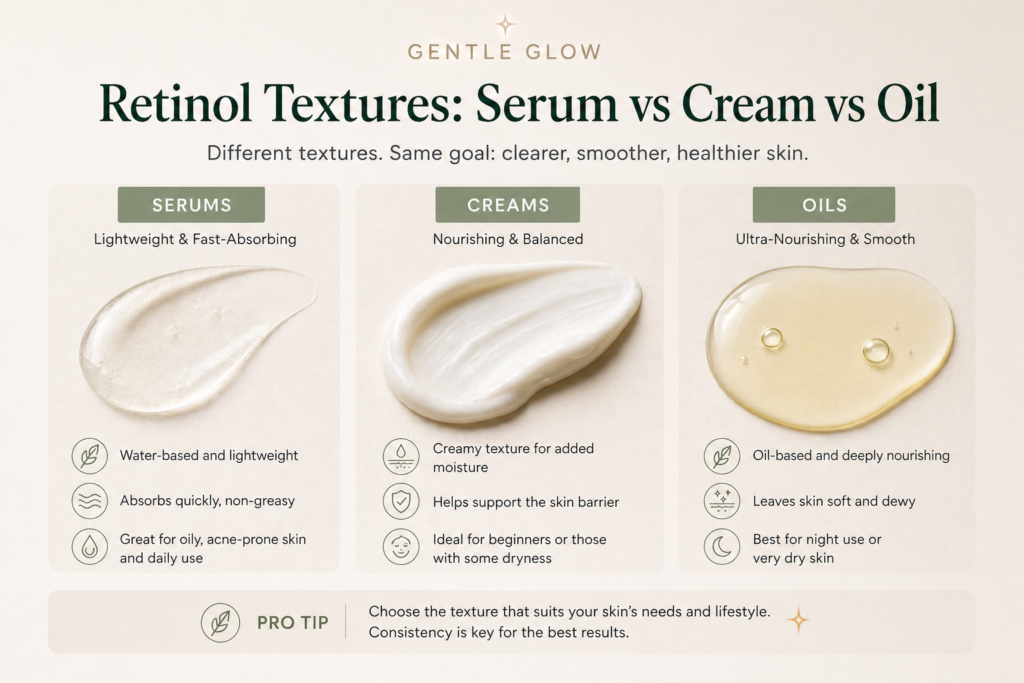
Choosing between a serum, cream, or oil isn’t about preference — it’s about how your skin behaves.
Serums are usually the easiest starting point. They’re lightweight, absorb quickly, and fit well into routines that already include other steps.
Creams tend to be more forgiving, especially if your skin is sensitive or your barrier is compromised. But on oily skin, they can sometimes feel heavier than needed.
Oils are often misunderstood. Not all oils behave the same — lighter ones like squalane can actually help balance the skin, while heavier oils may increase congestion.
This is why the same retinol percentage can feel completely different depending on the format.
What to Use with Retinol (and What to Avoid in the Same Routine)
Retinol doesn’t need a complicated routine — but it does need the right support.
It pairs well with ingredients that help balance oil and reduce irritation, like niacinamide or lightweight moisturizers. If you’re building a routine, choosing the right non-comedogenic moisturizer for oily acne-prone skin and a well-formulated niacinamide serum for oil control and pores can make retinol much easier to tolerate.
These combinations help stabilize the skin barrier and reduce irritation, which is supported by dermatological research on nicotinamide and skin barrier function.
On the other hand, layering retinol with strong exfoliants in the same routine — especially acids like BHA — can overwhelm the skin and increase irritation, especially if you’re already dealing with sensitivity or trying to understand how to repair a damaged skin barrier from over-exfoliation. If you’re already using exfoliants, it’s important to understand how salicylic acid works for blackheads and oily skin and how to separate it from retinol in your routine.
It’s not about avoiding these ingredients completely, but about how you space and combine them.
All of this explains why some retinol products for oily and acne-prone skin feel easy to use — while others lead to irritation or breakouts.
Once you understand that, choosing the right product becomes much more predictable.
A Simple Routine That Works
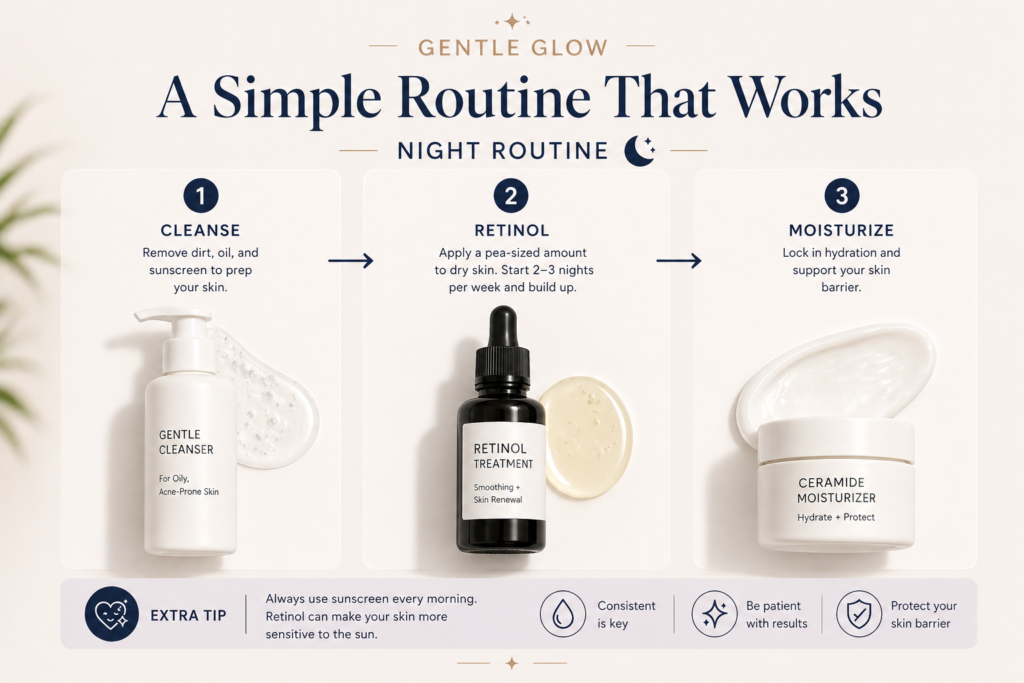
A simple, well-structured routine is often enough to get results with retinol—without triggering irritation or unnecessary breakouts.
- Start with a lightweight retinol formula
- Use it 2–3 times per week, then adjust based on tolerance
- Apply it on clean, dry skin as part of a consistent night routine for oily acne-prone skin
- Follow with a lightweight moisturizer to support the barrier
- Avoid using it in the same routine as strong exfoliants like BHA, especially if your skin is already prone to irritation
For most people, consistency matters more than chasing the strongest retinol or adding extra products. If you’re concerned about how heat, sweat, and sun exposure might affect your routine, our guide on using retinol safely during summer explains the adjustments that can help keep retinoids comfortable year-round.
Final Thought
The best retinol products for oily and acne-prone skin are the ones your skin can tolerate consistently.
When the formula fits your skin, your routine becomes easier to maintain, irritation becomes less of a concern, and results become more predictable over time.
FREE RETINOID GUIDE
Take your retinoid plan with you.
Save the routine, schedule, reaction checklist, and common mistakes so you do not have to remember everything from this article.
Get the free guide and join Gentle Glow’s skincare emails. Unsubscribe anytime.
Frequently Asked Questions
How often should beginners with oily skin apply retinol?
Beginners can start with one or two nights per week and gradually increase based on tolerance and the product instructions. There is no single evidence-based timetable that suits everyone, so pay attention to redness, stinging, dryness, and peeling before increasing the frequency. Some people eventually tolerate every-other-night use, while others get good results with less frequent application.
Should I apply moisturizer before or after retinol?
For oily skin, applying retinol to clean, dry skin and following with a lightweight moisturizer is a common approach. If your skin is sensitive or reactive, you may prefer a buffered routine: apply a thin layer of moisturizer, then retinol, followed by another light layer of moisturizer. Some people find this more comfortable, although the sandwich method has not been directly validated in strong comparative clinical trials.
Can retinol cause breakouts on oily skin?
Some people may experience a temporary acne flare after starting a topical retinoid, but this is not universal, and the term “purging” is often overused. New or worsening breakouts may also reflect irritation, an unsuitable formula, or acne that needs additional treatment. If the breakouts persist or become more inflamed, speak with a dermatologist rather than assuming they are a normal part of adjustment.
Do I need to use sunscreen with retinol?
Yes. Daily broad-spectrum sunscreen remains important because UV exposure can worsen irritation, post-acne marks, and other forms of sun damage. Current evidence does not show that topical retinoids automatically cause direct photosensitivity in everyone, but irritated or peeling skin may feel more vulnerable during sun exposure.
Is retinol or retinal better for acne-prone skin?
Retinal converts into retinoic acid in one step, compared with two for retinol, and appears more potent at lower concentrations. However, direct head-to-head evidence showing that retinal clears acne faster than retinol remains limited. Retinol may be easier for beginners to tolerate, while retinal may suit experienced users ready for a more potent cosmetic retinoid.
Sources and References
- Kolli SS, Pecone D, Pona A, Cline A, Feldman SR. Topical Retinoids in Acne Vulgaris: A Systematic Review. American Journal of Clinical Dermatology. 2019.
- Tanno O, Ota Y, Kitamura N, Katsube T, Inoue S. Nicotinamide Increases Biosynthesis of Ceramides as Well as Other Stratum Corneum Lipids to Improve the Epidermal Permeability Barrier. British Journal of Dermatology. 2000.
- Mukherjee S, Date A, Patravale V, Korting HC, Roeder A, Weindl G. Retinoids in the Treatment of Skin Aging: An Overview of Clinical Efficacy and Safety. Clinical Interventions in Aging. 2006.
- Retinol. Cleveland clinic
- Thielitz A, Abdel-Naser MB, Fluhr JW, Zouboulis CC, Gollnick H. Topical Retinoids in Acne—An Evidence-Based Overview. Journal der Deutschen Dermatologischen Gesellschaft. 2008.
- Duell EA, Kang S, Voorhees JJ. Unoccluded Retinol Penetrates Human Skin In Vivo More Effectively Than Unoccluded Retinyl Palmitate or Retinoic Acid. Journal of Investigative Dermatology. 1997.
- Shields CW, White JP, Osta EG, Patel J, Rajkumar S, Kirby N, Therrien J-P, Zauscher S. Encapsulation and Controlled Release of Retinol from Silicone Particles for Topical Delivery. Journal of Controlled Release. 2018.
- Slade HB, Shroot B, Feldman SR, Cargill DI, Stanfield J. Reappraising the Phototoxicity of Tretinoin: A Report of Four Controlled Clinical Trials. Photodermatology, Photoimmunology & Photomedicine. 2009.
Medical Disclaimer
Gentle Glow guides are developed using peer-reviewed dermatology research and established clinical guidelines. The information provided is for educational purposes only and does not replace professional medical advice, diagnosis, or treatment. Always consult a board-certified dermatologist or qualified healthcare provider before starting new active skincare treatments.