Everything You Need to Know About Oily Skin

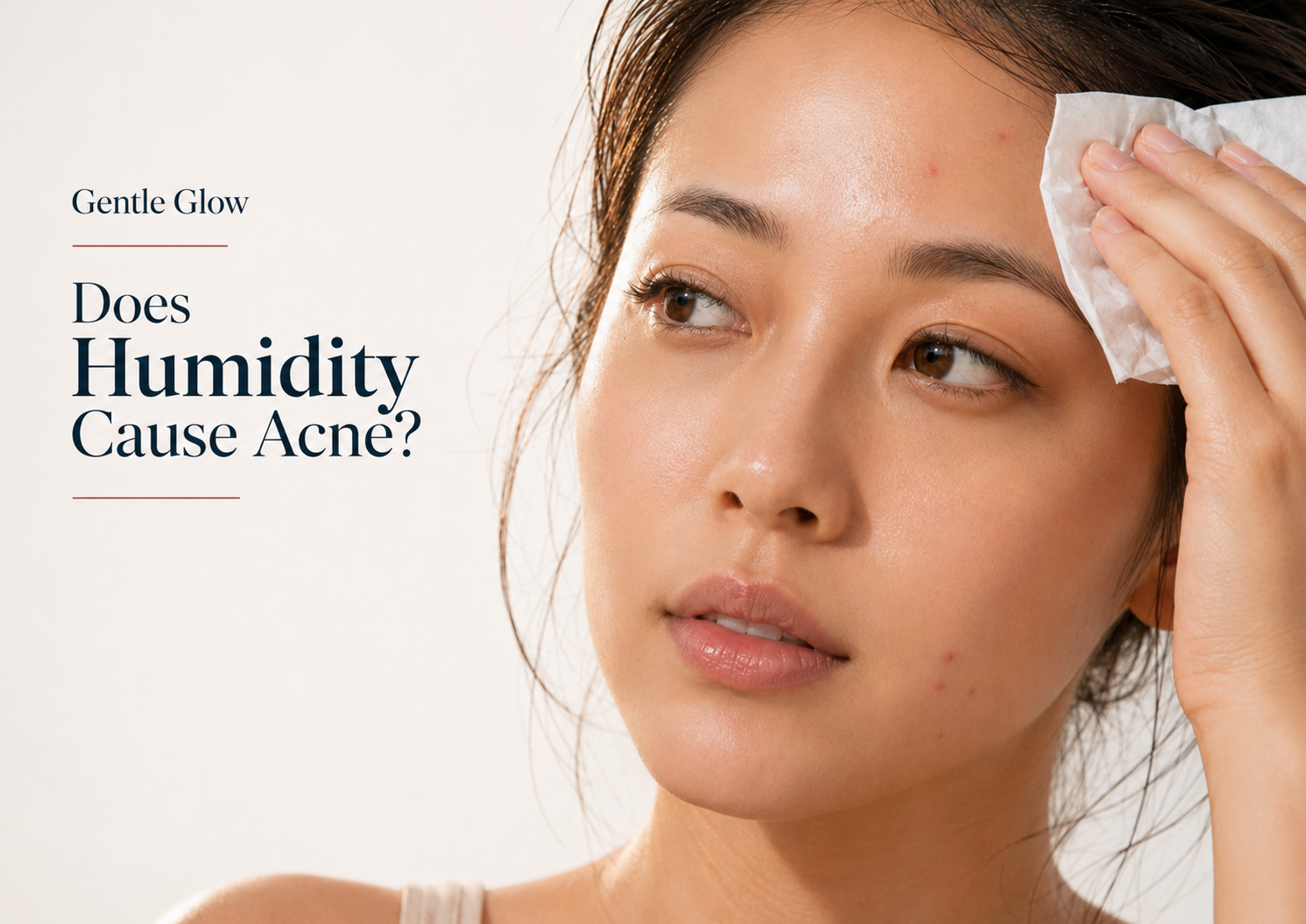
Does Humidity Cause Acne? Why Humid Weather Can Worsen Breakouts

Medically reviewed by
Gamal Henin, B.Pharm
Pharmacist & Medical Reviewer at Gentle Glow
Reviewed July 31, 2026
Does humidity cause acne? Not directly, but humid weather can make breakouts more likely by slowing sweat evaporation and leaving sweat, surface oil, sunscreen, and skincare on the skin longer. When heat, lingering moisture, product films, and friction overlap, acne-prone skin may become more congested or irritated.
- Heat increases sweating: It may also make surface oil more noticeable.
- Humidity slows evaporation: Sweat and product layers can remain on the skin longer.
- Congestion may become more likely: This buildup can make breakouts easier to trigger in acne-prone skin.
Table of Contents
Does Humidity Cause Acne in Oily Skin?
Humid weather can make acne-prone skin more vulnerable to congestion, but humidity is rarely the only factor behind a breakout. Heat, sweat, surface oil, skincare products, sunscreen, and friction often change at the same time, creating conditions that may make breakouts easier to trigger.
As summer begins—especially in places where humidity stays high—you may notice that your skin suddenly feels different. If you have oily skin, your face may become shinier and stickier, sweat seems to linger, and oiliness returns soon after cleansing.
This does not mean your skincare routine has suddenly stopped working. Instead, the environment around your skin has changed.
Research examining seasonal acne patterns has found that many people report worsening breakouts during warmer seasons, with temperature, humidity, and sweating identified as possible contributors. However, these factors usually occur together, so the research cannot prove that humidity independently causes acne in everyone.
Humidity is better understood as an environmental amplifier. It can change how quickly sweat evaporates and how surface oil, product layers, and friction behave around acne-prone skin, making an existing tendency toward breakouts more noticeable.
Factors That Affect Your Skin in Summer
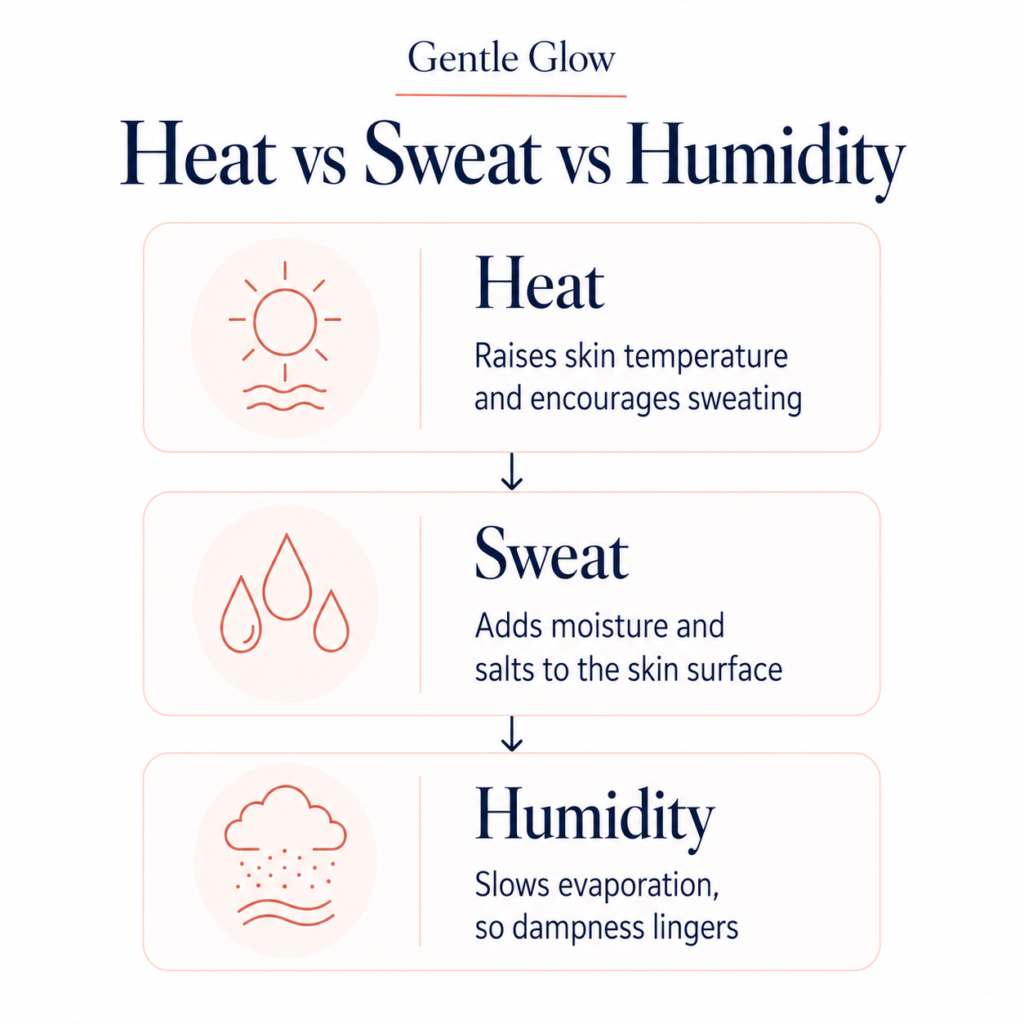
Heat, sweat, and humidity affect acne-prone skin in different but connected ways. Heat raises skin temperature and increases sweating, sweat adds moisture and salts to the surface, and humidity slows evaporation.
| Factor | What it does | What it means for acne-prone skin |
|---|---|---|
| Heat | Raises skin temperature and encourages the body to sweat | Skin may look shinier, while warmth and dampness can make friction more noticeable |
| Sweat | Helps cool the body by releasing water and salts onto the skin | It is not pore-clogging oil, but it may contribute to irritation when it lingers beneath products, clothing, or repeated rubbing |
| Humidity | Describes how much water vapor is already present in the air | It makes sweat evaporate less efficiently, so moisture, surface oil, and product layers may remain noticeable for longer |
Research on local skin temperature and sebum excretion supports a relationship between temperature and the amount of sebum measured at the surface. However, this does not mean heat instantly makes the sebaceous glands manufacture large amounts of new oil.
Sweat is produced by sweat glands, while sebum is produced by sebaceous glands. Sweat itself is mostly water and is not the same as the oil involved in clogged pores. The problem is more likely to develop when sweat remains beneath sunscreen, makeup, tight clothing, hats, or other occlusive layers and is combined with friction.
Sweat cools the body most effectively when it evaporates. When the surrounding air already contains a large amount of moisture, evaporation becomes less efficient, so the skin may stay damp even after sweating begins to slow. Research on sweat evaporation confirms that environmental humidity affects how readily sweat leaves the skin surface.
This is why humidity can make an ordinary summer day feel different from dry heat. It does not directly create acne, but it can allow sweat, surface sebum, skincare layers, and friction to overlap for longer.
Why Can Humid Weather Worsen Breakouts in Oily Skin?
Humid weather can make oily skin more vulnerable to breakouts by allowing sweat, surface oil, product residue, friction, and irritation to overlap for longer.
Lingering Sweat Can Increase Friction
In humid weather, sweat, surface oil, and multiple product layers may remain noticeable on the skin for longer, making your usual routine feel heavier and potentially contributing to congestion or irritation in oily skin.
Damp skin may also stick more easily to hair, masks, hats, headbands, collars, and pillowcases. Repeated rubbing, pressure, and occlusion can contribute to acne mechanica, particularly around the forehead, hairline, cheeks, jawline, chest, and back.
Irritation Can Make Breakouts Harder to Manage
Persistent shine and stickiness in humid weather may tempt you to cleanse more frequently, exfoliate more aggressively, or skip moisturizer. However, these changes can contribute to dehydrated oily skin, leaving the skin irritated and making effective acne treatments harder to tolerate.
Humidity does not directly create acne. Instead, it can alter the skin-surface environment so that lingering sweat, product buildup, friction, occlusion, and irritation occur together, making breakouts easier to trigger in susceptible skin.
How to Prevent Acne in Humid Weather
To help prevent acne in humid weather, focus on reducing unnecessary product buildup, managing sweat gently, limiting friction, and keeping your skin barrier comfortable. The goal is to stop heat, sweat, residue, and irritation from building on one another.
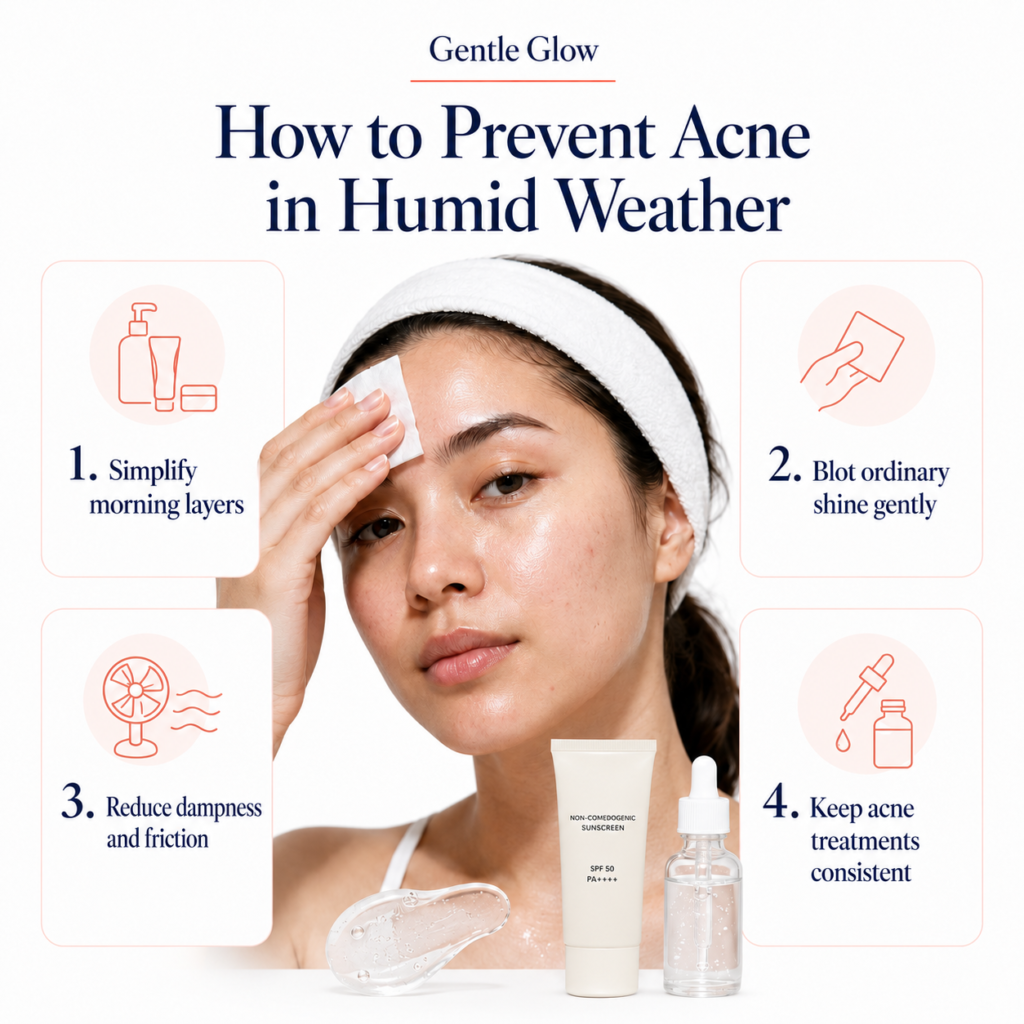
Simplify Your Morning Layers
Humid weather can make a routine that felt comfortable in cooler months seem heavier. Instead of layering several hydrating serums, oils, primers, and rich creams, keep each morning step purposeful.
A simple routine may include:
- A gentle cleanser when needed
- One acne treatment, if used in the morning
- A lightweight moisturizer suited to your skin
- A non-comedogenic sunscreen
However, this does not mean that every routine must contain only four products. The important point is to remove unnecessary or overlapping layers rather than abandoning hydration or sun protection.
Allow each layer to settle before applying the next. Applying large amounts of several formulas too quickly can increase heaviness.
Manage Shine Without Washing Repeatedly
A shiny or sticky face does not always need to be washed. On an ordinary humid day, you can gently blot excess sweat and oil with a clean tissue or soft blotting paper rather than repeatedly cleansing or rubbing your skin.
Washing too frequently may increase dryness and irritation without preventing the processes that form acne inside the follicle. The American Academy of Dermatology recommends washing acne-prone skin gently and after activities that cause heavy sweating, rather than scrubbing whenever the skin feels oily.
You can still cleanse in the morning and evening according to your routine. The aim is to avoid washing your face repeatedly every time humidity makes it feel sticky.
Reduce Friction and Prolonged Dampness
When possible, change damp headbands, masks, workout clothing, or shirts rather than allowing them to remain pressed against the skin. Keep hair away from breakout-prone areas, and avoid repeatedly wiping the forehead, cheeks, chest, or back with your hands.
Use a clean, soft towel to pat sweat away instead of rubbing. Frequently wash items that remain in close contact with your skin, such as pillowcases, hats, helmet straps, and reusable masks.
Continue Acne Actives Without Becoming More Aggressive
A humid-weather breakout does not necessarily mean that your acne routine is too weak. Increasing salicylic acid, benzoyl peroxide, exfoliating toners, or retinoids all at once may increase irritation without correcting the environmental factors contributing to the flare.
Continue effective acne treatments according to your usual schedule and your skin’s tolerance. When irritation develops, review the complete routine—including cleansing, product layering, sweating, friction, and moisturizer use—before increasing treatment strength.
Could Your Humid-Weather Bumps Be Something Other Than Acne?
Not every bump that appears during hot, humid weather is acne. Folliculitis, heat rash, irritation, and friction-related breakouts can sometimes look similar, but they do not always develop for the same reasons or respond to the same treatments.
Malassezia folliculitis can cause clusters of small, similar-looking bumps that are often itchy and may appear on the forehead, hairline, chest, shoulders, or back. It is sometimes called “fungal acne,” although it is a type of folliculitis rather than acne vulgaris.
Heat rash may also cause small red or clear bumps when sweat becomes trapped within the sweat ducts. It is more likely to feel prickly or itchy and often develops in areas covered by tight or non-breathable clothing.
Other possibilities include irritation from skincare or sunscreen, inflammation around hair follicles, and acne mechanica caused by repeated pressure, rubbing, or occlusion from masks, hats, helmets, or damp clothing.
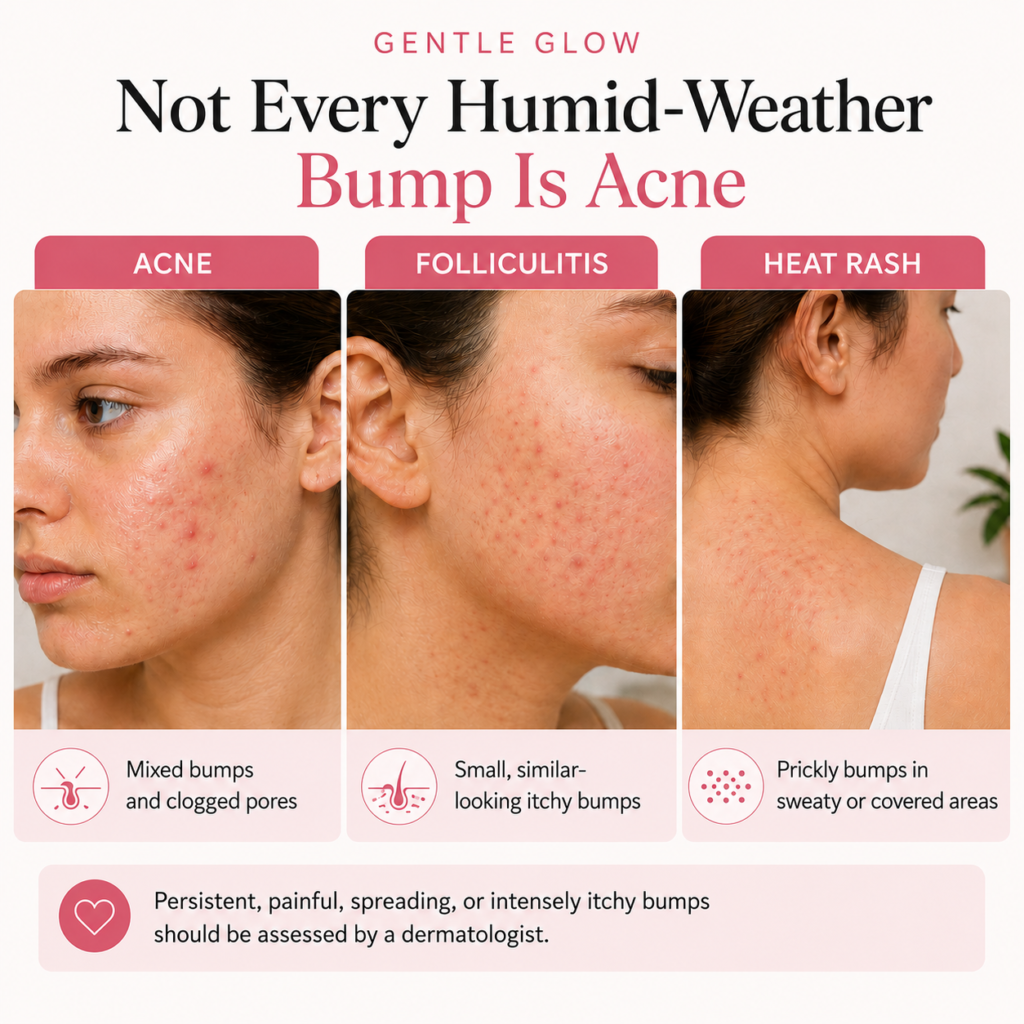
Consider speaking with a dermatologist if the bumps are intensely itchy, unusually uniform, spreading rapidly, painful, persistent, or leaving scars, or if they appeared suddenly after starting a new product or medication. Increasing exfoliation or adding stronger acne treatments without knowing the cause may make irritation worse.
Final Thought
Does humidity cause acne? Not directly, but humid weather can create conditions that make breakouts easier to trigger in oily, acne-prone skin. Slower sweat evaporation allows lingering moisture, surface oil, product residue, friction, and irritation to overlap for longer.
The best response is not to cleanse more aggressively or add stronger treatments. Keep your routine purposeful, manage sweat gently, reduce prolonged dampness and friction, and continue acne treatments according to your skin’s tolerance.
When bumps are unusually itchy, uniform, painful, or persistent, they may not be acne and should be assessed by a dermatologist.
Frequently Asked Questions
Why Does My Skin Break Out in a Humid Climate?
Your skin may break out in a humid climate because heat, sweating, sunscreen use, product layering, and friction often increase at the same time. Your usual skincare routine may also feel heavier when sweat evaporates less efficiently.
Does Humidity Make Oily Skin Produce More Oil?
Humidity can make oily skin look and feel greasier, but it does not necessarily make the sebaceous glands produce substantially more oil.
Sweat, existing surface sebum, moisturizer, sunscreen, and makeup may remain noticeable for longer in humid conditions, increasing shine and stickiness. Heat may also affect how sebum reaches and spreads across the skin’s surface.
Should I Stop Using Moisturizer in Humid Weather?
No, oily and acne-prone skin may still need moisturizer in humid weather. Acne treatments, frequent cleansing, wiping, and air conditioning can leave the skin irritated or dehydrated even when the surface looks shiny.
Choose a lightweight lotion, fluid, emulsion, or gel-cream that feels comfortable beneath sunscreen. A suitable moisturizer can support the skin barrier and improve tolerance to benzoyl peroxide, retinoids, or exfoliating acids.
Should I Wash My Face More Often in Hot and Humid Weather?
No, you should not wash your face more often simply because humidity makes it feel shiny or sticky. Repeated cleansing may increase dryness and irritation without preventing acne from forming inside the follicle.
Gently blot ordinary shine, and cleanse after heavy sweating, exercise, or significant sunscreen and makeup buildup. Use a gentle cleanser and avoid scrubbing damp or irritated skin.
Could Itchy, Uniform Bumps Be Folliculitis Rather Than Acne?
Yes, itchy and uniform bumps may be folliculitis rather than acne vulgaris. Malassezia folliculitis often appears as clusters of small, similar-looking bumps around the forehead, hairline, chest, shoulders, or back.
Heat rash and irritation can also resemble acne. Consider seeing a dermatologist when bumps are intensely itchy, rapidly spreading, painful, persistent, or not responding to your usual acne routine.
Sources and References
- Narang I, Sardana K, Bajpai R, Garg VK. Seasonal Aggravation of Acne in Summers and the Effect of Temperature and Humidity in a Study in a Tropical Setting.
- Williams M, Cunliffe WJ, Williamson B, Forster RA, Cotterill JA, Edwards JC. The Effect of Local Temperature Changes on Sebum Excretion Rate and Forehead Surface Lipid Composition.
- Ashworth ET. Sweat Evaporation in Humans: A Molecular and Thermodynamic Perspective.
- Mills OH Jr, Kligman AM. Acne Mechanica.
- American Academy of Dermatology. Ludmann P, Schleehauf B. Acne: Tips for Managing.
- Oakley A, Stewart T. Malassezia Folliculitis. DermNet NZ.
- Oakley A, Eshraghi A. Miliaria. DermNet NZ.
Medical Disclaimer
Gentle Glow guides are developed using peer-reviewed dermatology research and established clinical guidelines. The information provided is for educational purposes only and does not replace professional medical advice, diagnosis, or treatment. Always consult a board-certified dermatologist or qualified healthcare provider before starting new active skincare treatments.