Everything You Need to Know About Oily Skin

Best Moisturizer for Oily Acne-Prone Skin (2026): What Dermatologists Recommend

Founder & Editorial Lead at Gentle Glow
Evidence-Based: This guide is based on current dermatological standards for non-comedogenic formulation and the biology of Sebum Excretion Rates (SER).
The best moisturizer for oily acne-prone skin is a lightweight, non-comedogenic formula that balances humectants like glycerin with breathable occlusives. This combination prevents transepidermal water loss (TEWL) and reactive oil production. For most, a water-based gel or gel-cream is superior to heavy traditional creams, especially in humid or air-conditioned climates.
Texture Rule: Gel for humidity; Gel-cream for AC.
Ingredient Hero: Niacinamide (2–5%) for sebum control.
Pro Tip: Apply to damp skin to stop TEWL.
Table of Contents
We include products we believe are suitable for oily and acne-prone skin based on formulation, texture, and real-world use. If you purchase through links on this page, Gentle Glow may earn a small commission at no extra cost to you.
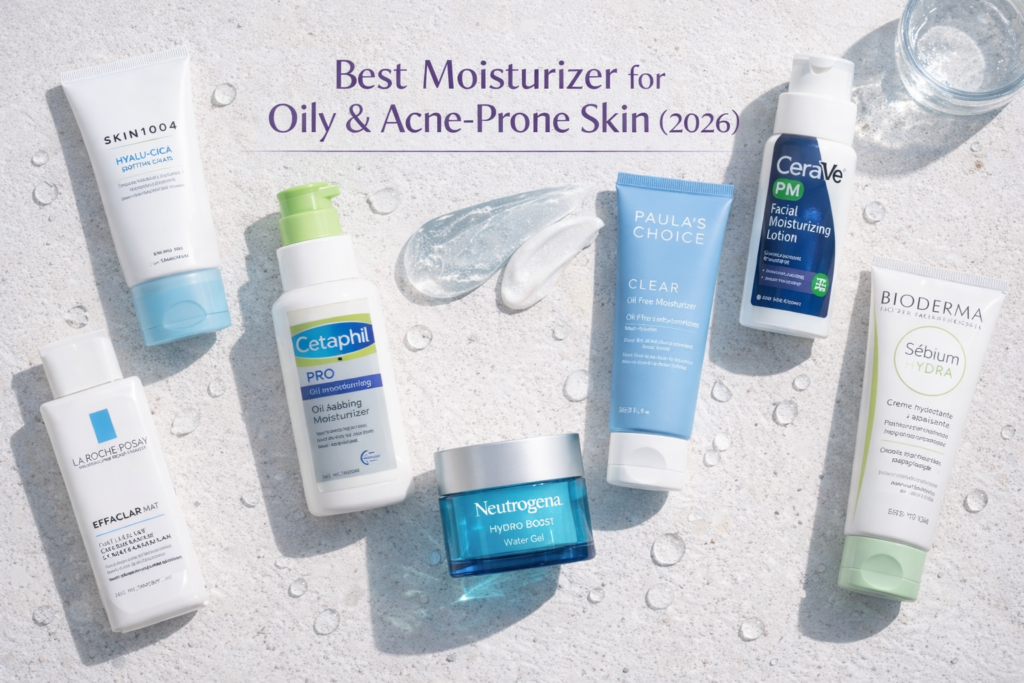
2026 Quick Selection Guide: Best Moisturizers for Oily Skin
Choosing the right moisturizer isn’t just about reducing shine. It’s about understanding what your skin is actually asking for. Oily skin doesn’t behave the same way in every situation — sometimes it needs lightweight hydration, sometimes it needs barrier support, and sometimes it simply needs better oil regulation.
If you’d like a deeper breakdown of how oily skin functions — from sebum production to barrier behavior — read our complete guide to oily and acne-prone skin.
Instead of guessing, the guide below helps you choose based on your skin’s current state and environment.
| Product | Texture | Best For | Key Ingredient Focus | Finish | View |
|---|---|---|---|---|---|
| Neutrogena Hydro Boost Water Gel | Gel | Dehydrated oily skin | Hyaluronic Acid | Fresh, light | View product |
| La Roche-Posay Effaclar Mat | Gel-cream | Midday shine control | Sebum regulators | Matte | View product |
| CeraVe PM Facial Moisturizing Lotion | Lotion | Night routine | Niacinamide + Ceramides | Soft natural | View product |
| Bioderma Sébium Hydra | Cream-gel | Skin under acne treatment | Barrier repair complex | Comfortable | View product |
| Paula’s Choice Clear Oil-Free Moisturizer | Gel | Congestion-prone skin | Antioxidants | Lightweight | View product |
| Minimalist Sepicalm Oat Moisturizer | Gel-cream | Reactive oily skin | Oat + barrier support | Calm glow | View product |
| Cetaphil Pro Oil Absorbing Moisturizer | Lotion | Budget daily use | Oil-control technology | Semi-matte | View product |
| Skin1004 Hyalu-Cica Moisture Cream | Gel-cream | Dehydrated-oily climate | Centella + HA | Natural | View product |
1. Neutrogena Hydro Boost Water Gel (2026 Version)
A long-standing favorite for oily skin that feels tight after washing but dislikes heavy creams. This gel is particularly helpful in warm, humid climates where richer textures can feel suffocating or overly glossy.
Why it works:
Built around hyaluronic acid, this oil-free formula delivers lightweight hydration without creating a coated sensation. It absorbs quickly and helps maintain surface comfort without interfering with oil balance. For many people, it’s the first moisturizer that feels hydrating rather than heavy.
Finish:
Fresh, water-light, and fast-absorbing with no sticky residue.
Pros:
Affordable
Widely available
Layers smoothly under sunscreen and makeup
Cons:
May feel too light in very dry or heavily air-conditioned environments
Gentle Glow Verdict:
An ideal entry-level moisturizer for oily skin that needs hydration without heaviness — especially in humid weather.
2. La Roche-Posay Effaclar Mat
Designed specifically for oily, shine-prone skin, this moisturizer is ideal if your main concern isn’t tightness — it’s midday oil breakthrough. It’s especially useful for those who notice their T-zone becoming glossy within hours of cleansing.
Why it works:
Effaclar Mat contains oil-absorbing microspheres along with sebum-regulating ingredients that help reduce surface shine without feeling heavy. Rather than adding hydration depth, it focuses on controlling excess oil and refining the appearance of pores throughout the day.
Finish:
Matte but breathable — it reduces shine without creating a dry, powdery look.
Pros:
Strong oil control
Creates a smooth base under makeup
Helps minimize the look of enlarged pores
Cons:
Not ideal for dehydrated oily skin or those experiencing tightness
Gentle Glow Verdict:
Best suited for very oily T-zones in hot, humid climates where shine control is the priority.
3. CeraVe PM Facial Moisturizing Lotion
A dermatologist favorite for those with oily and acne-prone skin who still need barrier support at night. This formula is especially helpful if your skin feels slightly tight after cleansing or active treatments.
Why it works:
It combines niacinamide with ceramides, helping to reinforce the stratum corneum barrier while remaining lightweight enough for congestion-prone skin. Instead of suppressing oil aggressively, it focuses on stabilization.
Finish:
Soft, natural-skin feel — not matte, not greasy.
Pros:
Fragrance-free
Supports barrier repair
Widely available and affordable
Cons:
Not ideal if you prefer a very matte finish
Gentle Glow Verdict:
One of the most reliable night moisturizers for oily and acne-prone skin that needs balance rather than oil suppression.
4. Bioderma Sébium Hydra
An excellent option for oily skin that feels irritated, tight, or uncomfortable due to acne treatments. If you’re using exfoliants, benzoyl peroxide, or vitamin A–based treatments and your skin suddenly feels reactive, this formula is designed to restore comfort without overwhelming pores.
Why it works:
Sébium Hydra focuses on barrier support and hydration rather than aggressive mattifying. It helps relieve dryness and tightness caused by acne treatments while maintaining a lightweight, acne-conscious texture. Instead of stripping oil further, it supports recovery.
Finish:
Comfortable and non-greasy with a soft, natural feel on the skin.
Pros:
Reduces treatment-related tightness
Compatible with active acne routines
Restores comfort without clogging pores
Cons:
Slightly richer than true gel formulas
Gentle Glow Verdict:
Best for oily skin that feels irritated from exfoliants, retinoids, or overuse of actives and needs barrier comfort without heaviness.
5. Paula’s Choice Clear Oil-Free Moisturizer
Formulated specifically for acne-prone routines, this moisturizer is ideal if breakouts are your primary concern and you prefer products built around clarity rather than comfort alone.
Why it works:
Its lightweight, oil-free formula is designed not to clog pores and includes antioxidant support to help calm environmental stress that can aggravate acne. It focuses on maintaining hydration without interfering with active treatments like salicylic acid or retinoids.
Finish:
Light, breathable, and barely noticeable once absorbed.
Pros:
Developed by an acne-focused brand
Consistent, reliable texture
Layers well with treatment products
Cons:
Higher price point compared to drugstore options
Gentle Glow Verdict:
A strong choice for structured, long-term acne-management routines that prioritize clarity without sacrificing hydration.
6. Minimalist Sepicalm Oat Moisturizer
A thoughtful option for oily skin that feels reactive, inflamed, or easily irritated. If your breakouts are accompanied by redness or sensitivity, this formula offers a gentler approach to hydration.
Why it works:
Powered by oat extract, it helps soothe visible irritation while maintaining a lightweight texture that won’t overwhelm congestion-prone skin. Rather than focusing heavily on oil control, it prioritizes calming and comfort — which can indirectly help stabilize oil behavior over time.
Finish:
Soft and slightly dewy, with a calm-skin appearance rather than a matte effect.
Pros:
Gentle and soothing
Affordable
Suitable for sensitive, acne-prone skin
Cons:
Not ideal if you prefer a strongly matte finish
Gentle Glow Verdict:
A good choice for oily skin that also feels sensitive or reactive and needs comfort before aggressive oil control.
7. Cetaphil Pro Oil Absorbing Moisturizer
A practical, no-fuss daily option for oily skin that wants shine control without overcomplicating the routine. This is the type of moisturizer many dermatologists suggest when someone needs something simple, stable, and easy to tolerate.
Why it works:
Formulated to help absorb surface oil while maintaining hydration, it strikes a middle ground between mattifying and moisturizing. It doesn’t aggressively dry the skin — instead, it aims to reduce visible shine while keeping the barrier comfortable.
Finish:
Semi-matte with a smooth, balanced feel — not flat, not greasy.
Pros:
Easy to find in most pharmacies
Dermatologist-trusted brand
Works well as a daytime base
Cons:
Lotion-like texture may feel slightly richer than gel formulas
Gentle Glow Verdict:
A solid everyday moisturizer for moderate oiliness, especially if you want reliability over trend-driven formulas.
8. Skin1004 Hyalu-Cica Moisture Cream
A favorite for dehydrated-oily skin, especially in climates where heat and air conditioning alternate throughout the day. If your skin feels shiny but slightly tight, this formula offers hydration without heaviness.
Why it works:
It combines Centella Asiatica — known for its calming properties — with hyaluronic acid to deliver lightweight hydration while helping reduce visible irritation. The texture sits between a gel and a cream, making it suitable for oily skin that still needs gentle barrier support.
Finish:
Natural, healthy-looking glow without a greasy film.
Pros:
Lightweight and breathable
Soothes reactive or inflamed skin
Comfortable in warm climates
Cons:
Not ideal if you prefer a fully matte finish
Gentle Glow Verdict:
A strong option for oily skin that feels slightly dehydrated and needs calming hydration without weight.
These examples illustrate an important pattern: the best moisturizer isn’t the most expensive — it’s the one that fits your environment, routine, and skin state.
Still unsure which texture fits your skin best?
Keep reading to understand how your environment — and TEWL — influence what your skin actually needs.
Should I Use Moisturizer if I Have Oily Skin?
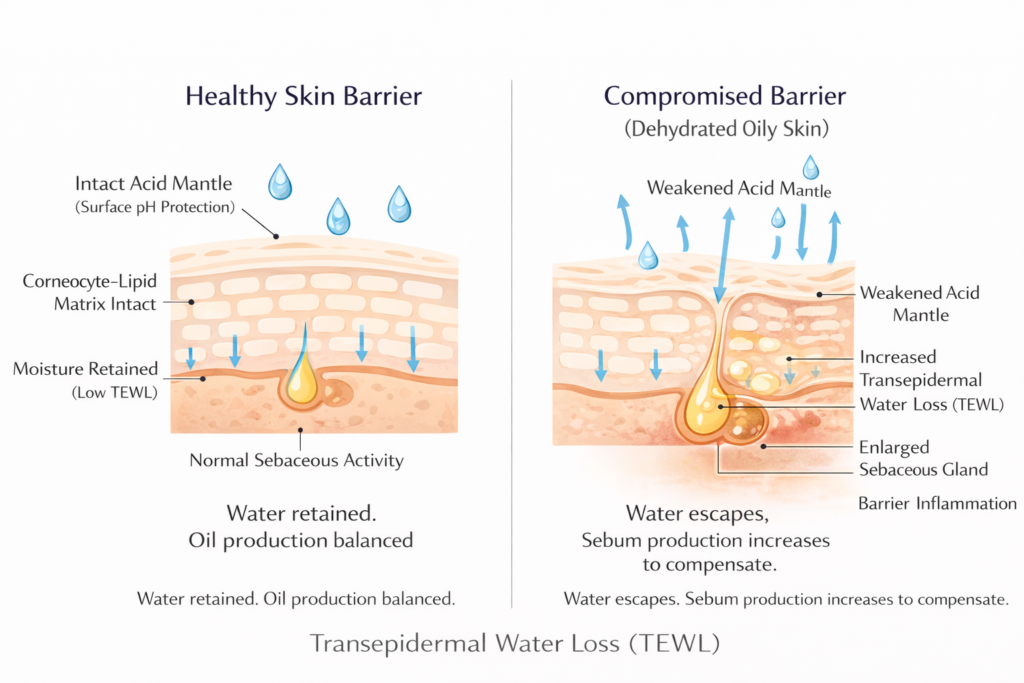
It may feel counterintuitive. If your skin already looks shiny by noon, adding another layer might seem unnecessary. But oil and hydration are not the same thing.
When skin loses water — whether from using the wrong cleanser, exfoliating, heat, or air conditioning — it can respond by producing more oil. That’s one reason some people feel tight yet still look greasy. If that sounds familiar, you may be dealing with dehydrated oily skin rather than simply “too much oil.” We explain the full biology behind this in our guide to dehydrated oily skin and why your face feels tight but still breaks out.
Moisturizer doesn’t create oil. It helps maintain hydration — which makes oil production more stable. Dermatologists consistently emphasize barrier support and hydration as part of comprehensive acne care, even for oily and acne-prone skin. This becomes even more important when the skin has been over-treated, as repeated irritation can lead to a damaged skin barrier, making oil levels less stable and increasing sensitivity over time.
This balance becomes even more important when you consider how daily habits influence oil production. Factors like stress, sleep quality, and diet can all affect how much oil your skin produces throughout the day. We explore this further in our guide on how everyday habits shape acne over time.
In today’s environments — dry indoor air, high heat, frequent active ingredients — oily skin is often overstimulated. The instinct is usually to wash more, add stronger treatments, or skip moisturizer entirely. But that can intensify shine instead of reducing it. The real solution isn’t removing hydration. It is about choosing a moisturizer that supports balance without clogging pores, and that’s where texture and formulation make all the difference.
Gel vs Cream — How to Choose the Best Moisturizer for Oily Acne-Prone Skin
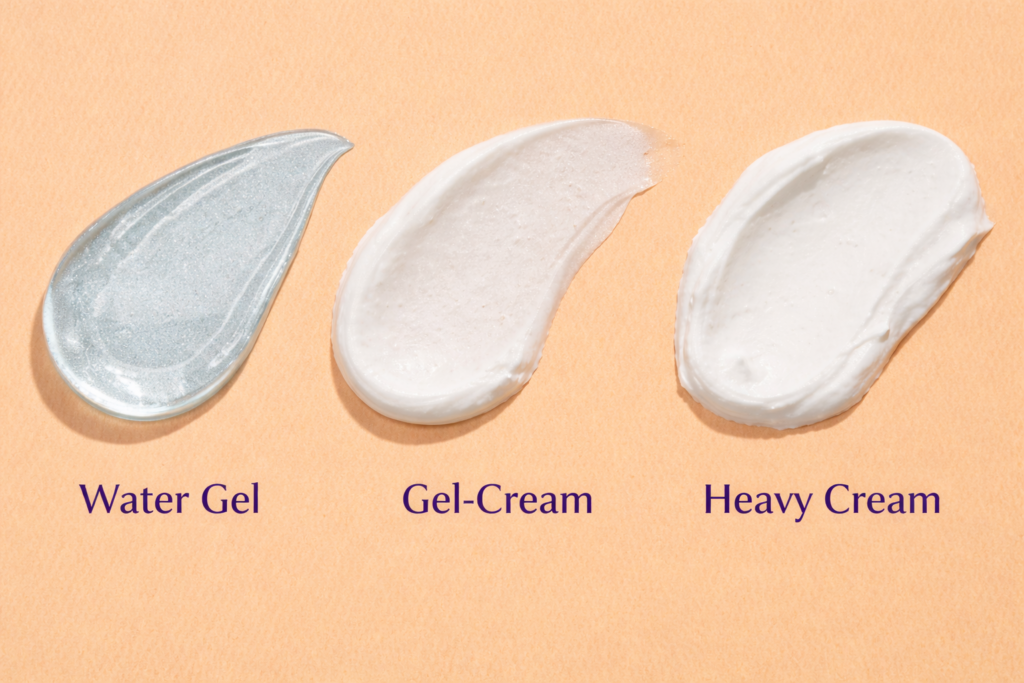
The honest answer? It depends on your environment and your skin’s current state.
Not all oily skin behaves the same way. Some people have what we can call “pure oily” skin — consistently shiny, rarely tight. Others experience oiliness with hidden dehydration.
Choosing the right texture makes a bigger difference than most people realize.
Best for Humid Climates (Pure Oily Skin)
If you live in a humid environment and your skin rarely feels tight, a lightweight gel moisturizer may be all you need.
In hot, humid weather, heavy creams can start to feel suffocating. If you’re already prone to midday shine, richer textures may sit on the surface and make your skin look oilier than it actually is.
When the air already contains moisture, your skin doesn’t struggle as much to hold onto hydration. Thick formulas can feel excessive. Gel moisturizers, on the other hand, are water-light, absorb quickly, and don’t leave a coated layer. That’s why they work so well under sunscreen and makeup in warm, sticky climates.
For people who exercise outdoors or spend time in the heat, lightweight formulas can also fit more comfortably into a summer workout skincare routine, helping reduce the heavy, layered feeling that sometimes develops after sweating.
In humid weather, choosing lighter moisturizer textures can also help prevent sunscreen from separating or flaking underneath makeup throughout the day.
In hot summers, a good gel feels refreshing and breathable — but comfort doesn’t always equal balance.
Some gels feel light at first yet don’t provide enough support to keep oil steady throughout the day. If a formula contains only humectants and no light sealing ingredients, your skin may look fresh initially — then become shinier a few hours later.
When choosing a gel, look beyond texture. A balanced formula should include humectants like glycerin or hyaluronic acid to attract hydration, niacinamide to support oil regulation, and lightweight silicones such as dimethicone to help reduce water loss without clogging pores.
The goal isn’t just a light texture.
It’s a formula that keeps your skin comfortable from morning to evening.
When a Gel Can Actually Increase Shine
This is something most guides don’t explain.
In very dry air, strong humectants (like hyaluronic acid) can draw water upward. If that water isn’t sealed properly, it can evaporate quickly — leaving the skin feeling tight again.
Your sebaceous glands may then increase oil output to compensate.
The result?
More shine, not less.
That’s why balance matters more than simply choosing “oil-free.”
Best for AC or Dry Environments (Dehydrated Oily Skin)
If your skin feels tight after washing, stings with actives, or looks shiny but uncomfortable — a pure gel may not be enough.
In air-conditioned rooms or dry climates, water evaporates faster. A gel without light occlusive support can leave hydration unsealed.
This is when a gel-cream or lightweight cream works better.
Gel-creams:
- Contain humectants + light barrier lipids
- Help reduce TEWL without suffocating pores
- Feel more stable in dry indoor air
If your skin looks greasy but feels tight, this subtle shift in texture can make a noticeable difference.
Sometimes, oily skin isn’t asking for less product.
It’s asking for a better formula.
Oil-Free vs Non-Comedogenic — What’s the Difference?
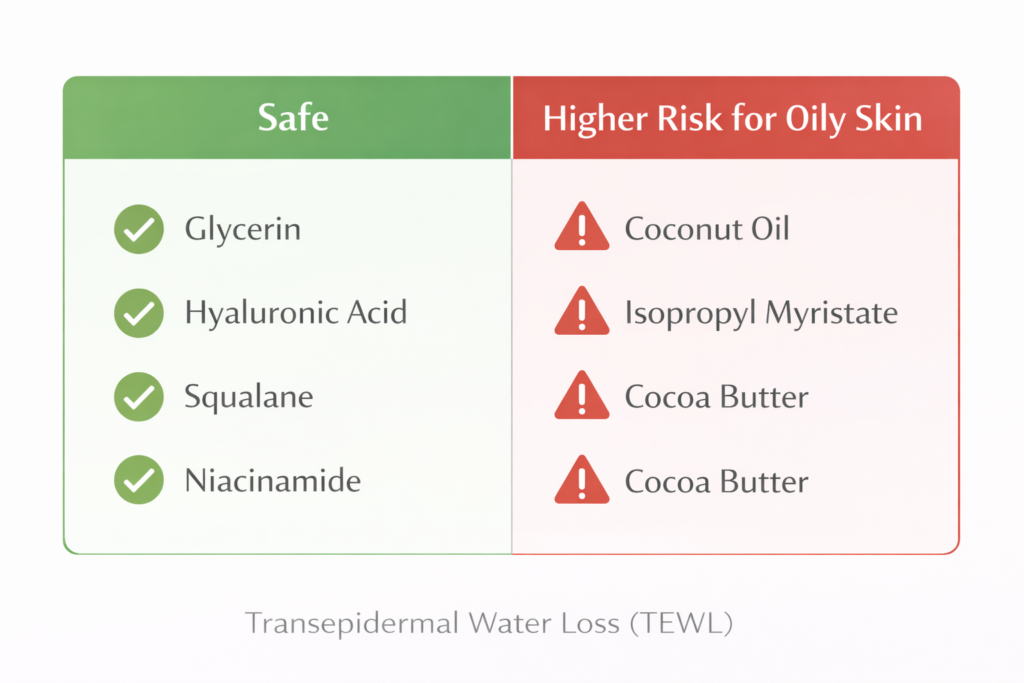
These two labels are often confused, but they are not the same.
A moisturizer can be oil-free and still clog pores if it contains heavy waxes or certain esters. Meanwhile, some lightweight oils — such as squalane — can actually work beautifully for acne-prone skin.
Oil-free means the formula does not contain traditional oils, but it does not guarantee the product won’t clog pores.
Non-comedogenic means the formula is designed to avoid ingredients known to block pores.
The smarter approach isn’t just reading the front label — it’s understanding the ingredient list and choosing what truly works for your skin.
How to Tell If a Moisturizer Is Clogging Your Pores
Your skin will usually tell you within 3 to 7 days if a new moisturizer isn’t a match. Look for these three warning signs:
- Closed Comedones: Tiny, flesh-colored bumps that don’t come to a head but make the skin texture look “pebbly” under direct light.
- Increased “Nose Shine”: If your sebaceous filaments look darker or more prominent shortly after switching products, the formula might be oxidizing your sebum.
- The “Film” Test: If you can feel the product “sitting” on top of your skin like a mask an hour later, it’s likely too occlusive for your pore structure.
Ingredients That May Need More Caution on Acne-Prone Skin
| Ingredient | Why it’s a Risk for Oily Skin |
| Coconut Oil | Can feel heavy and may be more likely to contribute to clogged pores in some acne-prone skin, especially in richer formulations. |
| Isopropyl Myristate | Showed strong comedogenic potential in older ingredient-level testing, but that does not mean every finished product containing it will clog pores. |
| Algae Extract | Though “natural,” some varieties are highly comedogenic. |
| Lanolin | Too heavy for most acne-prone sebaceous glands. |
This doesn’t mean these ingredients are “bad” universally — but oily, congestion-prone skin tends to react more easily.
When in doubt, switch textures before switching routines entirely.
Understanding Humectants and Occlusives (Without the Confusion)
To achieve the “Gentle Glow,” you need a balance of two things:
- Humectants (The Water Magnets): Ingredients like Glycerin and Hyaluronic Acid. They pull moisture from the air (or deep skin layers) into the surface.
- Occlusives (The Shield): Ingredients like Dimethicone or Squalane. They act as a “breathable lid” on a pot of water, preventing it from boiling away.
For oily skin, we want a High Humectant / Low Occlusive ratio. This ensures the stratum corneum barrier is hydrated without being suffocated.
The balance between hydration and barrier support depends not only on the ingredients themselves but also on how they’re formulated together. This emphasis on formulation science is one reason clinic-grade at-home treatments often differ from conventional drugstore skincare, with greater focus on ingredient stability, delivery systems, and overall formulation design.
This lightweight balance becomes even more important in heavily air-conditioned indoor environments, where dry air can increase water loss while making oily skin feel shinier on the surface at the same time.
Does Niacinamide Help Oily Skin in a Moisturizer?
When included inside a moisturizer, niacinamide can support oil balance more gently than many standalone treatments.
Niacinamide (Vitamin B3) is one of the few ingredients shown in clinical studies to help regulate visible shine while also strengthening the skin barrier.
In oily skin, that distinction matters.
Niacinamide works by:
- Supporting ceramide production, which plays a critical role in reinforcing the stratum corneum barrier and reducing water loss.
- Calming low-grade inflammation
- Gradually regulating sebocyte activity while improving barrier resilience
If you’ve already read our full guide to niacinamide for oily skin, you know it doesn’t work overnight. Its benefit is gradual stabilization — not aggressive oil suppression.
When placed inside a moisturizer, niacinamide becomes part of a supportive system rather than a standalone active.
If you’re looking for more targeted results, many routines also include niacinamide serums for oily and acne-prone skin to regulate oil more effectively before moisturizer.
And that’s often easier for acne-prone skin to tolerate.
Niacinamide + Zinc vs Niacinamide + Ceramides
Not all niacinamide formulas behave the same way.
The supporting ingredients change the purpose of the product.
Morning Use (Niacinamide + Zinc): Look for this pairing in your daytime moisturizer if your main goal is “midday shine control.” Zinc acts as a mild astringent and anti-inflammatory agent.
Night Use (Niacinamide + Ceramides): This is the gold standard for your [night skin care routine for acne prone skin]. While you sleep, the ceramides repair the “mortar” between your skin cells, while Niacinamide keeps the oil production in check.
This pairing works particularly well if your skin feels both shiny and tight.
In many cases, the best night cream for oily acne-prone skin contains this exact combination.
Understanding the “5% Niacinamide” Sweet Spot
While some brands push 10% or 20%, dermatologists recommend finding a moisturizer with 2% to 5% Niacinamide. This concentration is high enough to regulate sebum but low enough to avoid the “niacin flush” (redness) that can happen when your barrier is already sensitive from acne treatments.
The Ultimate Night Routine for Oily Skin
At night, your skin becomes more receptive to repair and hydration, making it the ideal time to restore balance.
A well-structured acne night routine follows a simple rhythm: cleanse gently, apply one targeted treatment if needed, then finish with a moisturizer that stabilizes everything underneath. This becomes especially important when choosing targeted treatments like salicylic acid products that help keep pores clear and reduce blackheads without disrupting the skin barrier. The same principle applies to benzoyl peroxide treatments for oily and acne-prone skin, where lower-strength formulas are often easier to maintain consistently without overwhelming the skin. If you’d like a full breakdown of layering order and active frequency, we explain it step by step in our detailed night routine for oily and acne-prone skin.
The final step is where your moisturizer does its real work.
Apply it while your skin is slightly damp — not dripping wet, just lightly hydrated. This small detail matters. Humectants like glycerin and hyaluronic acid attract water, and applying moisturizer to damp skin improves hydration efficiency by helping trap that water before it evaporates.
Start with a pea-sized amount. Spread it gently across the face and press lightly rather than aggressively rubbing. Oily skin does not benefit from heavy layering. Over-application can increase shine, cause pilling, and leave the surface feeling coated instead of balanced.
A well-formulated moisturizer for oily skin should absorb within about a minute. Your skin should feel comfortable and calm — not tight, not slippery, not heavy. If it feels greasy after five minutes, the formula may be too rich. If it still feels tight, it may be too light.
The right moisturizer should disappear into the background, leaving your skin stable and supported — not stretched, not suffocated.
Final Takeaway — Balance, Not Battle
The journey to a “Gentle Glow” isn’t about drying out your skin until the oil disappears. It’s about understanding that oil is a sign of life, but shine is often a sign of thirst. By choosing a moisturizer that respects your biology—one that provides water without weight— you are telling your skin it no longer needs to overproduce oil for protection.
Stability leads to clarity. When the barrier is balanced, the breakouts follow suit.
FAQ
Is gel or cream moisturizer better for acne-prone skin?
For most, a water-based gel is better as it provides hydration without heavy oils. However, if your skin feels “tight” or you are in a dry environment, a gel-cream hybrid is superior for barrier repair.
Should I moisturize if my skin feels greasy?
Yes. Greasiness is often a sign of Reactive Seborrhea, where the skin overproduces oil to compensate for a lack of internal hydration.
How do I know if my moisturizer is breaking me out?
Look for “closed comedones” (tiny flesh-colored bumps) that appear within 3–7 days of starting a new product. This usually indicates the formula is too occlusive for your pores.
What is the best night cream for oily acne-prone skin?
A non-comedogenic, oil-free lotion containing Niacinamide and Ceramides is the gold standard for nighttime repair without congestion.
Does niacinamide replace moisturizer?
No. While Niacinamide regulates oil, it is a “treatment” active. You still need a moisturizer containing humectants to prevent TEWL (Transepidermal Water Loss).
Can I skip moisturizer in summer?
No. Even in hot climates, air conditioning and sun exposure increase transepidermal water loss (TEWL). Lightweight hydration is still necessary.
Sources and References
- Fulton JE. Comedogenicity and irritancy of commonly used ingredients in skin care products. Journal of the Society of Cosmetic Chemists. 1989;40(6):321–333.
- Fulton JE Jr, Pay SR, Fulton JE III. Comedogenicity of current therapeutic products, cosmetics, and ingredients in the rabbit ear. Journal of the American Academy of Dermatology. 1984;10(1):96–105. doi:10.1016/S0190-9622(84)80050-X.
- Cosmetic Ingredient Review. Safety Assessment of Alkyl Esters as Used in Cosmetics. Final report. 2013.
Medical Disclaimer
Gentle Glow guides are developed using peer-reviewed dermatology research and established clinical guidelines. The information provided is for educational purposes only and does not replace professional medical advice, diagnosis, or treatment. Always consult a board-certified dermatologist or qualified healthcare provider before starting new active skincare treatments.