Everything You Need to Know About Oily Skin

Best Benzoyl Peroxide Products for Oily and Acne-Prone Skin (2026 Guide)

Founder & Editorial Lead at Gentle Glow
Gentle Glow Editorial Team • Updated May 2026 • Evidence-based skincare
The best benzoyl peroxide products for oily and acne-prone skin in 2026 include lightweight 2.5% micronized gels such as Neutrogena Stubborn Acne AM, barrier-supportive creamy washes like CeraVe Acne Foaming Cream Cleanser, and more targeted treatments like La Roche-Posay Effaclar Duo. These newer-generation formulas focus on controlling inflammatory acne while minimizing the tightness, peeling, and irritation traditionally associated with benzoyl peroxide.
- Best for daily prevention: Lower-strength 2.5% to 4% benzoyl peroxide formulas that help manage acne-causing bacteria with less irritation.
- Best texture for oily skin: Lightweight washes and micronized gels that feel breathable under moisturizer and sunscreen.
- Most important 2026 shift: Short-contact therapy (SCT) and modern delivery systems are replacing aggressive overnight acne routines.
Table of Contents
Some links in this guide are affiliate links. This means Gentle Glow may earn a small commission if you purchase through them — at no extra cost to you. We only recommend products that are suitable for oily and acne-prone skin.
Watch: Benzoyl Peroxide Percentages Explained
Why Modern Benzoyl Peroxide Feels Different on Oily Skin
For years, benzoyl peroxide was associated with harsh 10% creams that left skin dry, flaky, and difficult to tolerate consistently. Many oily skin routines were built around aggressively stripping breakouts rather than managing inflammation in a way the skin barrier could realistically sustain long term.
Modern benzoyl peroxide products for oily skin have shifted toward a different approach. Lower concentrations, lighter textures, and newer delivery systems now make it easier to treat inflammatory acne without the excessive tightness traditionally associated with older acne treatments.
This is especially important for oily skin types living in warm or humid climates, where heavy leave-on treatments can quickly feel uncomfortable under sunscreen, makeup, or throughout long days in the heat. In many cases, a lightweight benzoyl peroxide wash or a breathable micronized gel fits more naturally into daily routines than thicker overnight treatments.
Another important shift is that benzoyl peroxide is increasingly being used as a preventative tool, not only as an emergency spot treatment. Consistent lower-strength use often helps manage acne-causing bacteria more comfortably than cycling between overly aggressive treatments and barrier-repair recovery phases.
Dermatologists also increasingly use benzoyl peroxide alongside retinoids or other acne treatments to improve overall acne control while reducing bacterial resistance.
That change in philosophy is also why newer-generation formulas focus more heavily on:
- 2.5% to 5% concentrations
- short-contact therapy (SCT)
- lightweight textures
- barrier-supportive ingredients
- easier layering with moisturizers and sunscreen
For oily and acne-prone skin, the goal is no longer simply using the strongest possible formula. The goal is finding a format that controls breakouts while still allowing the skin to remain balanced, comfortable, and consistent over time.
2026 Quick Selection Guide: Which Benzoyl Peroxide Format Fits Your Skin Best?
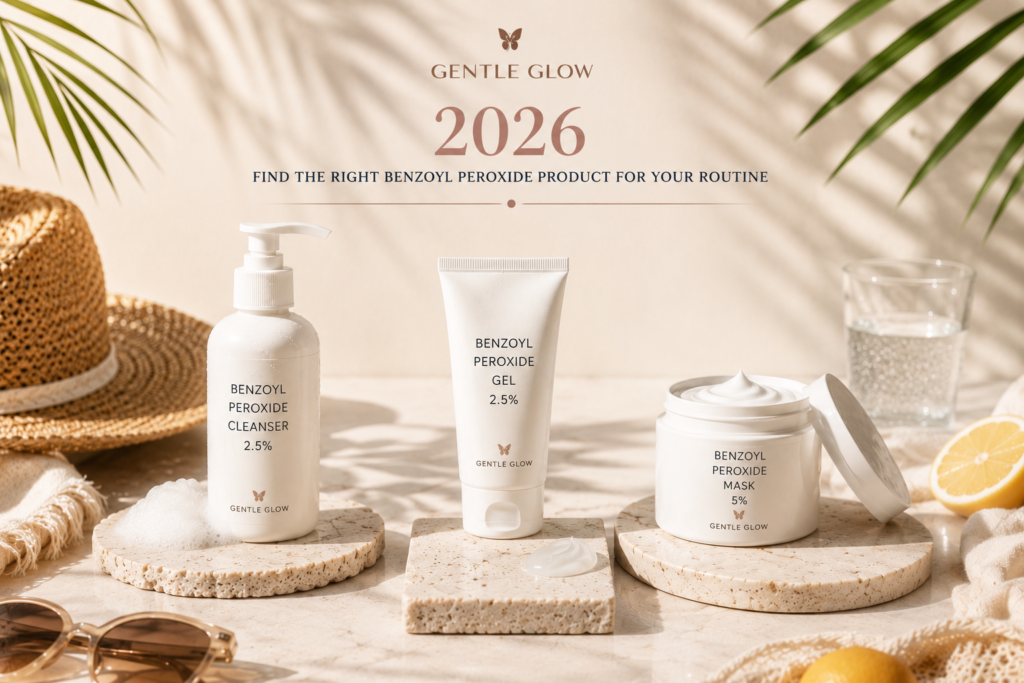
Choosing the best benzoyl peroxide product for oily and acne-prone skin often depends on texture, concentration, and how comfortably the formula fits into your routine.
| Product | Best For | Texture | Benzoyl Peroxide Type | Why It Stands Out | View |
|---|---|---|---|---|---|
| Neutrogena Stubborn Acne AM Treatment | Daily inflammatory acne management | Lightweight gel-cream | 2.5% micronized benzoyl peroxide | Breathable finish with lower irritation potential for consistent use | View product |
| CeraVe Acne Foaming Cream Cleanser | Oily skin prone to dehydration | Creamy foaming wash | 4% benzoyl peroxide wash | Combines acne treatment with ceramides and hydrating support | View product |
| La Roche-Posay Effaclar BPO Multi-Target Acne Treatment | Persistent inflammatory breakouts | Lightweight treatment gel | 5.5% benzoyl peroxide + LHA | More targeted correction with gentle micro-exfoliation support | View product |
| Sofie Pavitt Face Reset Mask | Weekly congestion and inflammation reset | Rinse-off mask | 5% benzoyl peroxide mask | Elegant short-contact approach that minimizes overnight dryness | View product |
| Paula’s Choice CLEAR Regular Strength | Beginner-friendly maintenance routines | Lightweight lotion | 2.5% benzoyl peroxide | Lower-strength formula designed for long-term tolerability | View product |
Not every benzoyl peroxide product works the same way on oily skin. Texture, concentration, and delivery method all influence how comfortably a formula fits into a routine — especially for skin already dealing with dehydration, sensitivity, or an impaired skin barrier.
Best Benzoyl Peroxide Products for Oily and Acne-Prone Skin (2026)
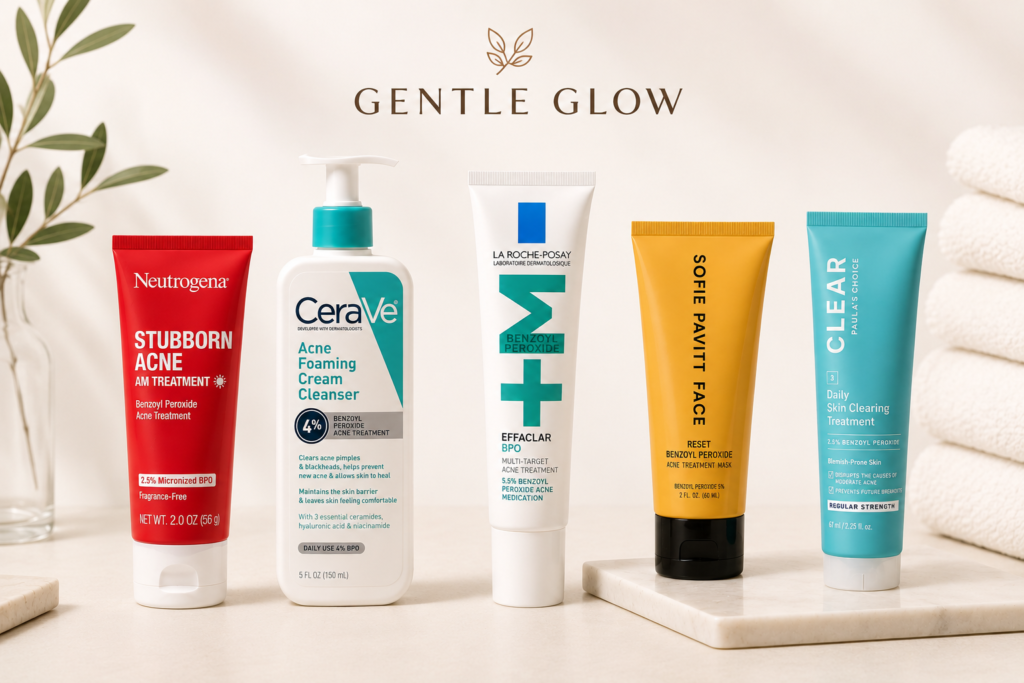
These are some of the best benzoyl peroxide products for oily and acne-prone skin currently available for balancing acne control with better tolerability.
Neutrogena Stubborn Acne AM Treatment
Best for: Daily inflammatory acne management with lower irritation potential
One of the biggest shifts in modern benzoyl peroxide skincare is the move toward lower-strength, more wearable formulas — and Neutrogena Stubborn Acne AM Treatment reflects that change particularly well. Instead of relying on an aggressive 10% concentration, it uses 2.5% micronized benzoyl peroxide, a format designed to distribute more evenly through the follicle while reducing some of the surface dryness associated with traditional BP treatments.
The texture is noticeably lighter than older acne creams. On oily skin, it dries down with less of the thick, chalky finish many people still associate with benzoyl peroxide, making it easier to layer under moisturizer and sunscreen during the day. In humid climates or warmer weather, that lighter finish often feels significantly more comfortable than heavier leave-on spot treatments.
Because the formula is lower strength, it also fits more naturally into routines already using ingredients like niacinamide, retinoids, or gentle exfoliants on alternating nights. That flexibility matters for oily skin, where aggressive layering can quickly push the skin barrier into irritation and rebound oiliness.
Gentle Glow Verdict:
This is one of the strongest options for oily and acne-prone skin that wants consistent inflammatory acne support without the overly dry, medicated feel of older-generation BP creams. The lightweight texture and micronized delivery system make it especially appealing for people trying to move away from harsh “spot treatment only” routines toward a more balanced long-term approach.
When it may not work:
Very persistent or severe inflammatory breakouts may still require a stronger leave-on treatment or prescription support. Extremely sensitive skin may also prefer starting with a short-contact wash before transitioning into leave-on benzoyl peroxide products.
CeraVe Acne Foaming Cream Cleanser
Best for: Oily skin that needs acne control without excessive dryness
Unlike traditional foaming acne cleansers that leave skin feeling stripped immediately after washing, CeraVe Acne Foaming Cream Cleanser takes a noticeably more balanced approach. It uses 4% benzoyl peroxide in a creamy wash format designed to reduce excess oil and support inflammatory acne while still maintaining some barrier comfort through ingredients like ceramides, hyaluronic acid, and niacinamide.
The creamy texture feels especially important for oily skin types already dealing with dehydration or irritation from over-cleansing. Instead of creating the tight, squeaky-clean feeling many older acne washes were known for, this formula leaves the skin feeling cleaner but less over-dried afterward — particularly when followed with a lightweight moisturizer.
Because it’s a rinse-off treatment, it also works well for people experimenting with short-contact therapy (SCT) or those who struggle with overnight leave-on treatments under humid conditions, sunscreen, or makeup. In warmer climates, many oily skin types find creamy benzoyl peroxide washes easier to tolerate consistently than thick leave-on creams.
Another advantage is routine flexibility. Since the formula is washed off rather than left sitting on the skin overnight, it often integrates more comfortably alongside retinoids, exfoliants, or barrier-repair routines already being used throughout the week.
Gentle Glow Verdict:
It works particularly well for oily skin that needs regular acne maintenance without turning cleansing into an overly stripping step that worsens dehydration and rebound shine.
When it may not work:
If your breakouts are deeply inflamed or concentrated in specific areas, a rinse-off cleanser alone may not feel targeted enough compared to a dedicated leave-on treatment.
La Roche-Posay Effaclar BPO Multi-Target Acne Treatment
Best for: Persistent inflammatory breakouts and targeted acne correction
For oily skin dealing with more stubborn or recurring breakouts, La Roche-Posay Effaclar BPO Multi-Target Acne Treatment offers a slightly more intensive approach while still feeling more modern than many traditional high-strength acne creams. The formula combines 5.5% micronized benzoyl peroxide with LHA, a gentler exfoliating acid that helps loosen buildup inside the pore without relying on overly harsh scrubbing or aggressive physical exfoliation. The gentle exfoliating support from LHA may also help improve congestion and the appearance of blackheads over time.
Compared to thicker spot treatments, the texture feels relatively lightweight and spreads easily across acne-prone areas without leaving an excessively greasy or heavy finish. On oily skin, it tends to sit more comfortably under lightweight moisturizers than older benzoyl peroxide creams, although it still feels noticeably stronger than lower-strength 2.5% formulas.
This type of treatment often works best for people dealing with more persistent inflammatory acne, especially around areas prone to recurring congestion like the cheeks, jawline, or lower face. Because the formula combines antibacterial support with gentle exfoliation, it can help address both active breakouts and some of the buildup that contributes to clogged pores over time.
That said, the stronger concentration means routine balance becomes more important. Using this alongside multiple exfoliating acids, harsh cleansers, or frequent retinoid application can quickly push oily skin into irritation, tightness, or rebound oil production — especially in dry indoor environments or during seasonal weather changes.
Gentle Glow Verdict:
It works particularly well for oily skin that needs something stronger than a basic maintenance treatment but still wants a more elegant texture than traditional heavy benzoyl peroxide creams.
When it may not work:
If your skin is already dehydrated, highly sensitive, or easily irritated by exfoliating acids, the combination of 5.5% benzoyl peroxide and LHA may feel too active for daily use.
Sofie Pavitt Face Reset Mask
Best for: Weekly congestion resets and short-contact acne treatment
Most benzoyl peroxide treatments are designed to stay on the skin for hours, which is part of the reason older formulas became associated with peeling, irritation, and bleached pillowcases. Sofie Pavitt Face Reset Mask takes a different approach by using 5% benzoyl peroxide in a rinse-off mask format that aligns more closely with modern short-contact therapy (SCT) principles.
The texture feels more like a treatment mask than a traditional acne medication. Kaolin clay helps absorb excess oil and surface buildup while the shorter wear time reduces some of the dryness that can happen with overnight leave-on products. For oily skin types that feel congested but easily irritated by daily BP use, this format often feels easier to maintain consistently.
It also fits naturally into routines already using retinoids, exfoliating acids, or multiple active ingredients throughout the week. Instead of layering another strong leave-on treatment overnight, a short-contact mask can provide a more controlled reset without pushing the skin into excessive tightness or barrier fatigue.
In humid climates or during warmer months, rinse-off formats like this can also feel more comfortable than thicker creams sitting on the skin overnight. Many oily skin types prefer the flexibility of a treatment they can wash away after several minutes rather than continuously layering additional leave-on actives.
Gentle Glow Verdict:
It works particularly well for oily skin that wants the benefits of benzoyl peroxide without committing to an aggressive overnight treatment several times a week.
When it may not work:
If your acne is severe or highly persistent, a weekly rinse-off mask may feel too gentle on its own without a more consistent daily treatment approach.
Paula’s Choice CLEAR Regular Strength Daily Skin Clearing Treatment
Best for: Beginner-friendly acne maintenance and sensitive oily skin
For oily skin that reacts easily to stronger acne treatments, Paula’s Choice CLEAR Regular Strength Daily Skin Clearing Treatment takes a more controlled, maintenance-focused approach. The formula uses 2.5% benzoyl peroxide, a concentration increasingly favored in modern acne care because it can still target inflammatory acne while reducing some of the excessive peeling and irritation associated with older high-strength treatments.
The texture feels lightweight and relatively easy to layer within larger skincare routines, especially compared to heavier spot treatments that can pill under sunscreen or feel overly dry throughout the day. On oily skin, it tends to absorb more cleanly without leaving the stiff, chalky residue many traditional benzoyl peroxide creams are known for.
This type of lower-strength leave-on treatment often works best for people trying to maintain long-term consistency rather than aggressively “dry out” every breakout as quickly as possible. It also fits more comfortably into routines already using hydrating serums, barrier-supportive moisturizers, or alternating retinoid nights.
Because the formula focuses more on tolerability, it may appeal particularly to oily skin that fluctuates between breakouts and dehydration — especially during seasonal weather shifts, indoor air conditioning exposure, or periods of over-exfoliation.
Gentle Glow Verdict:
It works particularly well for oily skin that needs steady acne maintenance without making the rest of the routine feel heavier, tighter, or overly reactive.
When it may not work:
If your breakouts are severe, deeply inflamed, or resistant to lower-strength formulas, this may feel too gentle compared to stronger targeted treatments.
Why Lower-Strength Benzoyl Peroxide Often Works Better
One of the biggest misconceptions in acne treatment is that stronger benzoyl peroxide percentages automatically produce better results. In reality, many dermatology studies have shown that 2.5% benzoyl peroxide can perform similarly to much higher concentrations when used consistently — while causing significantly less irritation, peeling, and barrier disruption along the way.
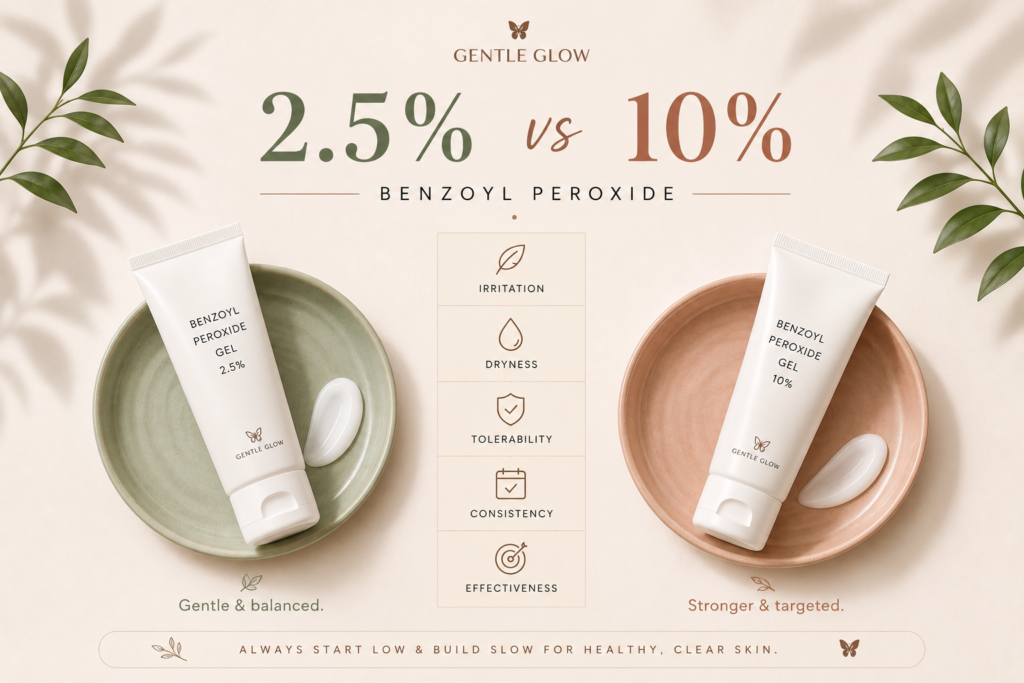
That difference matters more than many oily skin routines realize.
When the skin becomes overly dry or irritated, it often becomes harder to tolerate acne treatments consistently. Some people begin skipping applications, over-moisturizing to compensate for tightness, or cycling between aggressive treatment phases and recovery periods. Over time, that inconsistency can become more disruptive than using a lower-strength formula steadily from the beginning.
For oily skin specifically, excessive irritation can also trigger a frustrating cycle where the skin feels both shiny and dehydrated at the same time. Instead of looking balanced, the skin may become tight after cleansing but greasy again several hours later — especially when multiple strong actives are layered together too frequently.
Modern benzoyl peroxide products for oily skin increasingly focus on improving tolerability rather than simply increasing strength. That shift is one reason newer formulas now emphasize:
- 2.5% to 5% concentrations
- lightweight textures
- micronized delivery systems
- short-contact therapy methods
- barrier-supportive formulations
Another reason lower-strength formulas work surprisingly well is that benzoyl peroxide is naturally lipophilic, meaning it travels through oil-rich environments like sebaceous follicles particularly effectively. Oily skin already produces the type of environment BP moves through easily, allowing even lower concentrations to reach acne-prone areas efficiently without necessarily relying on harsh percentages.
Benzoyl peroxide also works differently from many exfoliating acids because it introduces oxygen into the pore. Since Cutibacterium acnes (C. acnes) bacteria thrive in low-oxygen environments, this oxygenation process helps reduce bacterial overgrowth inside inflamed follicles.
In practical terms, this means modern benzoyl peroxide routines are increasingly moving away from the old “strongest possible treatment” mindset. For many oily and acne-prone skin types, a lower-strength formula used consistently and comfortably often performs better long term than an aggressive routine that constantly pushes the skin barrier into irritation.
The Short-Contact Therapy Method for Oily Skin
One reason many people stop using benzoyl peroxide consistently is that traditional overnight treatments can become difficult to tolerate over time. Tightness, flaking, irritation, and fabric bleaching often make strong leave-on products feel harder to maintain within already active-heavy oily skincare routines.
This is where short-contact therapy (SCT) has become increasingly popular in modern acne care.
Instead of leaving benzoyl peroxide on the skin overnight, SCT involves applying the product for a shorter period — usually several minutes — before rinsing it away. The idea is to still allow the ingredient enough contact time to reduce acne-causing bacteria while minimizing some of the prolonged surface irritation associated with longer wear.
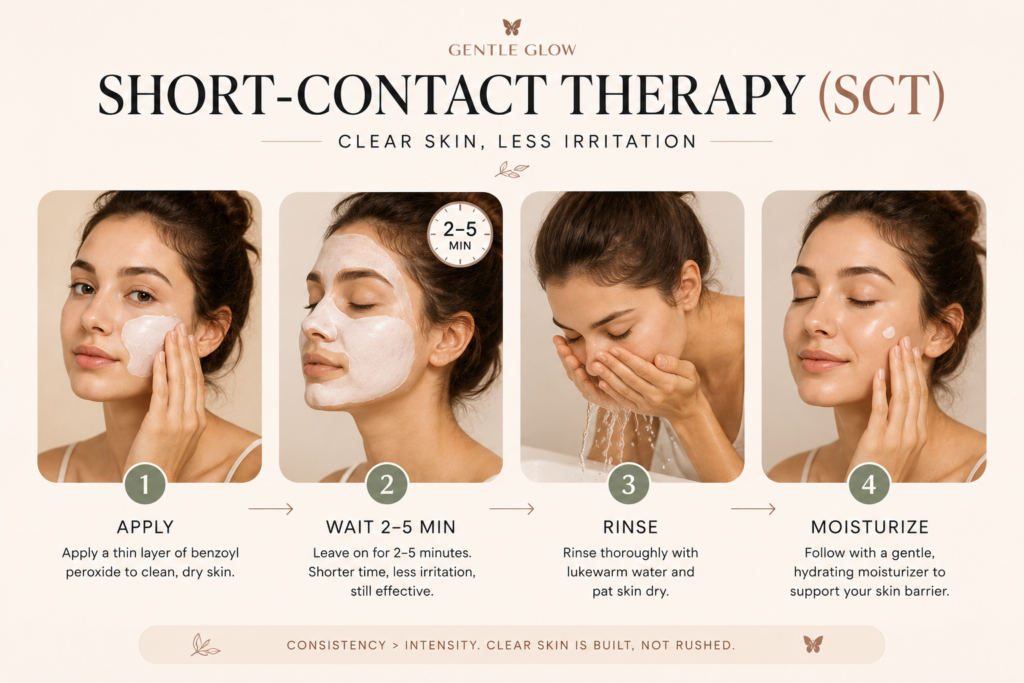
For oily and acne-prone skin, this approach often works particularly well with:
- benzoyl peroxide washes
- creamy BP cleansers
- rinse-off masks
- lower-strength leave-on gels used several times weekly
Many oily skin types find SCT easier to tolerate during warmer months, humid weather, or periods where the skin is already adjusting to retinoids, exfoliating acids, or barrier-repair routines. Instead of layering multiple strong overnight actives together, short-contact use creates a more controlled treatment approach that can feel easier to maintain consistently.
A simple SCT routine often looks like this:
- Cleanse the skin gently.
- Apply the benzoyl peroxide treatment evenly to acne-prone areas.
- Leave it on for approximately 2–5 minutes depending on tolerance.
- Rinse thoroughly and follow with a lightweight moisturizer.
Over time, some people gradually increase contact duration if their skin tolerates it comfortably. Others continue using SCT long term because it reduces irritation while still helping control recurring inflammatory breakouts.
This method can also help reduce some of the lifestyle frustrations associated with traditional BP routines, including:
- bleached pillowcases
- fabric discoloration
- excessive overnight dryness
- irritation around the corners of the nose or mouth
For oily skin already prone to dehydration or sensitivity, short-contact therapy often feels less disruptive than applying strong leave-on acne treatments every night without interruption.
Benzoyl Peroxide Wash vs Leave-On: Which Fits Your Skin Better?
Choosing between a benzoyl peroxide wash and a leave-on treatment often matters just as much as choosing the percentage itself. For oily and acne-prone skin, the right format can influence everything from irritation levels to how comfortably the product layers under sunscreen, makeup, or other active ingredients throughout the week.
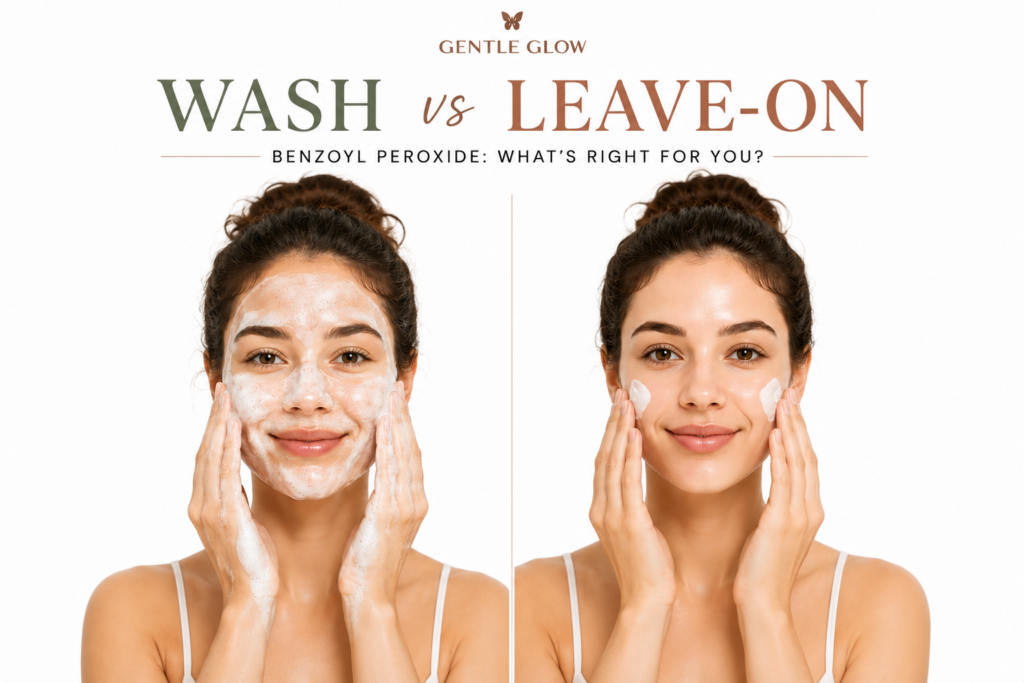
| Format | Best For | Main Advantage | Possible Drawback |
|---|---|---|---|
| Benzoyl Peroxide Wash | Oily skin prone to dehydration or irritation | Easier to tolerate with less prolonged dryness | May feel less targeted for stubborn breakouts |
| Leave-On Benzoyl Peroxide | Persistent inflammatory acne | Longer contact time for targeted correction | Higher risk of peeling, tightness, and layering conflicts |
Benzoyl Peroxide Washes
A benzoyl peroxide wash is usually easier to tolerate because the ingredient stays on the skin for a shorter amount of time before being rinsed away. This often makes washes a better fit for:
- oily skin prone to dehydration
- beginners starting BP for the first time
- humid climates
- routines already using retinoids or exfoliating acids
- people sensitive to overnight dryness or fabric bleaching
Creamy washes in particular tend to feel more comfortable for oily skin than older foaming acne cleansers that leave the face feeling overly stripped after every wash. Many oily skin types also find rinse-off formulas easier to maintain consistently during warmer months, especially when layering sunscreen daily.
Leave-On Benzoyl Peroxide Treatments
Leave-on treatments usually provide more continuous exposure to benzoyl peroxide, which can make them more effective for persistent or concentrated inflammatory acne. Lightweight gels and lotion-textures generally feel easier to manage on oily skin than thick spot treatments that sit heavily on the surface.
The challenge is that leave-on formulas also increase the likelihood of:
- tightness
- peeling
- irritation around the mouth and nose
- rebound oiliness from over-drying
- layering conflicts with other active ingredients
This is partly why many modern oily skincare routines now combine both approaches. Some people use a benzoyl peroxide wash several mornings weekly for maintenance while reserving leave-on treatments for more stubborn breakout areas at night.
For many oily skin types, the most effective approach is not necessarily choosing the strongest product — but choosing the format the skin can tolerate consistently without triggering excessive dryness or routine fatigue.
How to Use Benzoyl Peroxide Without Over-Drying Oily Skin
One of the most common mistakes in oily skincare routines is assuming that more dryness automatically means better acne control. In reality, overly aggressive benzoyl peroxide use often pushes oily skin into a cycle of irritation, tightness, and rebound shine that becomes difficult to manage consistently.
For many oily and acne-prone skin types, the goal is not removing as much oil as possible. The goal is reducing inflammation while keeping the skin barrier stable enough to tolerate treatment long term.
That balance usually starts with:
- lower-strength benzoyl peroxide
- gentle cleansing
- lightweight hydration
- controlled active layering
- consistent sunscreen use
A lightweight moisturizer is especially important, even for oily skin. Skipping hydration after strong acne treatments often makes the skin feel temporarily matte but increasingly dehydrated underneath, particularly in air-conditioned environments or during periods of over-cleansing. If your skin already feels unusually tight, shiny, or reactive, it may be a sign of a damaged skin barrier rather than “oiliness that needs stronger treatment.”
Another important factor is how frequently active ingredients are layered together. Combining benzoyl peroxide and exfoliating acids aggressively within the same routine can quickly overwhelm oily skin — especially when irritation is already present.
Many oily skincare routines tolerate active ingredients more comfortably when they are alternated throughout the week instead of stacked together daily. For example:
- benzoyl peroxide washes in the morning
- retinoids several nights weekly
- exfoliating acids on separate evenings
- barrier-supportive serums during recovery days
This type of rotation often feels easier to maintain long term than relying on multiple strong treatments every single day.
Ingredients like niacinamide can also help support oily acne-prone skin alongside BP routines because they focus more on barrier support, oil balance, and visible redness rather than additional exfoliation pressure. In many cases, calmer and more consistent routines outperform aggressive “maximum strength” approaches over time.
Climate and environment matter too. In humid weather, thick acne creams may feel overly heavy under sunscreen, while dry indoor air from heating or air conditioning can increase dehydration and sensitivity even on oily skin. Adjusting texture and frequency seasonally often works better than rigidly following the same routine year-round.
For oily and acne-prone skin, successful benzoyl peroxide use is usually less about choosing the strongest possible treatment and more about building a routine the skin can realistically tolerate without constant irritation or recovery cycles.
Common Benzoyl Peroxide Mistakes That Make Oily Skin Worse
Many oily skin routines do not struggle because benzoyl peroxide “doesn’t work.” More often, the problem is that the skin becomes overwhelmed by how aggressively the ingredient is being used.
One of the most common mistakes is applying too much product too quickly. Thick layers of BP do not necessarily clear breakouts faster, but they do increase the likelihood of peeling, irritation, and tightness — especially around the nose, mouth, and jawline where the skin barrier is naturally thinner.
Another frequent issue is combining too many strong actives within the same routine. Oily skin already using exfoliating acids, retinoids, harsh cleansers, or frequent scrubs can quickly become reactive when benzoyl peroxide is added aggressively on top. In many cases, the resulting redness and sensitivity are mistaken for “purging” when the skin is actually signaling irritation.
Skipping moisturizer is another mistake that often backfires on oily skin. Many people worry that hydration will worsen shine or clog pores, but overly dry skin frequently becomes more reactive and difficult to balance over time. A lightweight, non-comedogenic moisturizer usually improves treatment tolerance far more effectively than trying to keep the skin constantly matte.
It is also important not to judge tolerance only by the face itself. The skin around the neck, sides of the nose, and corners of the mouth often becomes irritated first — sometimes before the rest of the face shows visible dryness. Paying attention to these areas early can help prevent full barrier irritation from developing later.
Using stronger percentages too early can create similar problems. Many oily skin types tolerate 2.5% benzoyl peroxide far more comfortably than 10% formulas, particularly when the goal is long-term consistency rather than short bursts of aggressive treatment.
Lifestyle habits matter too. Leaving benzoyl peroxide sitting against colored towels, pillowcases, or clothing overnight often leads to fabric bleaching that many people do not expect initially. White towels and lighter pillowcases tend to be easier to manage when using leave-on BP products regularly.
For oily and acne-prone skin, successful acne treatment usually comes from consistency and routine balance rather than pushing the skin into constant cycles of over-treatment and recovery.
Final Takeaway
Modern benzoyl peroxide routines are increasingly moving away from the harsh, overly drying treatments that once defined acne care. For oily and acne-prone skin, lower-strength formulas, lighter textures, and more balanced treatment methods often feel easier to maintain consistently without pushing the skin barrier into constant irritation.
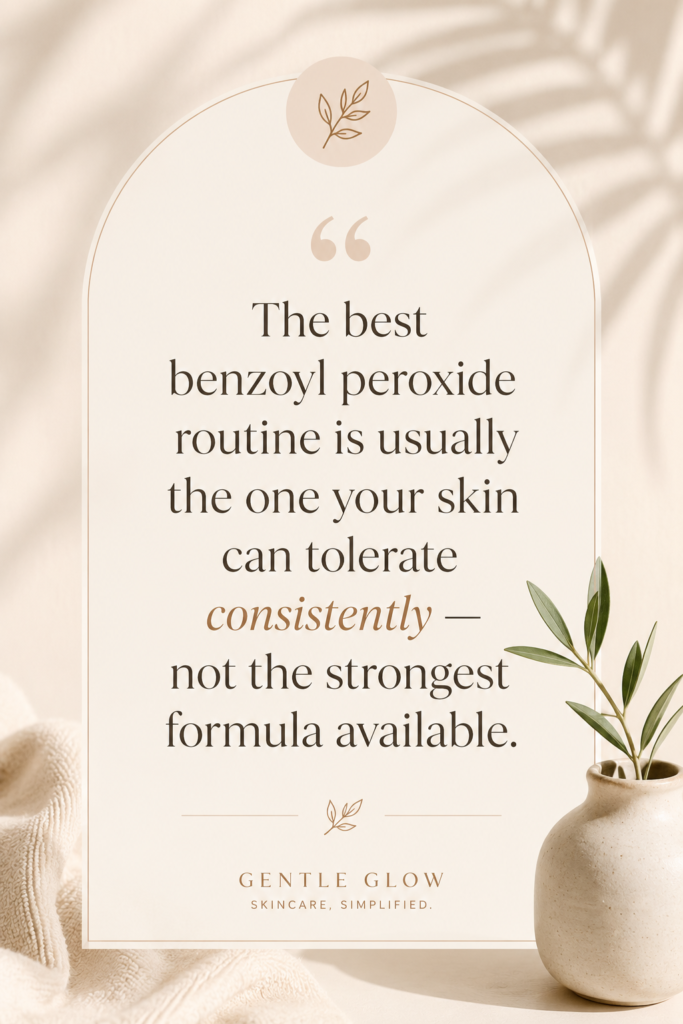
In many cases, the best benzoyl peroxide products for oily and acne-prone skin are not the strongest formula available, but the one your skin can comfortably tolerate long term. Whether that means a creamy wash, a lightweight leave-on gel, or a short-contact treatment approach, calmer and more sustainable routines often outperform aggressive acne management over time.
Frequently Asked Questions
Does 2.5% benzoyl peroxide work as well as 10%?
Yes. Clinical dermatology research has demonstrated that 2.5% benzoyl peroxide provides comparable antibacterial efficacy to 10% strengths when treating mild-to-moderate inflammatory acne. The critical differentiator is that 2.5% concentrations significantly lower the rate of trans-epidermal water loss, peeling, and surface irritation, making it much easier to use consistently.
Can I use benzoyl peroxide every day?
You can use benzoyl peroxide daily once your skin has built up a tolerance, but it should be introduced gradually. For oily skin types, starting 2–3 times a week with a creamy wash or a low-percentage gel allows you to monitor your skin barrier for signs of excessive tightness or redness before moving to daily application.
Can I use benzoyl peroxide with niacinamide?
Yes. Pairing benzoyl peroxide with niacinamide is an excellent strategy for oily and acne-prone skin. While benzoyl peroxide targets the C. acnes bacteria within the pore, niacinamide acts as a barrier-supportive counterweight, managing visible redness, balancing sebum production, and keeping the skin hydrated.
Why does benzoyl peroxide make my skin feel tight?
Benzoyl peroxide is highly lipophilic (oil-soluble), meaning it quickly breaks down surface lipids to reach the interior of the follicle. If used in high percentages or without a supporting moisturizer, it can over-strip the skin’s natural moisture barrier, resulting in a tight, dehydrated surface that can paradoxically trigger rebound oil production.
How long should I leave benzoyl peroxide wash on?
For effective short-contact therapy (SCT), a benzoyl peroxide wash should be left on the skin for 2 to 5 minutes before rinsing thoroughly with lukewarm water. This brief window provides ample time for the active ingredient to release oxygen into the pore and neutralize acne bacteria without causing prolonged surface dryness.
Does benzoyl peroxide cause purging?
Because benzoyl peroxide accelerates cell turnover and rapidly clears deep-seated follicular congestion, it can trigger a brief purging phase. This typically presents as non-inflammatory microcomedones coming to the surface faster. However, if you experience widespread peeling, burning, or deep itching, it is likely a sign of barrier irritation rather than true purging.
Can oily skin become dehydrated from benzoyl peroxide?
Absolutely. Oily skin frequently suffers from surface dehydration when treated with aggressive acne actives. Overusing benzoyl peroxide can impair the stratum corneum’s lipid matrix, causing your face to feel tight and flaky underneath a layer of midday shine.
Sources and References
- Comparing 2.5%, 5%, and 10% benzoyl peroxide on inflammatory acne vulgaris
https://pubmed.ncbi.nlm.nih.gov/2948929/ - Acne: Diagnosis and treatment
https://www.aad.org/public/diseases/acne/derm-treat/treat - Minimum Contact Time of 1.25%, 2.5%, 5%, and 10% Benzoyl Peroxide for a Bactericidal Effect Against Cutibacterium acnes
https://pmc.ncbi.nlm.nih.gov/articles/PMC8922035/ - Benzoyl peroxide: a review of its current use in the treatment of acne vulgaris
https://pubmed.ncbi.nlm.nih.gov/19761357/
This article is based on dermatology research and peer-reviewed studies on acne pathogenesis, hormonal signaling, and skin barrier function.
Medical Disclaimer
Gentle Glow guides are developed using peer-reviewed dermatology research and established clinical guidelines. The information provided is for educational purposes only and does not replace professional medical advice, diagnosis, or treatment. Always consult a board-certified dermatologist or qualified healthcare provider before starting new active skincare treatments.