Everything You Need to Know About Oily Skin


The Summer Double Cleansing Trap: When Cleansing Too Much Makes Oily Skin Worse (2026 Guide)

Medically reviewed by
Gamal Henin, B.Pharm
Pharmacist & Medical Reviewer at Gentle Glow
Reviewed June 29, 2026
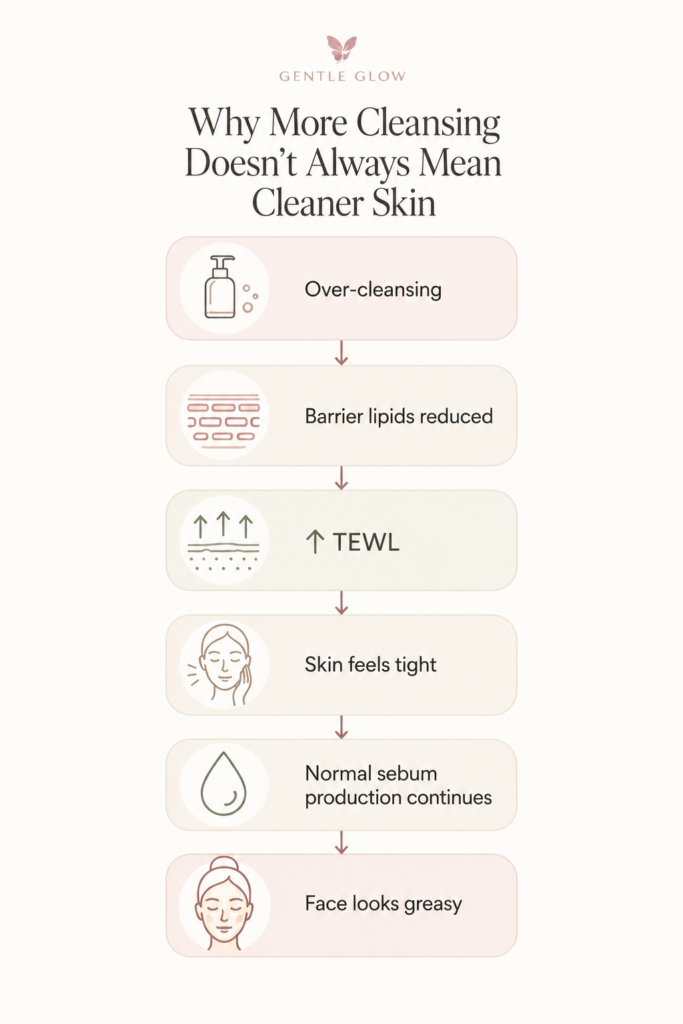
The Summer Double Cleansing Trap happens when oily and acne-prone skin is cleansed more often than necessary. While double cleansing for oily skin can effectively remove water-resistant sunscreen, long-wear makeup, and other stubborn residues, it is not necessary every day, even during summer. Over-cleansing may disrupt the skin barrier, increase transepidermal water loss (TEWL), and leave your skin feeling tight after washing, and some people notice their skin appears oilier later as the skin responds to barrier disruption and normal sebum production. The healthiest summer routine removes what needs to be removed while preserving your skin’s natural barrier.
- Double cleanse when removing water-resistant sunscreen or heavy makeup, not simply because it’s summer or you have oily skin.
- Sweat alone usually does not require double cleansing, as a single gentle cleanse is often enough to remove perspiration and surface debris.
- If your face feels tight after cleansing but looks greasy later, your routine may be disrupting your skin barrier rather than improving it.
Table of Contents
Some links in this guide are affiliate links. This means Gentle Glow may earn a small commission if you purchase through them — at no extra cost to you. We only recommend products that are suitable for oily and acne-prone skin.
Myth: Everyone With Oily Skin Should Double Cleanse Every Night During Summer
Over the past few years, double cleansing has become one of the most widely recommended skincare habits for people with oily and acne-prone skin. Social media tutorials, influencer routines, and the growing popularity of Korean skincare have all helped introduce the practice to a much wider audience. At the same time, dermatologists have rightly emphasized the importance of thoroughly removing water-resistant sunscreen, especially during summer.
Somewhere along the way, however, a helpful technique gradually became a universal rule.
Today, many people believe that having oily skin automatically means they should use an oil cleanser followed by a foaming cleanser every single evening throughout summer. In reality, your skin doesn’t benefit from the maximum amount of cleansing—it benefits from the right amount of cleansing.
Whether double cleansing for oily skin is helpful depends on what is actually on your skin, not simply the season, your skin type, or what someone else’s routine looks like.
If you’ve spent the day outdoors wearing water-resistant sunscreen, reapplied sunscreen several times, or worn long-wear makeup, a two-step cleanse may be an excellent choice. On the other hand, if you’ve worked indoors, worn only a non-water-resistant sunscreen, or simply exercised and accumulated sweat, a single gentle cleanse is often enough.
Research suggests that every cleanse removes more than dirt, sunscreen, and excess oil. Cleansing also temporarily affects the skin’s protective surface lipids and hydration. When cleansing becomes more aggressive or more frequent than your skin actually needs, it may contribute to skin barrier disruption, increase transepidermal water loss (TEWL), and leave your skin feeling tight but greasy.
That brings us to the most important question:
How do you know when your skin genuinely needs a second cleanse—and when it doesn’t?
Instead of following blanket rules, the goal is to make every cleansing decision based on what you’re removing, how your skin feels, and whether a second cleanse genuinely adds value. That balanced approach protects the skin barrier, supports healthier-looking skin over time, and helps avoid the summer double cleansing trap.
| Common Advice | Summer Reality | The Gentle Glow Framework |
|---|---|---|
| Everyone with oily skin should double cleanse every night. | The need for double cleansing depends on sunscreen, makeup, and product buildup, not simply on skin type. | Double cleanse only when your skin has something difficult to remove. |
| Stronger cleansing leaves pores cleaner. | Overly aggressive cleansing may increase skin barrier stress and transepidermal water loss (TEWL). | Focus on effective cleansing without unnecessary stripping. |
| Sweat always requires a double cleanse. | Sweat is primarily water-based and usually removes much more easily than waterproof sunscreen or makeup. | A single gentle cleanse is often enough after sweat alone. |
| A perfectly matte finish means your cleanser is working. | Skin that feels squeaky clean may actually be losing too much moisture and becoming less comfortable over time. | Healthy summer skin should feel clean, comfortable, and balanced, not overly stripped. |
Understanding this difference is the key to avoiding the summer double cleansing trap.
Before deciding whether you need one cleanse or two, it helps to understand what double cleansing actually does, why it works so well for some situations, and why it can become unnecessary—or even counterproductive—in others.
What Double Cleansing Actually Does
To understand whether double cleansing for oily skin is necessary, it helps to first understand what the routine is actually designed to do.
Despite its popularity, double cleansing is not about making your skin “extra clean.” Instead, it’s a practical way to remove substances that are difficult to wash away with a single water-based cleanser alone.
The process combines two different types of cleansers, each with a specific role.
The first cleanse typically uses an oil-based cleanser, cleansing oil, cleansing balm, or micellar oil to dissolve oil-soluble substances such as:
- Water-resistant sunscreen
- Long-wear makeup
- Excess surface sebum
- Pollution particles that adhere to oil on the skin
This follows a simple principle of chemistry: oil dissolves oil. Ingredients that are designed to resist water—such as many sports sunscreens and long-wearing makeup formulas—are often removed more efficiently by an oil-based cleanser than by repeated washing with a foaming cleanser alone.
The second cleanse uses a gentle water-based cleanser to remove any remaining cleanser residue along with sweat, water-soluble debris, and loosened impurities from the skin’s surface.
Rather than serving the same purpose twice, the two cleansers perform different jobs that complement one another.
When performed appropriately, double cleansing can thoroughly remove sunscreen and makeup while allowing the second cleanser to work more gently, reducing the temptation to scrub harder or wash repeatedly.
However, this doesn’t mean everyone with oily or acne-prone skin automatically needs two cleansing steps every evening.
Whether a second cleanse is helpful depends far more on what is on your skin than on your skin type alone.
When Double Cleansing Actually Helps
One of the biggest misconceptions surrounding double cleansing for oily skin is that it should become a permanent part of every evening routine throughout summer.
In reality, your skin doesn’t know whether it’s July or January—it simply responds to what needs to be removed.
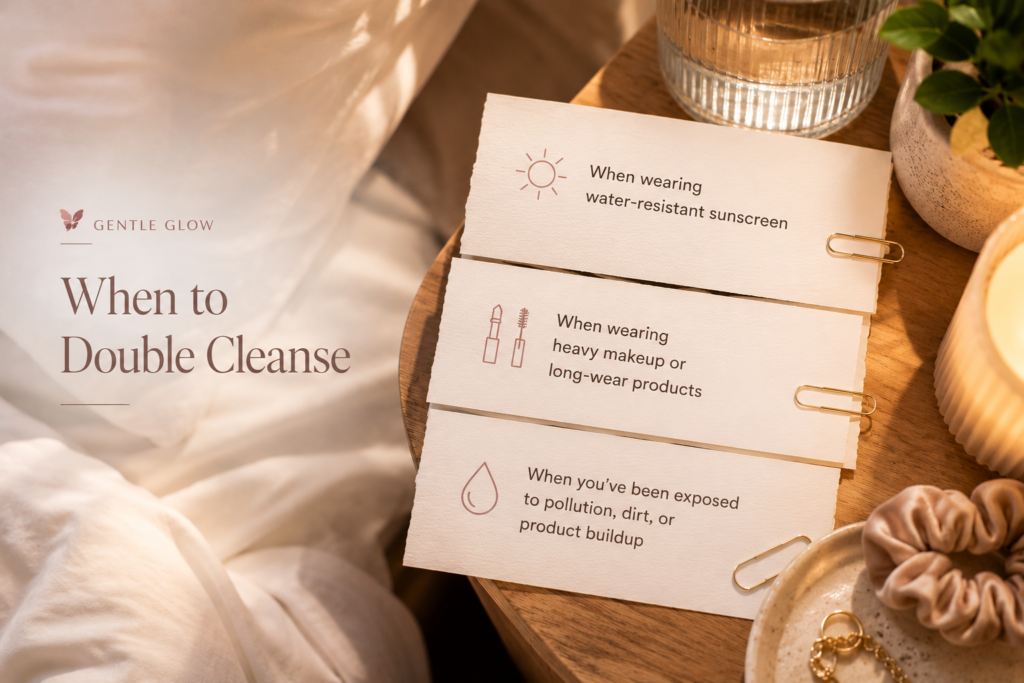
If you’re wearing water-resistant sunscreen, heavy makeup, or multiple layers of sunscreen after spending hours outdoors, an oil-based first cleanse often makes removal easier and more thorough.
By contrast, if you’ve spent most of the day indoors, worn only a lightweight daily sunscreen, or simply accumulated sweat after a workout, a single gentle cleanse is often enough.
The decision should be based on your skin’s cleansing needs, not the season.
| Situation | Single Cleanse | Double Cleanse | Why |
|---|---|---|---|
| Worked indoors with little product on the skin | ✅ Usually | ❌ Usually unnecessary | Minimal sunscreen, makeup, and environmental buildup. |
| Lightweight daily sunscreen | ✅ Often | ➖ Sometimes | Depends on how much sunscreen was applied and whether it removes easily. |
| Water-resistant sunscreen | ➖ Sometimes | ✅ Usually | Designed to resist sweat and water, making it more difficult to remove completely. |
| Long-wear or waterproof makeup | ❌ Usually insufficient | ✅ Yes | Oil-based cleansers dissolve pigments and long-lasting cosmetic ingredients more effectively. |
| Beach, hiking, or prolonged outdoor activities | ❌ Usually insufficient | ✅ Usually | Multiple sunscreen applications, sweat, sebum, and environmental particles increase cleansing needs. |
| Indoor workout with sweat only | ✅ Usually | ❌ Usually unnecessary | Unlike sebum, sweat is primarily water-based and is generally removed with a gentle cleanser. |
Notice that sweat appears very differently from sunscreen or makeup.
Many people assume that sweating heavily automatically means they should double cleanse. In reality, sweat alone usually doesn’t require a second cleanser, especially if you weren’t also wearing water-resistant sunscreen or makeup.
How to Decide If You Need to Double Cleanse
Instead of asking: “Should I double cleanse every night?”
Ask yourself four simple questions before you wash your face.
1. Am I removing water-resistant sunscreen?
If yes, a double cleanse is often the easiest way to remove sunscreen thoroughly without excessive rubbing.
2. Am I removing makeup?
If you’re wearing long-wear or waterproof makeup, an oil-based first cleanse can help dissolve pigments more effectively before using a gentle water-based cleanser.
3. Is it mostly sweat?
If your skin is simply sweaty after exercising and you’re not removing heavy sunscreen or makeup, a single gentle cleanse is usually sufficient.
4. Does my skin already feel tight, irritated, or sensitive?
If your skin already feels uncomfortable after cleansing, adding an unnecessary second cleanse may place additional stress on an already vulnerable skin barrier. Paying attention to how your skin responds is often just as important as removing every last trace of oil.
Using these four questions transforms double cleansing from a fixed rule into a thoughtful decision.
Instead of cleansing twice because it’s summer, you can adapt your routine to what your skin actually needs on that particular day.
The next question, however, is one that confuses many people with oily skin:
If double cleansing is supposed to help, why does my skin sometimes feel tighter after washing—but become even shinier a few hours later?
Why the Summer Double Cleansing Trap Leaves Skin Tight but Greasy
One of the biggest misconceptions about double cleansing for oily skin is that if your face still looks shiny after washing, you probably haven’t cleansed thoroughly enough.
In reality, visible shine doesn’t always mean your skin needs another cleanse.
Many people with oily and acne-prone skin fall into the same pattern. They cleanse their skin, notice it feeling clean for a short time, then become frustrated when shine begins to return a few hours later. Assuming the first cleanse wasn’t effective, they wash again or switch to stronger cleansers in an attempt to stay matte for longer.
This is where the summer double cleansing trap often begins.
Every time you cleanse, you remove more than sunscreen, dirt, and excess sebum. Cleansing also removes a small amount of the skin’s natural surface lipids. Research shows that the skin barrier relies on a carefully organized mixture of ceramides, cholesterol, and fatty acids to help limit transepidermal water loss (TEWL) and protect against environmental stressors. Under normal circumstances, healthy skin gradually restores much of this balance over time.
However, when cleansing becomes more frequent or more aggressive than necessary, the skin has less time to recover between washes.
Research shows that disruption of the skin barrier is associated with increased transepidermal water loss (TEWL). As a result, the skin may feel tighter and less comfortable after cleansing, particularly when cleansing becomes more frequent or more aggressive than necessary.
Ironically, this temporary tightness often convinces people that they need to cleanse even more.
A few hours later, the skin may begin to look shiny again. Rather than being a sign that the original cleanse “failed,” this shine is often the result of normal sebum production combined with mild barrier disruption, increased water loss, and changes in the way dehydrated skin reflects light. Researchers have not conclusively shown that over-cleansing permanently increases sebum production, but many people experience what is commonly described as rebound shine or rebound oiliness after repeatedly stripping the skin.
The important takeaway is that more cleansing doesn’t always produce cleaner or healthier skin.
In fact, sebum plays an important role in lubricating the skin and supporting its natural barrier.
Instead, the aim is to remove water-resistant sunscreen, makeup, pollution, and excess surface oil while preserving as much of the skin’s protective barrier as possible.
How to Spot the Signs of Over-Cleansing
Your skin often tells you when it’s being cleansed more than necessary.
Rather than assuming persistent shine means you need a stronger cleanser or another cleansing step, look for signs that your routine may be disrupting your skin barrier instead.
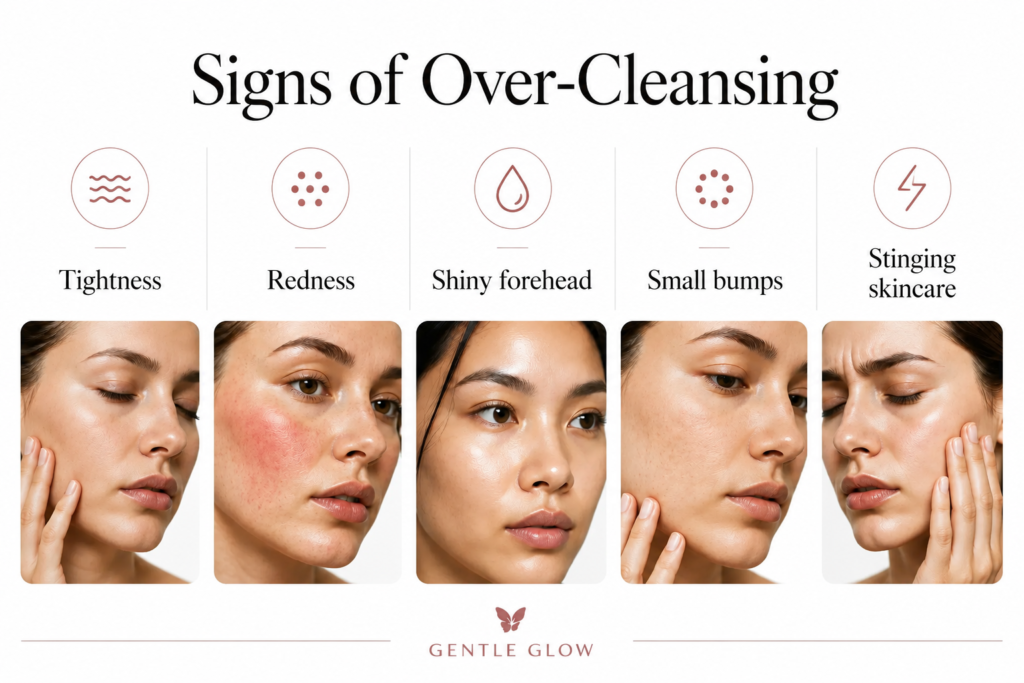
You may be over-cleansing if:
- Your skin feels tight or uncomfortable immediately after washing.
- Your face looks shiny again within a few hours, despite feeling dry underneath.
- Products that normally feel comfortable, such as a niacinamide serum or lightweight moisturizer, suddenly begin to sting.
- You notice small, uniform bumps appearing without changing the rest of your routine.
- Your skin becomes more sensitive, irritated, or prone to redness.
- You find yourself washing again simply because your face looks oily—even though you aren’t removing makeup or water-resistant sunscreen.
If these signs sound familiar, your skin may benefit more from reducing unnecessary cleansing than from using stronger products. Giving the skin barrier time to recover can often improve comfort while helping you avoid the cycle of repeatedly chasing a “perfectly clean” feeling.
Why Sweat Usually Doesn’t Require Double Cleansing
Many people assume that heavy sweating automatically means they should double cleanse after every workout.
In reality, unlike sebum, sweat is primarily water-based and is generally removed with a gentle water-based cleanser.
Even when humid weather slows sweat evaporation and leaves the skin feeling sticky for longer, that sensation alone does not mean a second cleanse is necessary.
What often requires more thorough cleansing isn’t the sweat itself, but everything that comes with it—such as water-resistant sunscreen, long-wear makeup, excess surface oil, and environmental particles that accumulate throughout the day.
For example, if you’ve just finished an indoor workout without wearing makeup or water-resistant sunscreen, a single gentle cleanse is usually enough to refresh your skin.
On the other hand, if you’ve spent hours exercising outdoors while wearing multiple layers of water-resistant sunscreen, an evening double cleanse may help remove those products more effectively without excessive rubbing.
Making cleansing decisions this way helps protect your skin barrier, avoids unnecessary stripping, and keeps your routine focused on your skin’s actual needs.
A Barrier-Friendly Summer Cleansing Routine
By now, one thing should be clear: there isn’t a single cleansing routine that suits everyone with oily skin during summer.
The best routine depends on what you’re removing, how your skin feels, and whether a second cleanse genuinely adds value.

The goal isn’t to make your skin feel completely oil-free after every wash.
Instead, aim to remove products that don’t belong on your skin while preserving the natural lipids that help maintain a healthy skin barrier.
Choosing the Right First Cleanse
If your skin genuinely needs a double cleanse, the first step should make sunscreen and makeup easier to remove—not make your routine harsher.
Many people with oily and acne-prone skin enjoy lightweight cleansing oils because they spread easily, emulsify well with water, and rinse away without requiring excessive rubbing.
Others prefer cleansing balms, which can work just as well when they’re formulated to emulsify completely.
The important part isn’t the texture of the product, but whether it:
- Removes water-resistant sunscreen effectively.
- Emulsifies and rinses away cleanly.
- Doesn’t encourage unnecessary scrubbing.
- Leaves your skin feeling comfortable instead of overly stripped.
The goal is to focus on cleansing effectively without unnecessarily disrupting the skin barrier.
Choosing a Gentle Second Cleanser
If you decide to double cleanse, your second cleanser doesn’t need to be aggressive.
In fact, this is where many people unintentionally begin over-cleansing.
Once sunscreen, makeup, and excess oil have already been loosened by the first cleanse, the second step simply needs to remove any remaining residue.
A gentle, low-pH cleanser is usually enough.
Look for a cleanser that:
- Cleans without leaving your skin feeling tight.
- Supports your skin’s natural barrier.
- Is appropriate for oily and acne-prone skin.
- Fits comfortably into your daily routine.
A well-formulated cleanser should leave your skin feeling clean, comfortable, and balanced.
Can a Cleansing Device Help?
Some people prefer using a gentle sonic cleansing device as part of their routine, particularly after wearing water-resistant sunscreen or spending long hours outdoors.
When used correctly and according to the manufacturer’s instructions, these devices may help loosen sunscreen residue and surface impurities while reducing the temptation to scrub with your hands.
For people who enjoy using a cleansing device, the Michael Todd Beauty Soniclear Elite is one option worth considering. Its antimicrobial brush head and gentle sonic technology are designed to help lift sunscreen, excess oil, and daily buildup while being suitable for a variety of skin types. Used with a gentle cleanser, it may provide a more thorough cleanse without relying on harsher products or excessive rubbing.
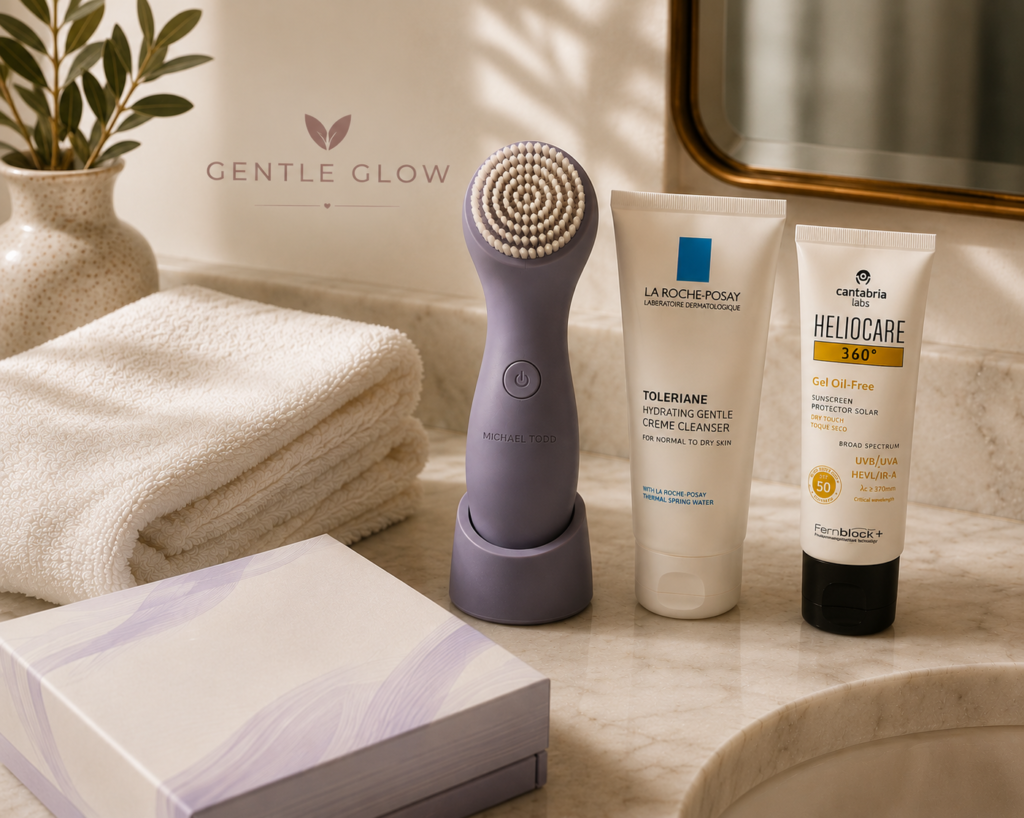
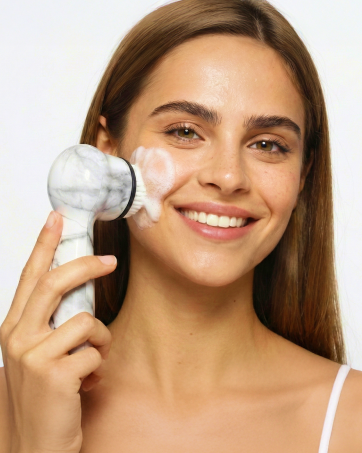
⭐ Recommended Option
Michael Todd Beauty Soniclear Elite
🏆 2026 Allure Readers’ Choice Award Winner
Why We Like It
- Patented antimicrobial brush protection
- Gentle sonic cleansing technology
- Suitable for a variety of skin types
However, no cleansing device replaces the fundamentals of a good skincare routine. It should complement a gentle, barrier-friendly cleansing routine, not encourage more frequent or more aggressive cleansing.
Ultimately, the goal remains the same: cleanse effectively without unnecessarily disrupting the skin barrier.
Final Thought
The Summer Double Cleansing Trap isn’t caused by double cleansing itself—it’s caused by cleansing more often or more aggressively than your skin actually needs. While double cleansing can be helpful after wearing water-resistant sunscreen, long-wear makeup, or significant product buildup, over-cleansing oily skin may do more harm than good by placing unnecessary stress on the skin barrier.
Ultimately, the healthiest summer routine is one that cleanses effectively without stripping away what your skin needs to stay balanced. Rather than aiming for perfectly matte skin, focus on supporting a comfortable, resilient skin barrier that can function at its best.
Frequently Asked Questions
Is double cleansing good for oily skin?
Double cleansing for oily skin can be beneficial when you’re removing water-resistant sunscreen, long-wear makeup, or heavy product buildup. However, it isn’t necessary every day, and using it more often than your skin needs may contribute to unnecessary skin barrier stress.
The key is to match your cleansing routine to what’s actually on your skin. If a single gentle cleanse removes the day’s buildup effectively, adding a second cleanse is unlikely to provide additional benefits.
Can double cleansing cause more acne?
Double cleansing itself doesn’t cause acne. However, over-cleansing oily skin may contribute to skin barrier disruption and irritation, which can make existing breakouts more difficult to manage and encourage people to use increasingly aggressive skincare routines.
Choosing gentle, non-comedogenic cleansers and avoiding unnecessary cleansing is often more important than adding extra cleansing steps.
Why does my face feel tight but look greasy after washing?
Feeling tight but looking greasy after washing may be a sign that your skin barrier has been temporarily disrupted. Increased transepidermal water loss (TEWL), combined with normal sebum production, can leave the skin feeling dry underneath while still appearing shiny on the surface.
Rather than cleansing again, focus on supporting your skin barrier with gentle cleansing and appropriate hydration.
Do I need to double cleanse every night if I only wear sunscreen?
Not necessarily. If you’re wearing a non-water-resistant sunscreen that removes easily with a gentle cleanser, a single cleanse is often enough. Double cleansing is usually most beneficial after wearing water-resistant sunscreen, multiple sunscreen applications, or long-wear makeup.
The best approach is to cleanse according to what you’re removing, not simply because it’s summer or because you have oily skin.
Is double cleansing bad for acne-prone skin?
No, double cleansing isn’t inherently bad for acne-prone skin. When used appropriately, it can help remove water-resistant sunscreen, long-wear makeup, and excess surface oil. Problems are more likely to occur when cleansing becomes more frequent or more aggressive than your skin actually needs.
For most people with acne-prone skin, the goal is to cleanse thoroughly without disrupting the skin barrier. Choosing gentle, non-comedogenic cleansers and only double cleansing when there’s a genuine need can help maintain that balance while reducing unnecessary irritation.
What is the Summer Double Cleansing Trap?
The Summer Double Cleansing Trap describes the cycle where oily and acne-prone skin is cleansed more often than necessary, leading to barrier disruption, increased transepidermal water loss (TEWL), and skin that feels tight but still looks greasy.
Sources and References
- Proksch E, Brandner JM, Jensen JM. The Skin: An Indispensable Barrier. Experimental Dermatology. 2008.
- Elias PM. Stratum Corneum Defensive Functions: An Integrated View. Journal of Investigative Dermatology. 2005.
- Ananthapadmanabhan KP, Moore DJ, Subramanyan K, Misra M, Meyer F. Cleansing Without Compromise: The Impact of Cleansers on the Skin Barrier and the Technology of Mild Cleansing. Dermatologic Therapy. 2004.
- Wertz PW. Roles of Lipids in the Permeability Barriers of Skin and Oral Mucosa. International Journal of Molecular Sciences. 2021.
- Walters RM, et al. Cleansing Formulations That Respect Skin Barrier Integrity. Dermatology Research and Practice. 2012.
- Brooks SG, et al. The Skin Acid Mantle: An Update on Skin pH. Journal of Investigative Dermatology. 2024.
- Chen Y, et al. The Optimal Cleansing Method for Removal of Sunscreen: Water, Cleanser or Cleansing Oil? Journal of Cosmetic Dermatology. 2020.
- Prakash C, et al. Skin Surface pH in Acne Vulgaris. Journal of Clinical and Aesthetic Dermatology. 2017.
- K Vanderwolf. Review of Sebum in Mammals: Skin Diseases, Function, and the Skin Microbiome. 2023.
Medical Disclaimer
Gentle Glow guides are developed using peer-reviewed dermatology research and established clinical guidelines. The information provided is for educational purposes only and does not replace professional medical advice, diagnosis, or treatment. Always consult a board-certified dermatologist or qualified healthcare provider before starting new active skincare treatments.