Everything You Need to Know About Oily Skin

Can You Use Retinol in Summer? Why Heat, Sweat, and Sun Change How Your Skin Responds

Founder & Editorial Lead at Gentle Glow
Gentle Glow Editorial Team • Updated June 2026 • Evidence-based skincare
Can you use retinol in summer? You can safely use retinol in summer, provided it remains part of your evening routine and is paired with consistent daily sun protection. While retinol can increase the skin’s sensitivity to UV exposure, it does not automatically become unsafe when temperatures rise. For most people, summer retinol success comes down to sun protection, barrier support, and routine adjustments rather than abandoning the ingredient altogether.
- Retinol does not need to be stopped automatically during summer. Most people can continue using it with small routine adjustments.
- Retinol can increase sun sensitivity, but irritation and sun sensitivity are not exactly the same thing. Understanding the difference helps prevent unnecessary fear and routine changes.
- Oily skin often benefits from continued retinoid use year-round. Maintaining a well-tolerated routine may help support clearer pores and more consistent skin texture.
Table of Contents
Affiliate Disclosure: Some links in this guide are affiliate links. This means Gentle Glow may earn a small commission if you purchase through them, at no additional cost to you. Any products mentioned are included because they are relevant to the topic being discussed and may be suitable for certain oily and acne-prone skin routines.
The Summer Retinol Question Everyone Asks
One of the most persistent skincare myths every summer is that retinol suddenly becomes dangerous once the weather gets warmer.
Social media warnings often make it sound as though you need to choose between clear skin and spending time outdoors. Some people stop their retinoid completely as soon as summer arrives. Others continue using it but become anxious every time they step outside.
The reality is much less dramatic.
Dermatologists generally agree that retinol can be used safely during summer, provided that it is used appropriately and supported by daily sun protection. The ingredient itself is not prohibited during warm weather, and there is no universal recommendation that people stop using retinoids from June through September.
For many people with oily and acne-prone skin, the bigger challenge is learning how heat, sweat, air conditioning, and increased sun exposure change the way the skin responds to an existing retinoid routine. This is especially relevant for those already using retinoids to help manage clogged pores, acne, or uneven skin texture.
What often changes during summer is not the safety of the ingredient itself — it is the environment surrounding your skin.
Higher temperatures can increase sweating and oil production. Air conditioning can increase water loss from the skin. Outdoor activities often lead to more UV exposure, while heavier sunscreen use can make routines feel more complicated.
Together, these factors can make a retinoid routine feel very different compared to how it felt during cooler months.
This is why many people begin searching questions such as:
- Can you use retinol in summer?
- Does retinol make skin sensitive to the sun?
- Should I stop retinol during summer?
- Can oily skin continue using retinoids year-round?
The answer to all of these questions starts with understanding one important distinction:
Retinol can contribute to sun sensitivity, but understanding why that happens is the key to using it safely during summer.
In the next section, we’ll look at what actually happens when retinol meets sunlight — and why many people misunderstand the relationship between retinoids and sun exposure.
Does Retinol Actually Make Your Skin More Sensitive to the Sun?
The short answer is yes — retinol can make your skin more sensitive to the sun.
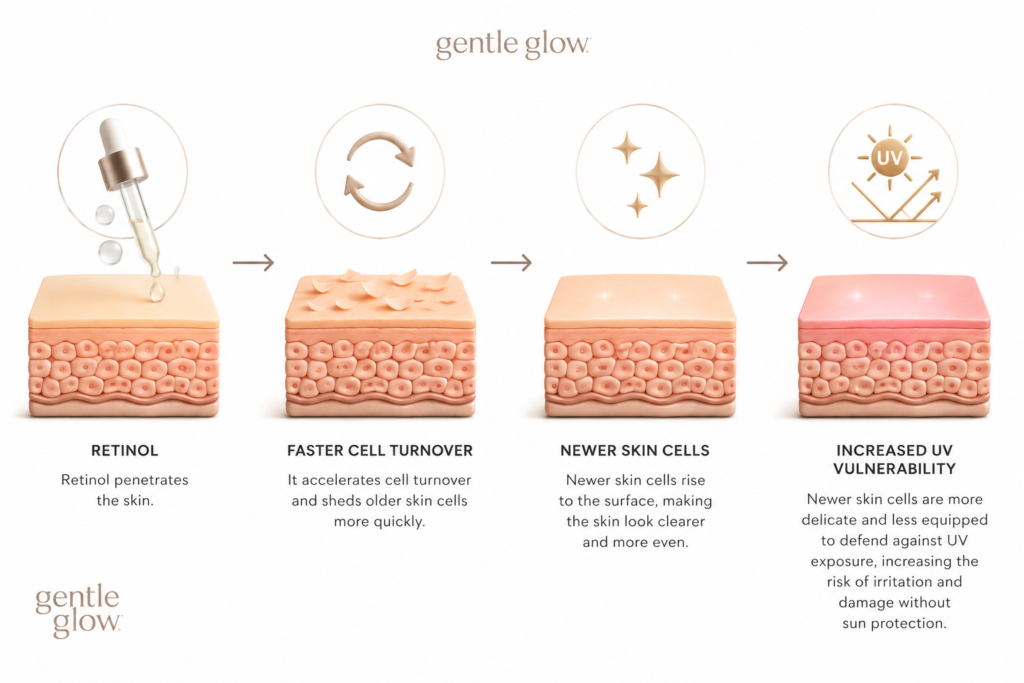
This is one reason dermatologists consistently recommend pairing retinoids with daily sunscreen and applying them as part of an evening routine.
However, understanding how retinol increases sun sensitivity is important because many people assume the ingredient itself reacts dangerously with sunlight. That is not quite what’s happening.
Retinol is considered photolabile, meaning it becomes unstable and breaks down when exposed to light. Sunlight reduces the effectiveness of the ingredient, which is why retinol is generally applied at night.
At the same time, retinoids accelerate skin cell turnover and can cause temporary dryness, peeling, redness, and irritation while the skin adapts. These changes may leave the skin more vulnerable to UV damage, especially when sunscreen use is inconsistent or the skin barrier is already compromised.
Rather than asking whether retinol should be avoided entirely during summer, a more useful question is how to continue using it while minimizing unnecessary irritation and protecting the skin from excess UV exposure.
Retinol, Sunlight, and Irritation: What’s Actually Happening?
| Common Belief | What Actually Happens |
|---|---|
| Retinol causes a dangerous chemical reaction with sunlight | Retinol breaks down in UV light and can increase vulnerability to sun damage through irritation and accelerated cell turnover |
| Retinol automatically causes sunburn | Retinoid-treated skin may burn more easily if adequate sun protection is not used |
| Retinol must be stopped during summer | Most people can continue using it with sunscreen and sensible routine adjustments |
| More peeling means the retinol is working better | Excessive peeling can indicate irritation rather than improved results |
This is why dermatologists typically emphasize daily broad-spectrum sunscreen, protective clothing, shade, and sensible sun habits rather than automatically discontinuing retinoids when summer arrives.
For people using retinoids to help manage acne, or clogged pores, stopping treatment every summer may not always be necessary. Topical retinoids remain one of the most established treatments for both comedonal and inflammatory acne lesions. In many cases, improving routine balance is a more effective solution than abandoning an ingredient that is already working well.
So while retinol can increase sun sensitivity, that alone is not usually what causes most summer retinol problems.
In many cases, heat, sweat, air conditioning, frequent cleansing, and increased sunscreen use play an equally important role in how comfortable a retinoid routine feels during warmer months.
Understanding those environmental factors is often the difference between successfully maintaining a retinoid routine and unnecessarily abandoning one.
Why Summer Changes the Way Retinol Feels

If retinol itself isn’t becoming unsafe in summer, why can it suddenly feel more irritating?
Often, the change has less to do with the retinoid and more to do with seasonal shifts in your environment and routine.
Heat, sweat, air conditioning, more frequent cleansing, and increased sunscreen use can all affect how your skin responds to products. As a result, a retinoid that felt comfortable during cooler months may start causing more dryness, sensitivity, or irritation during summer.
Your Skin Barrier Is Constantly Adapting to Its Environment
The outermost layer of the skin, known as the stratum corneum, does much more than simply sit on the surface.
Research shows that it helps regulate hydration and limit water loss while also supporting several important protective functions within the skin.
When this barrier is functioning well, the skin is generally more resilient.
When it becomes stressed, even products that previously felt comfortable may begin to cause irritation.
This isn’t limited to skincare actives. Many people notice that products they have used comfortably for years, including fragrances that can suddenly feel different during summer, may respond differently to seasonal changes. Heat, sweat, humidity, and friction may all influence how the skin responds, often requiring small adjustments to a routine.
Retinoids do not automatically damage the skin barrier. However, because they increase skin cell turnover and can cause temporary dryness during the adjustment process, they may leave less room for additional environmental stressors.
Summer often introduces several of those stressors at the same time.
Heat and Sweat Can Change How Your Skin Behaves
During warmer months, increased temperatures stimulate sweat production and often increase sebum output as well.
For oily skin, this can create a confusing situation.
The skin may appear shinier than usual while simultaneously feeling tight, dehydrated, or uncomfortable underneath.
Many people interpret this as a sign that their skin needs stronger cleansing.
Unfortunately, that response can sometimes make the problem worse.
Over-cleansing in an attempt to remove sweat and excess oil may strip away some of the skin’s natural protective lipids, making a retinoid routine feel more irritating than it did before.
If you’ve ever wondered why your skin feels tight but still looks oily, you’re not alone. This combination of surface oiliness and underlying dehydration is surprisingly common during summer and can make retinoid-related dryness feel more noticeable.
The Hidden Impact of Air Conditioning
For many people, summer is not just about heat.
It’s also about moving repeatedly between hot outdoor environments and heavily air-conditioned indoor spaces.
This constant shift exposes the skin to dramatic changes in temperature and humidity throughout the day.
While air conditioning can feel comfortable, it often creates a drier environment that encourages increased water loss from the skin.
For someone already using a retinoid, that additional dehydration may contribute to:
- Tightness
- Flaking
- Increased sensitivity
- A feeling that retinol is suddenly “too strong”
In reality, the retinoid may not be the only factor involved.
The environment has changed as well.
Many people notice that their skin becomes oilier after moving between outdoor heat and air-conditioned indoor spaces, even though their skincare routine hasn’t changed. In reality, the skin is often responding to environmental changes rather than a sudden increase in oil production.
More Sunscreen, More Layers, More Friction
Summer routines often become more complicated.
Additional sunscreen applications, sweat, outdoor activity, and frequent face touching can all increase friction and irritation throughout the day.
This doesn’t mean sunscreen is causing the problem.
In fact, sunscreen remains one of the most important parts of any retinoid routine.
However, when multiple factors combine—heat, sweat, friction, dehydration, and active ingredients—the skin may become less comfortable than usual.
The important takeaway is this:
Many summer retinol problems are not caused by retinol alone. They are the result of retinol interacting with a completely different environment than the one your skin experienced during cooler months.
Understanding that distinction often makes it much easier to adjust a routine rather than abandon it.
Why Some Oily Skin Types Notice More Congestion After Stopping Retinoids
One of the most common reactions to summer skincare advice is deciding to put retinol aside until cooler weather returns.
At first, that can feel like a logical decision.
If retinol increases sun sensitivity and summer brings more heat, more outdoor activity, and more UV exposure, stopping the product may seem like the safest option.
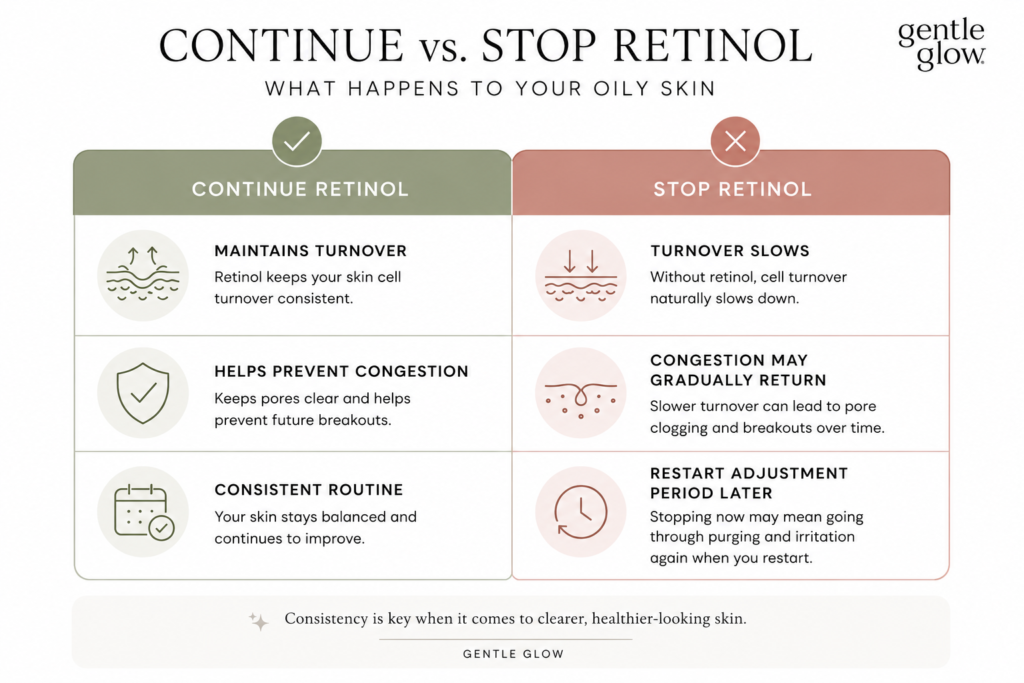
For some people, especially those using retinoids primarily for acne, blackheads, or clogged pores, the results are not always what they expect.
Retinoids Don’t Just Treat Existing Breakouts
Retinoids are often associated with treating acne that is already visible on the surface.
In reality, one of their most important functions happens before a breakout appears.
Topical retinoids remain one of the most established treatments for both comedonal and inflammatory acne lesions, helping regulate the abnormal shedding of skin cells that contributes to clogged pores and congestion.
This means that retinoids are not simply treating today’s breakout. They are helping influence the conditions that may contribute to tomorrow’s breakout as well.
Summer Creates Conditions That Already Favor Congestion
For many people with oily skin, summer naturally brings:
| Summer Skin Change | Potential Impact on Pores |
|---|---|
| Increased sebum production | More oil available inside the follicle |
| Higher sweat production | Greater surface buildup |
| More sunscreen use | Additional layers on the skin |
| Heat and humidity | Changes in skin comfort and cleansing habits |
None of these factors automatically cause acne.
However, they can create an environment where congestion develops more easily if pores are already prone to clogging.
This is one reason some people feel as though their skin becomes more unpredictable after stopping a retinoid routine during summer.
Why Congestion May Gradually Return
Stopping retinol does not mean breakouts appear overnight.
Nor does it mean everyone will experience a sudden flare.
What often happens is that over time, the skin gradually returns to its baseline behavior.
For someone with naturally oily or acne-prone skin, that may mean clogged pores begin forming more easily again, particularly when increased summer oil production is already creating favorable conditions for congestion.
This is one reason dermatologists often view retinoids as long-term management tools rather than short-term treatments.
Does This Mean You Should Never Take a Break?
Not necessarily.
There are situations where temporarily reducing frequency or pausing a retinoid may be reasonable.
Examples may include:
- Significant irritation
- Active barrier damage
- Recovery after certain professional procedures
- Specific recommendations from a dermatologist
The key point is that summer itself is not automatically a reason to stop using a retinoid.
For many people with oily and acne-prone skin, maintaining a well-tolerated routine may actually be easier than stopping completely and then attempting to restart several months later.
Rather than viewing summer as a season that requires abandoning retinol, it can be more helpful to think about how the routine itself may need to adapt to changing environmental conditions.
That’s exactly what we’ll look at next.
Can You Use Retinol in Summer? Here’s How to Do It Safely
For most people, the goal is not deciding whether retinol is allowed in summer.
The goal is figuring out how to continue using it comfortably when the environment around your skin has changed.
Fortunately, that usually requires adjustment rather than abandonment.
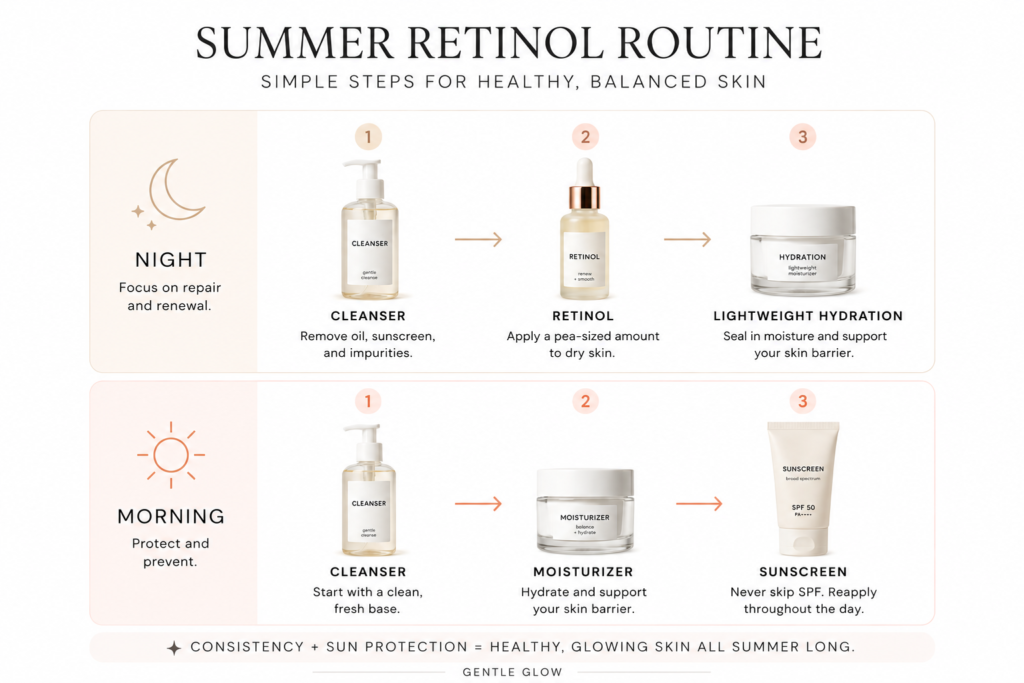
Keep Retinol in Your Evening Routine
Retinol is generally best used at night.
Not only does this avoid direct UV exposure, but it also aligns with the skin’s natural overnight repair processes.
Applying retinol in the evening allows the ingredient to work without competing with daytime factors such as heat, sweat, sun exposure, and repeated sunscreen application.
If you’ve been using retinol successfully during cooler months, there is rarely a need to move it into a morning routine simply because summer has arrived.
Adjust Frequency Before You Quit
One of the biggest mistakes people make is assuming there are only two options:
- Continue using retinol exactly as before.
- Stop using it completely.
In reality, there is a middle ground.
If your skin feels more sensitive during summer, consider reducing frequency before abandoning the routine altogether.
For example, someone using retinol five nights per week may find that three nights per week feels more comfortable during periods of increased heat, travel, outdoor activity, or air-conditioning exposure.
This approach allows many people to maintain consistency while giving their skin additional recovery time.
Support Hydration Without Heavy Layers
One challenge for oily and acne-prone skin during summer is finding the balance between hydration and comfort.
Many people dislike using rich, heavy creams in hot weather, especially when they are already dealing with increased sweat and oil production.
This is where lightweight hydrating products can be useful.
Ingredients such as hyaluronic acid, beta glucan, aloe, glycerin, and peptides can help support hydration without creating the heavy finish that many oily skin types find uncomfortable during summer.
Some people also prefer using a lightweight hydrating serum alongside their evening retinoid routine. Products that combine humectants such as hyaluronic acid with ingredients like beta glucan, aloe, and peptides may help improve comfort without adding the heavier feel that many oily skin types dislike during summer. One example is Michael Todd Beauty’s Knú Serum, which combines several of these ingredients in a lightweight serum format.
A similar philosophy applies to well-formulated niacinamide serums, which many people find comfortable alongside retinoid routines because they can support barrier function without adding excessive weight to the skin.
Sunscreen Remains Non-Negotiable
No summer retinol strategy is complete without sunscreen.
Daily use of a broad-spectrum sunscreen helps reduce UV exposure and supports the long-term goals that often motivate people to use retinoids in the first place.
For oily and acne-prone skin, texture often plays a major role in sunscreen consistency. Heavy or greasy formulas can feel uncomfortable in hot weather, making daily use more difficult than it needs to be.
Many people find that non-comedogenic sunscreens with lightweight textures are easier to wear alongside a retinoid routine during summer, particularly when sweat, humidity, and excess oil are already concerns.
By this point, a pattern should be becoming clear.
It’s usually about making thoughtful adjustments to frequency, hydration, and sun protection while continuing a routine your skin already tolerates well.
Summer Retinol Myths vs Reality
Most people do not need to choose between protecting their skin in summer and maintaining a retinoid routine. Understanding what retinol actually does—and how summer changes the environment around your skin—makes it much easier to make informed decisions.
| Common Summer Myth | Reality |
|---|---|
| You must stop retinol during summer. | Most people can continue using retinol during summer with appropriate sun protection and routine adjustments. |
| Retinol becomes dangerous when temperatures rise. | Heat does not make retinol inherently unsafe, but environmental changes may affect how comfortably your skin tolerates it. |
| Retinol causes a chemical reaction with sunlight. | Retinol can increase the skin’s sensitivity to UV exposure, but it does not create a direct phototoxic reaction with sunlight. |
| More peeling means the retinol is working better. | Excessive peeling and irritation often signal that the routine may need adjustment. |
| Oily skin should avoid retinoids in hot weather. | Many people with oily and acne-prone skin continue to benefit from retinoids throughout the year. |
| Stopping retinol for summer has no downside. | For some people prone to clogged pores and acne, discontinuing retinoids may allow congestion to gradually return over time. |
Final Thought
If there’s one takeaway from this guide, it’s that summer changes the environment around your skin more than it changes retinol itself.
Heat, sweat, air conditioning, sunscreen, and increased sun exposure can all influence how comfortable a retinoid routine feels. That doesn’t necessarily mean the ingredient has suddenly stopped working or become unsafe.
For many people with oily and acne-prone skin, the most effective approach is learning how to adjust the routine so it continues to work with the season rather than against it.
Consistency, sun protection, and barrier support usually matter more than abandoning retinol when the weather gets warmer.
Ultimately, the answer to “can you use retinol in summer?” is yes for most people, provided the routine includes appropriate sun protection and barrier support.
Frequently Asked Questions
Can You Use Retinol in Summer?
Yes. Most people can continue using retinol during summer as long as it is applied at night and paired with daily sun protection. Summer may require adjustments to frequency, hydration, or sunscreen use, but it does not automatically require stopping retinol.
Does Retinol Make Skin More Sensitive to the Sun?
Yes. Retinol can increase the skin’s sensitivity to UV exposure by accelerating skin cell turnover and revealing newer skin cells. This makes consistent sunscreen use especially important, even though retinol itself does not cause a direct phototoxic reaction with sunlight.
Should I Stop Retinol During Summer?
Not necessarily. Many people with oily and acne-prone skin continue using retinol throughout the year without problems. If irritation increases during summer, reducing frequency or improving hydration is often more helpful than stopping treatment completely.
What Happens If You Use Retinol and Go in the Sun?
Occasional sun exposure after using retinol is not automatically harmful. However, unprotected UV exposure may increase the risk of irritation, redness, and sunburn. This is why dermatologists generally recommend using retinol at night and wearing sunscreen during the day.
Can Oily Skin Use Retinol Year-Round?
Yes. Many people with oily and acne-prone skin use retinal and other retinoids throughout the year to help manage clogged pores, uneven texture, and breakouts. Seasonal adjustments may sometimes improve comfort, but summer does not automatically make retinoids unsuitable for oily skin.
What Happens If You Use Retinol Without Sunscreen?
Using retinol without sunscreen increases the risk of UV-related irritation. Daily sun protection helps support both skin health and the long-term benefits of a retinoid routine.
Sources and References
- Topical retinoids in the treatment of acne vulgaris
https://pubmed.ncbi.nlm.nih.gov/18786495/ - Retinoids in the treatment of skin aging: an overview of clinical efficacy and safety
https://pubmed.ncbi.nlm.nih.gov/18046911/ - The clinical relevance of maintaining the functional integrity of the stratum corneum in both healthy and disease-affected skin
https://pubmed.ncbi.nlm.nih.gov/21938268/
This article is informed by peer-reviewed dermatology research on topical retinoids, skin barrier function, ultraviolet (UV) exposure, transepidermal water loss (TEWL), and the environmental factors that affect oily and acne-prone skin.
Medical Disclaimer
Gentle Glow guides are developed using peer-reviewed dermatology research and established clinical guidelines. The information provided is for educational purposes only and does not replace professional medical advice, diagnosis, or treatment. Always consult a board-certified dermatologist or qualified healthcare provider before starting new active skincare treatments.